

Introduction
In modern heavy construction, mining, and large-scale earthmoving, equipment downtime and fuel inefficiency directly erode profit margins. Standard-duty excavators often struggle with cyclic loads, extreme abrasion, and continuous operation exceeding 5,000 hours annually. The heavy-duty excavator class (operating weight ≥40 metric tons, engine power ≥300 HP) is engineered to withstand rigorous conditions while meeting ISO 6016 and ISO 9249 standards. This guide provides an evidence-based evaluation of powertrain architecture, hydraulic performance, and total cost of ownership (TCO) to support fleet managers and project engineers in making data-driven procurement decisions.
Core Powertrain & Structural Design
Engine & Emissions Compliance
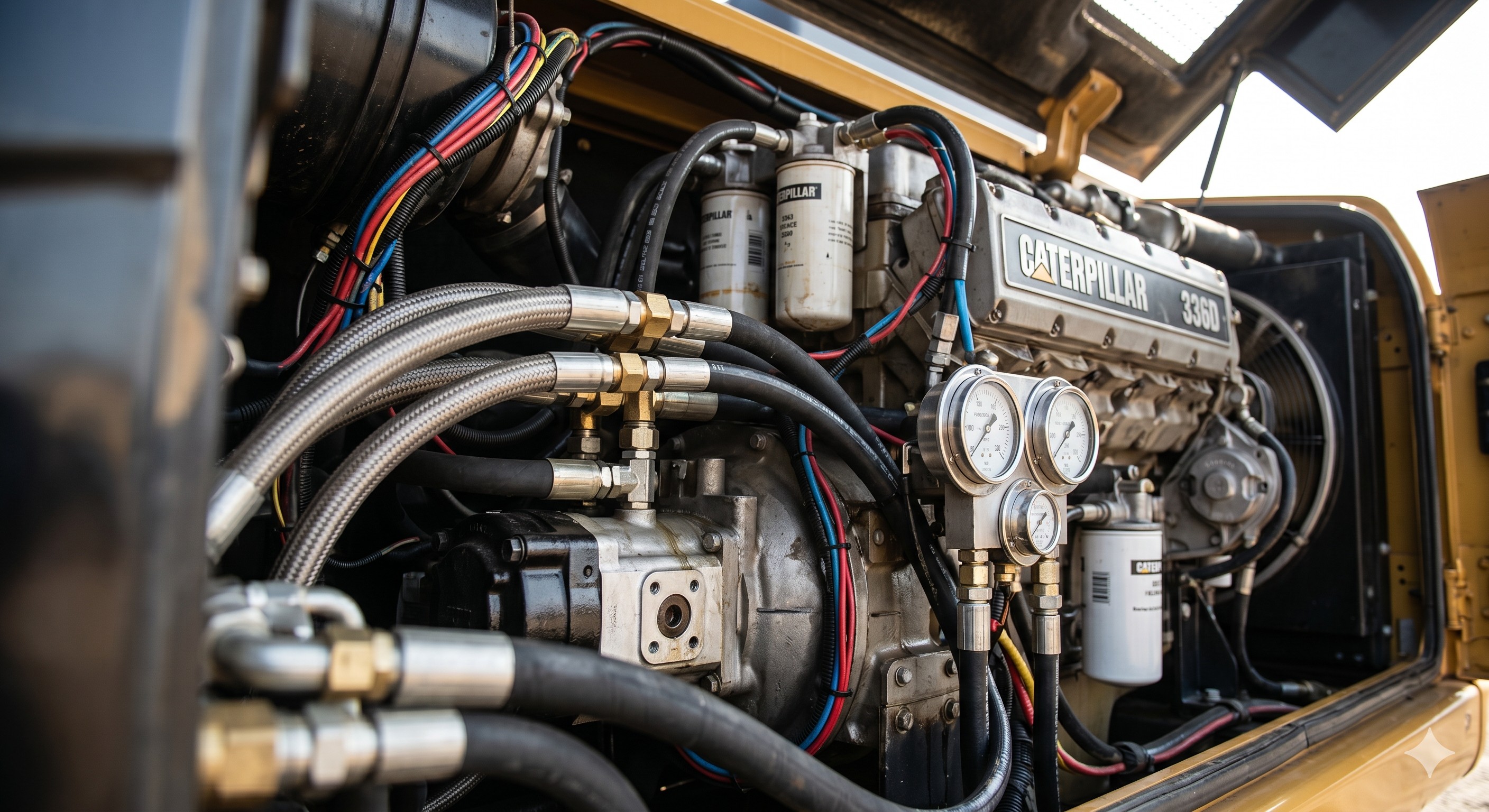
Heavy-duty excavators are powered by turbocharged diesel engines with net power ranging from 300 HP (224 kW) to over 900 HP (671 kW) for ultra-class models. Modern units must adhere to EPA Tier 4 Final or EU Stage V emissions regulations, achieved via selective catalytic reduction (SCR) with diesel exhaust fluid (DEF) and diesel particulate filters (DPF). Typical specific fuel consumption (SFC) lies between 190-210 g/kWh under full load. For example, a 50-ton heavy-duty excavator consumes approximately 25-32 L/h in heavy digging cycles.
Hydraulic System Architecture
Closed-center, load-sensing hydraulic systems dominate this segment, providing variable flow up to 2×200 L/min or higher. Main relief valve pressures are set between 350-400 bar (5,076-5,800 psi). Key metrics include: hydraulic cycle time (e.g., 180° swing and dump under 10 seconds) and auxiliary flow rate for attachments (e.g., 250 L/min for hydraulic hammers). Piston pumps with swashplate control and proportional pressure-reducing valves ensure precise boom/arm/bucket coordination.
Chassis, Undercarriage & ROPS/FOPS
The undercarriage features heavy-duty track links (220-300 mm pitch), sealed and lubricated track chains, and multiple bottom rollers (typically 7-9 per side). Track shoe widths range from 600 mm to 900 mm for ground pressure as low as 0.8 kg/cm² on soft terrain. The ROPS (ISO 3471) and FOPS (ISO 3449) certified cab ensures operator safety. Swing frames incorporate cross-ribbed cast steel nodes and reinforced boom feet for torsional rigidity.
Technical Specifications
The following table presents baseline technical parameters for a representative 50-65 metric ton class heavy-duty excavator, compliant with ISO 6015 measurement standards.
[TABLE_1]Comparative Advantage: TCO, Fuel Efficiency, and ROI
Compared to standard excavators, a heavy-duty excavator delivers lower total cost of ownership over a 12,000-hour lifecycle. Key differentiators:
Fuel Efficiency: Advanced hydraulic hybridization or variable-speed fan systems reduce fuel consumption by 8-15%. At $0.90/L diesel, a fleet of five 50-ton units saves $32,000-$58,000 annually.
Maintenance: Extended service intervals (500 hours for engine oil, 2,000 hours for hydraulic oil) and wear-resistant bucket bushings (HRC 55-60) lower labor and part costs.
ROI: Higher daily production (10-15% more bank cubic meters per hour) due to faster cycle times and greater bucket capacity (2.5-3.5 m³ vs. 1.5-2.0 m³).
Resale Value: Units with maintenance records and original undercarriage retain 45-55% of initial value after 5 years versus 30-35% for standard models.
Heavy-Duty Application Scenarios
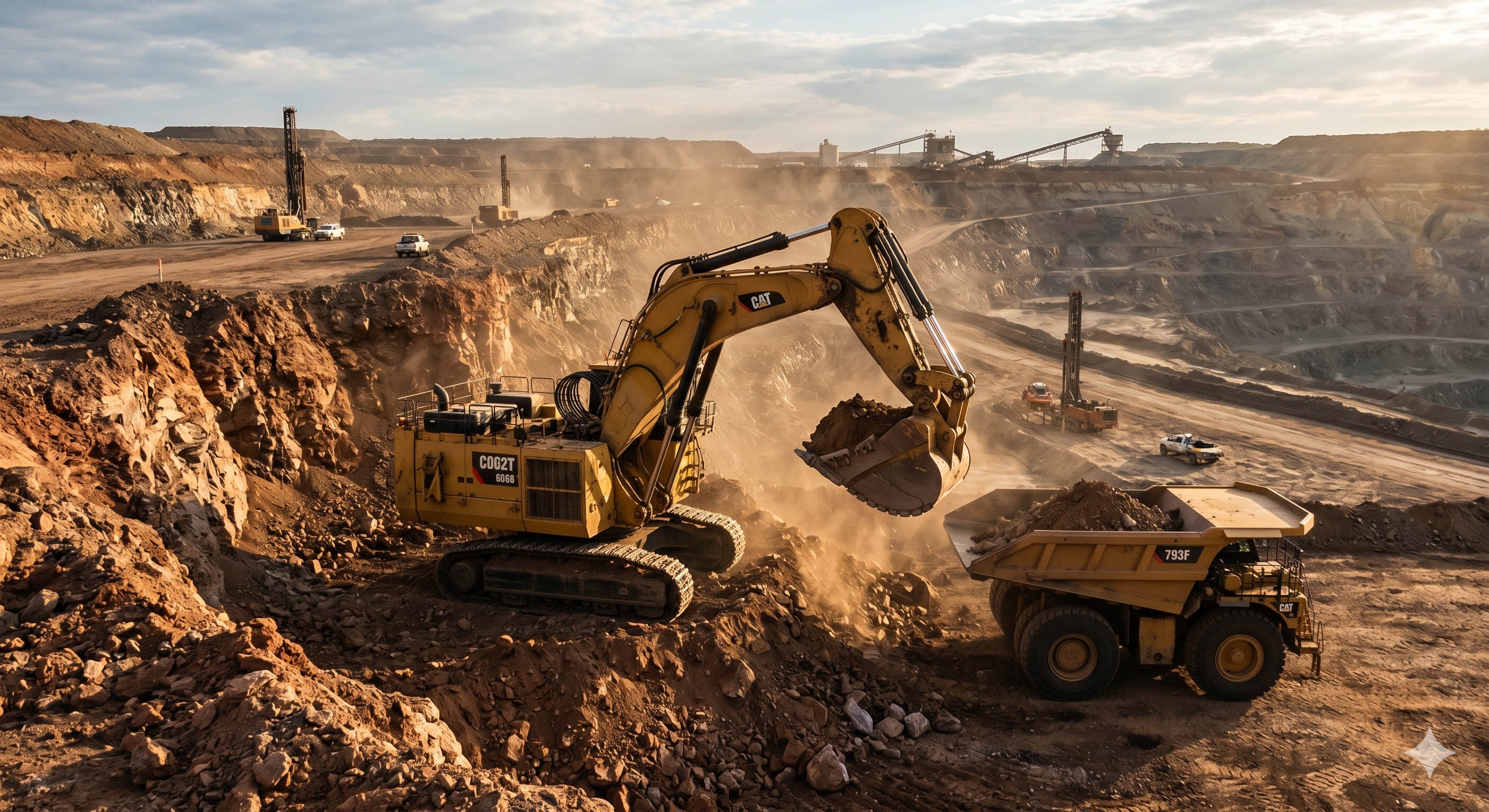
Surface Mining: Overburden removal and ore extraction (copper, iron, coal). Uses 4.0-6.0 m³ buckets or high-reach front shovels. Operational payloads exceed 15 tons per pass.
Large-Scale Earthmoving: Dam construction, highway embankments, and airport development. Equipped with GPS/grade control systems (accuracy ±2 cm).
Quarrying & Aggregate: Primary rock excavation with hydraulic hammers (impact energy >6,000 Joules) and heavy-duty rip-ping buckets (wear plates thickness 30-40 mm).
Demolition: Multi-processors (cutting force >400 kN) and high-altitude work platforms for buildings up to 30 meters.
Conclusion
Investing in a heavy-duty excavator is a strategic decision for operations requiring sustained productivity under extreme loads. By prioritizing high-pressure hydraulics (>350 bar), emissions-compliant powertrains, and reinforced undercarriages, engineering managers reduce TCO by up to 18% over 10,000 hours while achieving ISO performance benchmarks. As telematics and autonomous features become standard (2D/3D machine control, remote operation), the next generation of heavy-duty excavators will further optimize fuel consumption and cycle efficiency. Evaluate your project’s tonnage requirements, duty cycle, and attachment compatibility to select the optimal model for long-term profitability.