

Introduction: Overcoming Urban Construction and Tight-Quarter Earthmoving Constraints
Industrial project managers and fleet operators face a persistent challenge: balancing compact footprint with sufficient breakout force and hydraulic efficiency. The 1.7 ton excavator class has emerged as the robust solution for landscape grading, residential foundation digging, utility trenching, and light demolition. Unlike larger machines that require premium transport permits, this weight class (typically 1,650 kg to 1,750 kg operating weight) delivers ISO 5006 visibility and ROPS/FOPS Level II structural integrity while maintaining a transport width under 1.1 meters. This guide provides a data-driven engineering assessment of powertrain architecture, hydraulic circuit design, emissions compliance (EPA Tier 4 / EU Stage V), and long-term ROI metrics.
Core Powertrain & Structural Design
1. Diesel Engine Platform & Emissions Compliance
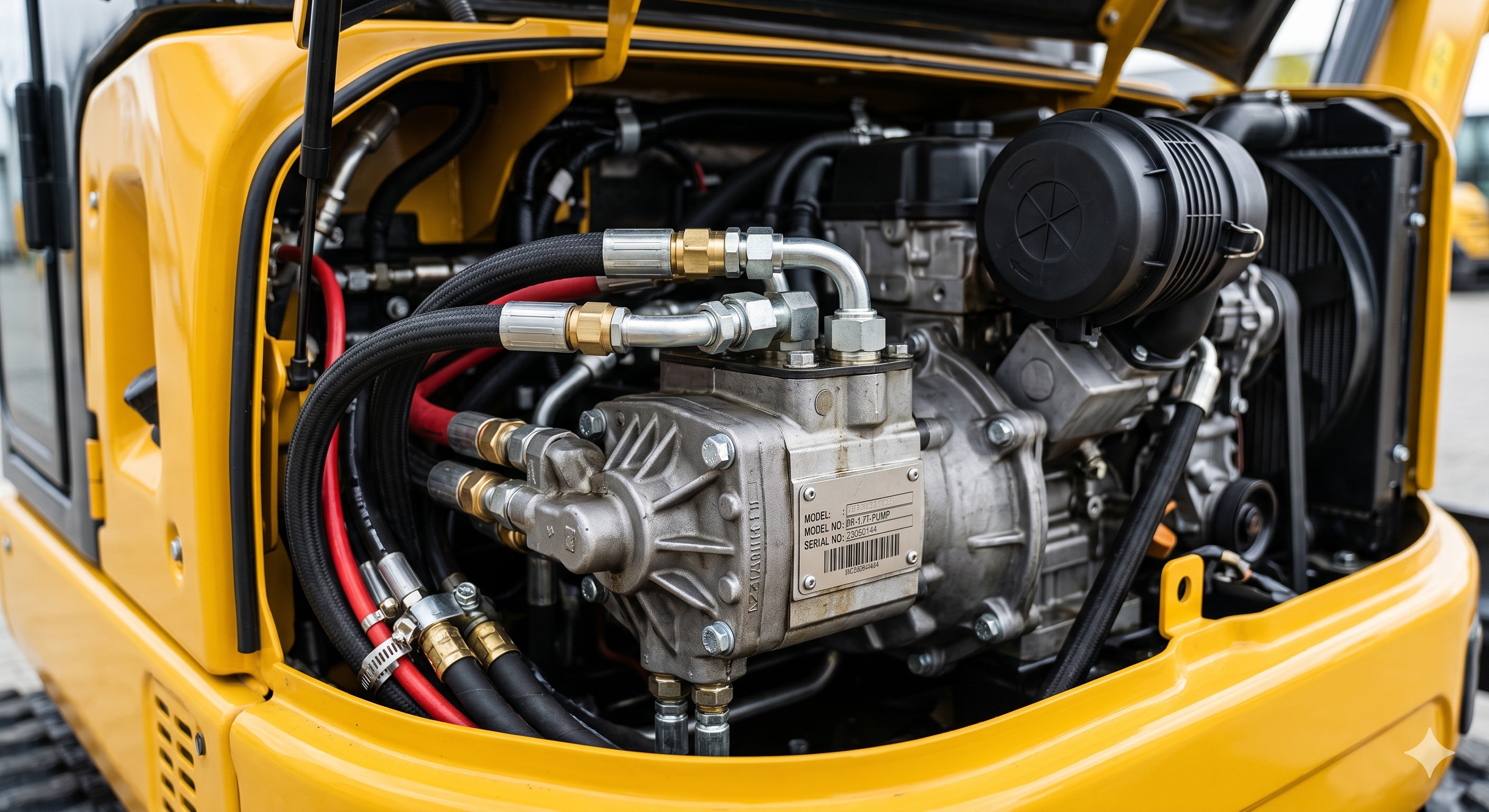
The latest 1.7 ton excavators integrate water-cooled, direct-injection diesel engines rated between 13.5 kW (18.1 HP) and 15.7 kW (21.1 HP) @ 2,400 rpm. To meet EPA Tier 4 Final and EU Stage V regulations, manufacturers deploy DOC (Diesel Oxidation Catalyst) combined with EGR (Exhaust Gas Recirculation) — no DPF required in most designs, reducing regeneration downtime. Specific fuel consumption ranges from 210 to 230 g/kWh, translating to 2.4–2.9 L/hour under mixed load cycles.
2. Hydraulic System Architecture
Closed-center, load-sensing hydraulic systems dominate this class, delivering variable displacement piston pumps with total flow of 35–42 L/min at 2,400 rpm. Main relief valve pressure is factory-set at 21 MPa (210 bar) for standard digging and can reach 24 MPa (240 bar) in heavy-lift mode via push-button pressure override. This yields a bucket breakout force of 14–16 kN and arm tear-out force of 9–11 kN — sufficient for compacted clay, class 4 soil, and light rock excavation.
3. Undercarriage & Structural Durability
Track options include rubber tracks (standard) for paved surfaces or steel tracks with rubber pads for mixed terrain. Track width ranges 230–250 mm, with ground pressure as low as 26–28 kPa (rubber tracks) to 32–35 kPa (steel). The X-frame carbody manufactured from high-tensile steel (yield strength ≥ 500 MPa) integrates grease-sealed track chains and track adjusters with hydraulic recoil springs. ISO 10265 fatigue life certification ensures 5,000+ hours before major structural overhaul under normal duty cycles.
Technical Specifications
The following table presents baseline parameters representative of leading OEM models (e.g., Kubota KX019-4, Yanmar ViO17, Bobcat E17z). Values are derived from SAE J1097 and ISO 6016 standardized tests.
[TABLE_1]Comparative Advantage: TCO, Fuel Efficiency & ROI Analysis
Against the popular 1.8–2.0 ton class, the 1.7 ton excavator offers three distinct ownership advantages:
- Transport compliance: Under 1,750 kg allows towing by a standard 3.5-ton GVW trailer without special licensing in most jurisdictions, reducing logistics overhead by €1,200–€1,800 annually.
- Fuel economy: At 2.6 L/hour average fuel burn (vs. 3.4 L/hour for a 2.0 ton machine), annual savings at 1,200 operating hours and €1.30/L diesel amount to €1,248 per year.
- Hydraulic efficiency ratio: Delivers 0.72–0.76 kN of breakout force per 100 kg operating weight — higher than the class average of 0.68. This translates to faster cycle times in confined trenching (typical 12–15 seconds per 90° digging cycle).
ROI break-even point for typical contractor usage (600 hours/year) occurs between 16–22 months, factoring initial acquisition cost (€28k–€35k) versus rental equivalent (€140–€180 per day). Residual value after 3,000 hours typically holds 55–62% of original price due to strong secondary market demand.
Heavy-Duty Application Scenarios
The 1.7 ton excavator excels in three industrial domains where larger machines cannot operate:
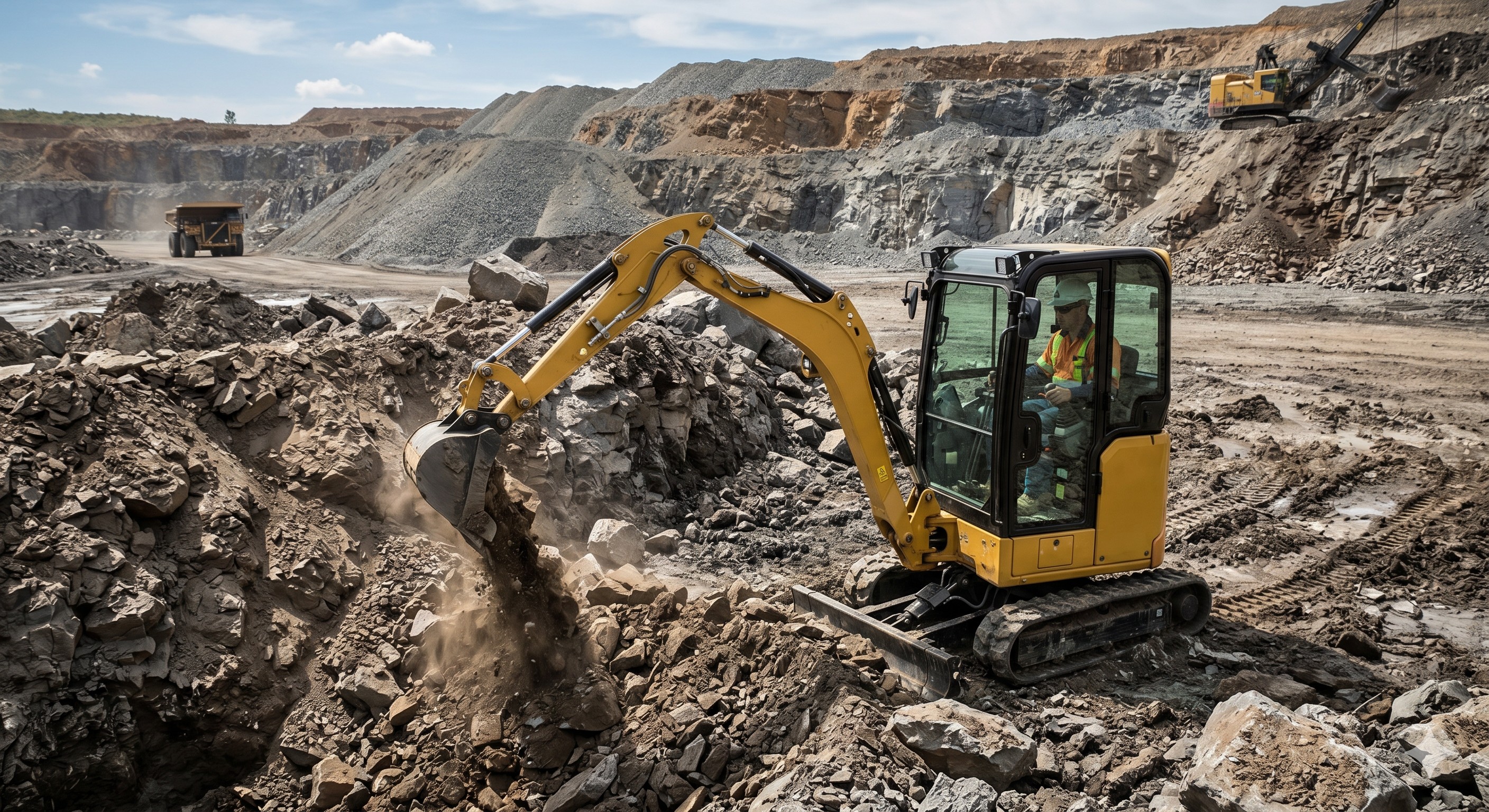
- Urban utility trenching: Laying water, gas, or fiber optic lines within 1.2m corridors. With retractable tracks (width down to 990 mm) and offset boom (60° left/45° right), operators dig adjacent to existing foundations without disturbing structural integrity.
- Landscape earthmoving & slope grading: The low ground pressure (<28 kPa) allows operation on finished lawns while dozer blade (optionally hydraulic angle) provides ±15° blade tilt for fine grading accuracy within ±5 mm.
- Light demolition & material handling: Fitted with hydraulic auxiliary circuits (dual-flow, 30 L/min), attachments like hydraulic breakers (energy class 120–180 Joules), augers (diameter 150–300 mm), and rotating grapples expand versatility. ISO 8643 hydraulic safety interlocks prevent tool drop during sudden pressure loss.
Conclusion: Future-Ready Compact Productivity
The 1.7 ton excavator has evolved from a simple hole-digger to a telematics-ready, emissions-compliant precision earthmoving platform. With 5G-ready remote monitoring (via CAN bus J1939) and factory-integrated grade control (2D laser or GNSS) now available as options, this machine class reduces rework by up to 40% in site preparation tasks. For fleet owners prioritizing lowest cost per cubic meter moved while navigating stricter urban emissions zones, the modern 1.7 ton excavator represents the optimal balance of power, portability, and life-cycle value.