

Introduction
Modern quarry and mining operations face escalating pressure to maximize material yield while minimizing total cost of ownership (TCO) and environmental impact. Traditional backhoes and wheel loaders often fail in high-abrasion environments, leading to excessive downtime, frequent undercarriage replacement, and non-compliance with EPA Tier 4 Final or EU Stage V emissions standards. The quarry excavating machine is engineered specifically for these extreme conditions, combining heavy-duty structural integrity with advanced hydraulic efficiency. Unlike standard excavators, quarry-specific models incorporate reinforced booms, high-capacity cooling systems, and ROPS/FOPS certified cabs to withstand falling debris and continuous operation.
Core Powertrain & Structural Design
The durability of a quarry excavating machine begins with its powertrain. Most heavy-duty models in the 40-80 metric ton class utilize a six-cylinder turbocharged diesel engine delivering between 300 and 550 horsepower. To meet EPA Tier 4 Final or EU Stage V, manufacturers employ selective catalytic reduction (SCR) with diesel exhaust fluid (DEF) and a diesel particulate filter (DPF). However, quarry applications demand additional cooling: oversized radiators and reversed cooling fans prevent dust clogging.
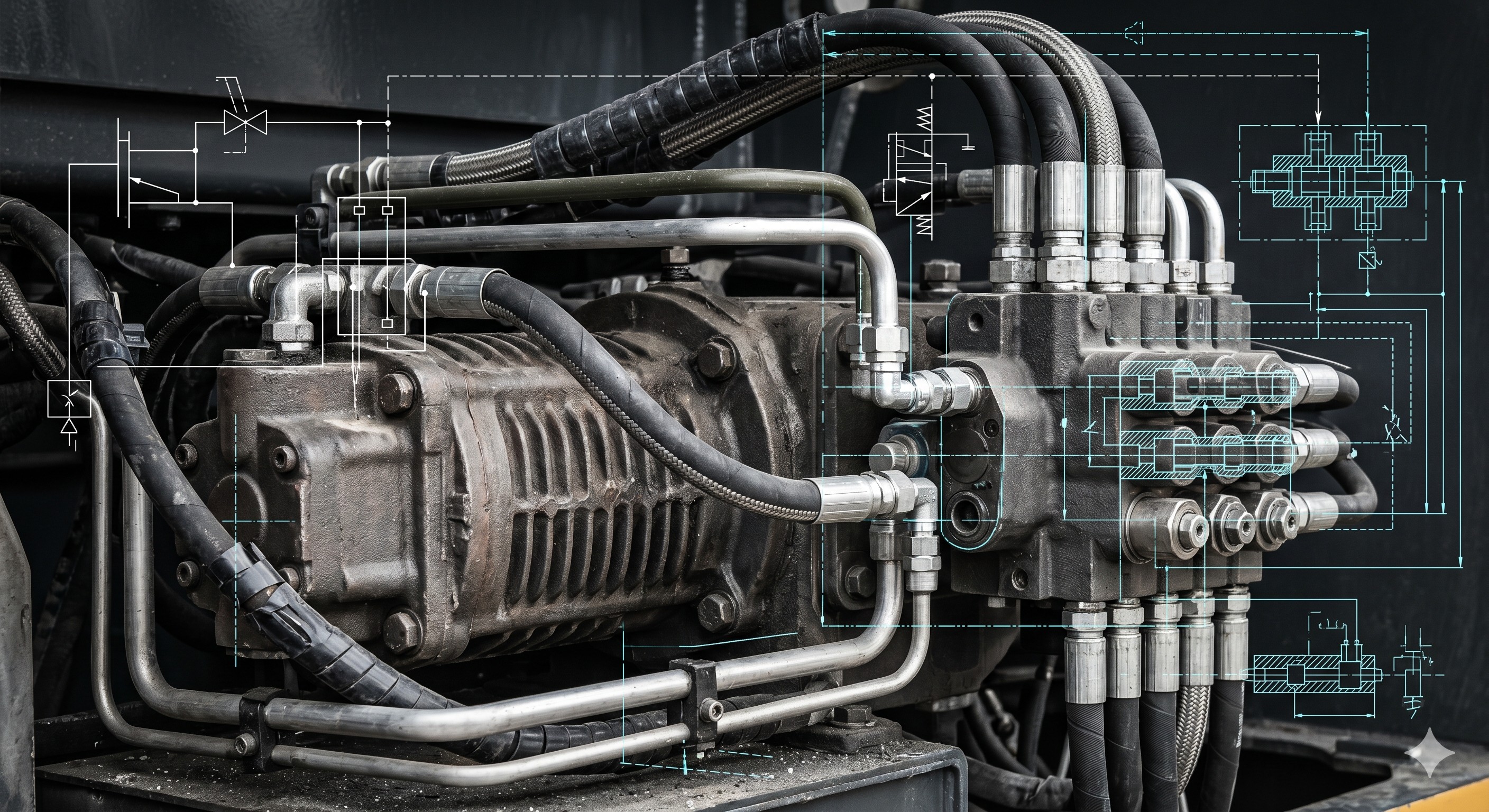
Hydraulic System & Pressure Ratings
Hydraulic efficiency defines productivity. A premium quarry excavating machine operates at main pump pressures of 34 to 37 MPa (4930–5365 PSI), with flow rates exceeding 2x300 L/min. Key specifications include:
Hydraulic cycle times: Boom up ≤5.8s, bucket closing ≤2.5s (for 3.5–4.5 m³ buckets).
Pressure relief valves: Set to ISO 8643 standards, with overload warning systems.
Closed-center load sensing (CLSS): Reduces fuel consumption by 8-12% compared to open-center systems.
Undercarriage and Structural Reinforcement
Quarry environments demand extended track life. Heavy-duty triple-grouser tracks with heat-treated pins and bushings are standard. Track shoe widths range from 600mm to 800mm to lower ground pressure (<85 kPa for soft overburden). The swing frame and carbody incorporate high-tensile steel (yield strength ≥690 MPa) with integrated cross-ribbing to resist torsional stress during rock excavation.
Technical Specifications
Below are key parameters for a typical 50-metric-ton class quarry excavating machine. Actual values vary by manufacturer (Caterpillar, Komatsu, Hitachi, Liebherr) and configuration.
| Key Parameter | Technical Specification (50t Class) |
|---|---|
| Engine Net Power (ISO 9249) | 336 kW (450 HP) @ 1,900 rpm |
| Operating Weight (with bucket) | 48,500 - 52,000 kg |
| Bucket Capacity (SAE heaped) | 3.2 - 4.2 m³ (rock bucket) |
| Max. Breakout Force (ISO 6015) | 285 kN (bucket) / 235 kN (arm) |
| Main Hydraulic Pressure | 35.3 MPa (5,120 PSI) |
| Fuel Consumption (avg. heavy load) | 16.5 - 18.2 L/hour |
| Swing Speed | 8.8 rpm |
| Max. Dump Height | 7.65 m |
| Ground Pressure (600mm shoes) | 78.5 kPa |
| Emissions Certification | EPA Tier 4 Final / EU Stage V |
Comparative Advantage: TCO, Fuel Efficiency & ROI
When comparing a purpose-built quarry excavating machine to a general-purpose excavator or wheel loader, the ROI gap becomes evident within 2,000 operating hours.
- Fuel Efficiency: General-purpose excavators consume 18–25 L/hour. Quarry-optimized hydraulics reduce this to 14–18 L/hour under equivalent load, saving up to $12,000 annually (assuming 2,500 hours at $0.90/L).
- Undercarriage Life: Standard excavators require track replacement every 3,000–4,000 hours in granite/basalt quarries. Heavy-duty sealed and lubricated tracks extend life to 6,000–7,500 hours, reducing per-hour undercarriage cost from $4.50 to $2.10.
- Structural Wear: Reinforced boom and arm with integral cast steel nodes eliminate stress risers, reducing crack risk by 70% compared to welded-only designs.
- Resale Value: After 8,000 hours, quarry-spec machines retain 35-40% of original value vs. 20-25% for standard excavators.
Quantitative ROI example: A quarry operator upgrading from a 45t standard excavator to a quarry excavating machine with 20% higher initial capex ($450k vs. $375k) achieves break-even at 3,200 hours and cumulative $210k net savings over 10,000 hours.
Heavy-Duty Application Scenarios
The versatility of quarry excavating machines extends beyond limestone or granite quarries. Primary use cases include:
- Primary Excavation & Ripping: Equipped with a multi-shank ripper (ISO 9248), these machines fracture rock layers with 240 kN of breakout force, eliminating blasting in softer sedimentary rock.
- ROM (Run of Mine) Feeding: High dump height (>7.5m) and large bucket capacity (3.0–5.5 m³) directly feed 50-100 ton articulated haul trucks or stationary grizzlies.
- Overburden Removal: Long-reach variants (boom length 8.5–10m) strip topsoil and weathered rock at depths up to 12m.
- Secondary Breaking: Hydraulic quick couplers allow rapid change to hydraulic breakers (impact energy 4,000–7,000 Joules) for oversized boulders.
- Stockpile Management: Aggressive bucket profiles with bolt-on wear strips and HB400/500 wear plates handle abrasive material without monthly liner replacement.
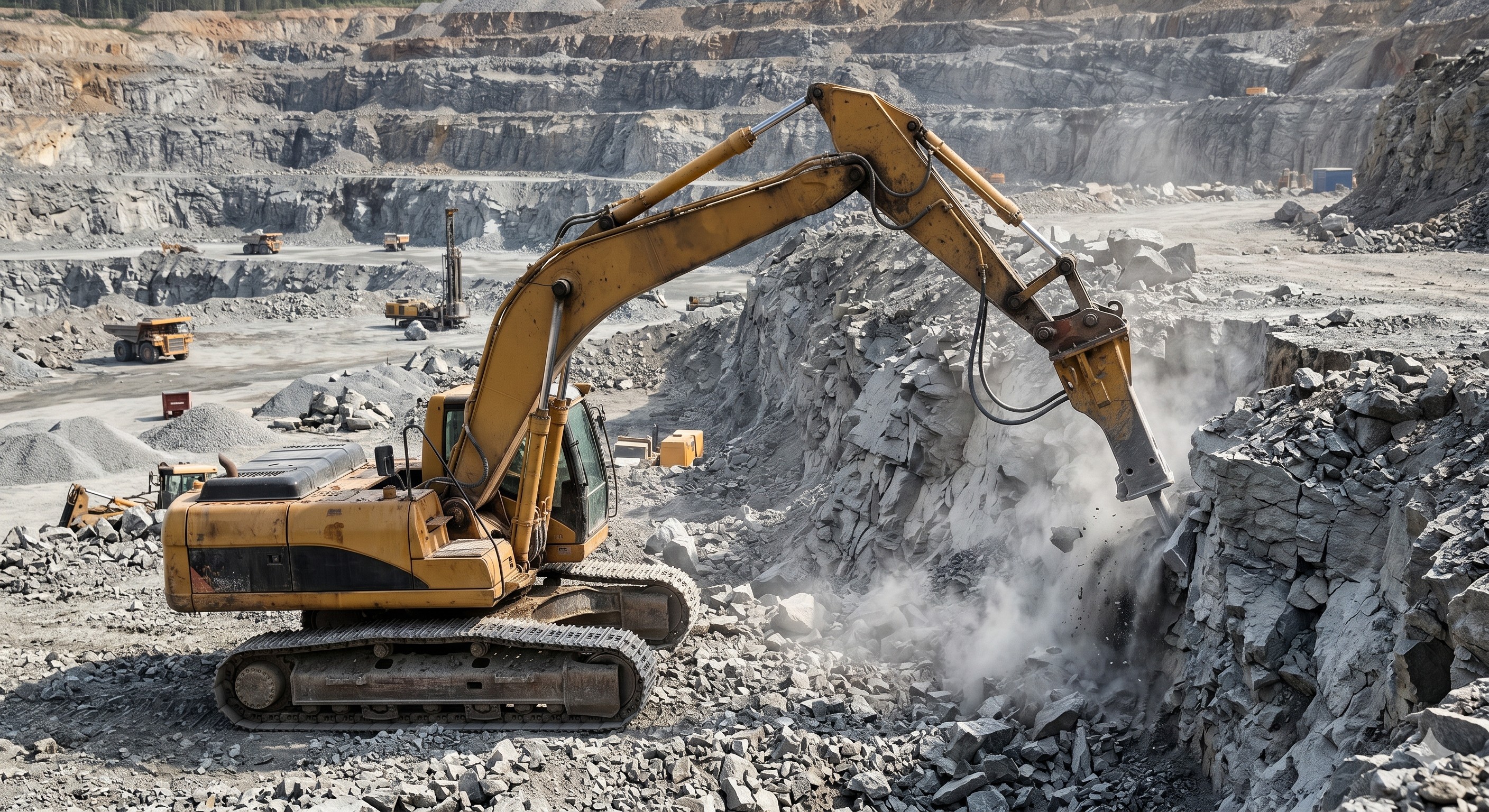
Each scenario demands specific attachments and software. Integrated machine telematics (ISO 15143-3) provides real-time payload, cycle counts, and fuel optimization alerts.
Conclusion
The shift to purpose-designed quarry excavating machines represents a critical upgrade for operations prioritizing uptime, emissions compliance, and long-term asset value. With hydraulic pressures exceeding 35 MPa, fuel consumption below 18 L/hour, and undercarriage lives surpassing 7,000 hours, these machines redefine productivity in abrasive environments. As quarrying moves toward automation and real-time data integration, models with factory-ready telematics and Grade Assist 2.0 will dominate the heavy equipment market. For engineering procurement, the question is no longer if to upgrade, but how quickly the ROI can be realized—typically within the first 18 months of full-scale operation.