

Introduction
The construction and mining sectors face converging pressures: rising diesel costs, tightening EPA Tier 4 Final and EU Stage V emissions mandates, and growing project demands for zero-emission operation on urban and indoor sites. Traditional backhoe excavators, while robust, deliver high carbon output and elevated maintenance schedules. The electric backhoe excavator has emerged as the engineered solution—delivering full hydraulic power, instant torque, and lower noise pollution without local exhaust emissions. This technical analysis examines powertrain architecture, key specifications, and real-world ROI data for heavy-duty applications.
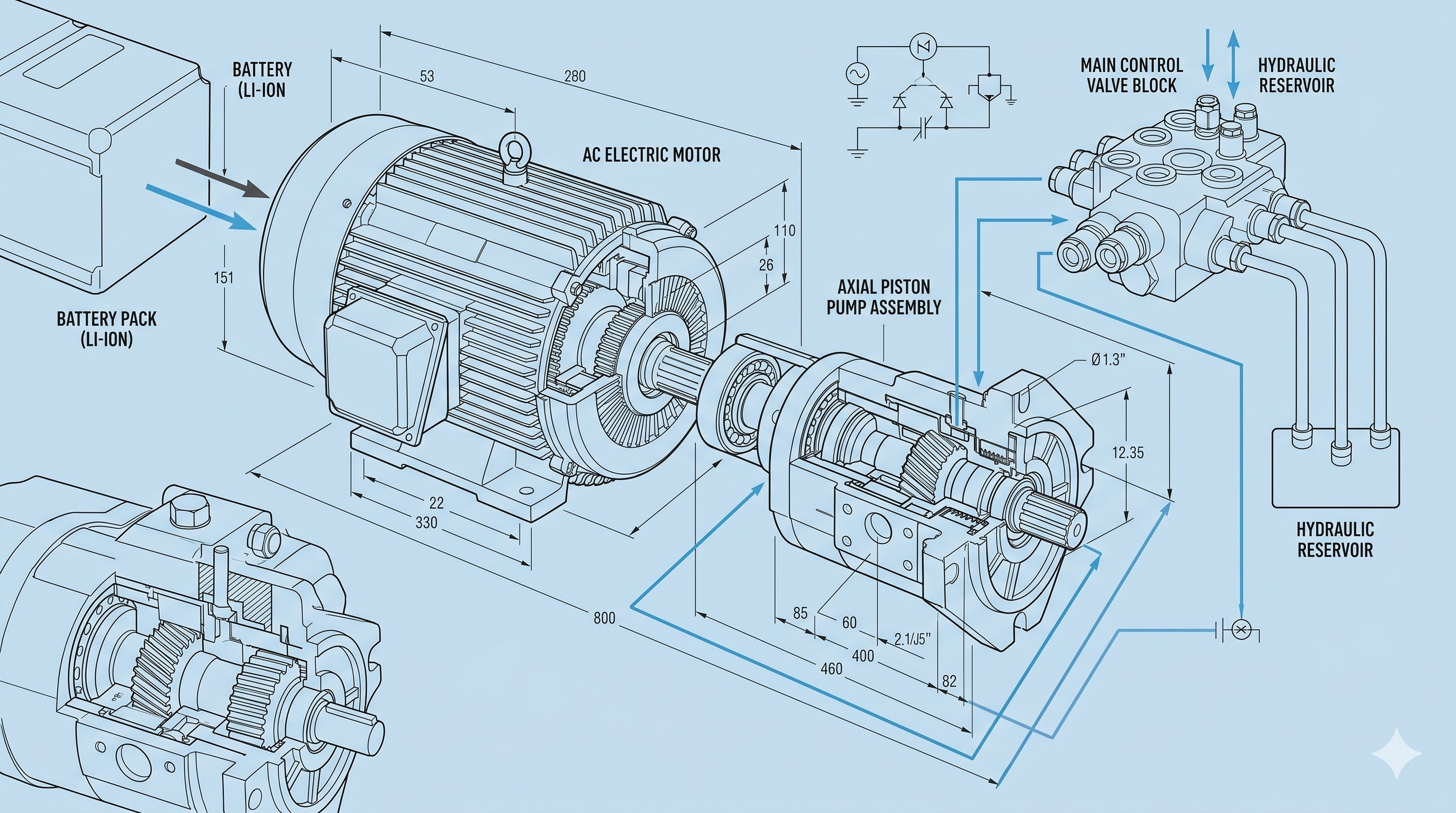
Core Powertrain & Structural Design
Electric Powertrain Architecture
Unlike diesel variants, the electric backhoe excavator uses a high-voltage lithium-ion battery pack (typically 350–650V, 80–150 kWh) coupled with one or two permanent-magnet synchronous motors (PMSM). Peak motor efficiency reaches 94–97%, compared to 35–40% for a diesel engine under typical load cycles. The system directly drives variable-displacement axial piston pumps for closed-loop hydraulic control.
Hydraulic System & Pressure Ratings
Leading OEMs maintain hydraulic operating pressures of 250–300 bar (3626–4351 psi) with electronically regulated load-sensing pumps. Hydraulic flow ranges from 70–140 L/min depending on machine size (operating weight 4–8 metric tons). The electro-hydraulic servo system eliminates mechanical lag, enabling simultaneous boom, arm, bucket, and dozer-blade movements.
Chassis & Safety Compliance
Structural durability meets ISO 12117-2 (ROPS) and ISO 3449 (FOPS Level II). The battery enclosure is IP67-rated and crash-protected with high-strength steel casing. Thermal management uses liquid cooling with redundant isolation monitoring. Machines conform to CE Machinery Directive 2006/42/EC and UN ECE R100 for EV safety.
Technical Specifications
The following baseline parameters represent a standard 6-metric-ton electric backhoe excavator class. Actual values vary by manufacturer and configuration.
| Key Parameter | Technical Specification (6t Class) |
|---|---|
| Engine (Electric Motor) Peak Power | 90-110 kW (120-148 HP) |
| Battery Capacity / Voltage | 80-110 kWh / 350-650V Li-ion |
| Operating Weight | 5,800 - 6,500 kg (12,800 - 14,330 lb) |
| Hydraulic Operating Pressure | 260 bar (3770 psi) |
| Hydraulic Flow (Implement) | 95 L/min (25 gpm) |
| Max Digging Depth | 3,900 - 4,200 mm |
| Max Reach at Ground Level | 6,200 - 6,700 mm |
| Dozer Blade Width / Height | 1,900 mm / 450 mm |
| Charge Time (150 kW DC) | 45 min (10-80% SOC) |
| Sound Power Level (LWA) | 96 dBA / Operator ear 68 dBA |
| Emissions Standard | Zero local emissions (EPA Tier 4 / EU Stage V exempt) |
| ROPS/FOPS | ISO 12117-2 / ISO 3449 Level II |
Comparative Advantage: TCO and ROI Analysis
Over a 5-year / 8000-hour lifecycle, the electric backhoe excavator achieves 40–55% lower total cost of ownership (TCO) compared to Tier 4 diesel equivalents. Key drivers: energy cost of $0.07–0.12 per kWh vs. diesel at $0.90–1.20 per liter reduces hourly fuel expense from ~$6.50 to ~$2.20. Maintenance savings include elimination of engine oil changes (0 vs. 12 intervals), diesel particulate filter (DPF) regeneration, and EGR valve servicing. Hydraulic fluid and filter intervals remain comparable. Payback period ranges from 18 to 30 months for fleets with daily utilization above 5 hours. Additionally, noise reduction (68 dBA vs. 95 dBA) enables nighttime urban work and indoor operations without hearing protection mandates.
Heavy-Duty Application Scenarios
- Urban Construction & Utility Trenching: Zero local emissions allow basement excavation, near-hospital work, and enclosed parking structure demolition.
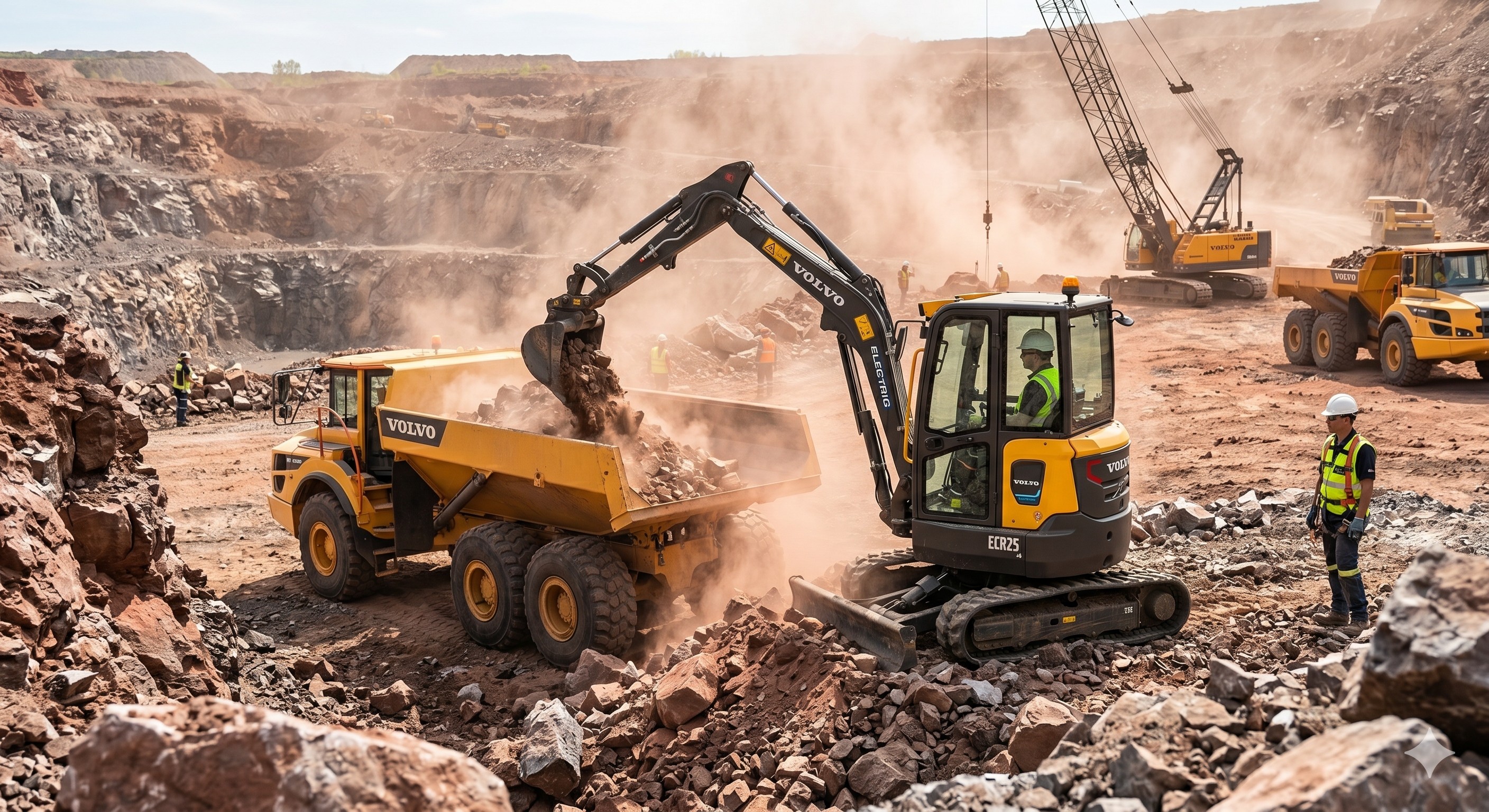
- Mining & Quarry Support: Underground mining benefits from reduced ventilation demand; surface use lowers carbon compliance costs.
- Industrial Manufacturing Yards: Indoor metal recycling, foundry cleanout, and warehouse earthmoving without exhaust extraction systems.
- Precision Earthmoving: Electro-hydraulic servo response improves trenching accuracy to ±2 cm, reducing rework by 15–20%.
Conclusion
The electric backhoe excavator is no longer a prototype novelty but a production-grade solution for forward-thinking contractors and industrial operators. By eliminating diesel aftertreatment complexity, reducing hourly energy costs by over 60%, and meeting global emissions standards without compromise on hydraulic performance, this platform directly addresses modern productivity and regulatory demands. As battery energy density improves and rapid-charging infrastructure expands (150 kW CCS2 capable), electric earthmoving will become the baseline for most backhoe applications by 2030. For B2B buyers, evaluating site-specific charging cycles and total ownership modeling is the recommended next step.