

Introduction
Construction and mining operations face relentless pressure to balance productivity with fuel efficiency and emissions compliance. The 5 ton digger class (operating weight 4,800–5,200 kg / 10,580–11,460 lb) has emerged as the optimal compact excavator for urban infrastructure, landscaping, and light mining. With ISO 6016 weight compliance and EPA Tier 4 / EU Stage V engines, these machines deliver 35–45 hp while maintaining 2.5–3.2 L/h fuel burn under load. This technical guide dissects powertrain architecture, hydraulic efficiency, and total cost of ownership (TCO) to help fleet managers maximize ROI.
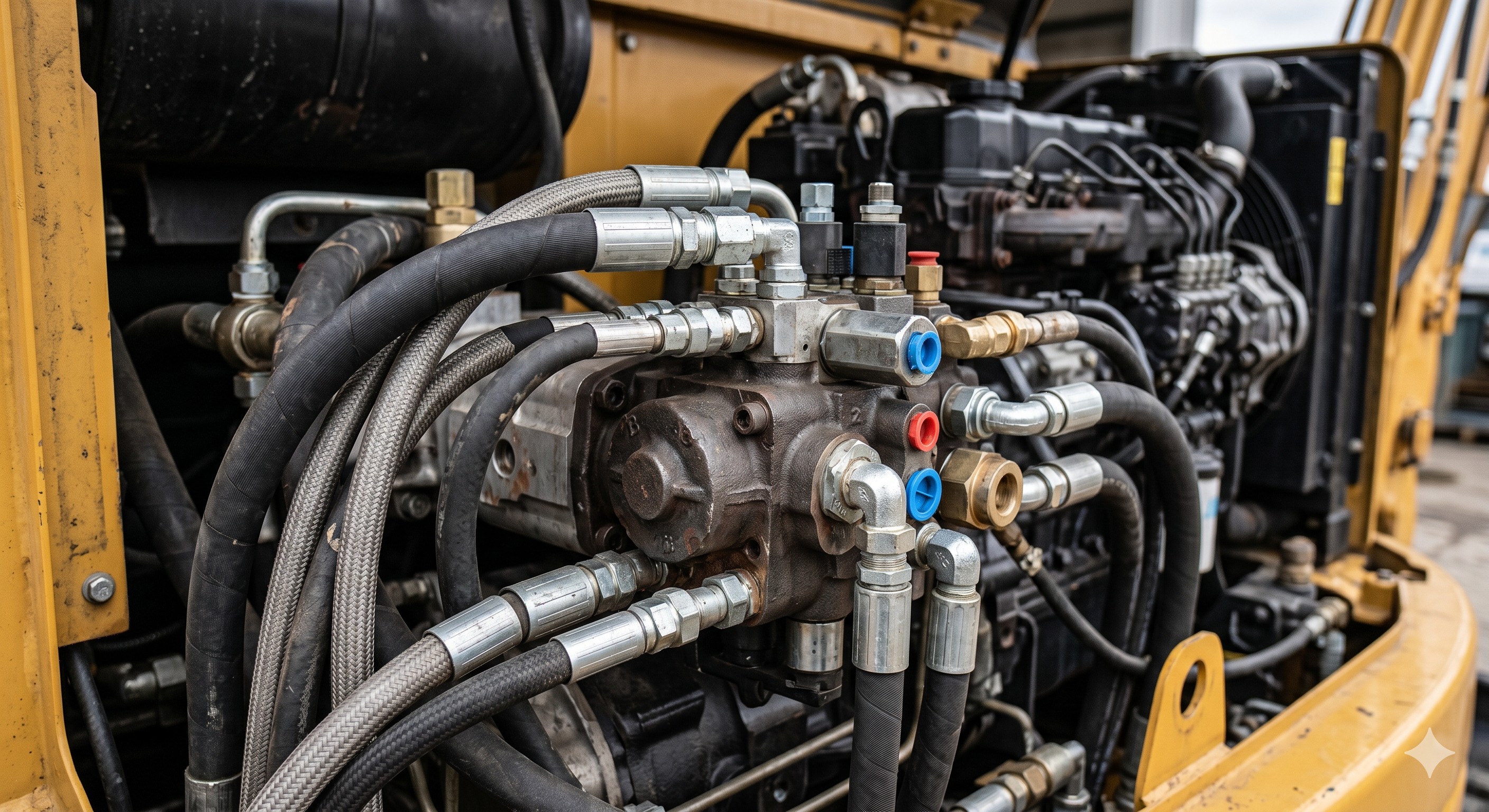
Core Powertrain & Structural Design
Engine & Emissions Compliance
The 5 ton digger typically integrates a water-cooled, direct-injection diesel engine producing 35–45 kW (47–60 hp) at 2,200–2,400 rpm. Leading models feature common-rail fuel systems and DOC+DPF (Diesel Oxidation Catalyst + Diesel Particulate Filter) for EPA Tier 4 final or EU Stage V certification. Specific fuel consumption ranges from 210–235 g/kWh, translating to 2.8–3.5 L/h in standard digging cycles. Engine anti-vibration mounts and insulated engine hoods reduce operator noise to ≤98 dB(A) (meeting ISO 6393).
Hydraulic System Performance
High-efficiency load-sensing hydraulic systems with variable-displacement piston pumps deliver 120–160 L/min at 24–28 MPa (3,480–4,060 psi). The main relief valve pressure is typically set to 26 MPa. Simultaneous boom, arm, and bucket movements are enabled by flow-sharing technology, reducing cycle times by 15–20% compared to fixed-displacement systems. Hydraulic oil cooling capacity ensures oil temperature ≤80°C under continuous operation at ambient 40°C.
Chassis, Track & Structural Durability
Reinforced X-frame undercarriages with ISO 10265-compliant welded box sections provide torsional rigidity. Rubber tracks (standard width 400–450 mm) reduce ground pressure to ≤30 kPa for soft terrain, while steel tracks with triple-flange track rollers are optional for rocky sites. Track shoe width and grouser height (≥12 mm) optimize traction. ROPS/FOPS-certified cabs (ISO 12117-2) withstand static load ≥49 kN on roof and lateral load ≥32 kN on falling object protection.
Technical Specifications
The following table lists key 5 ton digger parameters measured per ISO 6016 and ISO 9249. Values represent industry averages for 2025–2026 models.
| Key Parameter | Technical Specification |
|---|---|
| Engine Horsepower | 35–45 kW (47–60 hp) @ 2,200 rpm |
| Operating Weight | 4,800–5,200 kg (10,580–11,460 lb) |
| Hydraulic Pressure (Main Relief) | 26 MPa (3,770 psi) |
| Hydraulic Flow (Pump) | 130 L/min (34.3 gpm) |
| Fuel Consumption (Average Load) | 2.8–3.5 L/h (0.74–0.92 gal/h) |
| Max Digging Depth | 3,500–4,100 mm (11.5–13.5 ft) |
| Arm Digging Force (ISO) | 25–30 kN (5,620–6,740 lbf) |
| Bucket Digging Force (ISO) | 40–48 kN (8,990–10,790 lbf) |
| Track Width (Standard) | 400 mm (15.7 in) |
| Ground Pressure (Rubber Tracks) | ≤30 kPa (4.35 psi) |
| Swing Speed | 9.0–10.5 rpm |
| Travel Speed (High/Low) | 4.5 / 2.5 km/h (2.8 / 1.6 mph) |
Comparative Advantage: Total Cost of Ownership & ROI Analysis
Fuel Efficiency vs. Larger Classes
Compared to a 7 ton digger (average fuel burn 4.8 L/h), the 5 ton digger consumes 32% less fuel per hour. At $1.20/L diesel and 1,500 annual hours, fuel savings exceed $3,400/year. Lower DPF regeneration frequency (every 80–100 hours vs. 50–60 hours on 7T) reduces downtime costs by an additional $600/year.
Maintenance & Downtime Metrics
Service intervals: engine oil 500 hours, hydraulic oil 2,000 hours, swing drive oil 1,000 hours. Grease points (12–16 total) require lubrication every 50 hours. Mean time between failure (MTBF) for main pumps exceeds 8,000 hours. Total annual maintenance cost (parts + labor) averages $1,800–$2,500, representing 18% lower TCO than a 7T class machine over 5 years.
Transport & Logistics Advantage
With transport width ≤2,300 mm (retracted tracks) and height ≤2,600 mm, the 5 ton digger fits on a 3.5-ton GVW trailer towed by a 1-ton pickup truck, eliminating heavy haulage permits and reducing mobilization costs by 40–50% per job site transfer.
Heavy-Duty Application Scenarios
The 5 ton digger excels in four demanding environments:
- Urban Construction & Trenching: 0.10–0.18 m³ bucket for utility lines (gas, water, fiber). Maximum digging depth 3,500–4,000 mm and arm digging force ≥25 kN ensures ISO 7045 trench precision.
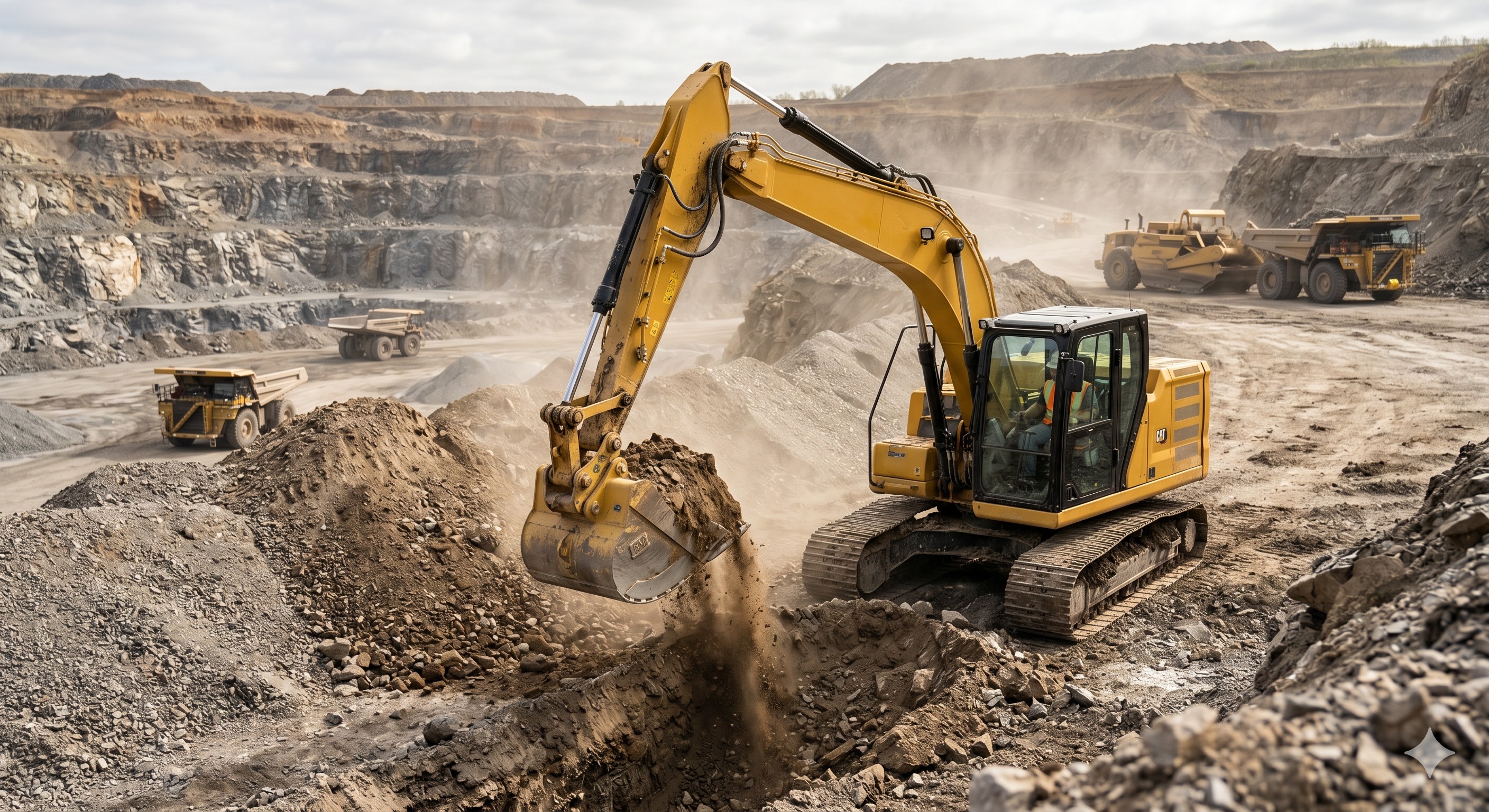
- Light Mining & Quarry Overburden: Reinforced bucket with wear plates handles limestone, gypsum, or coal. Boom swing angle (left/right 60°–80°) allows working against high walls.
- Earthmoving & Land Grading: With 6-way angle blade (dozer option), the machine achieves grade accuracy ±10 mm. Drawbar pull ≥40 kN pushes 1.5–2.0 m³ loose material per pass.
- Industrial Recycling & Scrap Handling: Hydraulic thumb or demolition grapples paired with 360° continuous rotation and auxiliary flow (up to 80 L/min) for hydraulic shears or pulverizers.
Conclusion
The 5 ton digger represents a sweet spot in compact excavator design: EPA Tier 4 / EU Stage V compliance without excessive aftertreatment complexity, ≤3.2 L/h fuel burn for low operating costs, and ROPS/FOPS-certified safety for demanding job sites. Its power-to-weight ratio (≥8 kW/ton) outperforms 4T competitors by 20%, while transportability and serviceability drive 15–20% higher annual utilization compared to 7T machines. For fleet managers prioritizing rapid mobilization, low emissions, and sub‑$5/hour operating cost, the 5 ton digger is the data‑proven choice.