

Introduction
In the high-stakes world of road construction, unplanned downtime is a contractor's worst enemy. The cost of a stalled project due to equipment failure can quickly escalate into thousands of dollars in lost productivity and penalties. The robust solution to this challenge lies in a rigorous, data-driven maintenance regimen for your crawler excavators. These machines are the workhorses of any job site, capable of handling tasks from heavy earthmoving to precise trenching, but their complexity demands a proactive approach to care. This guide provides an in-depth, technical overview of how to maintain a crawler excavator used in road construction, focusing on maximizing uptime, adhering to industry standards, and ensuring a strong return on investment (ROI).
Core Powertrain and Structural Design
The efficiency of a crawler excavator in road construction is a direct result of its engineering. Understanding the core systems is the first step in effective maintenance.
Powertrain and Emissions Compliance
Modern crawler excavators are powered by high-horsepower diesel engines, typically ranging from 100 to over 500 HP depending on the machine's operating weight (e.g., a standard 20-25 ton class excavator often features a 150-200 HP engine). These powerplants must comply with stringent emission regulations like the EPA Tier 4 Final or EU Stage V standards. This often means the engine is equipped with a complex after-treatment system, including a Diesel Particulate Filter (DPF) and Selective Catalytic Reduction (SCR). Proper maintenance of these systems—using low-sulfur fuel and high-quality API CK-4 engine oil—is critical to prevent derates and maintain peak performance.
Hydraulic System
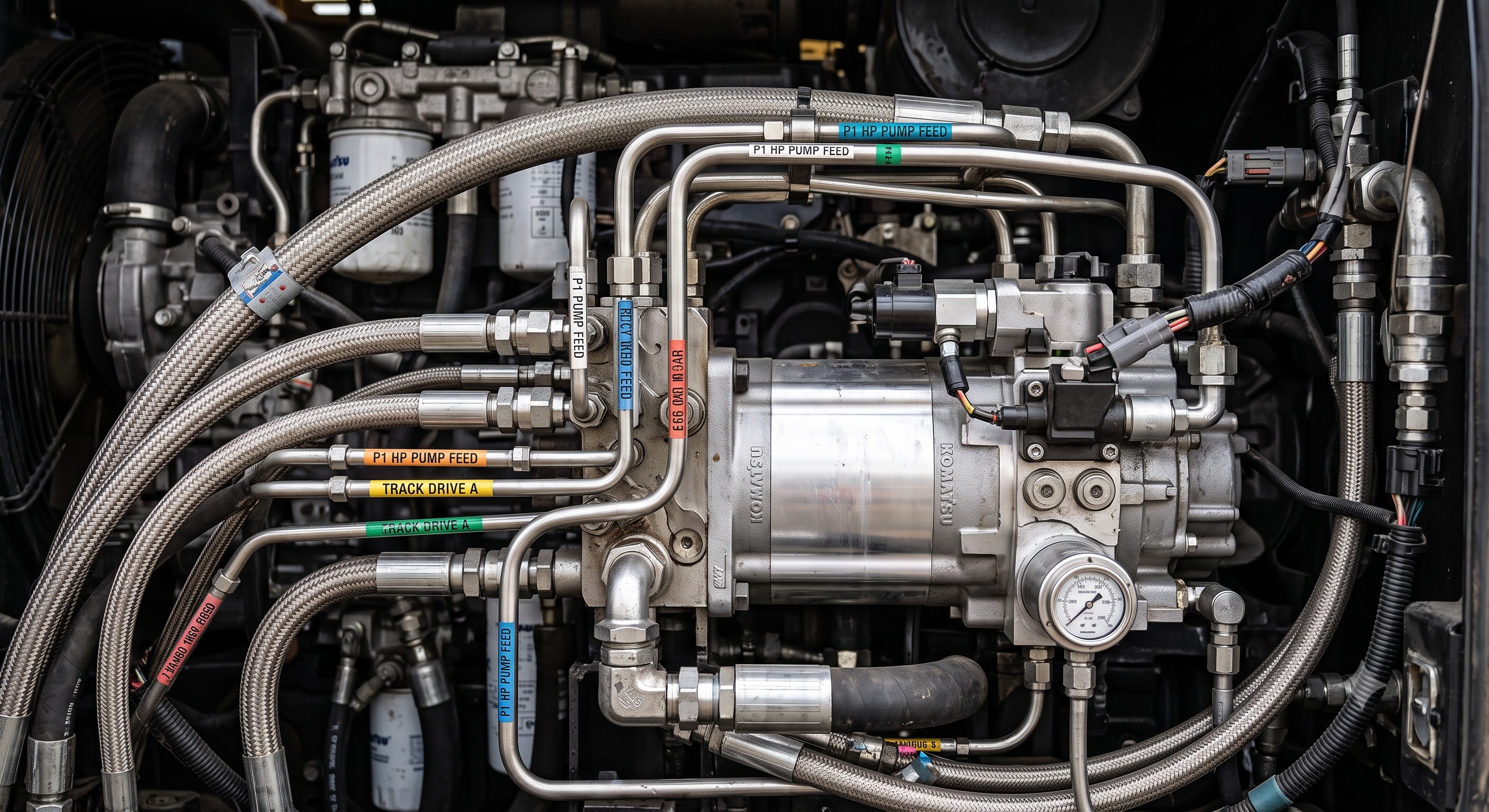
The hydraulic system is the powerhouse of the excavator. The engine drives a variable-displacement piston pump that delivers high-pressure oil (often with a main relief pressure between 4,000 to 5,000 psi) to the cylinders and motors . This system provides the precise control needed for delicate grading work or the brute force required for breaking bedrock. The hydraulic oil not only transmits power but also lubricates internal components and dissipates heat. This makes contamination control and fluid temperature management paramount.
Undercarriage and Chassis
Built for the demanding terrain of road construction sites, the undercarriage features a heavy-duty chassis and a track system. The track frame, which includes components like track shoes, rollers, idlers, and sprockets, is designed for durability and stability. The undercarriage's robustness is essential for maintaining traction and stability, but it is also the most expensive component to maintain, accounting for up to 50% of total maintenance costs over a machine's lifecycle . Regular inspection and maintenance of this system are non-negotiable.
Technical Specifications
To manage a fleet effectively, it's essential to understand the baseline technical specifications. The following table provides a standard reference for a mid-size crawler excavator commonly used in road construction.
| Key Parameter | Technical Specification |
|---|---|
| Engine Horsepower (Typical) | 150 - 200 HP (for 20-25 ton class) |
| Operating Weight | 20,000 - 25,000 kg |
| Main Hydraulic Relief Pressure | 4,000 - 5,000 psi |
| Hydraulic Oil Change Interval | 2,000 - 5,000 hours (depending on OEM and fluid type) |
| Hydraulic Filter Change Interval | 500 - 2,000 hours |
| Engine Oil Change Interval | Every 250 hours |
| Track Tension Inspection | Weekly |
Comparative Advantage
In the context of road construction, the choice between a crawler and wheeled excavator often comes down to a detailed Total Cost of Ownership (TCO) and Return on Investment (ROI) analysis.
- Site Mobility vs. Terrain Adaptability: Wheeled excavators offer superior travel speed between job sites (often up to 30 km/h). However, on rough, uneven, or muddy terrain common in early-stage road construction, their mobility is compromised. Crawler excavators provide vastly superior stability and flotation, with ground pressure as low as 6 psi on wide tracks, allowing them to operate where wheeled machines would get stuck .
- Fuel Efficiency and Productivity: While crawler excavators may have a slightly higher fuel consumption per hour, their ability to work continuously in harsh conditions without interruption often leads to higher overall productivity and lower cost per cubic meter of material moved. A common metric for a 20-ton class crawler excavator is fuel consumption of about 5-8 gallons per hour, a worthwhile cost for its cycle times and breakout force.
Heavy-Duty Application Scenarios
Crawler excavators are vital to multiple phases of road construction, from initial land clearing to final landscaping.
- Site Preparation & Earthmoving: Clearing brush, excavating for foundations, and moving large volumes of soil. The machine's track system allows for stable operation on unstable fill material. Its ROPS/FOPS-certified cab (Roll-Over Protective Structure / Falling Object Protective Structure) provides operator safety during these demanding tasks.
- Drainage and Trenching: Digging deep, precise trenches for drainage culverts and utility lines. The excavator's hydraulic finesse allows for accurate depth control while its power can dig through compacted ground and rock.
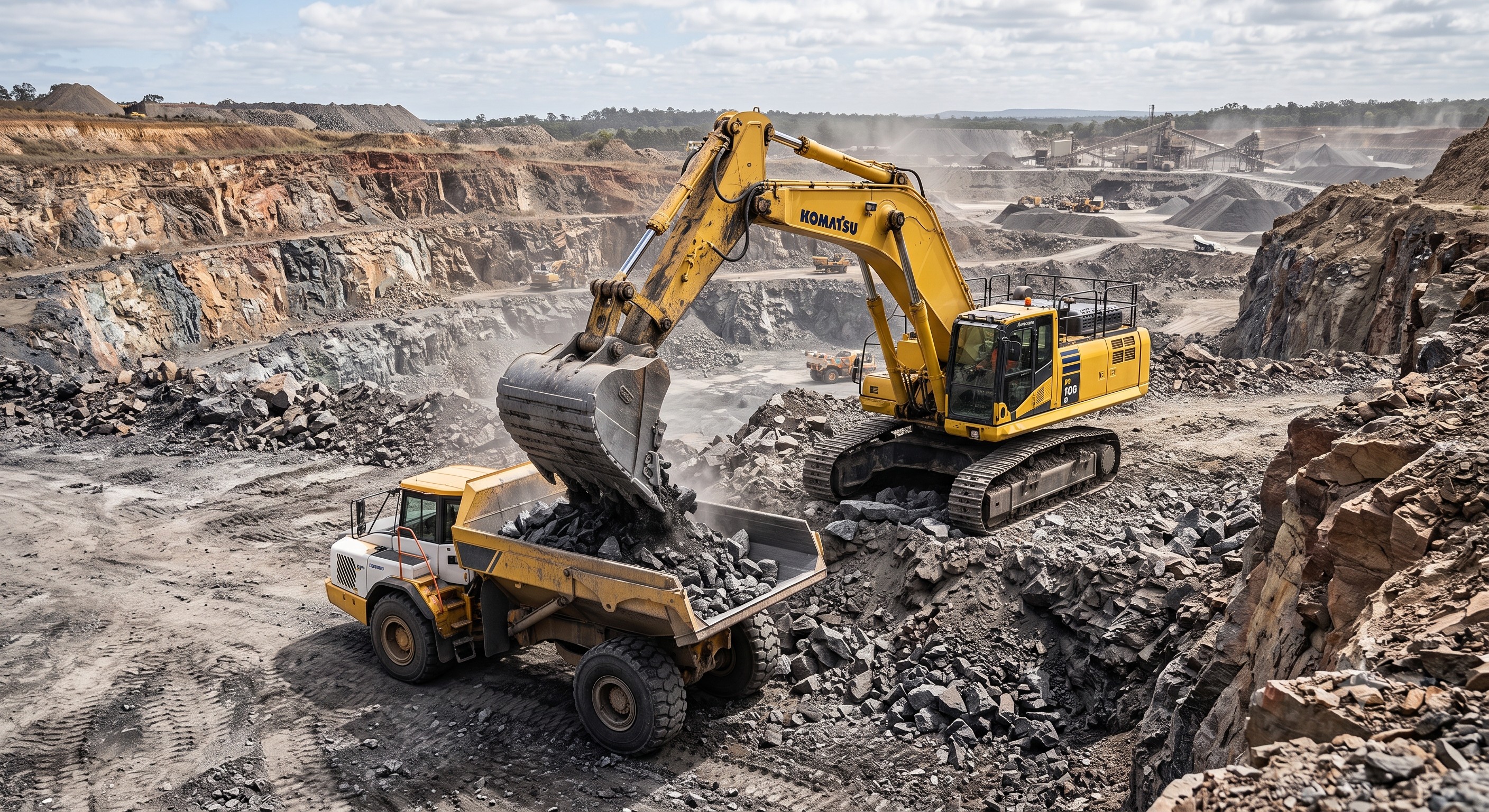
- Material Handling: Loading heavy aggregates like crushed stone and asphalt into dump trucks. The machine's high hydraulic flow and pressure ensure quick cycle times, keeping the production line moving efficiently.
Conclusion
Maintaining a crawler excavator in the demanding field of road construction is a critical aspect of modern industrial productivity. By adhering to a rigorous preventive maintenance schedule—from daily walkarounds to major component overhauls—you ensure that your machine remains reliable, safe, and profitable. The integration of advanced maintenance strategies, such as real-time fluid analysis and IoT-based component monitoring, promises to further enhance uptime and reduce operational costs. Ultimately, a well-maintained crawler excavator is not just a piece of machinery; it is a guarantee of project success and a competitive advantage in the construction industry .