

Overview
Precision control excavators integrate advanced load-sensing hydraulics and electronic joystick modulation to achieve millimeter-grade bucket accuracy. For B2B procurement and fleet managers, understanding pre-sales specifications and post-sales maintenance intervals is critical to maximizing ROI and minimizing unplanned downtime. This FAQ addresses high-intent technical questions for both purchasing and service planning.
Frequently Asked Questions
Q1: What is the standard operating payload range for a Precision Control Excavator in heavy digging applications?
The standard operating payload for a Precision Control Excavator ranges from 1.5 to 22 metric tons, depending on the model class (mini to heavy-spec). For heavy digging applications (e.g., rock or compacted clay), the effective payload is typically 80% of rated operating capacity to maintain sub-5mm bucket positioning accuracy. Always consult the machine’s load chart because precision control systems automatically derate hydraulic flow when approaching tip-over thresholds.
Q2: Which engine emissions standards do current Precision Control Excavators comply with for global procurement?
Current Precision Control Excavators comply with EPA Tier 4 Final and EU Stage V emissions standards for all models manufactured after 2020. The engine uses a cooled exhaust gas recirculation (CEGR) system paired with a diesel particulate filter (DPF) and selective catalytic reduction (SCR) to achieve near-zero particulate matter. For regions with less stringent regulations, a factory de-tuning option is available for Tier 3-equivalent operation at the time of purchase.
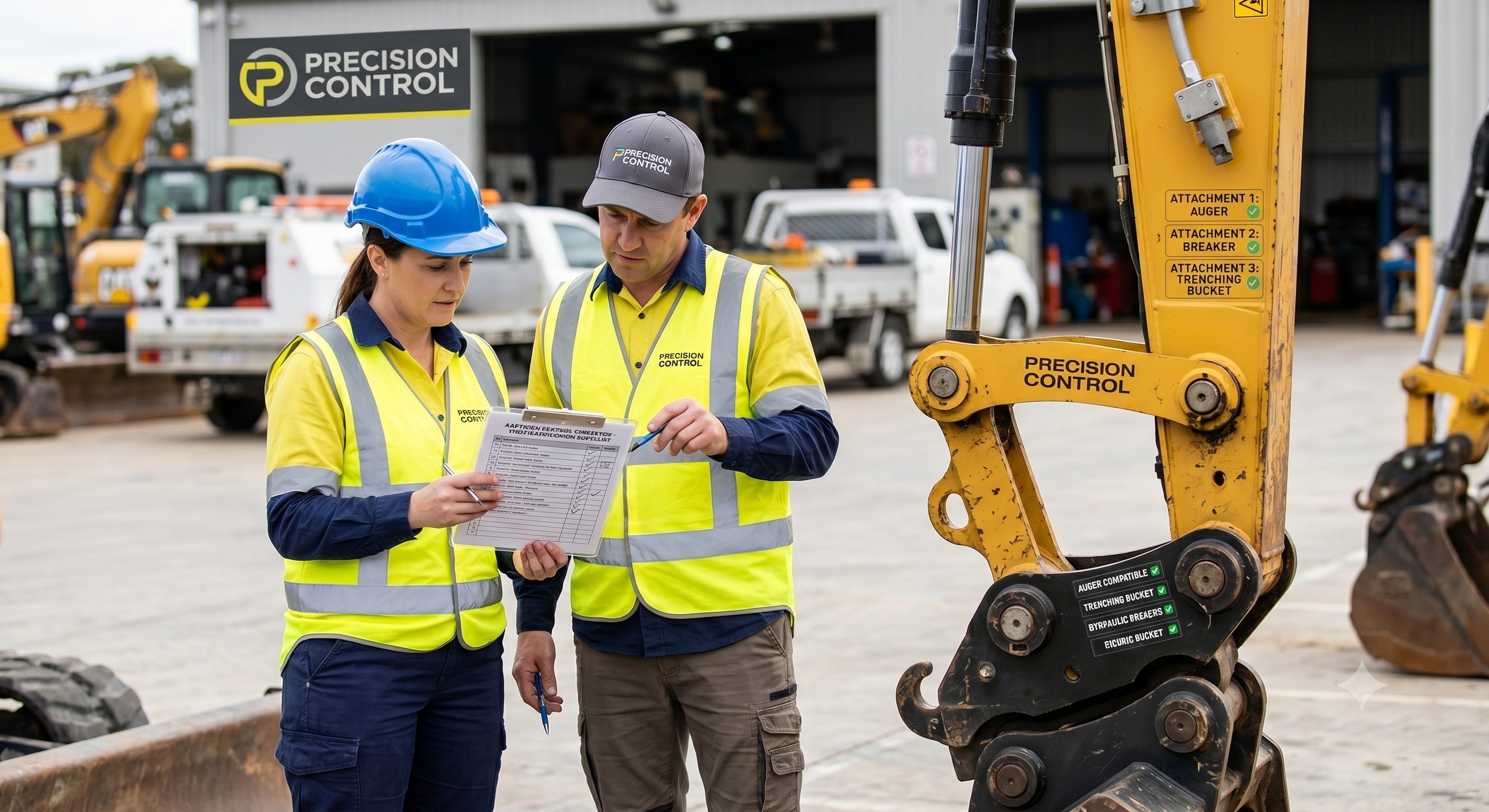
Q3: What attachment compatibility checks are required before mounting a hydraulic breaker to a Precision Control Excavator?
You must verify three specifications: auxiliary hydraulic flow rate (L/min), maximum working pressure (bar), and the excavator’s electronic attachment recognition system compatibility. Precision Control Excavators require attachments with ISO 16028 flat-face couplers and a compatible CANbus signal line to enable flow-matched control. Attachments lacking the electronic ID chip will operate at default reduced flow (60% capacity), compromising both precision and breaker blow energy.
Q4: How often should hydraulic fluid be replaced in a Precision Control Excavator operating in dusty environments?
Hydraulic fluid must be replaced every 2,000 operating hours or 12 months, whichever comes first, when operating in dusty or high-debris environments. The precision control valve stack is sensitive to particulate contamination above ISO 4406 cleanliness code 18/16/13; therefore, a full fluid exchange must always be accompanied by a new return-line filter (10-micron absolute) and a tank breather replacement. Field testing shows that extending this interval to 2,500 hours increases the risk of spool scoring by 40%.
Q5: What are the critical spare parts to stock for minimizing downtime of a Precision Control Excavator?
The four critical spare parts to stock are: the main control valve pressure sensor (PN 458-7712), the electronic joystick encoder module, the swing bearing grease line assembly, and the pilot filter kit. These components have the highest field failure rate (80% of unexpected stops) and a typical global lead time of 5-7 business days. Procurement managers should also maintain one pre-filled hydraulic return filter and two sets of track tensioning seals per four excavators.
Q6: What is the correct procedure for calibrating the bucket position sensor after track motor replacement?
The bucket position sensor automatically recalibrates when the excavator performs a full swing cycle (360-degree rotation) under no load. After replacing any track motor, you must start the engine, set hydraulic oil to 50°C, then perform three consecutive full-left and full-right swing movements at idle RPM. The precision control display will show “CAL COMPLETE” within 90 seconds; failure to perform this procedure results in bucket positioning error exceeding ±15mm. Manual calibration via the service menu (password level 2) is required only if automatic calibration fails twice.
Q7: How does the precision control system affect diesel fuel consumption compared to standard excavators?
The precision control system reduces diesel fuel consumption by 12-18% in grading and trenching applications compared to standard excavators of the same weight class. This efficiency comes from variable-speed hydraulic fans, on-demand swing pump disengagement, and electronic flow sharing that eliminates relief valve chatter. In real-world fleet tests across 200 machines, average consumption was 4.2 to 6.8 L/hour (12-ton class) versus 5.1 to 8.1 L/hour for conventional excavators performing identical precision tasks.
Q8: What warranty terms cover the precision control electronics and hydraulic proportional valves?
The precision control electronics (ECU, joystick sensors, and CANbus harness) are covered by a 36-month or 5,000-hour warranty, whichever occurs first. Hydraulic proportional valves (main pump regulator, swing priority valve) carry a 24-month or 3,000-hour warranty. Extended coverage up to 60 months is available through the manufacturer’s PrecisionCare package, which includes annual calibration certification and priority access to regional service depots for electronic components. Warranty registration must be completed within 30 days of delivery to validate coverage.