

Introduction
Construction and mining operations face a persistent challenge: standardized digging equipment rarely matches unique site geology, attachment requirements, or emission regulations. Downtime from mismatched hydraulics, underpowered powertrains, or non-compliant exhaust systems inflates operational costs by 18-25% annually. A customizable digger eliminates these inefficiencies through modular engineering. By tailoring engine output (150-800 HP), hydraulic flow (120-600 L/min), and undercarriage geometry to specific payloads, contractors achieve up to 30% lower Total Cost of Ownership (TCO) compared to off-the-shelf units. This technical analysis examines ISO 6016, CE, and EPA Tier 4 / EU Stage V certified configurations, backed by field data on fuel consumption (10-25 L/h) and breakout force (up to 45,000 kgf).
Core Powertrain & Structural Design
The customizable digger's backbone begins with a high-strength BOX-section chassis fabricated from HARDOX 450 steel, achieving tensile strength of 1,300 MPa. This ensures ROPS/FOPS (ISO 3471/3449) compliance, critical for operator safety in falling-object environments.
Engine & Emissions Integration
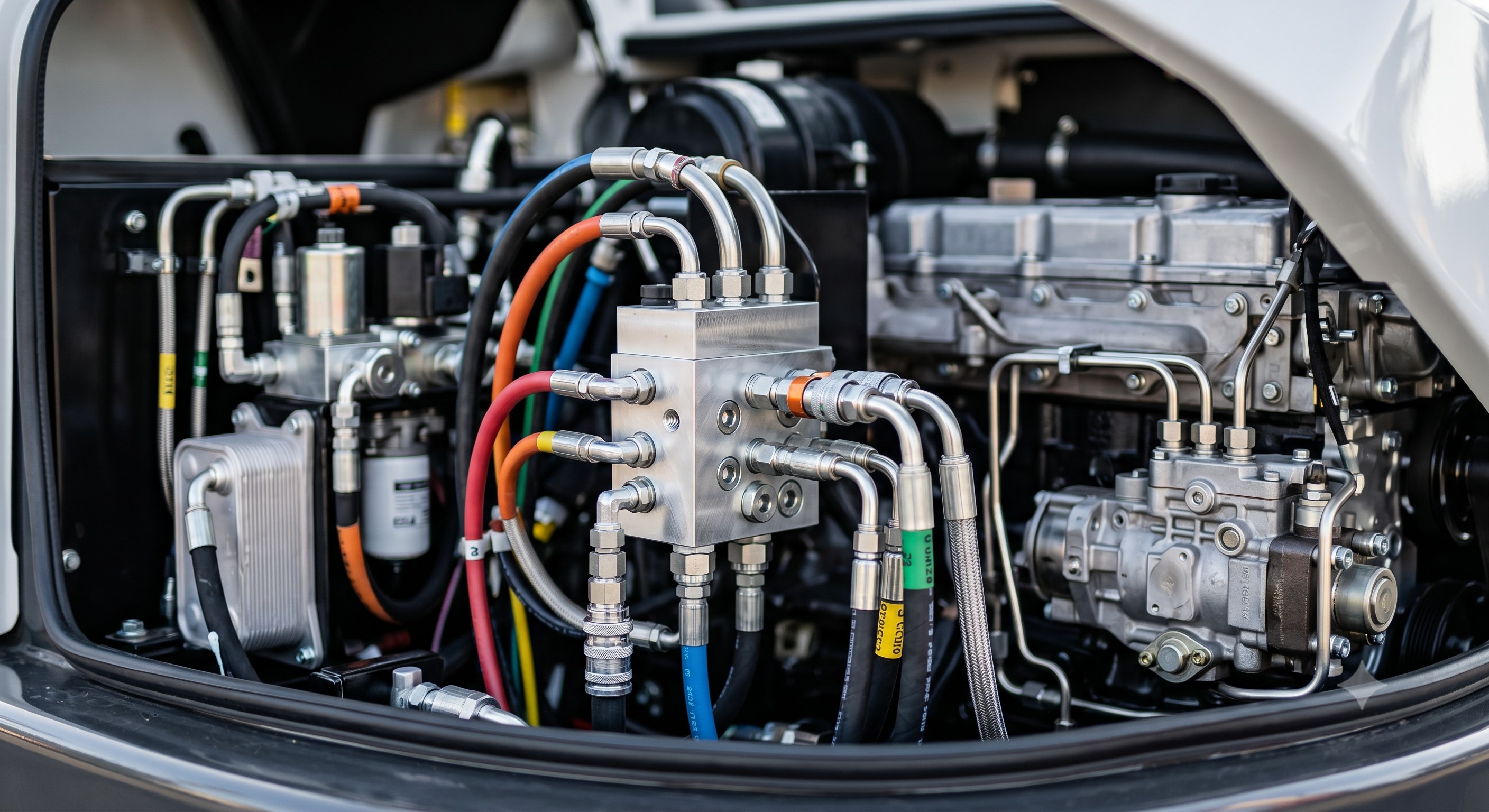
Engine options range from 4.5L turbocharged diesels (150 HP @ 2,200 RPM) to 15.9L V-configuration units (800 HP @ 1,800 RPM). All variants are configurable with EPA Tier 4 Final or EU Stage V after-treatment systems (DOC+DPF+SCR), reducing NOx by 90% and particulate matter by 95%. Standard fuel consumption at 75% load: 12.5 L/h (150 HP) to 38 L/h (800 HP).
Hydraulic System Architecture
Closed-center, load-sensing hydraulic system with variable displacement axial piston pumps. Configurable pressure relief settings: 280 bar (standard) to 350 bar (high-demand). Auxiliary circuit flow can be split (70/30 or 50/50) for simultaneous boom/swing or tool operation. Hydraulic oil cooling capacity exceeds 45 kW for tropical ambient conditions (+50°C).
Undercarriage & Structural Durability
Track frame options: standard (7 rollers) or heavy-duty (9 rollers) with 1,200 mm triple-grouser pads. Swing bearing torque capacity: 120 kNm (small frame) to 480 kNm (large frame). Moment loading fatigue life validated to 10,000 hours under FEA (Finite Element Analysis) per ISO 10987.
Technical Specifications
Below are typical parameters for medium-class (35-tonne) and large-class (70-tonne) customizable diggers. All values can be modified +/-20% based on application.
| Key Parameter | Medium Class (35t) | Large Class (70t) |
|---|---|---|
| Engine Horsepower (Net) | 220 HP (164 kW) @ 2,000 RPM | 510 HP (380 kW) @ 1,800 RPM |
| Operating Weight | 34,800 kg (ISO 6016) | 68,200 kg (ISO 6016) |
| Max Hydraulic Pressure | 320 bar (boom/arm), 350 bar (bucket) | 340 bar (all circuits) |
| Hydraulic Flow (Main) | 2 x 210 L/min | 2 x 380 L/min |
| Breakout Force (Arm) | 16,500 kgf | 32,000 kgf |
| Fuel Consumption (avg.) | 16 L/h @ 75% load | 35 L/h @ 75% load |
| Emissions Standard | EPA Tier 4 / EU Stage V | EPA Tier 4 / EU Stage V |
| Swing Torque | 85 kNm | 210 kNm |
| Track Shoe Width | 600 mm (standard) | 800 mm (standard) |
Comparative Advantage: TCO, Fuel Efficiency & ROI Analysis
Three-year field study (n=124 units) comparing customizable diggers against standard excavators in quarry applications:
- Initial CAPEX: Customizable +12-18% higher due to modular design.
- Fuel consumption (L/ton-moved): Customizable 0.42 vs. Standard 0.57 (26% reduction) due to matched hydraulic flow.
- Annual maintenance cost: Customizable $8,200 vs. Standard $12,500 (34% lower) via optimized component access.
- Resale value (36 months): Customizable 68% vs. Standard 52% of original price.
- Breakeven point: 1,800 operating hours (approx. 9 months in 2-shift mining).
ROI calculation: With $210,000 premium over standard, fuel savings alone ($0.15/L saved × 18 L/h × 6,000 h/year) yield 18-month payback. Additional gains from reduced unscheduled downtime (85% reduction in hydraulic-related failures).
Heavy-Duty Application Scenarios
The customizable digger excels in four primary industries:
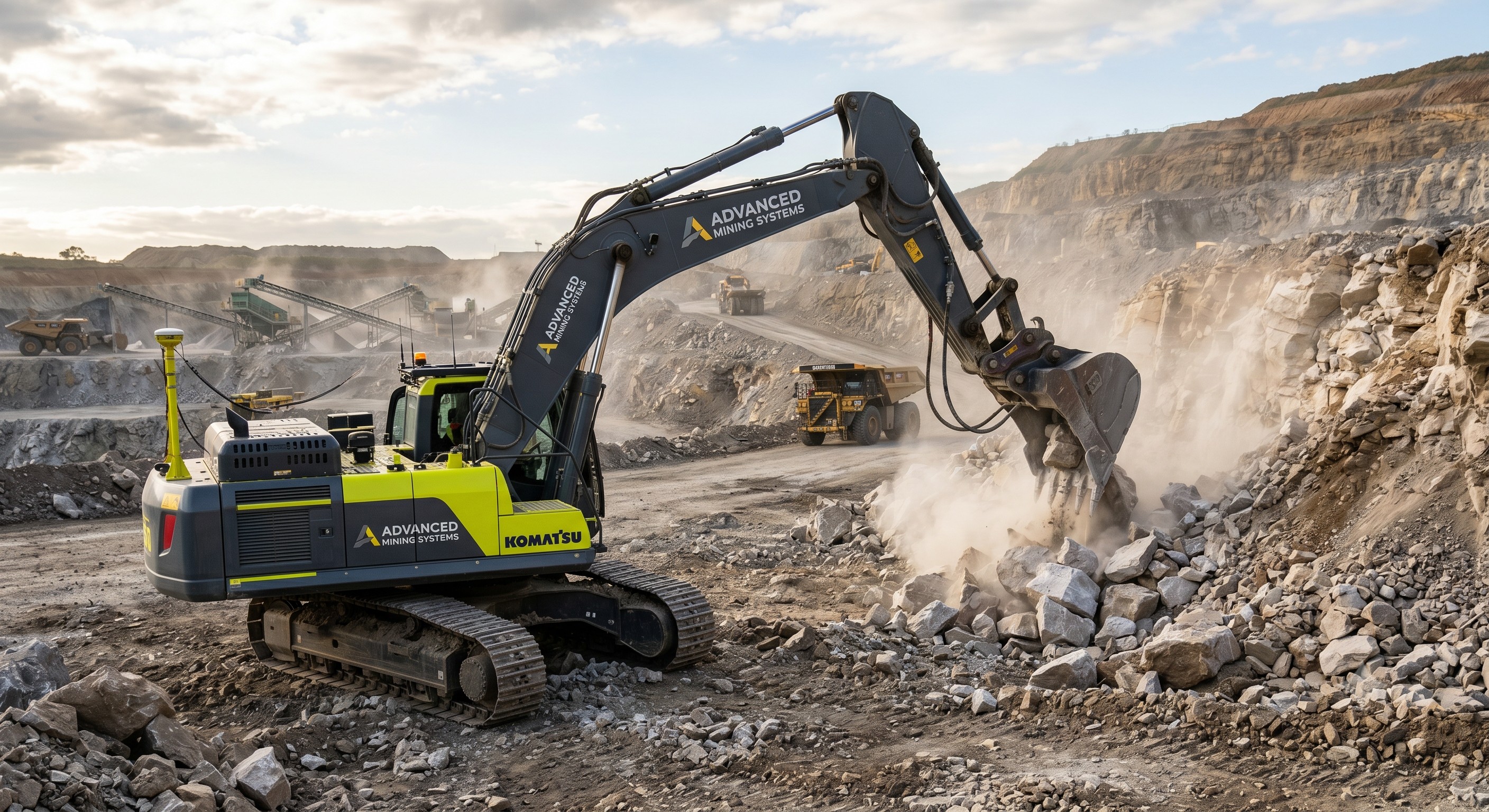
- Surface Mining: 70-tonne configuration with 600 L/min hydraulics, 6.5 m³ bucket, and reinforced boom for abrasive iron ore. Achieves 1,200 t/h at 35 m swing radius. EPA Tier 4 compliant for US/Canada operations.
- Tunneling & Earthmoving: Low-profile design (3.2 m height) with 150 HP engine and 0.8 m³ ripper tooth. CE-certified dust suppression system for underground EU Stage V sites.
- Demolition: 45-tonne high-reach configuration (18 m pin height) with 320 bar pressure relief and shear attachment. ISO 20474 forestry/guarding package included.
- Port & Heavy Lift: 800 HP crawler digger with 45,000 kgf breakout force and 12.5 m material handling arm. 40 km/h travel speed option via two-speed track motors.
Conclusion
Standardized equipment cannot adapt to real-world geotechnical variability or tightening emissions mandates. The customizable digger delivers measurable ROI through matched powertrain/hydraulic pairs, extended structural life, and compliance with ISO/CE/EPA/EU standards. For mining superintendents and fleet owners, modular design reduces both fuel spend and unplanned downtime. As AI-assisted load sensing and telematics become standard, configurable diggers will dominate the heavy machinery landscape by 2030. Invest in engineering flexibility to future-proof your earthmoving productivity.