

Overview
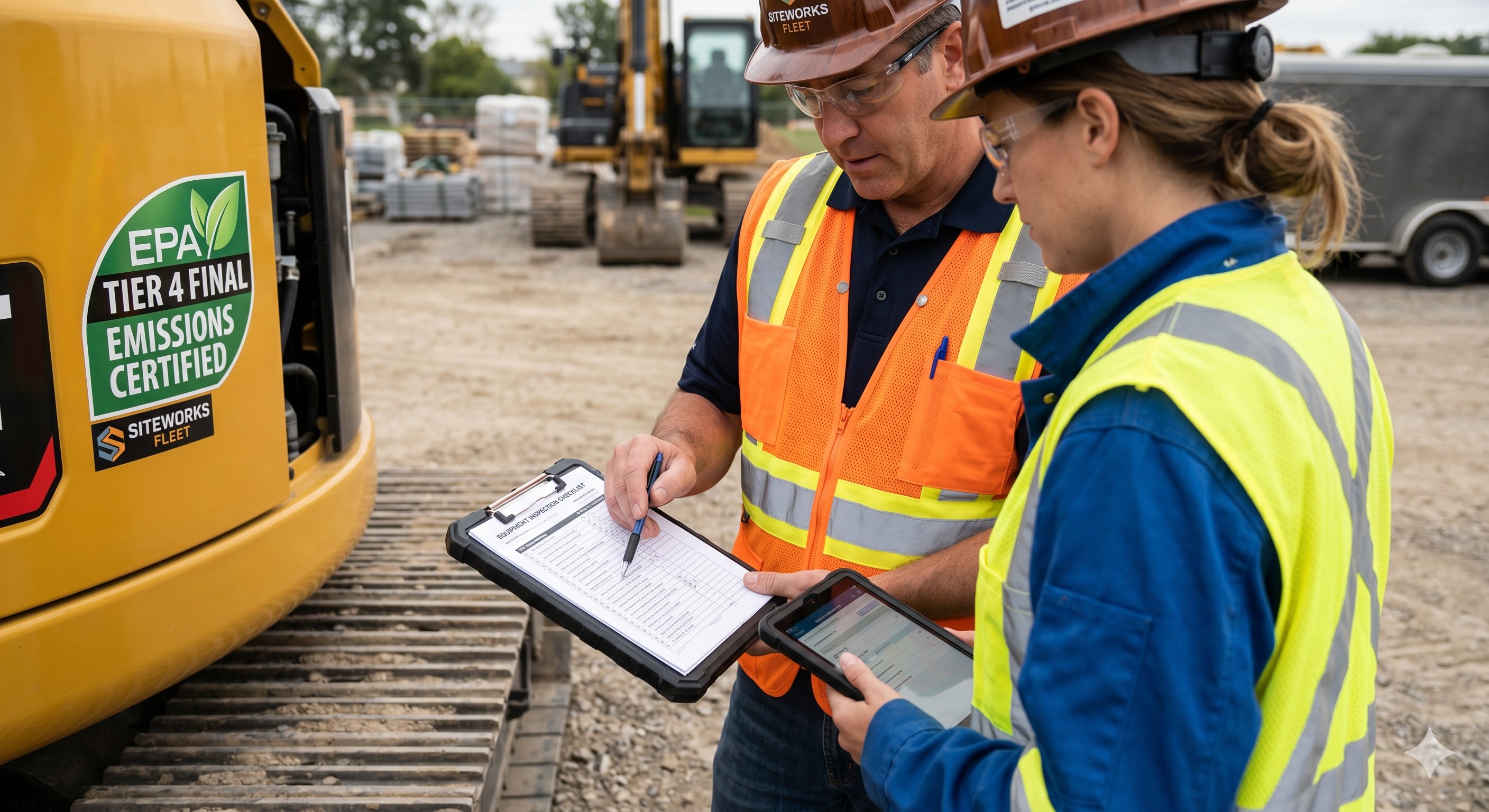
EPA certified excavators meet strict U.S. emission standards for off-road diesel engines (Tier 4 Final). For B2B fleet and procurement managers, understanding maintenance schedules, hydraulic system requirements, and EPA-compliant attachments is critical to maximize uptime and avoid regulatory fines. This FAQ addresses pre-sales specifications and post-sales care for EPA certified excavators.
Frequently Asked Questions
Q1: What is the standard maintenance interval for an EPA certified excavator?
The standard maintenance interval for an EPA certified excavator is every 250 engine hours or three months, whichever comes first. This includes engine oil and filter changes, fuel filter replacement, and visual inspection of the Diesel Particulate Filter (DPF) and Selective Catalytic Reduction (SCR) system. For severe duty (high dust, extreme temps), reduce intervals to 150 hours.
Q2: What is the maximum payload or operating capacity of a typical EPA certified excavator?
The maximum operating capacity (35% of tipping load) for a common 20-ton EPA certified excavator is approximately 14,000 lbs (6,350 kg). Actual payload varies by model: compact units (3-6 tons) handle 1,500-3,500 lbs; mid-size (15-25 tons) handle 8,000-18,000 lbs; large units (30+ tons) exceed 25,000 lbs. Always consult the machine's load chart, as EPA-certified Tier 4 engines maintain rated power without derating.
Q3: What hydraulic fluid type and replacement interval does an EPA certified excavator require?
An EPA certified excavator requires ISO VG 46 anti-wear hydraulic fluid meeting OEM specifications (e.g., Caterpillar HYDO, Komatsu TO-10). The standard replacement interval is every 2,000 hours or 12 months. Under normal conditions, perform a fluid analysis every 500 hours; change full capacity (40-80 gallons depending on machine size) when oxidation exceeds 0.5 mgKOH/g or ISO cleanliness code exceeds 18/16/13.
Q4: Which attachment brands are compatible with EPA certified excavators?
EPA certified excavators are compatible with any attachment using a standard pin-grabber coupler (e.g., Caterpillar CW, Volvo S1) or hydraulic quick coupler meeting ISO 13031. Top compatible brands include Geith, Sandvik, NPK, and Stanley. Critical pre-purchase checks: hydraulic flow (GPM) must match excavator's auxiliary circuit (typically 30-80 GPM for 15-25 ton units), and operating pressure (psi) must not exceed OEM limits. EPA certification does not restrict attachments—only engine emissions.
Q5: How do you properly clean the Diesel Particulate Filter (DPF) on an EPA certified excavator?
Proper DPF cleaning on an EPA certified excavator must be performed using an off-board, OEM-approved thermal cleaning station every 3,000-5,000 hours or when backpressure exceeds factory limits. Do not attempt water or compressed air cleaning—this destroys the ceramic filter. The maintenance procedure is: remove DPF from machine, bake at 600°C (1,112°F) in a cleaning oven for 8-12 hours, followed by compressed air purging. Always replace the ash collection gasket upon reinstallation.
Q6: What are the common spare parts that fail on EPA certified excavators?
The five most common spare parts that fail on EPA certified excavators are: (1) DPF differential pressure sensor (failure every 2,000-3,000 hours), (2) DEF (Diesel Exhaust Fluid) dosing injector (clogs every 1,500 hours), (3) hydraulic pilot filter (replace every 500 hours), (4) swing bearing seals (fail at 4,000-6,000 hours in dusty sites), and (5) track tensioner grease fittings (breakage every 800-1,200 hours). Always stock OEM or certified aftermarket equivalents to avoid EPA compliance violations.
Q7: Can a non-EPA certified attachment void the excavator's emission compliance?
No, a non-EPA certified attachment does not void the excavator's engine emission compliance, but it may void the machine's warranty if it causes hydraulic or electrical damage. EPA certification applies strictly to the engine and aftertreatment system (DPF, SCR, DEF). However, use only attachments that do not modify engine RPM or exhaust backpressure—for example, avoid auxiliary hydraulic-powered hammer attachments without a proportional relief valve, as they can cause engine lugging and incomplete DPF regeneration.
Q8: What are the daily pre-operation checks required for EPA compliance?
The daily pre-operation checks required for EPA compliance on a certified excavator are: inspect for DPF warning lamps (amber means passive regeneration needed; red means service required), verify DEF level above 20% and DEF quality (no crystallization), check for exhaust leaks around the SCR module, and ensure the engine control unit (ECU) shows no active emission fault codes. Additionally, confirm that the machine's software is on the latest OEM version—uncalibrated ECUs cause false emission alerts and may trigger a roadside violation under 40 CFR Part 1068.