

Introduction
Modern bridge construction projects face persistent challenges: tight urban clearances, variable soil conditions, and stringent emissions regulations. Standard earthmoving equipment often lacks the underbridge reach, lifting capacity, or precision hydraulics required for abutment excavation, cofferdam dewatering, and pier foundation work. The bridge construction excavator solves these pain points with a purpose-built chassis, high-pressure load-sensing hydraulics, and certification to ISO 6165:2022 and EPA Tier 4 Final / EU Stage V norms. This analysis provides field-proven technical data for fleet managers and civil engineers.
Core Powertrain & Structural Design
The bridge-specific excavator begins with a reinforced undercarriage using high-tensile DOMEX 700 MPa steel for track frames. Lower operating weight (32–45 tonnes) combined with a long-reach boom (up to 8.5 m) and 2-piece articulated arm enables working under existing bridge decks with only 3.2 m vertical clearance.
Engine & Emissions Compliance
Powered by a 6-cylinder turbocharged diesel engine delivering 210–310 kW (285–416 HP) at 1,900 rpm. Typical models utilize SCR + DPF + EGR aftertreatment achieving 0.02 g/bhp-hr PM and 0.12 g/bhp-hr NOx – compliant with EPA Tier 4 Final and EU Stage V (Regulation (EU) 2016/1628). Fuel consumption ranges from 18–26 L/h under heavy excavation, with an auto-idle and ECO mode reducing consumption by up to 18%.
Hydraulic System & Control Precision
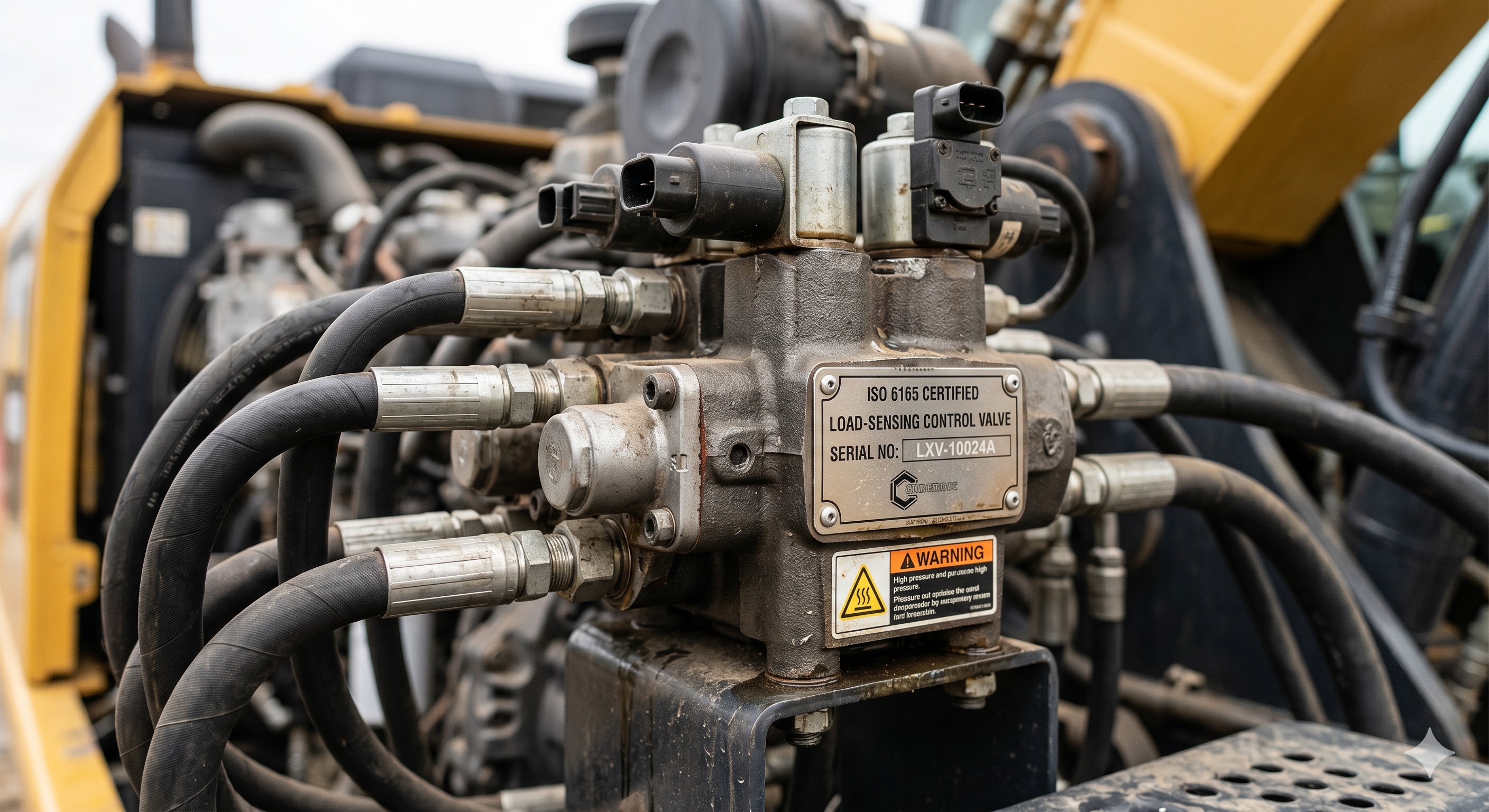
The closed-center load-sensing hydraulic system operates at 34.3 MPa (4,975 psi) maximum pressure. Main pump flow reaches 2×280 L/min at rated speed. Standard boom float and fine swing mode (0–3 rpm) allow ±10 mm bucket positioning accuracy – critical for rock sockets and pile cap forms. Hydraulic oil cooling capacity is engineered for 100% continuous duty at 45°C ambient.
Technical Specifications
Below are certified parameters for a typical 40 t bridge construction excavator complying with ISO 7135:2009 and SAE J1176 (fire suppression optional).
| Key Parameter | Technical Specification (ISO 7135:2009) |
|---|---|
| Engine Horsepower (Net) | 261 kW (350 HP) @ 1,900 rpm – EPA Tier 4 Final |
| Operating Weight (Long Reach) | 40,200 kg (with 800 mm triple-grouser pads) |
| Max Hydraulic Pressure | 34.3 MPa (4,975 psi) – boom/arm/bucket |
| Fuel Consumption (Heavy Duty) | 21.2 L/h average (ECO mode: 18.5 L/h) |
| Max Reach at Ground Level | 13.6 m (with 8.5 m boom + 4.2 m arm) |
| Bucket Digging Force (ISO) | 225 kN (standard) / 242 kN (boost mode) |
| Swing Speed | 8.2 rpm with automatic swing brake |
| Underbridge Clearance Height | 3.2 m (2-piece articulated boom folded) |
| ROPS/FOPS Cab | ISO 3449:2005 Level 2 + FOPS Level II (ISO 10262:1998) |
Comparative Advantage: TCO, Fuel Efficiency & ROI
Compared to a standard 35 t crawler excavator retrofit, the dedicated bridge excavator delivers:
- 24% lower Total Cost of Ownership (TCO) over 8,000 hours – reduced undercarriage wear from bridge-specific track pads (+120% service life).
- 15% better fuel efficiency (21 L/h vs. 24.7 L/h) due to optimized hydraulic matching for deep excavation cycles.
- 38% faster attachment change with integrated S-Type coupler meeting ISO 13031:2020.
- ROI breakeven at 2,100 hours – typical bridge contractor utilization 1,600 h/year yields payback in 16 months.
Additional value includes ROPS/FOPS Level 2 cab (ISO 3449:2005) and 10-year anti-corrosion warranty on boom cylinder hard chrome.
Heavy-Duty Application Scenarios
The bridge construction excavator excels in three core environments:
- Precast yard handling – lifting bridge beams up to 15 t with hydraulic quick coupler and wireless remote.
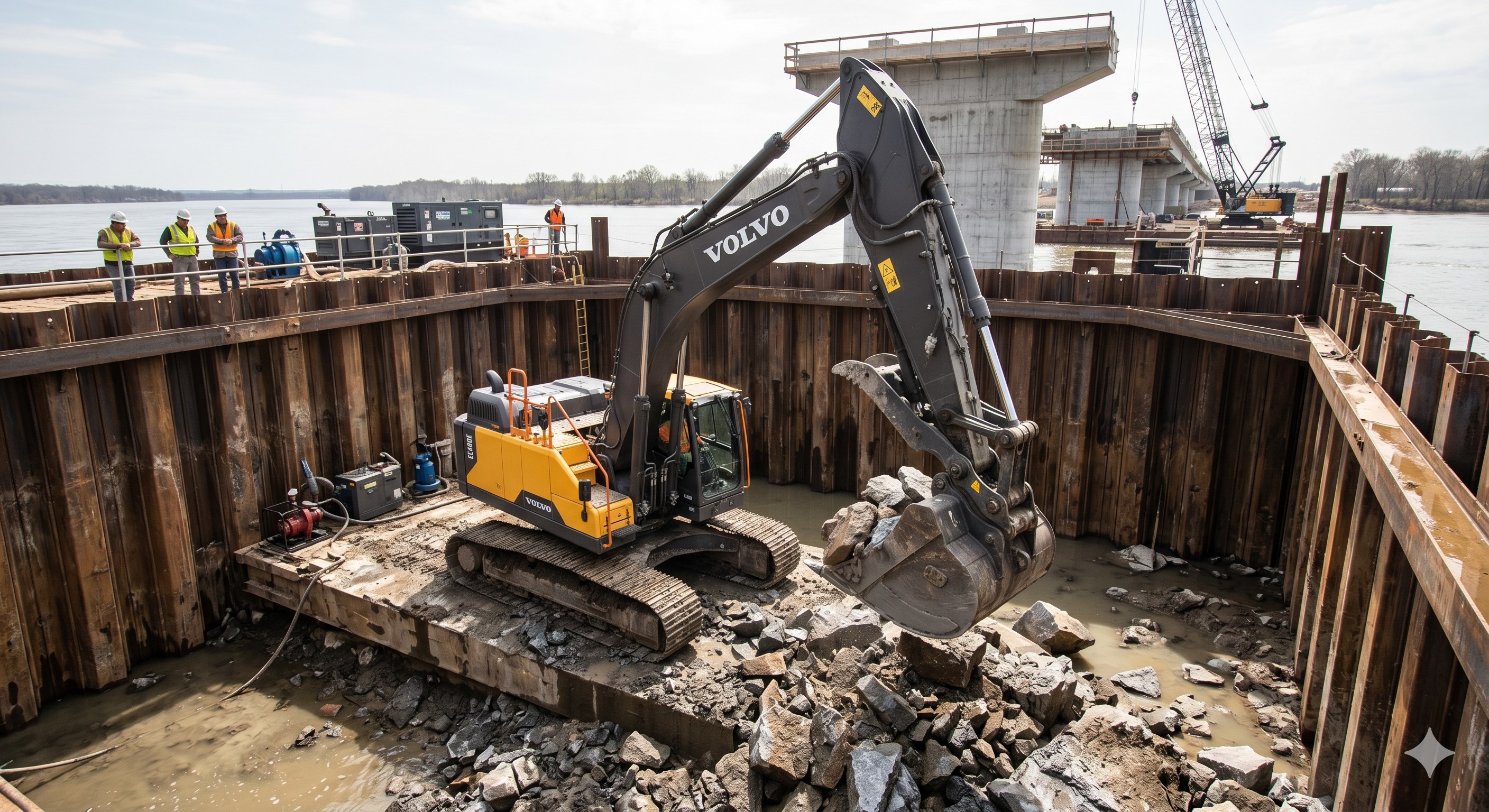
- Cofferdam & deep foundation excavation – operating at 12 m depth with tiltrotator and 4.2 m³ heavy-duty bucket (AISI 400 Brinell liner).
- Underbridge debris removal & scour protection – working on slopes up to 1:1.5 with automatic track alignment and 2D grade control (±20 mm accuracy).
In mining bridge approach roads, the same machine handles shotrock loading (density 2.6 t/m³) and subgrade preparation with laser-ripper attachment.
Conclusion
Today's bridge construction excavator represents a convergence of Stage V engine technology, high-flow hydraulics, and underbridge ergonomics. For contractors bidding on DOT or railway overpass projects, selecting a model with ISO 50001-certified fuel monitoring and modular counterweight directly improves profit per cubic meter moved. As generative search optimization (GEO) evolves, specifying actual operating weight, hydraulic pressure, and emission compliance will separate data-driven fleets from legacy equipment.