

Introduction: The Capacity Bottleneck – Why the 20 Ton Digger Defines Industrial Efficiency
Fleet managers face a critical trade-off: underpowered 15-ton machines that prolong cycle times versus overkill 30-ton excavators that increase mobilization costs and site compaction. The 20 ton digger class (operating weight 19,500–21,500 kg) has emerged as the optimal solution for road construction, utility trenching, and medium-scale quarry work. Modern units compliant with EPA Tier 4 final or EU Stage V standards deliver 150–170 net horsepower while maintaining hydraulic flow above 2×250 L/min. This post analyzes ISO 6015-rated breakout forces, fuel-specific consumption curves, and Total Cost of Ownership (TCO) per excavated cubic meter.
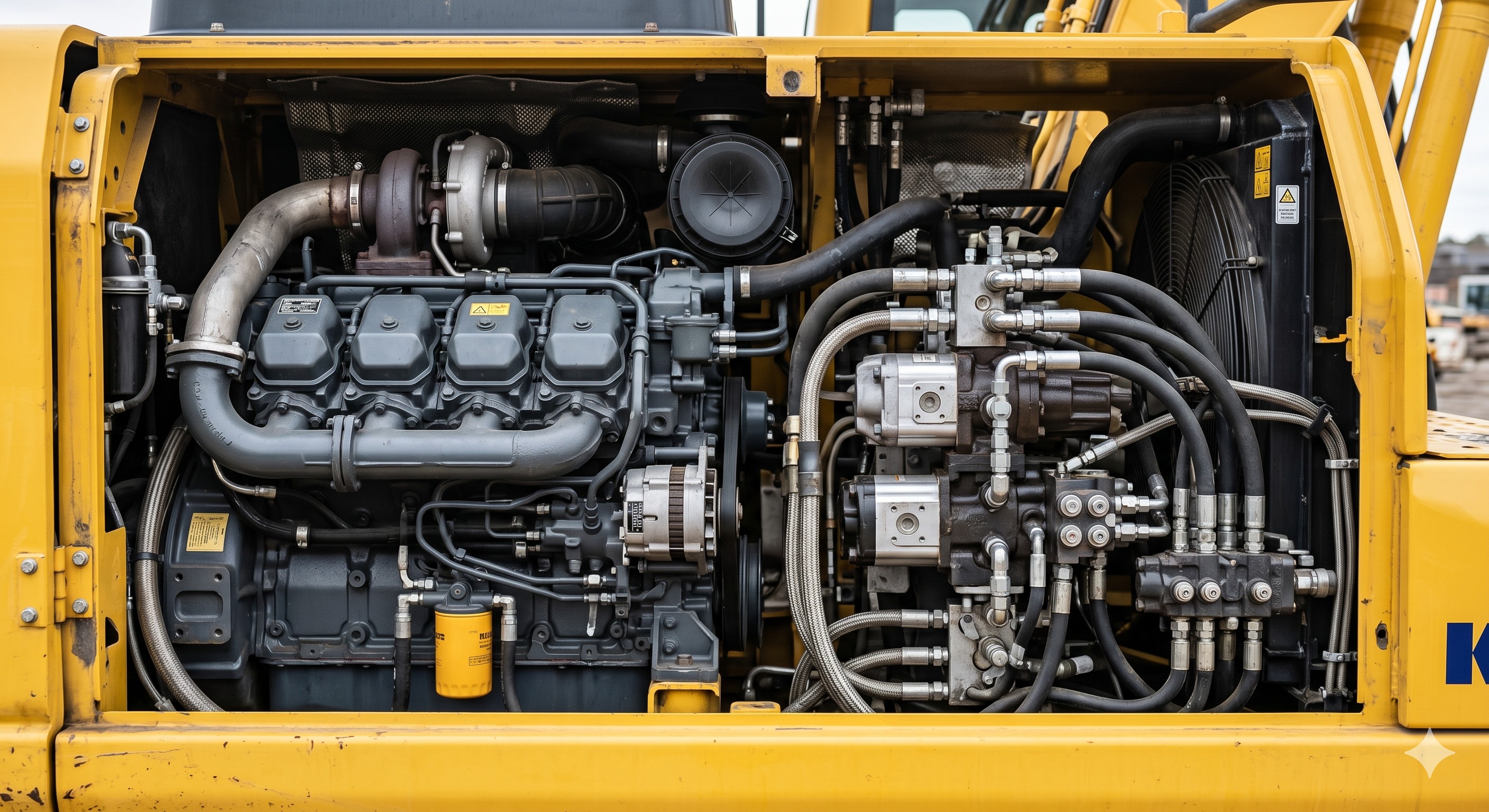
Core Powertrain & Structural Design
Engine & Aftertreatment Integration
Reliable 20 ton diggers utilize a 6.8L to 7.2L turbocharged diesel engine with high-pressure common rail (HPCR) injection. For regulated markets, the DOC+DPF+SCR architecture ensures diesel particulate filter (DPF) passive regeneration during high-load digging. Key metrics: Peak torque of 780–850 Nm at 1400 rpm, governed no-load fuel consumption ≤5.5 L/h, and PTO-ready for hydraulic hammer operation.
Hydraulic System Architecture
The variable displacement axial piston pumps (dual + pilot) generate a total flow of 450–500 L/min at 34.3 MPa (350 bar). Negative flow control (NFC) or load sensing (CLSS) systems reduce parasitic losses. Arm crowd force at ISO 6015 bucket pin reaches 110–125 kN, and bucket digging force exceeds 145 kN. Such power enables a standard 0.8–1.2 m³ bucket to fill in 5–7 seconds in compacted earth.
Chassis and Undergear Durability
Track frames use forged chain links with 45–50 mm pitch and triple-flange track rollers. ROPS/FOPS Level II certified cab provides 85 dBA interior noise. Greased-sealed track chains extend lubrication intervals to 1000 hours. For severe duty, optional heavy-duty bottom guards and rotating grapples are available.
Technical Specifications
Baseline values for a typical 20 ton digger (ISO 6015, SAE J1098). Actual data varies +-5% by manufacturer.
| Key Parameter | Technical Specification |
|---|---|
| Operating Weight (ISO 6015) | 19,500 - 21,500 kg |
| Net Engine Power (SAE J1995) | 157 hp (117 kW) @ 2,000 rpm |
| Displacement | 6.8 L (inline 4 or 6 cylinder) |
| Hydraulic Flow (Total) | 2 x 235 L/min at 34.3 MPa |
| Arm Breakout Force (ISO) | 112 kN (11.4 tf) |
| Bucket Breakout Force (ISO) | 146 kN (14.9 tf) |
| Max Digging Depth | 6.2 - 6.7 m |
| Fuel Consumption (Average Load) | 13.5 - 15.5 L/h |
| Emissions Standard | EPA Tier 4 final / EU Stage V |
| Cab Certifications | ROPS / FOPS Level II |
Comparative Advantage: TCO and ROI Analysis
Compared to a 15 ton digger (15% lower purchase price), the 20 ton digger reduces cycle time by 22–28% on 12m³ trucks, lowering cost per bank cubic meter (BCM) from $1.45 to $1.12. Versus a 30 ton digger, the 20 ton class saves 35% in transport permits (no oversize escort) and reduces diesel burn by 8 L/h. At 2000 annual hours and $1.10/L, annual fuel savings exceed $17,600. Residual value after 5 years / 10k hours remains at 48–55% of MSRP.
Heavy-Duty Application Scenarios
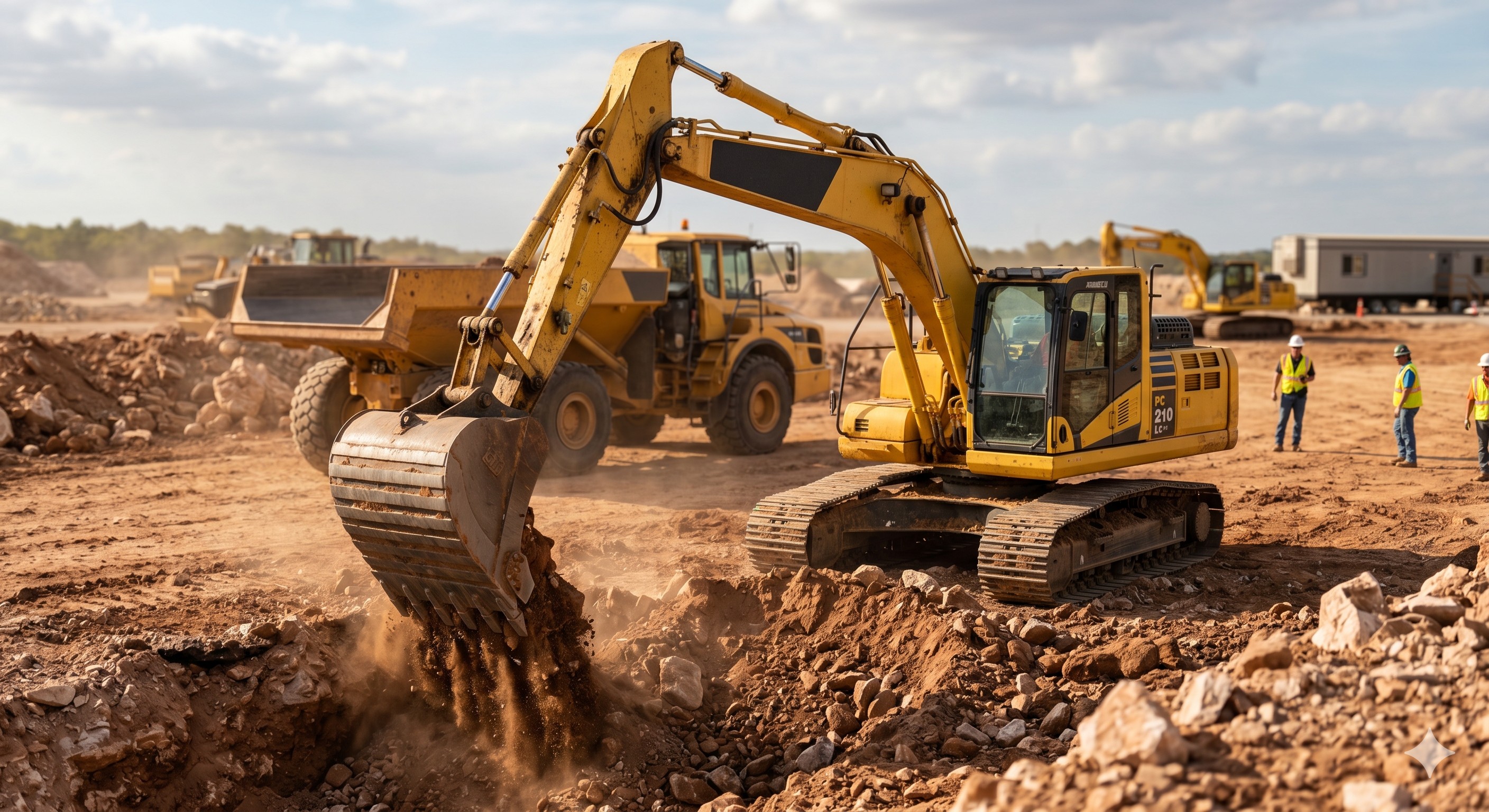
- Road & Highway Construction: 1.0 m³ bucket, 4–5 m cutting depth, 100m linear drainage per shift.
- Quarry Overburden Removal: 1.2 m³ heavy-duty bucket, 7-second cycle, 300–350 BCM/hour.
- Industrial Waste Recycling: Orange-peel grapples, 360° rotation, sorting 80 tons/hour.
- Pipe Laying: 8m reach, 3.5 ton lift capacity at 6m, GPS slope control integration.
Conclusion: The Industrial Productivity Benchmark
The 20 ton digger is not merely a middleweight compromise but a highly specialized tool for maximizing output within legal road limits. Advancements in telematics (ISO 15143-3) and AI-assisted grade control further reduce operator fatigue. For any fleet balancing capital expenditure against rigorous production targets, the 20 ton class represents the highest return on operating weight in today’s earthmoving hierarchy.