

Introduction
A truck semi trailer is an unpowered freight vehicle that couples to a tractor unit through a fifth-wheel (saddle) connection, transferring a substantial portion of its vertical load onto the tractor while carrying the remainder on its own rear axles. This architecture distinguishes it from a full trailer, which supports its entire weight on its own axles and transmits no significant static load to the towing vehicle . The semi trailer’s coupling design is the source of its commercial advantage: the tractor can be decoupled and reassigned while the trailer is loaded, unloaded, or staged, converting one power unit into a flexible asset across multiple freight flows.
For procurement managers and fleet operators, the truck semi trailer is not a single specification but a configuration family. A flatbed trailer optimized for steel and containers shares little beyond basic coupling geometry with a lowbed trailer rated for 70 tonnes of machinery. Axle count, suspension type, deck height, and kingpin rating must all align with the cargo, route, and regulatory envelope. The practical challenge is matching a specific trailer configuration to a defined duty cycle—and understanding where the engineering and the economics intersect.
This guide examines the coupling and structural design factors that define truck semi trailers, presents representative specifications with appropriate qualification, and frames the selection and total cost decisions that determine long-term fleet value.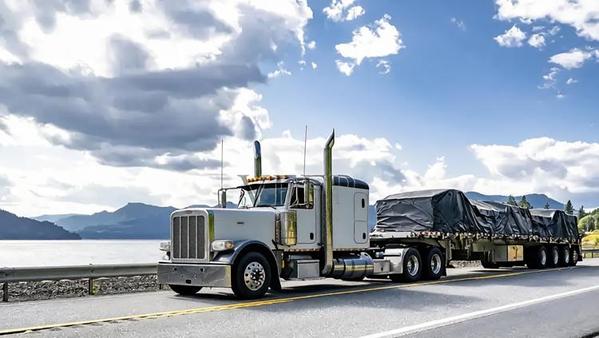
Core Powertrain and Structural Design
Engine and Transmission
A truck semi trailer has no engine or transmission of its own. Its performance is entirely dependent on the tractor unit’s powertrain and the efficiency of the coupling interface. The fifth-wheel coupling transmits horizontal traction forces and vertical load between tractor and trailer. The kingpin—typically 2 inches (50.8 mm) for standard duty or 3.5 inches (89 mm) for heavy-haul applications—locks into the fifth-wheel jaw and must be matched to the tractor’s coupling specification .
Tractor selection therefore directly affects trailer performance. A tractor with insufficient rear-axle capacity or an improperly positioned fifth wheel can overload the steer axle or the trailer tandems, accelerating tire wear and creating compliance risk. For heavy-haul semi trailers, the tractor must be rated for the gross combination weight and equipped with appropriate gearing and cooling for sustained grade climbing.
Hydraulic System
Most general-freight truck semi trailers have no hydraulic system beyond the landing gear, which is manually or pneumatically operated. Hydraulic systems become relevant in two configurations: lowbed and heavy-haul semi trailers, where hydraulic gooseneck detachment and axle lift are essential for loading and maneuvering; and dump trailers, where a hydraulic cylinder raises the body for bulk discharge.
For lowbed trailers, hydraulic system reliability determines whether the trailer can be detached and loaded safely. Cylinder seals, hose condition, and valve function should be inspected as part of any pre-purchase or scheduled maintenance assessment. A lowbed with a compromised hydraulic system may be functionally unusable regardless of frame condition.
Chassis and Structural Durability
The truck semi trailer’s main beams are the load-distributing structure, typically fabricated from high-strength steel such as Q345B or 16Mn with variable web depths to concentrate material where bending moments are highest. Common main beam dimensions for a flatbed or container chassis include a height of 500 mm, upper flange of 14–16 mm, web of 8–10 mm, and lower flange of 16–18 mm . These figures are configuration-dependent; heavier ratings use thicker sections.
Cross-member spacing and floor plate thickness govern resistance to concentrated loads. A 3 mm checkered steel floor is standard on many flatbed and container chassis . Fatigue cracking at suspension bracket welds, cross-member intersections, and kingpin reinforcement plates is the dominant structural failure mode. Inspection should prioritize these zones over cosmetic condition, particularly on used trailers with unknown service history.
Technical Specifications
The table below presents representative parameters for a conventional three-axle truck semi trailer in general freight service. Values are labeled as typical industry ranges; actual specifications vary by manufacturer, model, configuration, duty cycle, and local regulations. They should not be treated as official figures for any named model.
Comparative Advantages TCO and ROI
The truck semi trailer competes with the rigid truck on short-haul routes and with full trailers on specialized heavy-haul applications. The rigid truck offers simpler dispatch and no coupling time, but its payload is constrained by a single chassis and it cannot be decoupled for waiting time. The full trailer supports its entire weight on its own axles and requires a more complex towing arrangement, but avoids the vertical load transfer that limits semi trailer tractor selection .
The semi trailer’s advantage is asset decoupling: a tractor can drop a loaded trailer and hook a pre-loaded unit, reducing tractor idle time in high-turnover distribution networks. For fleets operating multiple trailers per tractor, this flexibility directly improves tractor utilization and return on capital.
Total cost of ownership for a truck semi trailer operation extends beyond trailer purchase price to include tractor acquisition, fuel, maintenance, tires, insurance, driver labor, and residual value. A representative Chinese market reference for a 460 hp 6×4 tractor with trailer operating 140,000 km annually suggests fuel costs of approximately 0.6–0.7 CNY per kilometer at diesel prices around 7 CNY/L, tolls of roughly 0.2–0.25 CNY/km, and maintenance and tire costs combining to 0.1–0.15 CNY/km. Driver labor, if hired, adds substantially. These figures are illustrative and vary by route, load factor, and local fuel prices.
A defensible ROI example requires stated assumptions. Consider a fleet adding a flatbed semi trailer with air suspension for container and steel haulage, replacing an older mechanical-suspension unit. If air suspension reduces cargo damage claims by 15% on high-value steel shipments, and annual claims average 40,000 CNY per trailer, the saving is 6,000 CNY/year. If the air suspension also reduces tire irregular wear by 10% against a 15,000 CNY annual tire budget, the additional saving is 1,500 CNY. Against a price premium of 20,000 CNY, simple payback is approximately 2.7 years—before resale value or uptime improvements are counted. Buyers should substitute fleet-specific claim and tire data.
Resale value favors standard configurations. Flatbed and container chassis trailers with common dimensions, air suspension, and documented maintenance history hold value better than specialized lowbeds, whose buyer pool is smaller.
Heavy Duty Application Scenarios
-
Container drayage and port operations: A container chassis with twist locks and a fixed kingpin setting is the standard tool. High-cycle coupling and short trips accelerate landing gear and brake chamber wear. Air suspension and protected air line routing reduce damage in congested terminal environments.
-
Construction material distribution: Flatbed or dropside truck semi trailers carry rebar, lumber, and prefabricated components. Deck plate thickness and strapping point density are specification decisions that affect loading cycle time and cargo security.
-
Heavy machinery transport: A lowbed semi trailer with hydraulic detachable gooseneck and multi-axle configuration moves excavators and crushers. The low deck clears overhead obstructions, but ground clearance and ramp angle require route planning and operator training. Payload ratings for these configurations commonly reach 70 tonnes and above .
-
Bulk cargo and agricultural haulage: Dropside and fence semi trailers serve building materials and agricultural products. Corrosion from fertilizer and manure is a primary life-limiter; coated structural steel extends service life in these applications .
Selection and Maintenance Considerations
Selecting a truck semi trailer begins with the regulatory envelope, not the load chart. Gross combination weight limits, axle load limits, and length restrictions determine the maximum practical payload. A trailer rated for 60 tonnes is commercially irrelevant if local bridge formulas cap the route at 45 tonnes.
Key selection criteria include:
-
Coupling compatibility: The kingpin size (2-inch or 3.5-inch) must match the tractor’s fifth-wheel specification. The coupling gap between kingpin and saddle should be checked regularly; excessive clearance accelerates wear on both components .
-
Axle and suspension configuration: Axle count must satisfy local bridge laws and tire load ratings simultaneously. Air suspension for fragile or high-value cargo; mechanical for abusive loading environments and lower acquisition cost. Standard flatbed configurations commonly use three 13-tonne axles .
-
Parts and service network: Confirm availability of brake chambers, slack adjusters, suspension bushings, and structural components in the operating region. A trailer brand with regional parts distribution reduces mean time to repair.
-
Warranty coverage scope: Clarify whether structural warranty includes fatigue cracks at suspension brackets and cross-member welds, and whether downtime costs are excluded.
Preventive maintenance for truck semi trailers follows mileage and calendar schedules. Brake system inspection—including pushrod stroke measurement and air dryer filter replacement—is commonly scheduled at 50,000 km or three-month intervals . Suspension U-bolt torque, frame crack inspection, and landing gear lubrication should be performed at defined intervals. Daily pre-trip checks should cover tire pressure, air pressure build-up and leak-down, coupling security, and light function.
Conclusion
The truck semi trailer rewards specification discipline over headline capacity. A configuration that matches payload to legal axle limits, suspension to cargo sensitivity, and coupling hardware to the tractor’s fifth wheel will deliver lower cost per ton-kilometer than a higher-rated trailer selected on brochure payload alone. The engineering priorities are fatigue resistance at the chassis-to-suspension interface, reliable brake and air systems, and a maintenance program that catches wear before it becomes a roadside failure.
Commercially, the truck semi trailer remains the most flexible heavy freight asset available to fleets and industrial shippers. Its value depends less on purchase price than on utilization rate, maintenance cost per kilometer, and residual value at disposal. Buyers who verify configuration against local regulations, confirm coupling compatibility, and invest in preventive maintenance protect all three.