

Overview
Semi trailer length is a regulated dimension that varies by jurisdiction and directly affects cargo capacity, route planning, and equipment specification. In the United States, the dominant dry van length is 53 feet, while the European Union generally works with 13.6-meter semi trailers and Australia applies combination-based length rules with a recent extension to 20-meter combinations under specified conditions.
This FAQ addresses the length question directly and then covers the related procurement and compliance issues that matter when specifying trailers for regional or cross-border operations. All figures should be verified against the current regulations of the specific jurisdictions in the operating network, as dimension rules are subject to amendment and jurisdiction-specific exceptions.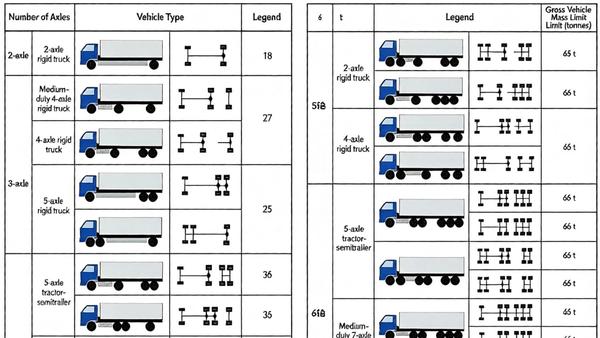
Frequently Asked Questions
How long is a semi trailer in the United States?
The most common semi trailer length in the United States is 53 feet, which has been the de facto standard for dry van and refrigerated trailers since regulatory changes in the 1980s allowed longer combinations . Federal law prohibits states from imposing a semi trailer length limit of less than 48 feet on the Interstate System, but 53 feet is now the prevailing specification because it accommodates 26 standard 48-inch by 40-inch pallets in 13 rows with minimal unused space .
Individual states may set their own limits above the federal floor. Pennsylvania, for example, limits a single trailer being towed by a truck tractor to 53 feet and also restricts the distance from the kingpin to the center line of the rear axle group to 41 feet . Massachusetts allows semi trailers up to 53 feet without an overall combination length limit applying to those units . Procurement teams should confirm the kingpin-to-rear-axle distance limit for every state in the operating network, because a trailer that is legal in length may still violate axle spacing rules.
How long is a semi trailer in Europe?
The standard semi trailer length in Europe is 13.6 meters, which is the conventional specification for dry freight, curtain-side, and refrigerated trailers operating under EU dimension rules. An extended version reaching 14.90 meters is available for operations that can use the additional loading space, but the 13.6-meter length remains the baseline for general European road transport .
EU regulations also control the front projection geometry of the semi trailer relative to the kingpin. The distance measured horizontally between the axis of the fifth-wheel king pin and any point at the front of the semi trailer must not exceed 2.04 meters . This dimension affects how the trailer nose interacts with the tractor cab and is a specification detail that should be confirmed when ordering for EU operation. As with width, length exceptions for indivisible loads require national permits.
How long can a semi trailer combination be in Australia?
Australia applies combination-based length rules rather than a single trailer length limit. Under changes implemented on 1 August 2026, semi trailer combinations may operate at an overall length of up to 20 meters, provided specified dimension and approval criteria are met, up from the previous 19-meter limit .
For a standard semi trailer, the distance from the front articulation point to the rear overhang line must not exceed 9.5 meters, and the distance from the articulation point to the rear of the trailer must generally not exceed 12.3 meters . Higher limits apply conditionally: up to 13.2 meters articulation-to-rear for trailers not operating in B-double or road train combinations, and up to 13.6 meters for refrigerated trailers meeting specified rear overhang geometry . Trailers intended for the 20-meter combination allowance require federal approval or an in-service modification approved by an Approved Vehicle Examiner .
What is the kingpin-to-rear-axle distance and why does it matter?
The kingpin-to-rear-axle distance is the horizontal measurement from the center of the kingpin to the center line of the trailer’s rear axle group, and it is a separate regulatory limit from overall trailer length. A trailer can be legal in total length but illegal in its axle spacing, which affects turning behavior and off-tracking.
In the United States, Pennsylvania’s regulation caps this distance at 41 feet for tractors towing trailers equipped with a kingpin . Federal law sets the floor for trailer length but does not preempt state axle spacing rules, so a 53-foot trailer with a poorly positioned axle group can still be non-compliant. In Australia, the articulation-point-to-rear-overhang-line distance of 9.5 meters serves a similar regulatory function by controlling how much trailer extends behind the rear axle . Buyers should request the kingpin-to-axle dimension on the specification sheet and verify it against the target jurisdiction.
Does semi trailer length affect payload capacity?
Semi trailer length affects cargo volume and pallet count more directly than it affects legal payload weight. A longer trailer provides more floor space for light, bulky freight, but payload remains governed by axle load limits and gross vehicle weight ratings, not by deck length.
The 53-foot US standard illustrates the point: it carries 26 standard pallets in 13 rows, a configuration that maximizes cube utilization for typical freight . A 48-foot trailer carries fewer pallets, but if the cargo is dense and the axle weights are the binding constraint, the additional length of a 53-footer does not translate into more legal payload. Fleets should model both cube and weight utilization for their actual freight profile before assuming that a longer trailer improves economics. For heavy cargo, axle configuration and weight distribution matter more than length.
What should I check before ordering a semi trailer for a specific route?
Before ordering, verify three dimensions against the route regulations: overall trailer length, kingpin-to-rear-axle distance, and front projection geometry. These are separate limits in most jurisdictions and a trailer must satisfy all of them, not just the overall length.
For US interstate operations, confirm that the trailer length does not exceed the limits of every state on the route, and check whether any state imposes a kingpin-to-axle cap below the intended specification. For EU operations, confirm the 13.6-meter or permitted extended length and the 2.04-meter front projection limit. For Australian operations, determine whether the intended combination falls under the 20-meter allowance and whether federal approval is required for the trailer specification . The trailer data plate and the current regulation text are the controlling references; a specification that is legal in one jurisdiction may require permits or be prohibited in another.
Conclusion
Semi trailer length comes down to three regional benchmarks: 53 feet in the United States, 13.6 meters in the European Union, and combination-based limits in Australia with a 20-meter allowance under specified conditions. Procurement teams should treat overall length and axle spacing as separate compliance checks, confirm both against every jurisdiction in the operating network, and use the trailer data plate and current regulation text rather than generic industry figures as the controlling reference.