

Overview
Coupling a tractor to a semi trailer is a safety-critical procedure that, when performed incorrectly, can result in tractor-trailer separation while in motion—a failure mode with fatal consequences . The procedure is not simply backing under the trailer and driving away; it requires height alignment, visual verification of the locking mechanism, and a physical tug test before the vehicle moves.
This FAQ addresses the coupling sequence, verification checks, and common failure points that matter most for drivers, fleet trainers, and maintenance teams. The procedure described follows the general sequence recognized by driver training standards and fifth wheel manufacturers; the specific fifth wheel manufacturer’s instructions and the fleet’s operating procedures control the actual steps for a given vehicle.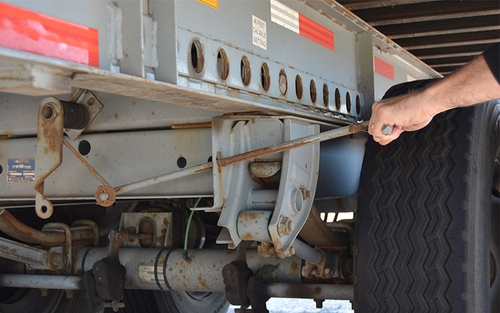
Frequently Asked Questions
What is the correct sequence for coupling a tractor to a semi trailer?
The correct coupling sequence is: inspect the fifth wheel and kingpin, adjust trailer height, back under slowly until the jaws engage, perform a tug test, visually inspect the lock, connect air lines and electrical cable, then raise the landing gear. Skipping any step creates a specific failure risk.
The sequence begins with a walk-around inspection. Check the fifth wheel and locking devices on the tractor, and the kingpin and upper coupler plate on the trailer, for damage or wear before backing under . Adjust the trailer height using the landing gear so the trailer’s upper coupler is slightly lower than the fifth wheel plate—this allows the locking mechanism to engage cleanly rather than the kingpin striking the fifth wheel . Back under slowly and in a straight line, stopping when the jaws engage . The verification and connection steps follow before the tractor moves.
How do I verify the kingpin is actually locked in the fifth wheel?
Verify lockup with two independent checks: a visual inspection of the jaws and release handle, and a tug test with the trailer brakes applied. Neither check alone is sufficient.
The visual inspection confirms that the kingpin is seated inside the closed jaws and that the release handle is in the locked position, with the safety catch or dog clip engaged . If the dog clip does not fully engage, the jaws are not properly locked—pull the release handle, move the tractor away, and repeat the entire coupling procedure . The tug test is the functional confirmation: select a low forward gear with the trailer brakes still applied, and slowly pull forward. The tractor should feel resistance and the trailer should not move relative to the tractor . A kingpin that is not locked can allow the trailer to separate under load, so both checks are mandatory.
Why does trailer height matter during coupling?
Trailer height determines whether the kingpin enters the fifth wheel jaws correctly or strikes the fifth wheel structure. If the trailer is too high, the kingpin can pass over the jaws entirely and end up in a dangerous position behind the cab or resting on top of the fifth wheel . If the trailer is too low, the kingpin can strike hard against the inside of the fifth wheel, damaging the components .
The correct starting height places the trailer’s upper coupler slightly lower than the fifth wheel plate at its pivot point. As the tractor backs under, the fifth wheel lifts the trailer slightly, which helps the locking mechanism engage . Adjust the height using the landing gear before backing under, and confirm the setting visually before committing to the approach.
In what order should I connect the air lines and electrical cable?
Connect the service (yellow) and electrical lines first, then the emergency (red) air line last. This order allows the driver to detect unexpected trailer movement when the emergency line is connected.
The service line provides the braking signal, and the electrical cable provides lighting and ABS power. The emergency line supplies the air that releases the trailer’s spring brakes. When the red line is connected, the trailer’s parking brakes release if the system is functioning correctly. If the trailer moves at that moment, the driver should immediately disconnect the red line and investigate why the trailer parking brake was not applied . Connecting the emergency line last gives the driver a controlled moment to observe whether the trailer is secure.
What should I do if the tug test fails or the lock does not engage?
If the tug test fails or the visual inspection shows the jaws are not closed, do not drive the vehicle. Pull the release handle to disengage the jaws, move the tractor away from the trailer, and repeat the coupling procedure from the beginning.
A failed lock is not a condition to troubleshoot by driving slowly or having someone watch the fifth wheel while the vehicle moves. The failure mode—tractor-trailer separation—can occur without warning and at speed. SAF-Holland’s instructions are explicit: failure to properly couple the tractor and trailer could result in separation while in use, which, if not avoided, could result in death or serious injury . Repeating the procedure from the start is the only safe response.
What checks should I complete after coupling and before driving away?
After coupling and connecting the lines, complete these checks before moving: raise the landing gear fully and stow the crank handle, release the trailer parking brake, test all lamps, check the ABS/EBS warning lamp sequence, and walk around the combination.
The landing gear must be fully retracted off the ground, not merely clear of the ground, and the handle secured in its retainer . Test the brake lights, turn signals, and marker lamps. Turn on the ignition and confirm that the ABS/EBS warning lamp activates and extinguishes in the correct sequence. On pulling away, test the brakes and confirm that the trailer ABS warning lamp functions correctly and extinguishes above approximately 15 km/h . A walk-around before departure confirms that nothing was left disconnected or out of position during the coupling sequence.
Conclusion
Coupling a tractor to a semi trailer comes down to three non-negotiable checks: the trailer height is set correctly before backing under, the kingpin lock is verified by both visual inspection and a tug test, and the air lines are connected in an order that reveals trailer movement. The failure mode that these checks prevent—tractor-trailer separation—is not a maintenance inconvenience; it is a fatal risk . Fleet training programs should treat the coupling procedure as a fixed sequence with no shortcuts, and drivers should be authorized to refuse to move a combination that has not passed the lock verification. The fifth wheel manufacturer’s instructions and the fleet’s procedure remain the controlling references for the specific equipment.