

Introduction
When a semi trailer won't move, the problem can interrupt deliveries, delay loading operations, and create unexpected maintenance costs. For trucking companies and fleet operators, identifying the cause quickly is important, but attempting to move a trailer without understanding the fault can create serious safety risks.
A semi trailer is an unpowered transport vehicle connected to a tractor through a fifth-wheel coupling. Its movement depends on the tractor, coupling system, trailer braking system, wheels, axles, suspension, and road conditions. If any of these components prevents the trailer wheels from rotating or the tractor from moving safely, the complete vehicle combination may become immobilized.
Common reasons a semi trailer won't move include:
-
Parking brakes that have not released.
-
Insufficient air pressure in the trailer braking system.
-
Frozen, seized, or mechanically damaged brakes.
-
A damaged or incorrectly engaged fifth-wheel coupling.
-
Landing gear that remains in contact with the ground.
-
Flat or damaged tires, seized wheel bearings, or axle problems.
-
A trailer positioned against an obstruction or stuck in soft ground.
-
Electrical or pneumatic faults affecting brake release systems.
The first step is to determine whether the tractor itself can move, whether the trailer brakes are released, and whether a mechanical obstruction is preventing movement. Drivers should never attempt to force a locked trailer forward or backward before confirming that the braking and coupling systems are safe.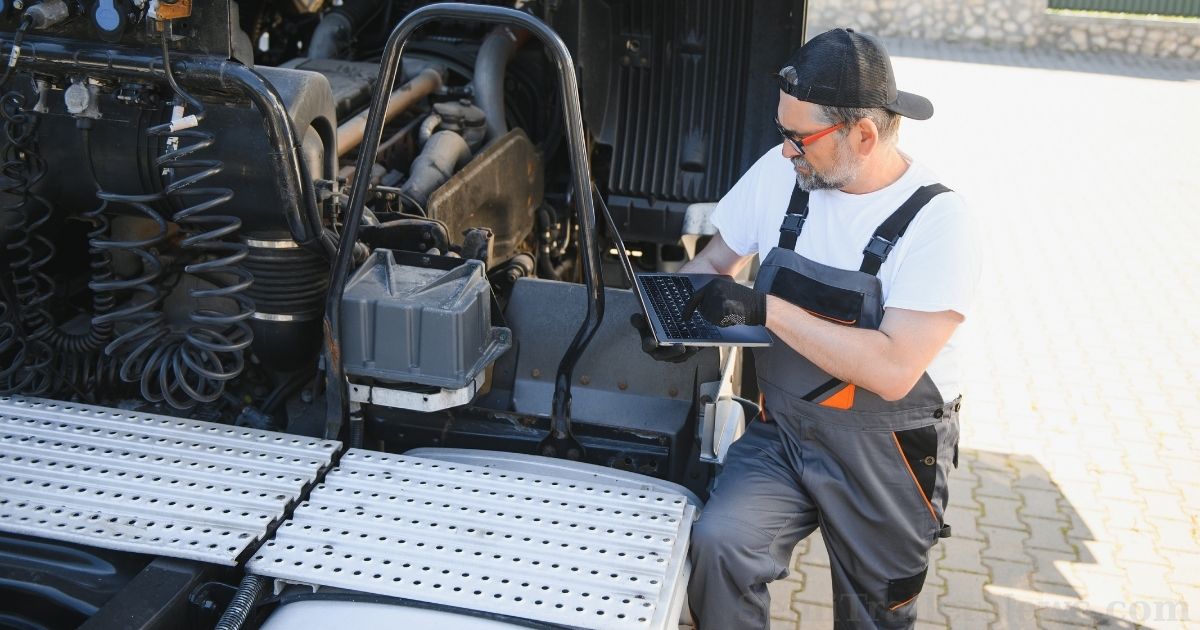
Core Powertrain and Structural Design
A conventional semi trailer does not have its own engine or transmission. Its movement is supplied by the tractor, while the trailer's mechanical and pneumatic systems determine whether it can roll safely.
Understanding these systems helps fleet technicians distinguish between a tractor problem and a trailer-related fault.
Tractor and Fifth-Wheel Coupling
The fifth-wheel coupling connects the tractor to the trailer kingpin. It transfers vertical load and allows the combination to articulate during turning.
If the trailer won't move after coupling, inspect the connection before attempting another movement.
Possible problems include:
-
The fifth-wheel locking jaws have not engaged correctly.
-
The kingpin is damaged or incorrectly positioned.
-
The fifth-wheel release mechanism is partially engaged.
-
The tractor and trailer are not properly aligned.
-
The trailer landing gear has not been fully raised.
-
The coupling area contains debris or visible mechanical damage.
A partially engaged coupling can cause dangerous separation or unexpected movement. Drivers should verify the locking mechanism using the manufacturer's coupling inspection procedure and confirm that the connection is secure before operating.
Air Brake System
The air brake system is one of the most important areas to investigate when a semi trailer won't move.
Many commercial semi trailers use spring-applied parking brakes. Compressed air holds the spring brakes in the released position. When air pressure is insufficient or the parking brake control remains engaged, the spring mechanism applies braking force.
Common air-related causes include:
-
Insufficient air pressure supplied by the tractor.
-
A disconnected or damaged red emergency/supply line.
-
Leaking pneumatic hoses or fittings.
-
A faulty trailer relay emergency valve.
-
A defective spring brake control valve.
-
A blocked or damaged air line.
-
A malfunctioning trailer air-brake control component.
The red supply line generally provides air to the trailer system and supports release of spring brakes. The blue service line carries the service-brake control signal in conventional dual-line systems. Connection arrangements and system designs vary by vehicle.
If the trailer air tanks have not reached the required operating pressure, the spring brakes may remain applied. Drivers should check the tractor's air-pressure gauges and warning indicators rather than assuming that the trailer has a mechanical failure.
Parking Brake and Brake Components
A trailer can remain immobilized even when the air supply appears normal.
Potential mechanical brake faults include:
-
Seized brake calipers on disc-brake configurations.
-
Sticking slack adjusters on drum-brake systems.
-
Corroded or damaged brake components.
-
Broken return springs or damaged brake hardware.
-
Spring brake chambers that fail to release.
-
Brake shoes or linings that remain in contact with the drum.
Moisture and corrosion can contribute to brake problems, particularly after extended parking in wet or cold environments.
A driver should not strike brake chambers, disconnect brake components, or attempt to force the wheels to rotate. A qualified technician should inspect the affected wheel-end and braking equipment before the trailer returns to service.
Chassis, Landing Gear, and Structural Obstructions
Landing gear supports the front of a disconnected semi trailer. If the legs remain lowered after coupling, they can contact the ground when the tractor attempts to move.
This can cause structural damage to the landing gear, trailer frame, tractor, or coupling system.
Other physical obstructions include:
-
Wheel chocks that have not been removed.
-
Cargo or loading equipment blocking the trailer.
-
A damaged mudguard or component rubbing against a tire.
-
A bent suspension part interfering with wheel rotation.
-
A trailer positioned on soft ground or in a depression.
-
A damaged tire trapped against a curb or other obstacle.
Before moving a coupled trailer, verify that the landing gear is fully raised, the handle is secured, and the support legs are clear of the road surface.
Electrical and ABS/EBS Systems
Modern semi trailers may use ABS or EBS to monitor wheel speed and manage braking functions.
An ABS warning light does not automatically mean that the brakes are locked. A warning may indicate a sensor, wiring, power supply, or control-system fault while conventional braking remains available.
However, an electrical or electronic fault can affect trailer braking performance depending on the system design.
Technicians should inspect:
-
Electrical connectors between tractor and trailer.
-
ABS/EBS power supply and wiring.
-
Wheel-speed sensor connections.
-
Damaged cables near axles and suspension components.
-
Relevant fault codes using compatible diagnostic equipment.
Drivers should follow the vehicle manufacturer's warning-light instructions and applicable operating regulations. A trailer with a braking-system defect should not be returned to service until its safety has been established.
Technical Specifications
When diagnosing a semi trailer that won't move, technicians should check the operating conditions and ratings of the braking, pneumatic, coupling, and wheel-end systems. The following table summarizes common inspection areas. Exact specifications vary by trailer manufacturer, axle configuration, brake design, tractor, and local regulations.
|
Key Parameter |
Typical Technical Specification |
Operational Significance |
|---|---|---|
|
Brake system |
Air-operated service and parking brakes |
Determines how the trailer stops and remains stationary |
|
Parking brake |
Spring-applied, air-released on common configurations |
Low air pressure can prevent brake release |
|
Air supply |
Tractor-supplied compressed air |
Insufficient supply can keep spring brakes applied |
|
Air connections |
Red supply line and blue service line in conventional systems |
Incorrect or damaged connections can affect braking |
|
Brake configuration |
Drum or disc brakes |
Determines inspection and repair procedures |
|
Axle configuration |
Commonly 2–4 or more axles, depending on design |
Helps identify which wheel-end may be immobilized |
|
Electrical braking equipment |
ABS or EBS, depending on configuration |
Supports braking control and fault diagnosis |
|
Coupling system |
Fifth wheel and compatible kingpin |
Transfers load and secures the tractor-trailer connection |
Why Air Pressure Matters
Spring brakes rely on compressed air to overcome mechanical spring force and release the parking brake. When pressure falls below the system's required release level, the brakes may remain applied.
The correct operating pressure depends on the tractor and trailer system. Drivers should use the manufacturer's specified pressure range and warning indicators rather than relying on a universal pressure figure.
A trailer that repeatedly loses air pressure while parked may have a leak, faulty valve, damaged hose, or another pneumatic defect. Repeatedly attempting to release the brakes without identifying the source of pressure loss can worsen the situation or create unsafe conditions.
Comparative Advantages TCO and ROI
The most effective response to a semi trailer that won't move depends on whether the problem is pneumatic, mechanical, electrical, or environmental. Comparing these causes helps maintenance teams choose the correct repair method and avoid unnecessary component replacement.
Air Brake Faults vs. Mechanical Brake Seizure
An air brake fault may involve low supply pressure, leaking lines, or a defective valve. These problems can sometimes be identified through pressure readings and pneumatic leak tests.
Mechanical brake seizure is different. Even when air pressure is sufficient, damaged or corroded components may prevent the brakes from releasing.
|
Fault Category |
Typical Symptoms |
Appropriate Inspection |
|---|---|---|
|
Low air pressure |
Parking brakes remain applied; air warning appears |
Check pressure gauges, supply lines, and leaks |
|
Faulty relay or control valve |
Brakes fail to release despite adequate supply pressure |
Perform pneumatic system diagnosis |
|
Seized brake components |
One or more wheels remain difficult to rotate |
Inspect brake assemblies and wheel ends |
|
Damaged air hose |
Audible air leak or pressure loss |
Locate and repair the damaged line |
|
Electrical fault |
ABS/EBS warning or communication problem |
Inspect connectors, wiring, sensors, and fault codes |
|
Landing gear obstruction |
Trailer front support legs contact the ground |
Check landing gear position and condition |
Repair Costs and Total Cost of Ownership
The total cost of a trailer immobilization event includes more than replacement parts. It can involve:
-
Technician labor and diagnostic time.
-
Replacement valves, hoses, brake chambers, or brake components.
-
Roadside assistance or recovery services.
-
Lost delivery revenue.
-
Driver waiting time.
-
Missed loading or unloading appointments.
-
Additional costs caused by secondary damage.
For example, assume a fleet operator experiences four trailer immobilization incidents per year. If each incident causes an average of $500 in direct repair and service costs and $750 in lost operating contribution, the annual impact is:
4 × ($500 + $750) = $5,000
If improved inspections and preventive maintenance reduce the number of incidents from four to two, the illustrative annual cost reduction is:
2 × ($500 + $750) = $2,500
This example assumes that incident costs remain unchanged and that the inspection program itself has no additional cost. Actual results depend on fleet size, operating conditions, fault frequency, labor rates, repair costs, and trailer utilization. It does not represent a guaranteed saving.
Preventive Maintenance vs. Emergency Repair
Preventive maintenance helps identify air leaks, deteriorating brake components, damaged wiring, and suspension problems before they cause an unexpected breakdown.
Emergency repairs may be unavoidable, but regular inspections can reduce the risk of repeated immobilization.
Fleet operators should pay particular attention to trailers that:
-
Remain parked for extended periods.
-
Operate in wet, salty, or cold environments.
-
Carry heavy loads regularly.
-
Travel on rough construction or industrial roads.
-
Have a history of air leaks or brake-related faults.
A documented inspection and repair history also helps maintenance managers identify recurring problems and evaluate whether a trailer remains economically suitable for continued service.
Heavy Duty Application Scenarios
A semi trailer that won't move can create different operational problems depending on its application. The working environment, cargo weight, and frequency of use influence the most likely causes and the urgency of recovery.
Long-Distance Freight Transport
For long-distance freight fleets, trailer immobilization can interrupt scheduled deliveries and create delays across multiple routes.
Common inspection priorities include:
-
Air pressure and brake release.
-
Tire condition and wheel-end temperature.
-
ABS/EBS warning indicators.
-
Fifth-wheel and kingpin condition.
-
Electrical and pneumatic connections.
Drivers should perform pre-trip inspections and report abnormal braking behavior before beginning a long journey.
Construction and Heavy Equipment Transport
Lowboy and flatbed trailers used for transporting excavators, bulldozers, wheel loaders, and other machinery may operate on uneven or unpaved surfaces.
These conditions can increase exposure to:
-
Mud and debris around landing gear and suspension.
-
Damage to air lines and electrical wiring.
-
Tire damage and wheel-end contamination.
-
Structural stress around axles and loading areas.
A trailer stuck in soft ground is not necessarily suffering from a brake failure. Recovery should be planned according to the cargo weight, ground conditions, and approved recovery points. Pulling from an unsuitable structural component can cause serious damage.
Agricultural and Bulk Material Transport
Dump trailers and agricultural transport trailers may operate in fields, quarries, grain facilities, and other environments where dirt, moisture, and uneven ground are common.
Inspection should include:
-
Brake components exposed to contamination.
-
Air-line routing and protection.
-
Landing gear stability.
-
Tire condition and axle alignment.
-
Hydraulic equipment on trailers equipped with tipping systems.
A dump trailer should also be checked for body or tailgate interference if the trailer cannot move after unloading.
Industrial and Port Operations
Semi trailers used in factories, warehouses, and ports often experience frequent coupling and uncoupling.
In these operations, common risks include:
-
Incorrect fifth-wheel engagement.
-
Landing gear left partially lowered.
-
Air and electrical lines connected incorrectly.
-
Wheel chocks not removed.
-
Brake release procedures not completed.
Standardized coupling and uncoupling procedures can reduce avoidable movement problems in high-frequency yard operations.
Selection and Maintenance Considerations
A trailer that repeatedly fails to move may have an underlying maintenance issue, an unsuitable operating environment, or a problem with its braking configuration. Fleet managers should evaluate both the immediate fault and the trailer's broader condition.
Safe Troubleshooting Procedure
If a semi trailer won't move, follow a controlled inspection process.
-
Secure the vehicle. Stop the operation, apply the tractor parking brake, and ensure the trailer is supported safely. Use appropriate wheel chocks where required.
-
Check the tractor. Confirm whether the tractor can move independently and inspect its dashboard warnings and air-pressure readings.
-
Inspect the landing gear. Verify that the legs are fully raised and are not contacting the ground.
-
Check the air connections. Inspect the red supply line, blue service line, connectors, and visible hoses for damage or disconnection.
-
Check the brake controls. Confirm that the tractor and trailer parking brake controls are in the correct operating positions.
-
Observe warning indicators. Check for ABS/EBS warnings and other brake-system alerts.
-
Inspect for visible obstructions. Look for wheel chocks, damaged tires, trapped debris, or components interfering with wheel rotation.
-
Arrange professional diagnosis. If the cause remains unclear, or a brake, coupling, axle, or structural fault is suspected, contact a qualified technician or recovery service.
Do not force the trailer to move, bypass safety systems, disconnect brake components, or crawl underneath an unsupported trailer. Spring brake chambers contain powerful mechanical springs, and improper handling can cause serious injury.
Preventive Maintenance Checklist
Regular inspections help reduce the risk of unexpected trailer immobilization.
-
Check air lines, fittings, and connectors for leakage or damage.
-
Confirm that the parking brake releases correctly during approved operational checks.
-
Inspect brake chambers, valves, and mechanical brake components.
-
Check ABS/EBS warning indicators and wiring connections.
-
Inspect tires, wheel bearings, and visible axle components.
-
Examine suspension parts and mounting points.
-
Verify that landing gear operates smoothly and locks securely.
-
Keep the fifth wheel and kingpin in serviceable condition.
-
Record faults and repairs in the trailer maintenance history.
Inspection frequency should follow manufacturer recommendations, applicable regulations, mileage, and duty cycle.
Choosing a Reliable Semi Trailer
For buyers purchasing a new or used semi trailer, braking-system quality and serviceability should be part of the selection process.
Before purchasing, evaluate:
-
Brake system design and component availability.
-
Axle and suspension specifications.
-
ABS/EBS configuration and tractor compatibility.
-
Air-line protection and accessibility.
-
Landing gear design and rated capacity.
-
Structural condition and maintenance history.
-
Manufacturer warranty and technical support.
-
Availability of replacement parts in the operating region.
Used trailers should receive a thorough inspection of the brakes, air system, tires, axles, chassis, kingpin, and suspension before purchase. A low purchase price may not represent good value if the trailer requires extensive brake or structural repairs.
Conclusion
When a semi trailer won't move, the most common areas to investigate are the air brake system, parking brakes, fifth-wheel coupling, landing gear, wheel-end components, and physical obstructions. Low air pressure can prevent spring brakes from releasing, while corrosion or mechanical damage can keep individual brakes engaged even when the air supply is normal.
A safe diagnosis begins with securing the vehicle, checking the tractor and trailer air supply, inspecting visible connections, and confirming that the landing gear and coupling are correctly positioned. Any suspected brake, axle, or structural defect should be assessed by a qualified technician before the trailer returns to service.
For fleet operators, regular brake inspections, air-system maintenance, driver training, and accurate repair records are practical ways to reduce unexpected downtime. Identifying the actual cause rather than forcing a trailer to move protects drivers, cargo, equipment, and long-term operating costs.