

Introduction
Commercial transport operators face constant pressure to improve payload efficiency, control fuel consumption, reduce vehicle downtime, and meet increasingly demanding road safety and emissions requirements. Choosing the right tractor configuration is an important part of achieving these objectives. A cab over semi trailer truck is a commercial vehicle combination in which the tractor cab is positioned above or directly over the engine, with the front axle generally located beneath or close to the driver’s seating area. The tractor is coupled to a semi-trailer through a fifth-wheel connection, allowing the trailer to carry a substantial share of the combined cargo load.
The cab over design is also known as a cab-over-engine (COE) configuration. Compared with a conventional long-nose truck, it generally has a shorter front profile and a more compact overall tractor length. This layout can be particularly useful where vehicle length restrictions, tight turning areas, loading yards, and urban delivery routes influence fleet operations.
A cab over semi trailer truck is not a single standardized vehicle specification. Its performance depends on the tractor's engine, transmission, axle configuration, wheelbase, fifth-wheel position, braking equipment, and the type of semi-trailer selected. Buyers should therefore evaluate the complete vehicle combination rather than judging the tractor or trailer independently.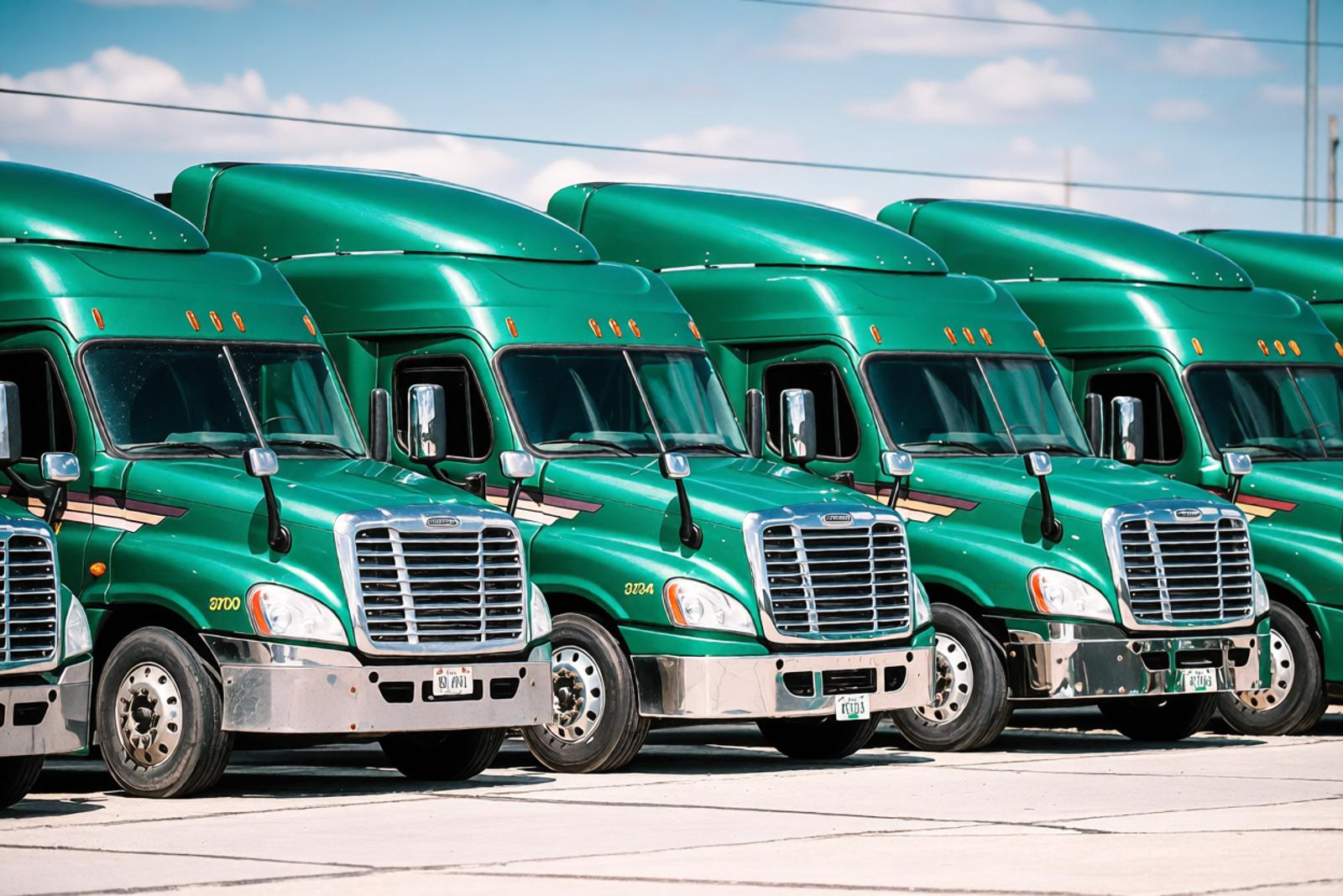
Core Powertrain and Structural Design
Engine and Transmission
The tractor unit provides the driving force for the entire combination. Its engine must generate sufficient power and torque to move the loaded semi-trailer under the intended operating conditions, including highway cruising, gradients, frequent acceleration, and stop-and-go traffic.
Heavy-duty cab over tractors commonly use turbocharged diesel engines. Depending on the manufacturer, market, and vehicle class, available powertrain configurations may include different engine displacements, cylinder arrangements, torque outputs, and emissions-control systems.
Important engine selection factors include:
-
Rated engine power: Determines the engine's available power under specified operating conditions.
-
Maximum torque: Influences acceleration and the ability to maintain speed under heavy loads.
-
Torque characteristics: The engine's torque curve affects drivability, especially on gradients and during low-speed operation.
-
Fuel consumption: Depends on engine technology, vehicle weight, speed, terrain, payload, and driving behavior.
-
Emissions compliance: Must match the regulations applicable in the vehicle's destination market.
The transmission transfers engine power to the drive axles. Manual, automated manual, and automatic transmissions may be available depending on the tractor manufacturer and intended application.
A transmission with suitable gear ratios helps maintain the engine within an efficient operating range. For long-distance heavy hauling, gear selection should account for gross combination weight, road gradients, cruising speed, and the expected frequency of gear changes.
The powertrain must also be matched to the trailer's loaded weight. An engine that performs adequately with a lightly loaded trailer may be unsuitable for demanding operations involving steep gradients, frequent starts, or high gross combination weights.
Fifth-Wheel Coupling and Trailer Compatibility
The fifth wheel is the main mechanical connection between the tractor and semi-trailer. It supports the trailer's front load while allowing articulation during turning and maneuvering.
Its technical requirements include:
-
Rated vertical load capacity.
-
Permissible towing or coupling capacity.
-
Coupling height and mounting arrangement.
-
Compatibility with the trailer kingpin.
-
Lubrication and locking mechanism condition.
-
Correct positioning relative to the tractor's rear axles.
The fifth-wheel position affects axle loading and vehicle handling. Incorrect positioning can create excessive loading on the tractor's drive axles or reduce the load carried by the steering axle. Buyers should verify the permitted axle loads and coupling geometry before selecting a trailer.
Chassis and Structural Durability
The tractor chassis supports the engine, transmission, cab, fuel tanks, suspension, axles, and fifth-wheel assembly. Its design must withstand vertical loads, braking forces, acceleration, torsional movement, and repeated road impacts.
A cab over tractor generally uses a compact front structure because the cab is positioned above the engine. This packaging arrangement can reduce overall tractor length, but it also makes cab mounting, engine access, and front structural protection important design considerations.
The semi-trailer has its own frame structure, which may be designed for container transport, general cargo, bulk materials, machinery, or specialized loads. Its construction and load distribution must remain compatible with the tractor's coupling capacity and axle configuration.
Braking and Operator Safety
A heavy-duty cab over semi trailer truck typically uses a compressed-air braking system. The tractor and trailer braking systems must be compatible and correctly connected.
Depending on the vehicle specification and market, safety equipment may include:
-
Anti-lock braking systems (ABS).
-
Electronic braking systems (EBS).
-
Electronic stability or traction-control functions.
-
Engine braking or auxiliary braking systems.
-
Driver assistance systems.
-
Seat belts and reinforced cab structures.
ABS helps prevent wheel lock during braking, while EBS can provide electronic control and monitoring of braking functions where fitted. The exact equipment and regulatory requirements vary by jurisdiction and vehicle configuration.
The cab's forward position gives the driver a different visibility profile from a conventional long-nose tractor. However, visibility still depends on cab height, windshield design, mirrors, cameras, blind spots, and seating position. Buyers should assess the actual vehicle rather than assuming that every cab over design provides identical visibility or safety performance.
Service Access and Maintainability
Cab over tractors commonly use a tilting-cab arrangement to provide access to the engine and related components. This allows maintenance personnel to reach major powertrain components without requiring a long conventional engine compartment.
The tilting mechanism, cab locks, hydraulic or mechanical support system, and associated safety devices should be inspected regularly. Maintenance access also depends on the manufacturer's service layout and the availability of replacement parts.
For fleet operators, the most useful maintenance considerations include:
-
Ease of engine and transmission inspection.
-
Access to air filters and fuel filters.
-
Cooling-system accessibility.
-
Availability of diagnostic equipment.
-
Replacement-part supply.
-
Local dealer and workshop capability.
Technical Specifications
The specifications of a cab over semi trailer truck vary significantly between manufacturers and vehicle classes. A regional distribution tractor, a long-haul tractor, and a heavy-duty tractor for demanding transport work may use very different engines, axle arrangements, chassis dimensions, and coupling capacities.
The following table identifies the principal parameters buyers should evaluate. It is a selection framework rather than a set of specifications for a particular model.
|
Key Parameter |
Typical Technical Specification |
Operational Significance |
|---|---|---|
|
Cab configuration |
Cab-over-engine, forward-control design |
Reduces front-end length and changes vehicle packaging |
|
Engine power |
Manufacturer-rated kW or hp |
Determines available power for the intended load and terrain |
|
Maximum torque |
Manufacturer-rated Nm |
Influences pulling performance and drivability |
|
Transmission |
Manual, automated manual, or automatic |
Affects gear selection, efficiency, and driver workload |
|
Drive axle configuration |
4×2, 6×2, 6×4, or other available layouts |
Influences traction, axle loading, and operating suitability |
|
Fifth-wheel capacity |
Manufacturer-rated vertical and coupling limits |
Determines compatible trailer and load configurations |
|
Braking system |
Compressed-air brakes, ABS, and optional EBS |
Supports controlled braking and regulatory compliance |
|
Gross combination weight |
Market- and model-specific approved rating |
Establishes the permitted operating weight of the complete combination |
Gross combination weight (GCW) is particularly important because it represents the total operating weight of the tractor, semi-trailer, cargo, fuel, and other equipment. It must not exceed the applicable vehicle rating or local legal limits.
Engine power should be evaluated together with torque, transmission ratios, axle configuration, and intended road conditions. A higher horsepower figure alone does not guarantee better transport performance. Similarly, a tractor with a suitable fifth-wheel rating may still be incompatible with a particular trailer if axle loads, coupling height, or chassis dimensions are incorrect.
Before purchasing, request the manufacturer's technical data sheet and confirm the actual configuration, including engine rating, transmission, axle loads, approved combination weight, wheelbase, and braking equipment.
Comparative Advantages TCO and ROI
The main alternative to a cab over semi trailer truck is the conventional long-nose semi truck, in which the engine is positioned ahead of the cab. Both configurations can perform heavy commercial transport work, but their packaging and operating characteristics differ.
A cab over tractor generally offers a shorter front section and can provide a shorter overall tractor length for a comparable wheelbase arrangement. This can be beneficial in urban delivery operations, confined industrial facilities, and markets where vehicle length is tightly regulated.
A conventional tractor usually provides a longer front engine compartment. Depending on the model, this can offer different engine-access arrangements, cab packaging, and driver comfort characteristics. However, its longer front section may make some maneuvering situations more demanding.
The principal differences include:
-
Vehicle length: Cab over designs generally use road space more efficiently at the tractor level.
-
Maneuverability: The shorter front profile can help in tight yards, although turning radius also depends on wheelbase, axle arrangement, and steering geometry.
-
Driver environment: Cab layout, noise insulation, suspension, visibility, and access differ by model.
-
Maintenance: Cab tilting provides access to many cab-over engine compartments, while conventional tractors may offer access through a front hood.
-
Fuel efficiency: Neither configuration is automatically more fuel-efficient. Aerodynamics, powertrain technology, gearing, speed, payload, and driving conditions have a major influence.
-
Purchase and ownership costs: Prices and maintenance expenses depend on manufacturer, specification, parts availability, service network, and local market conditions.
Total Cost of Ownership
Total cost of ownership (TCO) includes more than the purchase price. Fleet managers should calculate the complete cost of operating the tractor and semi-trailer throughout the expected ownership period.
Major cost categories include:
-
Initial vehicle and trailer purchase price.
-
Fuel consumption and energy-related expenses.
-
Scheduled servicing and replacement parts.
-
Tire wear and replacement.
-
Insurance, registration, and road charges.
-
Driver labor and training.
-
Unplanned repairs and vehicle downtime.
-
Depreciation and eventual resale value.
For example, a fleet comparing two tractor configurations over five years should use the same assumptions for annual mileage, payload, fuel price, driver hours, financing, maintenance, and resale value. If one vehicle has a higher purchase price but lower operating expenses, the difference should be evaluated over the full ownership period rather than through the initial price alone.
Return on Investment
Return on investment depends on whether the selected truck improves the fleet's actual transport economics. A shorter cab over tractor may help a company operate within a particular length restriction or access a delivery location that is difficult for a longer vehicle. However, the financial benefit only exists if that capability improves utilization, reduces operating constraints, or creates additional revenue.
A practical ROI assessment should compare:
-
Annual trips and distance traveled.
-
Average payload and permitted gross weight.
-
Fuel cost per kilometer or mile.
-
Maintenance cost per operating hour or distance.
-
Vehicle availability and downtime.
-
Revenue generated per completed trip.
-
Depreciation and resale value.
No fixed savings or return can be assumed without vehicle-specific operating data. Fleet operators should use actual route and maintenance records when comparing cab over and conventional tractor configurations.
Heavy Duty Application Scenarios
Cab over semi trailer trucks are used across multiple commercial transport sectors. Their compact front-end design can be particularly useful in operations where overall vehicle length, turning space, and access conditions influence productivity.
Long-Distance Freight Transport
For highway freight, the tractor must provide sufficient power, torque, cooling capacity, and braking performance for sustained operation. Trailer selection may include curtain-side, box, flatbed, refrigerated, or other configurations.
Important considerations include aerodynamic performance, fuel-tank capacity, driver comfort, transmission gearing, and the manufacturer's approved combination weight.
Urban and Regional Distribution
Cab over trucks can be suitable for regional distribution because their shorter front profile may help with access to warehouses, industrial parks, and urban delivery locations.
Operators should still assess:
-
Turning radius and wheelbase.
-
Cab visibility and blind spots.
-
Loading-dock access.
-
Maximum vehicle length restrictions.
-
Local emissions and noise requirements.
Construction and Building Materials
Cab over tractors may be used with flatbed or other specialized semi-trailers for transporting construction materials, steel products, machinery, and prefabricated components.
For heavy cargo, the trailer's deck strength, axle capacity, load-securing points, and weight distribution are critical. The tractor must also have sufficient approved coupling capacity and appropriate braking performance.
Container and Port Transport
Container chassis trailers are frequently used with heavy-duty tractor units for moving shipping containers between ports, terminals, warehouses, and distribution centers.
The combination must be compatible with the container chassis, including fifth-wheel height, kingpin position, axle loading, and approved gross combination weight. Port operators should also consider maneuvering space, vehicle height restrictions, and terminal operating requirements.
Specialized Industrial Transport
Certain industrial operations require dedicated trailers for equipment, bulk materials, or oversized cargo. In these cases, tractor selection must be based on the complete transport configuration rather than the cab design alone.
The engineering assessment should consider:
-
Cargo dimensions and weight.
-
Trailer type and axle arrangement.
-
Coupling and load distribution.
-
Route gradients and road conditions.
-
Braking requirements.
-
Local permits and transport regulations.
Selection and Maintenance Considerations
Selecting a cab over semi trailer truck requires matching the tractor, trailer, cargo, route, and regulatory environment. A vehicle that is suitable for regional freight may not be appropriate for heavy industrial hauling or long-distance operation.
Key Purchasing Considerations
1. Define the transport application
Identify whether the truck will be used for container transport, general cargo, construction materials, machinery, refrigerated goods, or another application. This determines the required tractor and trailer configuration.
2. Confirm the legal weight limits
Check the permitted gross vehicle weight, gross combination weight, axle loads, dimensions, and coupling limits in the destination market. These requirements may differ between countries and road networks.
3. Match engine and transmission specifications
Evaluate rated power, maximum torque, transmission ratios, and cooling capacity according to the expected load, road gradients, annual mileage, and operating environment.
4. Select the correct axle configuration
A 4×2 tractor may suit some regional and highway applications, while 6×2 and 6×4 configurations may be considered for different load, traction, and axle-capacity requirements. The correct choice depends on local regulations and actual operating conditions.
5. Check fifth-wheel and trailer compatibility
Confirm the coupling rating, kingpin compatibility, mounting position, coupling height, and axle-load distribution before placing an order.
6. Evaluate emissions compliance
The engine and emissions-control system must meet the applicable requirements in the country where the truck will be registered and operated. Buyers should request the relevant documentation for the exact vehicle specification.
7. Review parts and after-sales support
For international purchases, confirm spare-parts availability, workshop capability, warranty terms, diagnostic support, and expected delivery times for replacement components.
Preventive Maintenance
A planned maintenance program helps reduce unexpected breakdowns and supports consistent fleet availability. Maintenance intervals should follow the manufacturer's instructions and be adjusted for operating conditions and duty cycles.
Important inspection areas include:
-
Engine oil, coolant, fuel filters, and air filters.
-
Transmission lubricant and clutch condition where applicable.
-
Cooling system, radiator, hoses, and fan operation.
-
Brake air lines, reservoirs, valves, and brake components.
-
ABS sensors and EBS components where fitted.
-
Tires, wheel fasteners, and suspension components.
-
Fifth-wheel locking mechanism and lubrication.
-
Trailer electrical connections and lighting.
-
Cab tilting mechanism and locking devices.
Drivers should be trained to identify abnormal noises, warning lights, air-pressure problems, unusual vibration, and changes in braking performance. Any serious brake, steering, coupling, or structural fault should be inspected by qualified personnel before the vehicle returns to service.
Conclusion
A cab over semi trailer truck offers a compact tractor layout that can be advantageous for commercial transport operations involving restricted vehicle lengths, urban access, regional distribution, and demanding loading-yard conditions. Its actual performance depends on the engine, transmission, axle arrangement, chassis, fifth-wheel system, braking equipment, and compatibility with the selected semi-trailer.
For fleet buyers, the most reliable purchasing decision comes from evaluating the complete vehicle combination against cargo requirements, route conditions, legal weight limits, emissions regulations, maintenance resources, and total cost of ownership. A properly matched cab over tractor and semi-trailer can provide a practical transport solution when its configuration is selected according to real operating demands.