

Introduction
Fuel costs, driver availability, vehicle downtime, emissions requirements, and increasing freight efficiency targets all influence commercial truck purchasing decisions. For transport companies, selecting the right tractor configuration is essential for balancing payload capacity, maneuverability, operating costs, and long-term reliability.
A cabover semi trailer truck is a commercial vehicle combination consisting of a cabover tractor unit and a semi-trailer. In a cabover design, the driver's cab is positioned above or directly over the engine, creating a shorter front section than a conventional long-nose tractor. The tractor connects to the semi-trailer through a fifth-wheel coupling, allowing the combination to transport general cargo, containers, construction materials, machinery, and other commercial loads.
Cabover trucks are also known as cab-over-engine (COE) trucks or forward-control trucks. Their compact front-end arrangement can be advantageous in markets with strict vehicle-length limits, urban delivery operations, and transport environments requiring frequent maneuvering.
However, the cab configuration alone does not determine transport capacity or performance. Engine power, torque, transmission ratios, axle configuration, chassis strength, fifth-wheel capacity, braking equipment, and trailer specifications must all be considered together.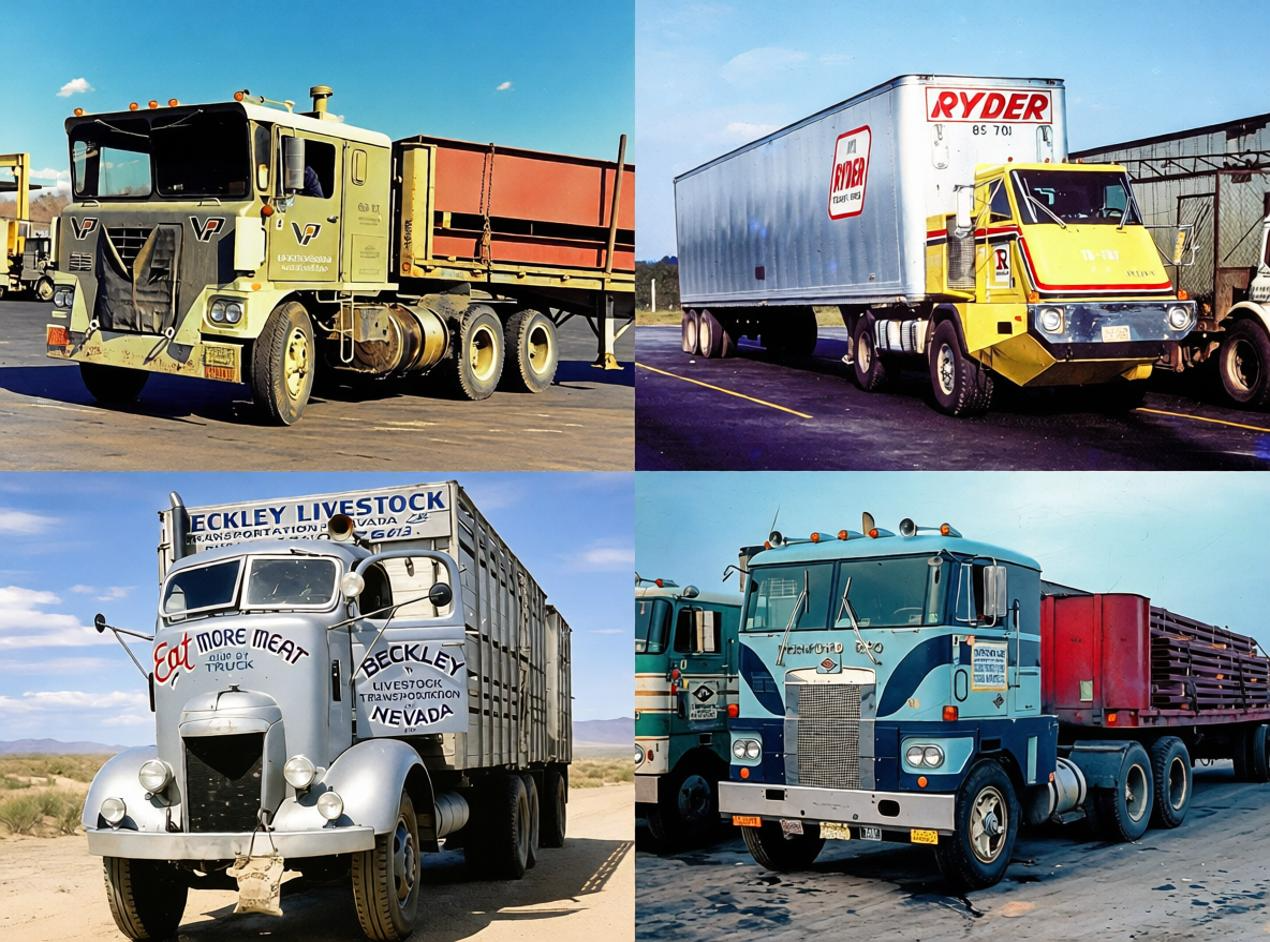
Core Powertrain and Structural Design
Engine and Transmission
The tractor engine provides the power required to move the complete truck and trailer combination. Cabover semi-trailer trucks commonly use heavy-duty diesel engines, although powertrain availability depends on the manufacturer, vehicle class, and destination market.
Engine selection should be based on the loaded gross combination weight, road gradients, annual mileage, operating speed, and expected duty cycle.
Important engine parameters include:
-
Rated power: Expressed in kilowatts (kW) or horsepower (hp), indicating the engine's available power under specified conditions.
-
Maximum torque: Measured in newton-meters (Nm), influencing acceleration and pulling performance.
-
Torque characteristics: Determine how effectively the engine delivers pulling force across its operating speed range.
-
Fuel consumption: Depends on engine technology, payload, driving speed, terrain, aerodynamics, and driving behavior.
-
Emissions system: Must meet the requirements of the market where the truck will be registered and operated.
The transmission transfers engine power to the drive axles. Available configurations may include manual, automated manual, and automatic transmissions.
An appropriate transmission helps maintain engine efficiency and provides suitable gear ratios for highway cruising, acceleration, and climbing gradients. For heavy transport, buyers should evaluate transmission performance under the intended loaded operating conditions rather than selecting a gearbox based only on the number of gears.
Hydraulic System
A standard cabover tractor does not necessarily require a hydraulic system to operate a conventional semi-trailer. The tractor's primary functions are propulsion, steering, braking, and trailer coupling.
However, hydraulic equipment may be required for specialized trailer applications.
Examples include:
-
Hydraulic tipping systems for dump semi-trailers.
-
Hydraulic lifting systems for certain low-bed trailers.
-
Hydraulic walking-floor systems.
-
Hydraulic loading ramps.
-
Hydraulic steering systems on specialized multi-axle trailers.
Where hydraulic equipment is required, buyers should confirm pump capacity, operating pressure, flow rate, reservoir capacity, cooling requirements, and compatibility between the tractor and trailer.
The hydraulic system must be matched to the trailer manufacturer's specifications. An unsuitable hydraulic power source can lead to slow operation, excessive heat, or component damage.
Cooling and Filtration
Heavy-duty tractor engines generate significant heat during sustained operation, particularly when transporting high gross combination weights or driving on steep gradients.
The cooling system generally includes a radiator, coolant circulation components, fan, hoses, and associated controls. Its capacity must be suitable for the engine rating and expected operating environment.
Filtration systems also protect major powertrain components.
Important filtration components include:
-
Engine air filters.
-
Fuel filters and water separators.
-
Engine oil filters.
-
Transmission filters where applicable.
-
Cooling-system filtration where specified.
Dusty roads, construction environments, and high-mileage operations can increase maintenance demands. Operators should follow the manufacturer's service schedule and adjust inspections according to actual working conditions.
Chassis and Structural Durability
The tractor chassis supports the engine, transmission, cab, fuel tanks, axles, suspension, and fifth-wheel assembly. It must withstand vertical loading, braking forces, acceleration, road impacts, and repeated torsional movement.
Cabover tractors use a compact front-end arrangement. The cab is positioned above the engine, and the vehicle's structural layout must accommodate the cab mounting system, powertrain, steering equipment, and front axle.
The semi-trailer has a separate chassis designed for its specific cargo and operating requirements. Trailer structures may include:
-
Main longitudinal frame rails.
-
Crossmembers.
-
Kingpin assembly.
-
Landing gear.
-
Axle and suspension mounting points.
-
Deck or cargo-body supports.
The tractor and trailer must be compatible in terms of coupling height, kingpin dimensions, fifth-wheel rating, axle loading, and gross combination weight.
Braking System and Operator Safety
Cabover semi-trailer combinations commonly use compressed-air braking systems. The tractor and trailer braking systems must work together to provide controlled deceleration under different load conditions.
Depending on the market and vehicle configuration, safety equipment may include:
-
Anti-lock braking system (ABS).
-
Electronic braking system (EBS).
-
Electronic stability control or related assistance functions.
-
Engine braking or auxiliary braking.
-
Traction-control systems.
-
Driver assistance equipment.
The cabover layout gives the driver a different forward visibility profile from a conventional long-nose tractor. However, actual visibility depends on windshield dimensions, mirrors, cameras, seating position, cab design, and blind spots.
Cab strength, seat belts, airbag availability, and applicable vehicle safety requirements should also be evaluated when purchasing a tractor.
Service Access and Maintainability
Many cabover tractors use a tilting-cab arrangement to provide access to the engine and related components. This allows maintenance personnel to reach major powertrain components without a long front engine compartment.
The cab tilting mechanism, locking system, and support devices must be inspected and maintained according to manufacturer instructions.
For fleet operators, serviceability should be assessed through:
-
Accessibility of engine and transmission components.
-
Ease of filter replacement.
-
Cooling-system inspection access.
-
Availability of diagnostic equipment.
-
Spare-parts supply.
-
Local workshop and dealer support.
A compact vehicle layout does not automatically mean lower maintenance costs. Actual expenses depend on component design, service intervals, parts prices, labor rates, and operating conditions.
Technical Specifications
The technical specifications of a cabover semi trailer truck vary by manufacturer, model, market, and intended application. A regional distribution tractor may have different engine power and axle configurations from a long-distance heavy-duty tractor.
The following table identifies the main parameters buyers should compare. It provides a selection framework rather than official specifications for a particular truck model.
|
Key Parameter |
Typical Technical Specification |
Operational Significance |
|---|---|---|
|
Cab configuration |
Cab-over-engine, forward-control design |
Reduces the tractor's front-end length |
|
Engine power |
Manufacturer-rated kW or hp |
Determines available power for the loaded combination |
|
Maximum torque |
Manufacturer-rated Nm |
Influences pulling performance and acceleration |
|
Transmission |
Manual, automated manual, or automatic |
Affects gear selection and driving efficiency |
|
Drive axle configuration |
4×2, 6×2, or 6×4 |
Influences traction, axle loading, and application suitability |
|
Fifth-wheel capacity |
Manufacturer-rated coupling and vertical load limits |
Determines compatible trailer configurations |
|
Braking system |
Compressed-air brakes, ABS, and optional EBS |
Supports controlled braking and road safety |
|
Gross combination weight |
Model- and market-specific approved rating |
Defines the permitted total operating weight |
Gross combination weight (GCW) refers to the total operating weight of the tractor, semi-trailer, cargo, fuel, and other equipment. It must remain within the manufacturer's approved rating and the applicable legal limits.
Engine power and torque should be evaluated together. A truck with higher horsepower is not automatically more suitable for every application. Transmission ratios, axle configuration, vehicle weight, and operating conditions also influence performance.
The fifth-wheel rating is equally important. Buyers should confirm that the tractor can support the trailer's vertical load and that the coupling system is compatible with the trailer's kingpin and mounting arrangement.
Comparative Advantages TCO and ROI
The main alternative to a cabover semi-trailer truck is a conventional long-nose tractor and semi-trailer combination. Both configurations are widely used for commercial freight, but their cab positioning and vehicle packaging differ.
Cabover vs. Conventional Long-Nose Tractor
A cabover tractor places the cab above the engine, creating a shorter front section. A conventional tractor places the engine in front of the cab, producing a longer hood.
Their practical differences include:
-
Overall tractor length: Cabover designs generally have a shorter front section, which can help where vehicle length is restricted.
-
Maneuverability: A shorter front profile can be advantageous in some confined areas, although turning radius also depends on wheelbase and steering geometry.
-
Forward visibility: The cabover layout provides a different seating and windshield position, but visibility depends on the complete cab design.
-
Engine access: Cabover tractors commonly use tilting cabs, while conventional tractors generally provide access through a front hood.
-
Driver comfort: Ride quality, noise insulation, cab suspension, and interior space vary by model.
-
Fuel efficiency: Neither configuration is automatically more efficient. Aerodynamics, engine technology, speed, load, and driving behavior have significant effects.
The most appropriate configuration depends on the destination market, road conditions, transport routes, and fleet requirements.
Total Cost of Ownership
Total cost of ownership (TCO) includes all major expenses incurred during the truck's operating life.
Key cost categories include:
-
Tractor and semi-trailer purchase price.
-
Fuel consumption.
-
Scheduled servicing and replacement parts.
-
Tire replacement and wear.
-
Brake and suspension maintenance.
-
Insurance, registration, and road charges.
-
Driver labor and training.
-
Unplanned repairs and downtime.
-
Depreciation and resale value.
A fleet comparing two tractor configurations should use consistent assumptions for annual mileage, average payload, fuel price, financing, maintenance, and expected ownership period.
For example, a five-year comparison should account for total fuel consumption and repair expenses over the same annual distance. A vehicle with a higher purchase price may still be commercially competitive if it provides better utilization or lower operating expenses, but this must be established using actual operating data.
Return on Investment
Return on investment depends on the truck's ability to generate revenue while controlling transport costs.
A cabover tractor may offer practical value in operations where a shorter front section helps meet vehicle-length requirements or access confined delivery locations. However, these benefits only create financial value when they improve fleet productivity or reduce operational restrictions.
Fleet managers should evaluate:
-
Annual trips and distance traveled.
-
Average payload per trip.
-
Fuel cost per kilometer or mile.
-
Maintenance expenses.
-
Vehicle availability.
-
Revenue per completed trip.
-
Resale value at the end of the ownership period.
No fixed savings or return can be assumed without vehicle-specific quotations and operating records.
Heavy Duty Application Scenarios
Cabover semi-trailer trucks are suitable for a wide range of commercial transportation applications. The correct tractor and trailer configuration depends on the cargo, route, legal requirements, and operating environment.
Long-Distance Freight Transport
For long-distance freight, the tractor must provide sufficient engine power, torque, cooling capacity, and braking performance for sustained operation.
Common trailer configurations include:
-
Curtain-side semi-trailers.
-
Enclosed box semi-trailers.
-
Flatbed semi-trailers.
-
Refrigerated semi-trailers.
-
Container chassis trailers.
Important considerations include fuel-tank capacity, aerodynamic performance, transmission gearing, driver comfort, and service network coverage.
Urban and Regional Distribution
Cabover tractors can be useful for regional distribution because their compact front-end design may help with access to warehouses, industrial facilities, and urban delivery areas.
Fleet operators should evaluate:
-
Turning radius and wheelbase.
-
Cab visibility and blind spots.
-
Vehicle length restrictions.
-
Loading-dock access.
-
Local emissions requirements.
-
Traffic and road conditions.
Container and Port Transportation
Container chassis trailers are commonly used with heavy-duty tractors to transport shipping containers between ports, terminals, warehouses, and distribution centers.
The tractor must be compatible with the chassis in terms of fifth-wheel height, kingpin position, axle loading, and gross combination weight.
Port operations may also involve frequent stopping, low-speed maneuvering, and extended periods of idling, which should be considered when selecting the powertrain and maintenance schedule.
Construction and Machinery Transportation
Cabover tractors can be paired with flatbed and low-bed semi-trailers to transport construction materials, steel products, excavators, loaders, and other machinery.
For heavy equipment transport, buyers should pay particular attention to:
-
Trailer deck strength.
-
Axle capacity.
-
Loading ramp design.
-
Cargo-securing points.
-
Tractor coupling capacity.
-
Permitted combination weight.
-
Route restrictions and oversize permits.
The tractor must be matched to the loaded trailer rather than selected solely according to engine horsepower.
Specialized Industrial Transport
Some industrial applications require tank trailers, bulk cement trailers, dump trailers, or other specialized equipment.
In these cases, the tractor may need additional hydraulic, electrical, or pneumatic connections. Buyers should confirm that the tractor has the required auxiliary equipment and that all connections are compatible with the selected trailer.
Selection and Maintenance Considerations
Selecting a cabover semi trailer truck requires matching the tractor, trailer, cargo, route, and destination regulations. A truck suitable for regional freight may not be appropriate for heavy machinery transport or demanding long-distance operations.
Key Purchasing Considerations
1. Define the transport application
Determine whether the vehicle will transport containers, general cargo, construction materials, machinery, bulk products, or another type of load. This determines the appropriate trailer and tractor configuration.
2. Confirm gross combination weight
Check the permitted GCW, axle loads, dimensions, and coupling ratings in the destination market. Legal limits can vary between countries and road networks.
3. Match engine power and torque
Select the engine according to the expected load, road gradients, operating speed, and annual mileage. Consider the complete torque curve rather than horsepower alone.
4. Select the correct axle configuration
A 4×2 tractor may suit certain highway and regional applications. A 6×2 or 6×4 configuration may be appropriate for other load, traction, and axle-capacity requirements. The final choice should reflect local regulations and actual operating conditions.
5. Verify fifth-wheel compatibility
Confirm the fifth-wheel rating, coupling height, kingpin dimensions, mounting position, and axle-load distribution before ordering the tractor and trailer combination.
6. Check emissions compliance
The engine and emissions-control system must meet the applicable requirements in the destination market. Buyers should request the documentation for the exact vehicle configuration.
7. Evaluate after-sales support
For international purchases, confirm spare-parts availability, warranty terms, diagnostic support, workshop capability, and expected delivery times for replacement components.
8. Compare the complete vehicle package
Evaluate the tractor and semi-trailer together, including coupling compatibility, cargo capacity, braking connections, lighting, and auxiliary systems.
Preventive Maintenance
Regular maintenance helps maintain vehicle reliability, roadworthiness, and fleet availability. Service intervals should follow the manufacturer's recommendations and account for operating conditions.
Important inspection areas include:
-
Engine oil, coolant, and filters.
-
Fuel system and air filtration.
-
Transmission lubricant and clutch condition where applicable.
-
Cooling system, radiator, hoses, and fan.
-
Brake air lines, reservoirs, valves, and components.
-
ABS sensors and EBS components where fitted.
-
Tires, wheel fasteners, and suspension.
-
Fifth-wheel locking mechanism and lubrication.
-
Trailer electrical connections and lighting.
-
Cab tilting mechanism and locking devices.
Drivers should be trained to identify warning lights, abnormal noises, air-pressure problems, unusual vibration, and changes in braking performance. Serious faults involving steering, braking, coupling, or structural components should be inspected by qualified technicians before the vehicle returns to service.
Conclusion
A cabover semi trailer truck combines a compact forward-control tractor design with a semi-trailer to support commercial freight transportation. Its shorter front section can be advantageous in certain urban, regional, and length-restricted transport environments, while its actual performance depends on engine power, torque, transmission, axle configuration, chassis strength, braking equipment, and trailer compatibility.
For fleet buyers, the best purchasing decision comes from evaluating the complete combination against cargo requirements, road conditions, legal weight limits, emissions regulations, maintenance resources, and total cost of ownership. Selecting a properly matched cabover tractor and semi-trailer helps establish a practical and reliable transport solution for long-term commercial operations.