

Introduction
A semi trailer repair shop is a specialized service facility equipped to inspect, diagnose, and restore the structural, braking, suspension, and electrical systems of semi trailers independent of the tractor unit. Because trailers are unpowered and frequently dropped at terminals, depots, and customer docks, the repair shop must be designed around trailer handling rather than vehicle drive-in access. This distinction shapes everything from bay dimensions and lifting equipment to technician workflow and parts inventory.
The operational pressures on a semi trailer repair shop are direct and measurable. A trailer held in a service bay is a trailer not generating revenue, so bay turn time is the shop’s central productivity metric. Brake and suspension work accounts for a large share of routine repairs, and repeat comebacks from incomplete diagnosis erode both profitability and customer trust. Regulatory compliance—brake performance standards, lighting and reflector requirements, and structural integrity rules—adds a mandatory inspection burden that the shop must be equipped and trained to meet.
This guide examines the facility design, equipment specification, technician capability, and service economics that determine whether a semi trailer repair shop operates as a reliable profit center or a bottleneck in the fleet’s maintenance chain.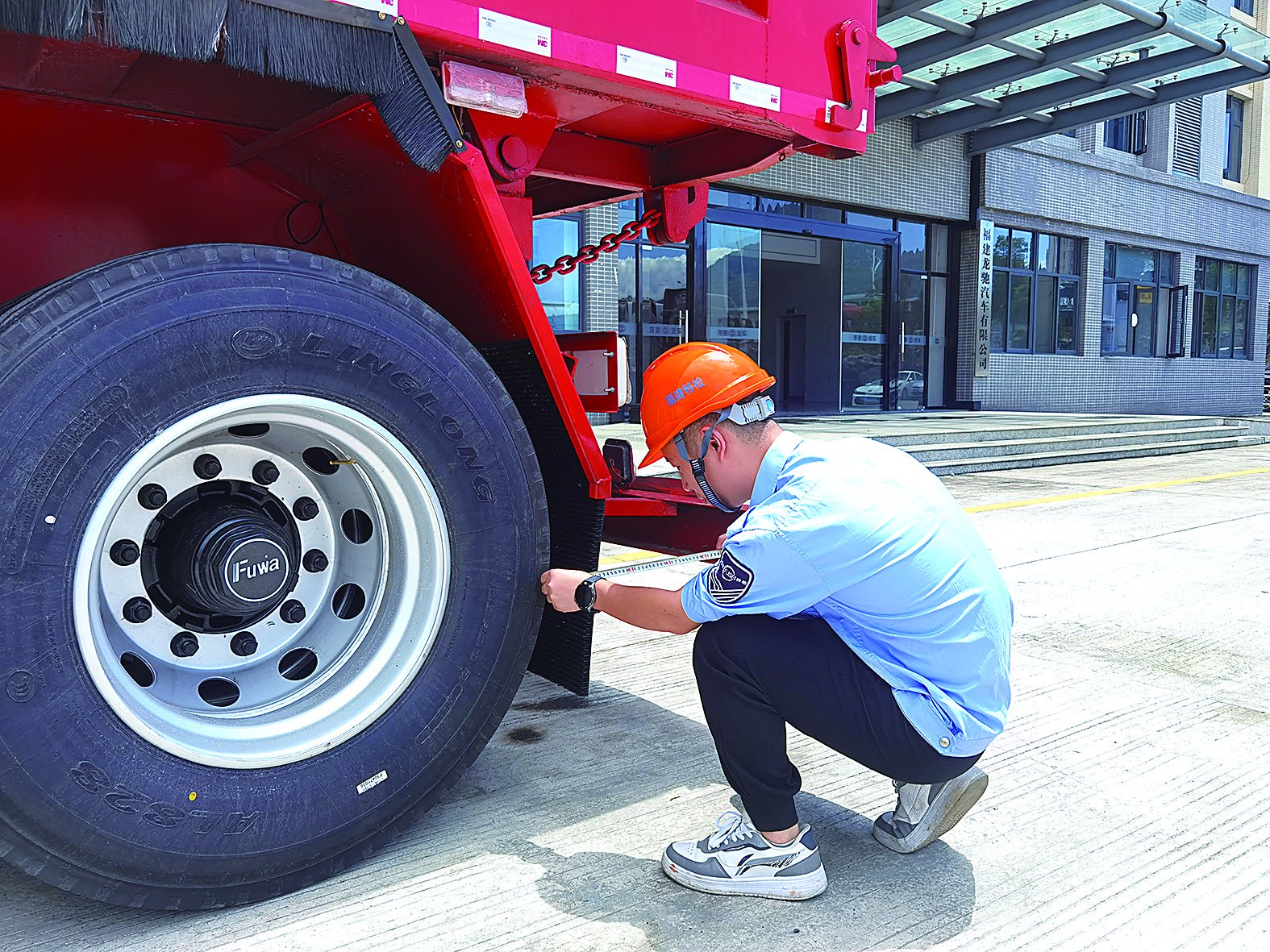
Core Powertrain and Structural Design
Facility Layout and Bay Configuration
A semi trailer repair shop is organized around drive-through or pull-in bays sized for trailer length and clearance. A common practical bay length is 18–20 m to accommodate a 13.6 m trailer with working space at both ends, and a bay width of 5–6 m to allow safe access to both sides. Drive-through bays with doors at both ends eliminate the need to reverse a trailer out of the shop, reducing the risk of damage to trailers, doors, and personnel .
Floor specification matters more than it may appear. A reinforced concrete floor rated for concentrated axle loads and jack stand point loads is essential. Floor flatness affects alignment measurements and jack stability. Drainage should channel away from work areas, and electrical outlets, compressed air drops, and lighting should be positioned for access with the trailer in place rather than planned after the building shell is complete.
Lifting, Support and Access Equipment
Semi trailers are repaired in one of two positions: coupled to a tractor and supported by the fifth wheel, or uncoupled on landing gear and axle stands. A well-equipped shop supports both modes. Heavy-duty jack stands rated for the axle load, positioned under the axle beam or frame rails, provide stable support for brake and suspension work. Portable column lifts or mobile trailer lifts allow the trailer to be raised for undercarriage access without a pit .
Compressed air capacity is a design parameter, not an afterthought. Brake work, impact wrenches, and air-operated tools draw heavily on the system; undersized compressors and inadequate dryer capacity introduce moisture into brake systems and cause repeat failures. A refrigerated air dryer and properly sized receiver tank protect both tools and the trailers being repaired.
Brake, Suspension and Structural Service Systems
The semi trailer repair shop’s core technical capability is brake system service. This requires brake chamber replacement capability, slack adjuster adjustment, drum and disc measurement, and air system leak diagnosis. A calibrated brake stroke gauge and a soap-bottle or ultrasonic leak detector are basic tools, not optional equipment. For shops servicing trailers with EBS or ABS, diagnostic software and the correct connector adapters are required to read fault codes and perform calibration.
Suspension service requires press equipment for bushing replacement, torque wrenches rated for suspension U-bolts and hanger bolts, and inspection access to hanger welds and equalizer pins. Structural repair—crack welding at cross-members and suspension brackets—requires welding procedure qualification and post-weld inspection discipline. A shop that welds on trailer frames without controlling heat input and weld quality can introduce new fatigue initiation points rather than removing them.
Technical Specifications
The table below presents representative facility and equipment parameters for a mid-sized semi trailer repair shop handling general freight trailers. Values are typical planning ranges; actual requirements vary with trailer types serviced, throughput targets, and local code requirements.
| Key Parameter | Typical Technical Specification | Operational Significance |
|---|---|---|
| Bay length | 18–20 m | Accommodates 13.6 m trailer with working clearance at both ends |
| Bay width | 5–6 m | Safe two-side access for brake and suspension work |
| Floor load rating | Reinforced concrete for axle and jack stand point loads | Prevents floor damage and jack instability under loaded trailer |
| Compressed air capacity | Sized for multiple simultaneous air tools with refrigerated dryer | Protects brake systems from moisture contamination |
| Jack stand capacity | Rated for maximum axle load with margin | Safety-critical support during undercarriage work |
| Brake diagnostic capability | Stroke gauge, leak detector, ABS/EBS scan tool | Enables complete diagnosis rather than parts substitution |
| Welding capability | Qualified procedure for trailer frame repair | Prevents new fatigue initiation points at repair welds |
| Parts inventory scope | Brake chambers, slack adjusters, bushings, seals, lights, air lines | Reduces bay turn time by avoiding external parts sourcing delays |
Comparative Advantages TCO and ROI
The semi trailer repair shop competes with two alternatives: the full-service truck and trailer dealership and the mobile roadside repair service. The dealership offers OEM parts, manufacturer-trained technicians, and warranty administration, but its labor rates are typically higher and its scheduling less flexible for routine trailer maintenance. The mobile service eliminates the need to move the trailer to a shop, but it is limited in the scope of work it can perform—structural repair, axle replacement, and extensive brake overhaul generally require a fixed facility.
The in-house or dedicated semi trailer repair shop occupies a middle position: lower overhead than a dealership, greater capability than mobile service, and scheduling control that supports planned preventive maintenance rather than reactive repair. For a fleet of 50 or more trailers, the economics of a dedicated shop are usually favorable because the fleet generates enough routine work to keep bays utilized and justify tooling investment.
A defensible ROI example requires stated assumptions. Consider a fleet evaluating an in-house shop against continued outsourcing. Assume 50 trailers averaging two repair events per year each, with an outsourced average invoice of 2,500 CNY per event including labor, parts markup, and trailer transport. Annual outsourced cost is approximately 250,000 CNY. An in-house shop with two bays, one technician, and 180,000 CNY in annual fixed cost (space, utilities, tooling depreciation) plus 120,000 CNY in parts and labor at cost handles the same volume for approximately 300,000 CNY—higher in this simplified case. The in-house case improves when repair volume exceeds roughly 70 trailers, when transport and downtime costs are included in the outsourced baseline, or when the shop also performs preventive maintenance that reduces repair frequency. Buyers should model their own volumes, labor rates, and downtime costs rather than adopting a generic threshold.
Downtime reduction is often the largest unquantified benefit. A trailer waiting two days for an external shop appointment may lose revenue that exceeds the repair invoice. An in-house shop that turns routine brake work in a single shift converts that lost revenue into available capacity.
Heavy Duty Application Scenarios
-
Fleet-owned maintenance facility: A dedicated shop serving a single fleet’s trailers, with standardized parts inventory and scheduled preventive maintenance. The primary design driver is throughput and predictable turn time rather than customer-facing service.
-
Third-party commercial trailer repair shop: Serves multiple fleet customers with varied trailer types and urgent repair needs. Requires broader parts inventory, flexible scheduling, and stronger diagnostic capability because the shop cannot rely on familiarity with a single fleet’s configuration.
-
Terminal and port repair depot: Located near container yards and drayage operations, with high-frequency brake, light, and structural work driven by intensive short-cycle duty. Bay design must accommodate rapid turnover and inspection documentation for regulatory compliance.
-
Heavy-haul and lowbed specialist shop: Equipped for multi-axle configurations, hydraulic gooseneck service, and structural repair on trailers rated above 60 tonnes. Requires heavier lifting equipment, hydraulic test capability, and welding procedures qualified for high-strength trailer steels.
Selection and Maintenance Considerations
Planning or selecting a semi trailer repair shop begins with the scope of work the facility must support. A shop limited to brake and light repair needs less space and tooling than one performing axle replacement, structural welding, and hydraulic system overhaul. The scope determines bay size, lifting capacity, diagnostic tools, and technician skill requirements.
Key considerations include:
-
Regulatory and safety compliance: Brake performance and lighting requirements are enforced at inspection, and the shop’s work must meet them. Welding, compressed air systems, and lifting equipment are subject to workplace safety regulation. Confirm that the facility’s procedures and equipment are documented and current.
-
Technician training and certification: Brake system diagnosis, ABS/EBS fault reading, and structural welding each require specific competence. A shop with strong brake capability but no qualified welder cannot perform structural repair safely. Training investment should match the service scope.
-
Parts availability and inventory discipline: Common wear parts—brake chambers, slack adjusters, bushings, seals, lamps, and air line fittings—should be stocked at levels that prevent bay idle time. Slow-moving parts can be sourced externally, but a shop that waits for every part erodes its turn-time advantage.
-
Diagnostic capability over parts substitution: A shop that replaces brake chambers without measuring pushrod stroke or checking air system contamination will produce repeat failures. Diagnostic tools and the discipline to use them separate a reliable shop from a parts-changing operation.
-
Documentation and warranty: Repair records should capture the inspection findings, parts installed, and measurements taken. This documentation supports warranty claims on parts and provides the fleet with a maintenance history that protects resale value.
Conclusion
A semi trailer repair shop is an engineered service system, not simply a building with tools. Bay dimensions, floor capacity, air system quality, lifting equipment, and diagnostic capability all determine whether the shop can turn trailers quickly and correctly. The technician skill mix and the discipline to diagnose before replacing parts determine whether repairs last.
Commercially, the shop’s value is measured in bay turn time, repeat-failure rate, and downtime avoided rather than in labor rate alone. A fleet or operator that matches facility scope to actual trailer types and repair volumes, invests in diagnostic capability, and documents every repair achieves lower cost per trailer-kilometer and stronger resale value than one that treats the shop as a cost center. The engineering and commercial logic converge: specify the facility for the work it must do, staff it for the diagnosis it must perform, and measure it by the downtime it prevents.