

Overview
A flatbed semi trailer is an open-deck articulated trailer with no side walls or roof, designed for carrying containers, steel products, construction materials, machinery, and oversized cargo that cannot be loaded into an enclosed van. For procurement managers and fleet operators, the critical decisions involve matching axle configuration and deck rating to the actual cargo profile, verifying container locking compatibility, and establishing maintenance routines for the wear components that drive unscheduled downtime.
This FAQ addresses the questions that most directly affect a flatbed semi trailer purchase, fleet deployment, and service lifecycle. Where values vary by configuration or market, typical industry ranges are provided alongside the manufacturer specification that controls the final purchase decision.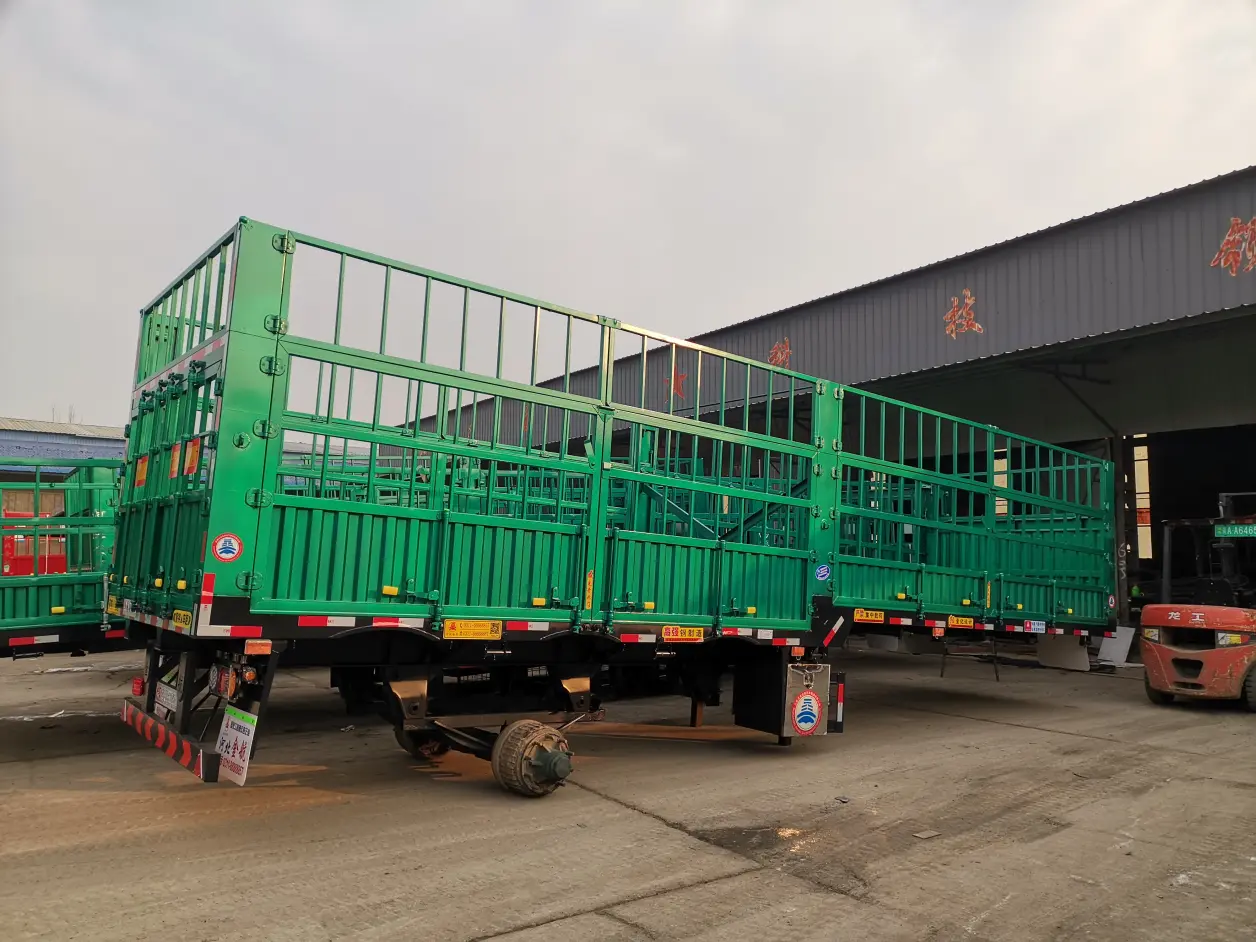
Frequently Asked Questions
What payload capacity does a flatbed semi trailer typically offer?
A standard 3-axle flatbed semi trailer typically carries a rated payload in the range of 40 to 60 tonnes, depending on axle ratings, tire specifications, and local road weight regulations. Chinese-manufactured 3-axle flatbeds commonly list payload capacities between 40,000 kg and 60,000 kg, with tare weights around 7,000 to 7,700 kg .
Payload is governed by the lowest of the trailer’s rated capacity, the tractor’s gross combination weight rating, and the legal axle load limits on the operating routes. A 4-axle configuration extends the range to approximately 80 tonnes for heavy-haul applications, but the additional tare weight and reduced maneuverability must be weighed against the payload gain . Fleets should confirm the trailer data plate rating and the specific axle load limits for every jurisdiction in the operating network before finalizing a specification.
How many axles should I specify for a flatbed semi trailer?
Three axles is the most common and versatile configuration for general freight, steel transport, and container hauling, offering a practical balance between payload capacity and fleet flexibility. A 3-axle flatbed distributes load more effectively than a 2-axle unit and is easier to maintain and maneuver than 4-axle configurations .
Axle selection should follow the cargo profile rather than a default preference. Fleets routinely carrying loads above 60 tonnes, such as mining equipment or heavy machinery, should specify a 4-axle or 5-axle configuration to obtain adequate load margin and safety reserve . A 3-axle trailer may occasionally handle a heavier load, but the question is how long it can do so reliably without frame fatigue or suspension damage. Procurement teams should also verify per-axle weight limits at the destination, since a 50-tonne rated trailer operating under a 12-tonne per-axle restriction legally carries only about 36 tonnes with three axles .
What is the difference between mechanical and air suspension for a flatbed trailer?
Mechanical leaf-spring suspension is simpler, more durable, and easier to repair in regions with limited service resources, while air suspension offers better ride quality and cargo protection for sensitive or high-value loads. Mechanical suspension remains the default specification for flatbed trailers in many export markets because a broken leaf spring can be replaced by most repair shops without waiting for specialized parts .
Air suspension reduces shock loads on the deck and cargo, which is advantageous for delicate machinery or electronics, but it requires specialized diagnostic equipment and trained technicians when air bags leak or leveling valves fail. In areas where repair infrastructure is limited, a leaking air bag or stuck height control valve can keep the trailer out of service for days. The appropriate choice depends on route quality, cargo sensitivity, and the local maintenance network rather than a universal preference.
How do container twist locks work on a flatbed semi trailer?
Container twist locks are retractable locking mechanisms mounted at standardized positions on the flatbed deck that engage the corner castings of ISO containers to secure them during transport. A typical flatbed semi trailer carries 12 twist locks in a layout that accommodates one 40-foot container, two 20-foot containers, or a single 20-foot container .
The twist lock layout is not a generic feature; incorrect positioning can prevent a container from seating properly or compromise restraint. For fleets that regularly carry both 20-foot and 40-foot containers, specifying a trailer with retractable central locks that can be laid down when not in use provides flexibility without obstructing flat cargo. Buyers should confirm the twist lock standard and the container sizes the trailer is designed to accept before ordering, particularly for intermodal or port drayage operations.
What maintenance intervals apply to a flatbed semi trailer?
A flatbed semi trailer requires daily pre-trip inspection of tires, lights, brake lines, and load security, with wheel bearing lubrication and brake system checks at approximately 10,000-kilometer intervals. Daily checks should confirm tire inflation and condition, that all lighting functions correctly, and that there are no air leaks in the brake system .
At the 10,000-kilometer service, wheel bearings should be cleaned and repacked, brake adjustment verified, and the suspension inspected for loose axle pull arms or worn components . Tire pressure should be checked monthly at ambient temperature, and tires with cracking or uneven wear should be evaluated for replacement. The deck surface and side rails should be inspected for cracks, deformation, or corrosion at each service, particularly around weld joints and crossmember connections. These intervals represent typical industry practice; the trailer manufacturer’s maintenance manual controls the actual schedule for a specific model.
What are the most common wear components on a flatbed semi trailer?
The most common wear components on a flatbed semi trailer are tires, brake linings and drums, suspension bushings and leaf springs, wheel bearings and seals, and deck surface fittings. These items absorb the cyclic loads of loading, unloading, and road operation and are the primary drivers of unscheduled maintenance cost.
Tires wear from both road use and scrubbing during tight turns, particularly on multi-axle configurations where tire scrub is more pronounced. Brake linings and drums should be inspected as a system, with pushrod stroke checked against the chamber adjustment limit. Leaf springs commonly develop cracks at the first and second leaves, especially in overloaded or rough-road service. Wheel oil seals are a frequent leak source that, if ignored, leads to bearing damage. Deck checker plate and twist lock mechanisms wear from repeated container engagement and cargo abrasion. Fleets should stock the wear items most relevant to their duty cycle rather than a generic parts inventory.
What should I check before accepting delivery of a new flatbed semi trailer?
Before accepting delivery, verify that the trailer’s data plate matches the ordered specification, that all welds and structural connections are sound, and that the braking and lighting systems function correctly. The data plate should confirm the model, dimensions, axle ratings, and tare weight against the purchase order.
A delivery inspection should cover the main beam for straightness and weld quality, the deck surface for flatness and secure attachment, the twist locks for proper operation and retraction, and the suspension for correct assembly and fastener torque. Brake chambers, air lines, and electrical connections should be tested for leaks and proper function. Kingpin size and landing gear operation should also be confirmed. Any discrepancy between the delivered unit and the specification should be documented and resolved before the trailer enters service, as post-delivery corrections are more difficult to enforce.
Conclusion
Flatbed semi trailer procurement comes down to matching axle count and deck rating to the actual cargo profile, verifying container locking compatibility for the intended freight mix, and building a maintenance routine around the wear items most likely to cause downtime. Published payload figures and maintenance intervals should be treated as planning inputs, not as substitutes for the trailer data plate, the manufacturer’s manual, and the axle load regulations of the operating jurisdictions.