

Overview
Adjusting semi trailer brakes correctly requires measuring the pushrod stroke first, then determining whether the slack adjuster is manual or automatic before deciding whether an adjustment is appropriate at all. For fleet maintenance teams, the critical distinction is that an automatic slack adjuster should not be manually readjusted to compensate for excessive stroke—if the stroke exceeds the limit, the correct response is to diagnose the foundation brake or replace the slack adjuster, not to crank the adjustment hex .
This FAQ addresses the stroke limits, measurement procedure, manual adjustment steps, and automatic slack diagnostics that matter most in semi trailer brake maintenance. The brake chamber’s stamped type and the applicable FMVSS or CVSA limits control the specific inspection decision; the manufacturer’s service manual controls the repair procedure.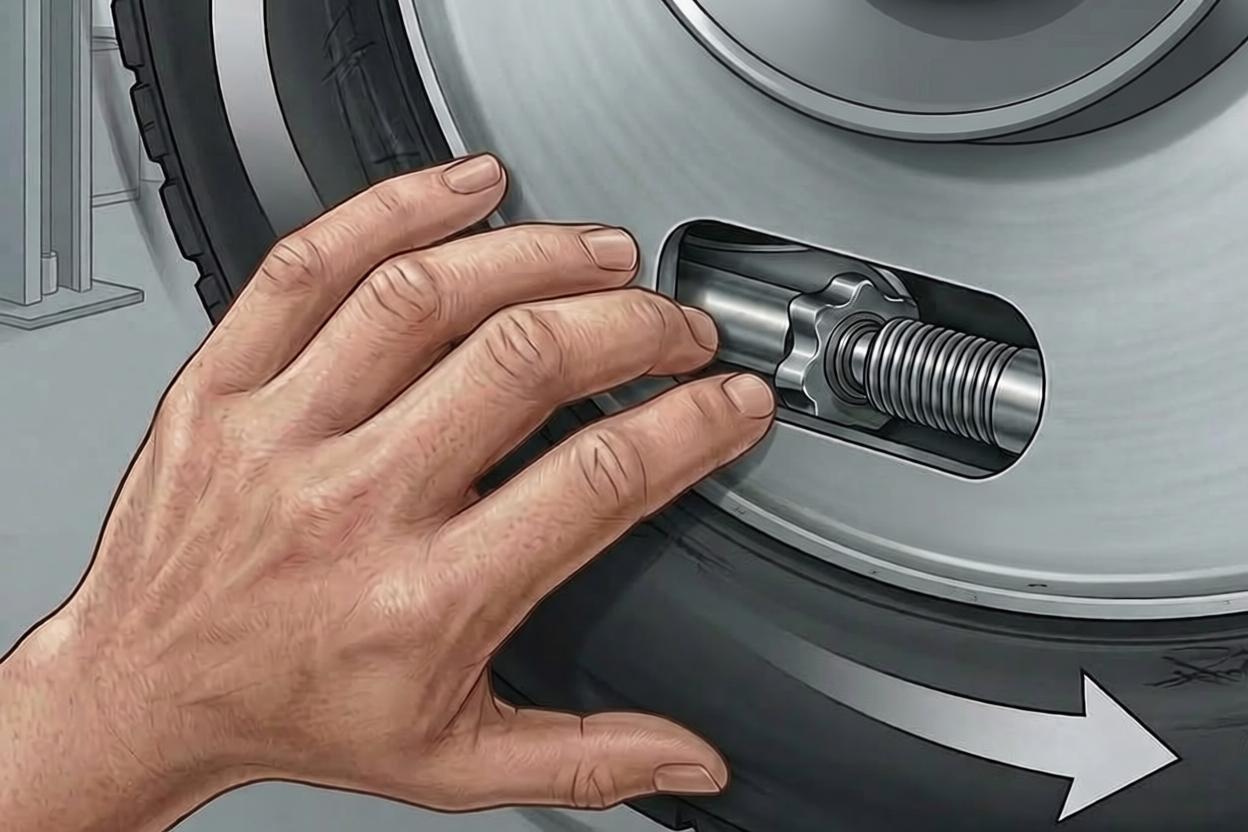
Frequently Asked Questions
What is the correct pushrod stroke limit for a semi trailer brake chamber?
The correct pushrod stroke limit depends on the chamber type: for a standard type 30/30 chamber, the maximum stroke is 2 inches (51 mm), while for type 24, 20, and 16 chambers the limit is 1¾ inches (44.5 mm) . Long-stroke chambers carry higher limits and must be identified by their square ports or trapezoidal tags before the limit is applied.
These are legal adjustment limits, not recommended operating targets. A properly adjusted brake with new linings typically shows a stroke of approximately 1½ inches on a type 30 chamber . A brake found at the adjustment limit is not a violation, but a brake that exceeds the limit is out of adjustment and must be corrected before the vehicle operates . Measurement must be taken with the engine off, air pressure at 90 to 100 psi, and the service brakes fully applied .
How do I measure semi trailer brake pushrod stroke?
Measure stroke by marking the pushrod with the brakes released, applying the brakes fully, and measuring the distance the pushrod travels from the mark to its new position. The alternative method measures from the bottom of the brake chamber to the center of the large clevis pin in both the released and applied positions, then subtracts the released measurement from the applied measurement .
The measurement conditions are critical. Air pressure must be between 90 and 100 psi with the engine shut off, the spring brakes released, and the service brakes fully applied and held . A second person or a brake-holding device is required to maintain the application while the measurement is taken. The stroke should be measured on every wheel end, not just the one that appears suspect, because the CVSA 20% rule places a vehicle out of service if 20% or more of its brakes are defective .
How do I adjust a manual slack adjuster on a semi trailer?
To adjust a manual slack adjuster, turn the adjustment hex clockwise until the brake shoes contact the drum, then back off one-half turn counterclockwise. This sets the running clearance and should produce a stroke within the applicable limit when measured.
The procedure begins with the brakes released and the wheels safely chocked. Locate the adjustment hex on the slack adjuster and turn it in the direction that moves the shoes toward the drum until solid resistance is felt, indicating contact . Then back the hex off one-half turn to establish clearance. After adjustment, re-measure the pushrod stroke to confirm it is within the limit, and check the drum for excessive heat after a test application—a drum that is too hot indicates the brakes are adjusted too tight . Only qualified individuals should perform brake adjustment; drivers with the appropriate endorsement may adjust manual slacks where permitted .
Why should I not manually adjust an automatic slack adjuster?
You should not manually adjust an automatic slack adjuster to correct excessive stroke, because the automatic mechanism is designed to maintain adjustment itself, and a stroke that exceeds the limit indicates a fault that manual adjustment will not fix. The Crewson Brunner service guidance states that if the maximum chamber stroke is within the range for the chamber size, the slack should not be manually readjusted; if the stroke exceeds the limit and does not adjust to within specifications, either the brake linings or the slack adjuster should be replaced .
The diagnostic check is to apply the brakes several times and watch whether the adjustment hex rotates. A box wrench on the hex makes an excellent indicator to magnify the movement. If the hex extension does not rotate, the automatic slack must be replaced . Manually cranking an automatic slack to mask a stroke problem can damage the self-adjusting clutch and delay the repair of the underlying fault.
What causes a brake to exceed its adjustment limit after adjustment?
A brake that exceeds its limit after proper adjustment typically has worn linings, a worn or damaged slack adjuster, or a mechanical fault in the foundation brake that prevents the shoes from contacting the drum. Meritor’s guidance states that if the pushrod travel exceeds the maximum stroke, the slack adjuster should be inspected and replaced if necessary .
The diagnostic sequence should check the lining thickness first. A lining worn below the replacement threshold cannot be brought back into adjustment by any slack adjustment. If the lining is serviceable, inspect the slack adjuster for a slipping clutch or damaged internal mechanism, and check the S-cam bushings, rollers, and return springs for wear. A brake that cannot be adjusted into specification is not a maintenance inconvenience—it is a defect that affects braking force and may trigger an out-of-service violation .
What are the most common mistakes when adjusting semi trailer brakes?
The most common mistakes are measuring stroke at the wrong air pressure, manually adjusting an automatic slack, and failing to re-measure after adjustment. Each of these produces a false sense of compliance and leaves the vehicle with a brake that may still be out of adjustment.
The measurement error is the most consequential. Stroke measured below 90 psi will read short because the chamber has not received full application pressure, and stroke measured above 100 psi may over-read. Both conditions produce a result that does not reflect the legal inspection standard . Manually adjusting an automatic slack to bring the stroke within the limit masks the fault and may damage the adjuster . Failing to re-measure after a manual adjustment means the technician does not know whether the adjustment actually corrected the stroke or merely changed it.
When should semi trailer brakes be inspected for adjustment?
Semi trailer brakes should be inspected for adjustment at every preventive maintenance interval, during pre-trip inspections where stroke indicators are fitted, and whenever a driver reports a braking concern. CVSA roadside inspections treat an out-of-adjustment brake as a defect that counts toward the 20% out-of-service threshold .
The inspection frequency should follow the duty cycle. A trailer in frequent stop-and-go service or heavy-haul operation wears linings faster than a long-haul unit and requires more frequent stroke checks. Brake-stroke indicators, where fitted, provide a visual check during walk-arounds, but they must be correctly installed and maintained to be reliable . The manufacturer’s maintenance schedule and the fleet’s own wear data control the actual interval.
Conclusion
Adjusting semi trailer brakes comes down to measuring stroke correctly at 90–100 psi, knowing whether the slack adjuster is manual or automatic, and treating an out-of-limit automatic slack as a diagnostic signal rather than an adjustment opportunity. The type 30 chamber limit is 2 inches, the type 24 limit is 1¾ inches, and a brake at the limit is compliant while a brake beyond it is defective. Manual slacks are adjusted to drum contact then backed off one-half turn; automatic slacks are replaced when the hex stops rotating. The brake chamber type and the manufacturer’s service manual remain the controlling references for every adjustment decision.