

Overview
Semi trailer alignment is the adjustment of the trailer’s axles so that they run parallel to the tractor’s thrust line and to each other, preventing the tires from scrubbing sideways as the combination moves down the road. For fleet maintenance teams, misalignment is one of the most expensive silent faults in trailer operation: it accelerates tire wear, increases fuel consumption through added rolling resistance, and produces dog-tracking that affects stability and driver control .
This FAQ addresses the measurement methods, tolerance limits, wear diagnosis, and cost considerations that matter most when building or auditing a trailer alignment program. Tolerances vary by suspension manufacturer and axle configuration; the specific suspension’s service manual and the trailer manufacturer’s specifications control the adjustment procedure.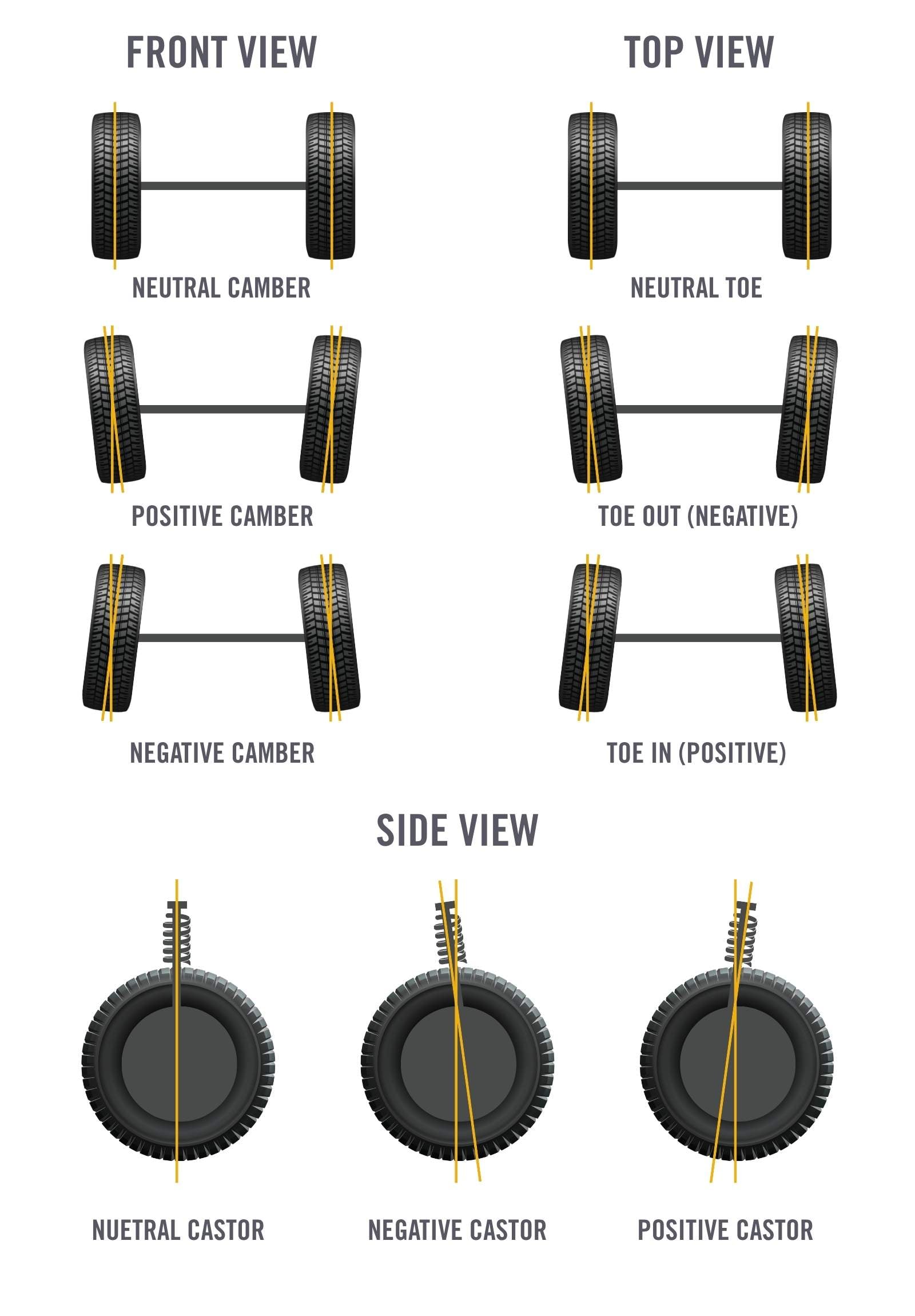
Frequently Asked Questions
What is the difference between thrust angle and scrub angle on a semi trailer?
Thrust angle is the alignment of a single axle relative to the trailer’s centerline or the tractor’s thrust line, while scrub angle is the parallel relationship between two axles on the same trailer. Thrust angle determines whether the axle pushes the trailer sideways; scrub angle determines whether the axles fight each other, creating tire scrub and rolling resistance.
The measurement process reflects this distinction. Thrust angle is checked by measuring from the kingpin to each end of the axle—distances that should be equal within the tolerance. Scrub angle is checked by measuring between axle ends on the same side—distances that should be equal within a tighter tolerance to keep the axles parallel . A trailer can have one axle correctly aligned to the kingpin but a second axle out of parallel with the first, producing scrub even though the thrust measurement looks acceptable.
What are the typical tolerance limits for trailer axle alignment?
The common industry tolerances are 1/8 inch (3.2 mm) difference between the kingpin-to-axle-end measurements for thrust angle, and 1/16 inch (1.6 mm) difference between axle-to-axle measurements for scrub angle . Fruehauf’s suspension guidance states that a 1/16 inch maximum tolerance is commonly considered acceptable for the distance between axles .
These tolerances are tight because the consequences of misalignment compound over distance. A scrub angle of 1/8 inch across a 77.5-inch axle track produces a small but continuous sideways force at every wheel revolution, which scrubs tread rubber away over thousands of miles. The tolerance is not a target to aim for—it is the maximum deviation allowed before the axle must be adjusted. Hendrickson’s alignment procedures use a pre-calculated target value based on kingpin-to-axle distance and axle track to determine whether the measured difference is within specification .
What tire wear patterns indicate a semi trailer alignment problem?
The most common alignment-related tire wear patterns are feathering or cupping on the tread, flat spots on one side of the tire, and rapid shoulder wear that does not match the tire’s inflation condition. Uneven wear across the tread—where one edge is worn significantly more than the other—points to a thrust angle or camber issue rather than a pressure problem.
A trailer tire with a diagonal or one-sided wear pattern should trigger an alignment check rather than a simple replacement. Misalignment causes tires to scrub and oppose each other, and the wear pattern follows the direction of the scrub . If the wear is on the inside shoulder of both tires on the same axle, the axle is likely toed in or out relative to the trailer centerline. If the wear pattern alternates between axles, the scrub angle between the axles is the likely cause. Checking inflation first is still appropriate, because underinflation produces its own shoulder wear pattern, but a tire that is correctly inflated and still wearing unevenly is an alignment symptom.
How is semi trailer alignment measured?
Trailer alignment is measured by establishing a reference line from the kingpin and comparing axle positions against it. The standard method uses a kingpin extender and axle-end extenders to create straight measuring surfaces, a 50-foot steel tape with consistent tension, and optionally a trammel bar for axle-to-axle measurements .
The measurement sequence begins with the trailer unloaded and level, with the suspension freed of binds by pushing the trailer backward then pulling it forward. The kingpin-to-axle-end distances (A and B) are measured on both sides, and the difference is compared against the thrust angle target. The axle-to-axle distances (C and D) are then measured between the front axle and each subsequent axle, and the difference is compared against the scrub angle tolerance . Using a tensioning device or spring scale ensures that the same pulling force is applied to both measurements, because tape tension variation alone can introduce a 1/16-inch error.
What causes semi trailer axles to go out of alignment?
Semi trailer axles go out of alignment from impact damage—potholes, curbs, and dock strikes—and from wear in the suspension components that locate the axle. A bent axle beam, worn spring bushings, elongated U-bolt holes, or a shifted slider box can all move the axle out of its designed position.
The alignment check should therefore include a suspension inspection before any adjustment is attempted. Worn or damaged components must be replaced first, because adjusting a track rod or alignment collar on a suspension with worn bushings will not hold the alignment . For sliding tandem suspensions, the alignment is set by the track rod and the slider box position; a slider that has been shifted or a track rod clamp that has loosened will change the axle angle. Leaf spring suspensions can shift on their center bolts, and air suspensions can move if the pivot bolt collars are not welded or tightened correctly .
How much does semi trailer alignment cost compared with neglect?
A single trailer alignment typically costs $150 to $300 at a commercial shop, while a combined tractor-trailer alignment runs $400 to $800 . The cost of neglecting alignment is substantially higher: premature tire replacement can cost $600 to $2,000 per axle set, and misalignment can increase fuel consumption by 1 to 3 percent through added rolling resistance .
The economics favor routine alignment checks as part of the preventive maintenance program. A trailer that scrubs its tires away in one season has already paid for several alignments, and the fuel penalty accumulates silently on every mile. For fleets with high-mileage trailers, including a thrust and scrub angle check in the annual periodic inspection and after any suspension repair is a low-cost control that protects both tire life and fuel efficiency.
What should I check before accepting a trailer alignment job?
Before accepting an alignment job, confirm that the shop will inspect the suspension and axle components first, because worn parts must be replaced before alignment can hold. A shop that quotes an alignment price without inspecting the suspension is likely to return the trailer with the same problem or with an alignment that drifts out within weeks .
The verification should include the measurement method—whether the shop uses a kingpin extender and axle-end extenders or an optical alignment system—and the tolerances they will apply. Ask for the before-and-after measurements in writing, including the thrust angle differences and scrub angle differences. For a trailer with a sliding tandem, confirm that the alignment includes checking the slider lock and track rod clamps. A written measurement record supports the fleet’s maintenance documentation and provides a baseline for tracking whether the alignment holds over time.
Conclusion
Semi trailer alignment comes down to two measurements: the thrust angle, which checks each axle against the kingpin within a 1/8-inch tolerance, and the scrub angle, which checks axle-to-axle parallelism within a 1/16-inch tolerance. The symptoms that should trigger a check are uneven tire wear, dog-tracking, and increased fuel consumption—not a scheduled interval alone. The cost of an alignment is modest compared with the tire and fuel penalty of neglect, but only if the suspension is inspected first and worn components are replaced before adjustment. The suspension manufacturer’s alignment procedure and the trailer data plate remain the controlling references for every adjustment.