

Introduction
A semi trailer motorhome—more commonly called a fifth-wheel trailer in the recreational vehicle market—is a towable living unit that couples to a pickup truck through a fifth-wheel hitch mounted over the truck’s rear axle. The coupling principle is identical to that of a commercial semi trailer: a kingpin on the trailer engages jaws in the hitch, transferring a substantial portion of the trailer’s vertical load to the tow vehicle while the trailer’s own axles carry the remainder. This architecture gives the fifth-wheel RV its defining engineering advantage: the pivot point sits over the rear axle rather than behind it, which improves straight-line stability and reduces the sway tendency that affects conventional bumper-pull travel trailers .
For buyers, the semi trailer motorhome decision is a weight-management problem disguised as a floorplan choice. Pin weight—the downward force the trailer exerts on the truck through the hitch—consumes a significant portion of the truck’s payload capacity. A trailer whose gross weight is within the truck’s tow rating may still overload the rear axle if its pin weight is too high. The operational pressures are concrete: an overloaded truck is a safety hazard and a liability exposure, while an under-specified truck that struggles on grades accelerates wear and erodes the towing experience.
This guide examines the engineering and commercial factors that define fifth-wheel motorhome ownership: pin weight and payload calculations, towing stability mechanics, regulatory length limits, and the total cost of ownership that extends well beyond the purchase price.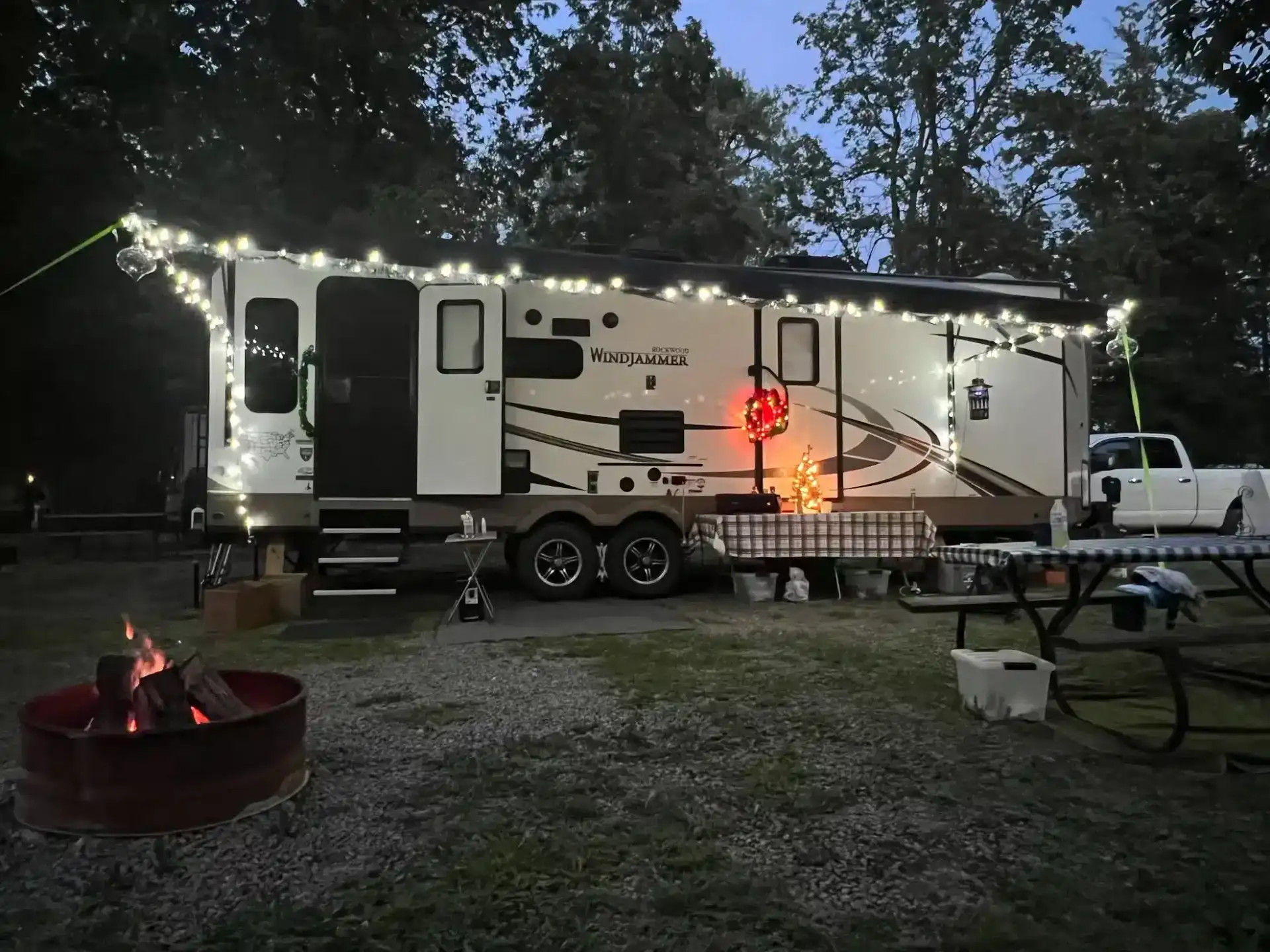
Core Powertrain and Structural Design
Engine and Transmission
A semi trailer motorhome has no engine or transmission. Its performance depends entirely on the tow vehicle’s powertrain and the truck’s Gross Combined Weight Rating (GCWR)—the maximum allowable weight of the loaded truck and trailer together. Diesel-powered heavy-duty pickups in the three-quarter-ton and one-ton classes are the conventional tow vehicles for mid-size and large fifth-wheel trailers. Half-ton trucks can tow some lightweight models, but the margin is narrow: pin weight can consume 15 to 25 percent of the trailer’s gross weight and may exceed the truck’s rear axle rating even when the trailer’s overall weight appears within the truck’s headline tow rating .
The critical specification is not horsepower alone but the truck’s payload capacity and rear axle weight rating (RAWR). A truck with abundant engine power but insufficient rear axle capacity cannot safely carry a heavy pin weight, regardless of how effortlessly it pulls on flat ground.
Hydraulic System
Semi trailer motorhomes do not use hydraulic systems for coupling or towing. The relevant systems are electrical and plumbing. The 7-pin connector supplies lighting and brake signals to the trailer, and the trailer’s onboard 12V system powers interior lighting, water pump, and appliances. Hydraulic leveling systems are common on larger fifth-wheels and add a maintenance surface area: hydraulic jacks, hoses, and valves require periodic inspection for leaks and proper function.
For buyers evaluating used units, the plumbing system deserves equal attention. Fresh water tanks, gray and black tanks, water heaters, and pumps are common failure points. Roof seal failures that allow water intrusion into walls and insulation are among the most costly repair categories in RV ownership, because the damage often remains hidden until delamination or soft floors become visible .
Chassis and Structural Durability
The semi trailer motorhome chassis is a welded steel frame that carries the living space structure and transfers pin weight to the tow vehicle. Unlike a commercial semi trailer engineered for decades of high-mileage service, an RV trailer is typically built for lower annual mileage and may use lighter-gauge materials to reduce weight. Structural inspection should focus on different priorities: water damage to the floor and wall structure, corrosion at frame attachments, and the condition of the pin box—the reinforced structure that transfers kingpin loads into the trailer frame.
Pin weight management is the defining structural constraint. The pin weight is the downward force exerted on the tow vehicle’s rear axle, and it typically falls in the range of 15 to 25 percent of the trailer’s gross weight . A 12,000 lb fifth-wheel trailer may impose 1,800 to 3,000 lb of pin weight on the truck. This load must be subtracted from the truck’s payload capacity along with passengers, fuel, and cargo in the bed. Exceeding the rear axle rating compromises steering and braking stability, regardless of whether the trailer’s total weight is within the truck’s tow rating.
Technical Specifications
The table below presents representative parameters for a mid-size to large semi trailer motorhome and its tow vehicle requirements. Values are drawn from published manufacturer specifications and should be verified against the specific unit’s data plate.
Comparative Advantages TCO and ROI
The semi trailer motorhome competes with two alternatives: the conventional travel trailer (bumper-pull) and the motorized RV (Class A or Class C). The travel trailer offers lower entry cost and compatibility with a wider range of tow vehicles, but it sacrifices interior height, storage capacity, and towing stability compared to a fifth-wheel. The motorized RV eliminates the need for a separate tow vehicle and offers easier setup at camp, but it carries a drivetrain that depreciates rapidly and requires maintenance of engine, transmission, and chassis systems in addition to the living quarters.
The fifth-wheel’s advantage is space and stability per dollar of acquisition cost. For a given length, a fifth-wheel typically provides more interior height and storage than a travel trailer because the sleeping area can extend over the truck bed. The over-axle hitch point produces substantially better sway damping than a conventional trailer at comparable pin weight percentages, and this stability advantage stems largely from the forward hitch location rather than from higher hitch loads alone .
Total cost of ownership extends well beyond the purchase price. Depreciation is the largest cost category: new RVs can lose 20 to 25 percent of their value in the first year, and the steepest depreciation occurs in the first few years of ownership . A $60,000 fifth-wheel may retain roughly 58 percent of its value at year five, though actual figures vary by brand, condition, and market demand.
Maintenance and repairs should be budgeted at 3 to 5 percent of current value annually for towables . Roof seal inspection and repair are recurring costs; tires age out before they wear out and require replacement on a calendar basis rather than a mileage basis. Storage is another significant expense for owners whose neighborhoods or HOAs prohibit RV parking at home. Covered storage can cost hundreds of dollars per month depending on location . Insurance premiums for towable RVs are generally lower than for motorized units but have risen in recent years.
A defensible cost comparison requires stated assumptions. Consider a buyer evaluating a $60,000 fifth-wheel financed at 7 percent over 15 years. The monthly principal and interest payment is approximately $539, totaling $97,020 over the loan term—$37,000 in interest alone. Adding insurance at $1,200 per year, maintenance at 4 percent of current value, storage at $1,800 per year, and registration at $400 per year, the first-year cost of ownership (excluding the tow vehicle) approaches $23,000. Years two through five average somewhat lower as depreciation slows, but the total five-year outlay is substantial. Buyers should model these costs against their actual usage pattern: a trailer used 20 nights per year carries a much higher cost per night than one used 100 nights per year.
Resale value favors well-maintained units with documented service records. Water damage is the single largest value destroyer in used RV markets; a trailer with a history of roof leaks or delamination will sell at a steep discount regardless of its cosmetic condition.
Heavy Duty Application Scenarios
-
Full-time and extended-stay living: A mid-size to large fifth-wheel with residential amenities is a common choice for buyers seeking a home base that can be relocated. The over-axle hitch and greater interior volume make extended living more comfortable than a comparable travel trailer. Priority specifications include tank capacity, insulation, and heating and cooling capacity.
-
Seasonal camping and weekend use: A smaller fifth-wheel under 30 ft paired with a properly rated half-ton or three-quarter-ton truck serves occasional users who value towing stability without the cost of a dedicated heavy-duty tow vehicle. Buyers in this segment should verify pin weight against truck payload before committing.
-
Off-grid and boondocking use: Fifth-wheel trailers with solar prep, large fresh water tanks, and generator capacity support dry camping. The trade-off is weight: water and battery banks add to pin weight and must be accounted for in the truck’s payload calculation.
-
Destination and resort camping: Large fifth-wheels with multiple slide-outs and residential appliances suit campgrounds with full hookups and paved access. Maneuverability in tight sites is a consideration; fifth-wheels can be more difficult to back into tight spaces than bumper-pull trailers because the pivot point is over the axle rather than behind it.
Selection and Maintenance Considerations
Selecting a semi trailer motorhome begins with the tow vehicle calculation, not the floorplan. The sequence should be: determine the truck’s payload capacity and rear axle rating; subtract passengers, fuel, and cargo; the remainder is the maximum pin weight the truck can safely carry. Then, and only then, select a trailer whose loaded pin weight falls within that limit. A trailer that exceeds the truck’s pin weight capacity is unsafe regardless of its tow rating.
Key selection and maintenance considerations include:
-
Verify state length limits before purchase. Fifth-wheel trailer length limits vary by state. California, for example, permits fifth-wheel trailers up to 48 feet, but also imposes a kingpin-to-rear-axle distance limit of 40 feet for trailers with two or more axles, or 38 feet for single-axle trailers. A trailer that is legal in one state may require route planning in another.
-
Check cab-to-trailer clearance for short-bed trucks. Shorter pickup boxes provide less clearance between the cab and the fifth-wheel trailer. Failure to verify clearance for turns up to 90 degrees can result in the trailer contacting the cab during low-speed parking and turning maneuvers . A sliding hitch can mitigate this risk.
-
Inspect the roof and seals quarterly. Roof membrane damage and failed sealant are the leading causes of water intrusion, which can travel through walls and insulation before becoming visible inside . EPDM and TPO roofs require manufacturer-specific cleaners and sealants; using the wrong product can accelerate degradation.
-
Budget for depreciation and finance costs. The largest ownership costs are not maintenance items but capital costs. Buyers should model total five-year outlay including interest, depreciation, insurance, storage, and maintenance against expected usage nights to determine true cost per night.
-
Test all systems before each season. Water heater, furnace, air conditioner, refrigerator, and holding tank valves should be exercised before the first trip of the season. A failed water pump or stuck valve discovered at a campsite is an inconvenience; discovered on a remote route, it can end the trip.
Conclusion
The semi trailer motorhome—the fifth-wheel trailer—offers a specific engineering value proposition: more interior space and towing stability per unit of length than a conventional travel trailer, at the cost of a more demanding tow vehicle requirement and stricter weight management. The purchase decision should begin with the truck’s payload and rear axle rating, not the trailer’s floorplan. A fifth-wheel that exceeds the tow vehicle’s pin weight capacity is not a bargain at any price.
Commercially, fifth-wheel ownership is a capital-intensive commitment with depreciation as the largest cost category and water intrusion as the largest resale risk. Buyers who calculate total cost of ownership against actual usage, verify state length limits for their travel routes, and maintain roof and seal integrity consistently achieve better long-term value than those who buy on floorplan appeal alone. The trailer that fits the truck, the campsites, and the budget is the one that delivers the lifestyle without the financial surprise.