

Overview
A side picture of a dry semi trailer is one of the most commonly requested images in used trailer listings, auction catalogues, and dealer inventory pages, because the side profile shows the trailer’s overall proportions, panel condition, and any visible damage in a single frame. Fleet managers and procurement teams use side images to screen candidates before arranging an in-person inspection, and sellers use them to present the trailer at its most favourable angle.
The procurement problem is that a side picture conveys less than it appears to. A clean side profile can hide punctured inner panels, soft floor sections, and damaged logistics posts that are only visible from inside the cargo bay. Conversely, a visible dent or scuff may be cosmetic while the structural posts behind it are sound. This FAQ addresses what a side picture can and cannot tell a buyer, the damage patterns worth flagging, and the verification steps that must follow any photo-based screening.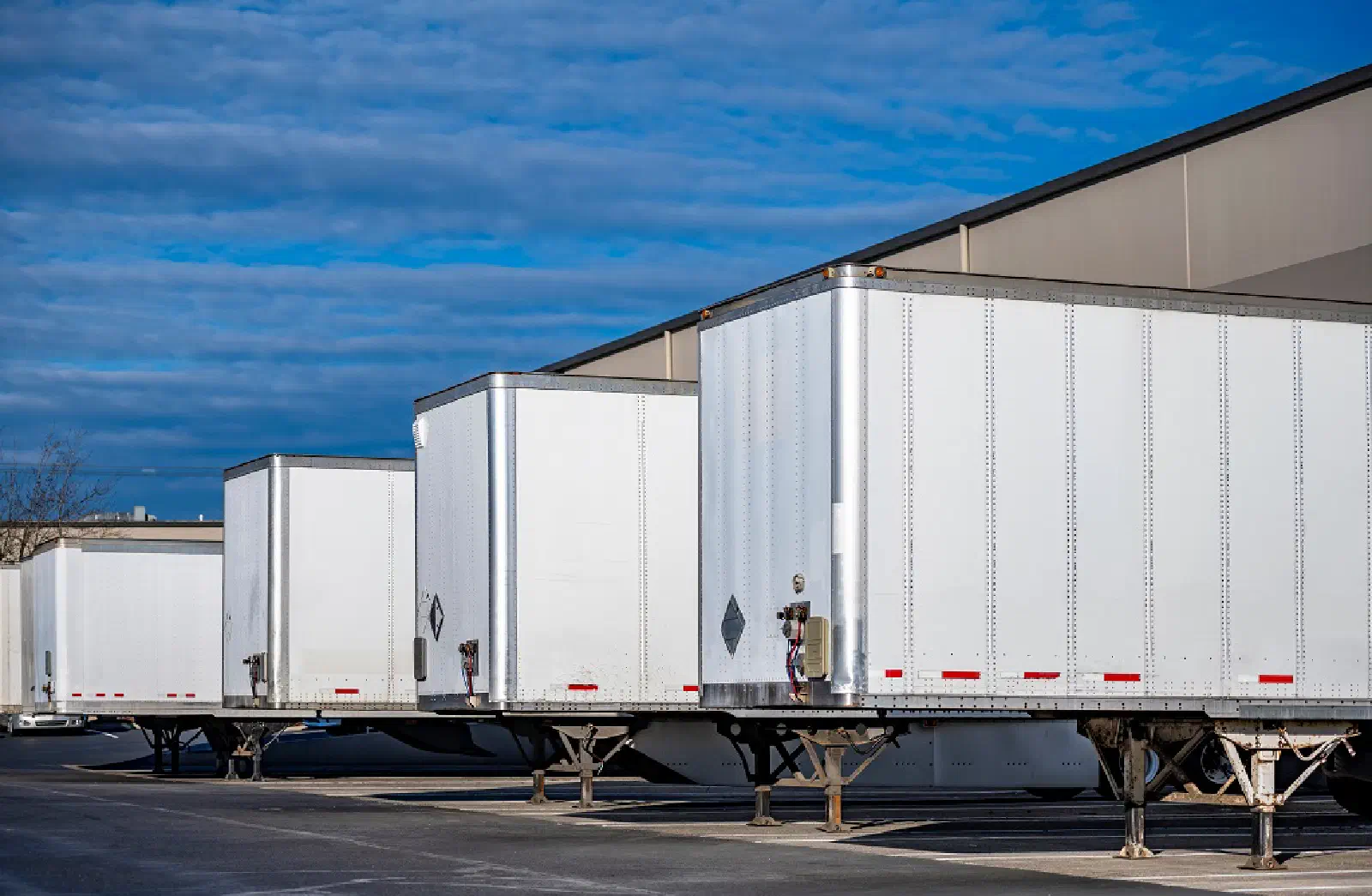
Frequently Asked Questions
What should a buyer look for in a side picture of a dry semi trailer?
A buyer should look for panel alignment, rivet line consistency, scuff or dent patterns, and evidence of repairs or mismatched panels in a side picture, because these are the features visible from a profile view. A straight lower rail and consistent rivet spacing suggest the trailer has not sustained major side impact. A section of panel with newer rivets or a different paint sheen may indicate a repaired puncture or replaced section. A side picture also shows the trailer’s overall length and height proportions, which can be compared against the listed specification to confirm the model. However, the side profile does not show the interior scuff liner, the logistics posts behind the panels, or the floor condition—all of which require an interior inspection.
What sidewall damage patterns are visible in a side picture?
The sidewall damage patterns most visible in a side picture are dents, punctures, panel bulges, and loose or missing rivets, which often indicate forklift impact or shifting cargo. Dry van sidewall repairs for typical damage such as punctures, dents, or loose panels range from $300 to $1,500, with structural panel replacement at the upper end . A side picture may show a dent that looks cosmetic, but if the impact was severe enough to dent the outer panel, the inner scuff liner and the logistics post behind it may also be damaged. A bulge in the panel can indicate that the post-to-panel attachment has failed or that moisture has entered the sidewall assembly. Loose rivets along a section of panel are a visual cue that the fastening system has been stressed.
Can a side picture reveal sidewall construction type?
A side picture can suggest the sidewall construction type but cannot confirm it without a close-up or interior view. Dry van sidewalls typically use a post-and-panel design with inner and outer panels separated by vertical posts, often with an air gap between the panels . From a side profile, a buyer may be able to see whether the panels are smooth (suggesting a bonded or composite construction) or show visible rivet lines (suggesting a riveted sheet-and-post construction). The number and spacing of vertical posts may be partially visible as slight surface undulations, but the post gauge, the presence of logistics track, and the scuff liner condition are not discernible from an exterior side image.
What interior damage can a side picture miss?
A side picture cannot show interior scuff liner condition, logistics post integrity, floor soft spots, or hidden anchor damage, all of which affect the trailer’s usability and repair cost. Scuff liners are the interior protective panels that take the abuse of forklift loading; a torn or missing scuff liner signals rough loading history and exposes the structural posts to damage . Logistics posts are the vertical tracks that cargo straps and load bars attach to; a bent post or a pulled anchor may not be visible from outside but will fail under load . Floor condition is entirely hidden from a side view—soft spots, rot, and delamination require a walk-through with a probe. A buyer screening from photos should treat the side picture as a first filter, not an inspection.
How should a buyer use a side picture in a procurement decision?
A buyer should use a side picture to filter out obviously damaged units and to generate specific questions for the seller, not to make a purchase decision. If the side image shows a repaired section, ask for the repair invoice or a close-up of the repair. If the rivet lines are inconsistent, ask whether the panel has been replaced. If the trailer sits unevenly in the photo, ask about suspension and landing gear condition. The side picture is most valuable when it prompts a targeted follow-up: a request for interior photos, a close-up of the lower rail, or a third-party inspection. A trailer that passes the side-picture screen should still receive an in-person or independent inspection before funds are committed.
What do dry van sidewall repair costs indicate about a candidate trailer?
Dry van sidewall repair costs indicate that visible damage in a side picture should be priced into the offer, not treated as a cosmetic issue. Typical sidewall repairs range from $300 to $1,500, with structural panel replacement at the higher end . A trailer with multiple dents along the lower rail or a section of replaced panel may have sustained repeated forklift impact, which can also damage the posts and floor behind the panels. A buyer should obtain a repair estimate for any visible damage before negotiating, and should factor the possibility of hidden interior damage into the offer. A trailer priced below market because of visible side damage may still be a poor value if the hidden damage requires post or floor repair.
What documentation should accompany a side picture from a seller?
A side picture from a seller should be accompanied by the VIN, the trailer’s model year and specification, and disclosure of any known damage or repairs, because a photograph without context cannot be verified. The image should be recent and should show the full side of the trailer without cropping that hides the lower rail or the rear corner. If the seller claims the trailer has no damage, the buyer should ask for a date-stamped photo and compare it against the VIN plate image. A side picture that is low-resolution, cropped, or undated provides little procurement value and should prompt a request for better documentation or an independent inspection.
Conclusion
A side picture of a dry semi trailer is a screening tool, not an inspection. Use it to confirm proportions, spot obvious damage patterns, and generate specific questions, but treat the interior scuff liner, logistics posts, and floor as unverified until a walk-through or third-party inspection confirms them. The repair cost range for visible sidewall damage is well documented; the cost of hidden interior damage is not, and that is what the side picture cannot show.