

Overview
A conventional semi trailer is designed to be pulled by a truck tractor through a fifth-wheel coupling, not by an ordinary passenger car. The trailer transfers a substantial portion of its loaded weight through the coupling to the towing vehicle, requiring a compatible chassis, adequate axle capacity, suitable brakes, and an appropriately rated hitch system.
The phrase "car pulling a semi trailer" may refer to a passenger car towing a large commercial trailer, a specialized towing vehicle, or a small-scale demonstration. Understanding the difference is essential when evaluating towing feasibility, vehicle compatibility, road safety, and legal requirements.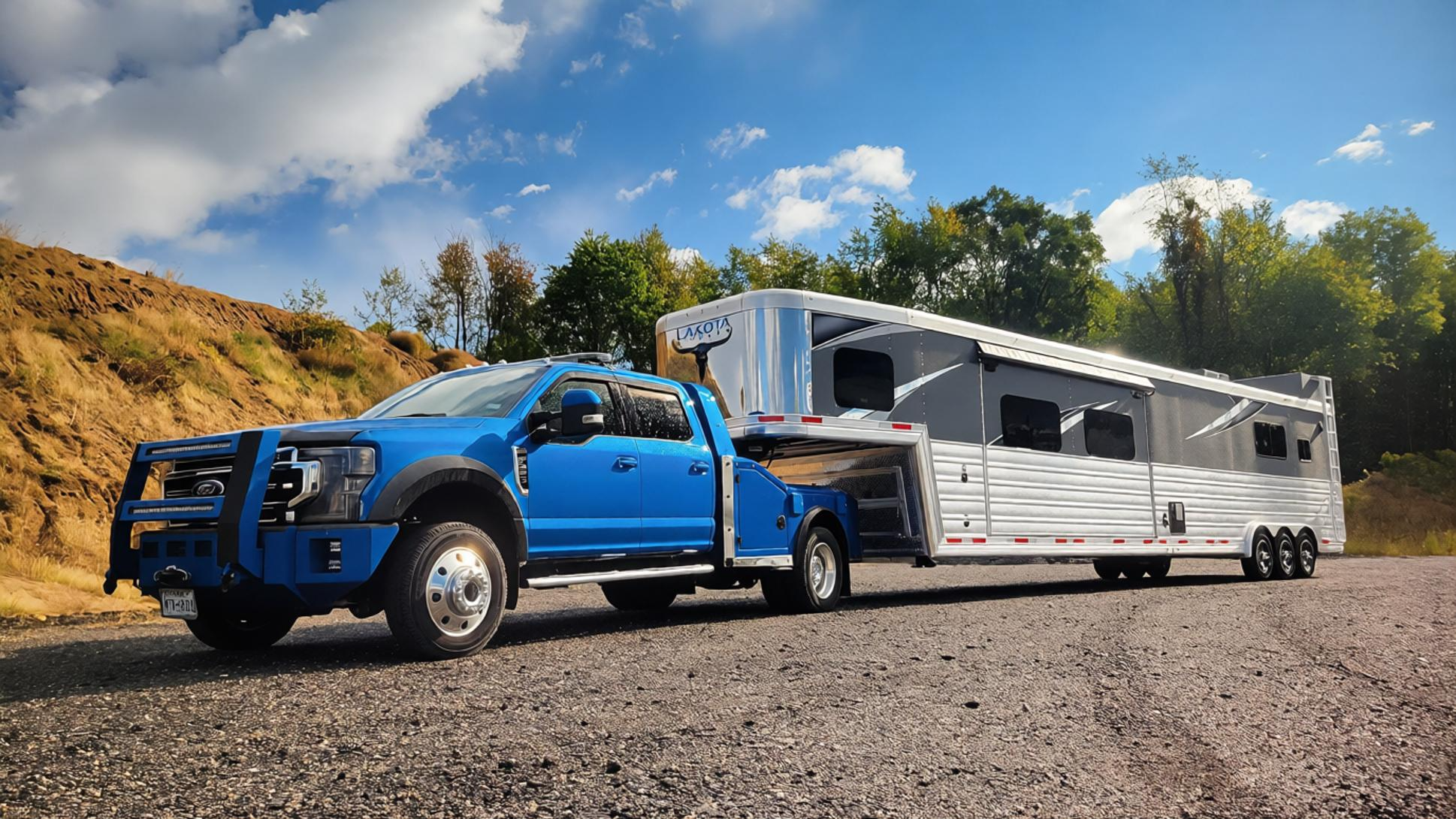
Frequently Asked Questions
Q1: Can a regular car pull a semi trailer?
A regular passenger car cannot safely or legally tow a conventional full-size semi trailer under normal operating conditions. Semi trailers are engineered to connect to heavy truck tractors through fifth-wheel couplings and require substantial towing, payload, axle, and braking capacity. A passenger car's chassis, rear axle, suspension, and hitch are not designed for these loads.
Q2: What vehicle is designed to pull a semi trailer?
A heavy-duty truck tractor is the standard vehicle used to pull a semi trailer. It has a fifth-wheel coupling mounted to transfer the trailer's vertical pin load to the tractor chassis and drive axles. Tractor selection must account for gross combination weight rating (GCWR), gross vehicle weight rating (GVWR), axle ratings, engine performance, transmission, braking capacity, and the intended route.
Q3: How does a fifth-wheel hitch connect a semi trailer to a towing vehicle?
A fifth-wheel coupling connects the tractor's fifth wheel to the semi trailer's kingpin and locks the two units together. The connection allows articulation during turns while transferring the trailer's vertical load to the tractor. Before operation, the coupling, locking mechanism, mounting structure, kingpin condition, and connection security must be checked according to the manufacturer's procedures.
Q4: What determines whether a vehicle can tow a semi trailer?
A vehicle's ability to tow a semi trailer depends on its rated combination weight, axle capacity, coupling rating, braking system, and structural compatibility. The loaded trailer weight must remain within the limits of the tractor, fifth wheel, kingpin, tires, axles, and applicable road regulations. Engine horsepower alone does not establish towing suitability.
Q5: Does a semi trailer need its own braking system?
A conventional road-going semi trailer uses its own braking system, which is operated through the towing vehicle's compatible control and air-supply connections. Commercial trailers commonly use air brakes, with ABS or other electronic braking features depending on the design and applicable regulations. The tractor and trailer systems must be compatible, correctly connected, and inspected before travel.
Q6: What are the main safety risks when an unsuitable vehicle pulls a semi trailer?
Using an unsuitable towing vehicle can cause coupling failure, loss of control, excessive braking distance, tire overload, and structural damage. Incorrect weight distribution can also overload the towing vehicle's rear axle or reduce steering and braking performance. Never exceed the ratings of the vehicle, hitch, coupling, tires, axles, or trailer.
Q7: Can a pickup truck pull a semi trailer?
A properly equipped heavy-duty pickup can tow certain fifth-wheel recreational trailers, but this does not mean it can tow a conventional commercial semi trailer. Recreational fifth-wheel trailers are designed around different vehicle ratings, hitch systems, and weight requirements. Always compare the loaded trailer's pin weight and gross weight with the pickup's payload, axle, hitch, and combination ratings.
Q8: What legal requirements apply when towing a semi trailer?
Towing a semi trailer requires compliance with the vehicle classification, licensing, weight, dimension, coupling, braking, lighting, and registration rules in the operating jurisdiction. Commercial tractor-semitrailer combinations may require specific commercial driving qualifications and vehicle inspections. Requirements vary by country and region, so operators should verify the applicable transport authority rules before using the combination on public roads.
Conclusion
A conventional semi trailer is intended to be pulled by a compatible truck tractor rather than an ordinary passenger car. Buyers and fleet operators should verify coupling specifications, loaded weights, axle ratings, braking compatibility, and local regulations before selecting a towing vehicle. Matching the tractor and trailer correctly is essential for safe operation and legal compliance.