You've driven the road a thousand times. You know every curve, every hill, every mailbox. But driving it in a tractor with a 30-foot implement behind you is a whole different game.
Your tractor is wide. It's slow. It doesn't stop fast. And when you're pulling something, you can't just swerve to avoid a mailbox—you've got 30 feet of steel swinging behind you that doesn't care what's in the way.
The cars behind you are moving four times your speed. The guy coming the other way might not see the implement hanging over the centerline until he's right on top of it. And the old bridge you've crossed a hundred times? With a loaded grain cart, it might not hold.
Most of the accidents that happen on rural roads happen because drivers and farmers don't think about how different the equipment is. A tractor isn't a car. It doesn't act like one. And the people in cars don't always understand that until something goes wrong.

Rush hour isn't just for cities. On rural roads, the most dangerous times are when people are going to work and coming home .
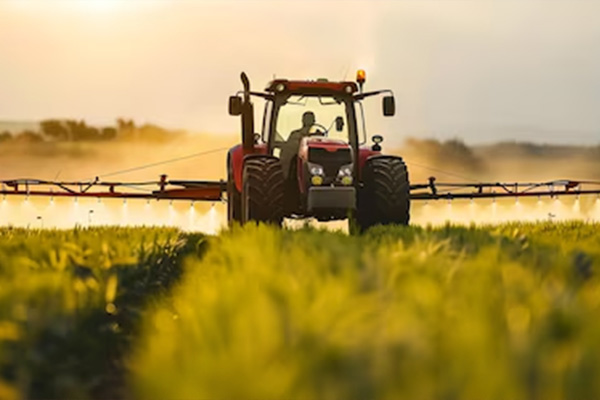
In the morning, drivers are in a hurry. They're running late. They've got coffee in one hand and the radio on, and they're not looking for a slow-moving tractor with a sprayer behind it .
In the afternoon, the same thing. People are tired, kids are getting out of school, and everyone wants to get home. Patience is thin. And that's when accidents happen.
Add to that the fact that in spring, farmers are moving equipment before dawn and after dark. Low light, tired drivers, and fast-moving cars—it's a bad combination.
This is the one that catches people. You're in a tractor pulling a tool bar and a nurse tank, and you need to turn left. The road is narrow, so you swing right to make the turn. That's what you're supposed to do.
But the guy behind you? He doesn't see that as a left turn setup. He sees you moving right, thinks you're pulling over to let him pass, and punches it .
Now you're turning left, he's passing, and neither of you knows the other is there until it's too late.
What to do: Use your turn signals. If your tractor doesn't have them, use hand signals. Before you turn, check your mirrors. Make sure nobody's coming up on your left. If you're not sure, wait.
Rural bridges weren't designed for 80,000-pound grain carts. Some of them were built when a tractor was a fraction of the size .
Before you cross, think about the weight. If the bridge looks old, if it's posted with a weight limit, don't push it. It's not worth finding out the hard way.
Also, bridges are narrow. If you see a car coming, let them cross first. Less weight on the bridge, more room for you.
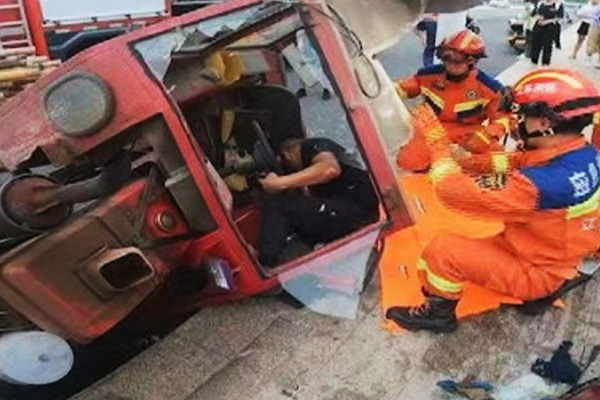
And here's something that gets overlooked: your tires. They have big lugs for traction. If you hug the edge to let someone pass, those lugs can catch the guardrail. And when they catch, they can pull you right over it .
Give yourself room. Don't crowd the edge. If the bridge isn't wide enough for both of you, wait.
At some point, someone's going to want to get around you. It's not your job to decide when it's safe. That's their call .
Never wave someone to pass. If something goes wrong, you don't want to be the one who gave the signal .
Also, don't drive half on the shoulder. Keep your left side at the centerline. If you're riding the shoulder and a car tries to pass, you've got nowhere to go when you hit a mailbox or a sign .
Stay in your lane. If they want to pass, they'll pass when it's safe. Or they won't. Either way, it's not on you.
This is the one that scares me. You're moving slow, and someone coming up behind you doesn't realize how slow until they're right on you .
It happens on hills. It happens on curves. A car comes over the crest and there you are, going 15 miles an hour, and they're doing 55 .
What you can do: Watch your mirrors. If you see someone coming up fast, give them time to see you. Make sure your SMV sign is clean and visible. If you're on a busy road, use an escort vehicle. Someone following behind with flashers gives cars a lot more warning .

Before you leave the yard, make sure everything works. Headlights, taillights, turn signals, flashers. If it's dirty, clean it. If it's burned out, fix it .
Reflectors and reflective tape make a huge difference, especially at dawn and dusk. Put them where they'll be seen .
The slow-moving vehicle sign is the most important thing on the back of your tractor. Keep it clean. Keep it visible. If it's faded or cracked, replace it .
If you're moving equipment on a busy road, or if it's dark, or if you've got something wide, get someone to follow you . An escort vehicle with flashers gives cars behind you a lot more warning. They see the escort before they see you, and that extra second of warning can be the difference between a close call and a collision.
If you're driving it, you need to know how it handles. How wide is it? How long? How does it turn? How does it stop? If you're not sure, take some time to get familiar before you hit the road .
And never let someone untrained drive it. A tractor with a loaded grain cart isn't the place to learn.
Use your signals. Stay in your lane. Don't wave people around. The more
predictable you are, the easier it is for other drivers to figure out what you're doing.
You need to know what's behind you. Check your mirrors constantly. If you see a car coming up fast, you can be ready. If you see someone trying to pass, you can wait before making that turn.
Some roads are worse than others. Narrow bridges, sharp curves, steep hills—know where they are. Plan your route to avoid the worst spots. If you've got a choice between a busy highway and a back road, take the back road, even if it takes a little longer.

Here's the short version for when you're climbing into the tractor at 5 a.m.:
You can't control what the drivers behind you do. But you can make yourself visible, predictable, and prepared. Do that, and you've got a much better chance of getting to the field and back without a story you'd rather not tell.
A: Morning rush hour (people going to work and school) and late afternoon (people coming home). Low light and impatience are a bad combination .
A: Because the tractor swings right to make a wide left turn. Drivers behind see the tractor move right and think they're being waved around to pass .
A: The slow-moving vehicle sign. It tells drivers behind you that you're not going highway speed. Keep it clean and visible .
A: On busy roads, yes. It gives drivers behind more warning and makes you more visible. Some states require it for wide loads .
A: Look for weight limit signs. If the bridge looks old or narrow, let oncoming traffic cross first to reduce the load. Don't hug the guardrail—wide tires can climb it .
A: No. Stay in your lane. If you're half on the shoulder, you've got nowhere to go when you hit a mailbox or sign. Let them decide when to pass .