

Introduction
A tractor and semi trailer combination is the dominant freight transport asset in road logistics, comprising a powered tractor unit and an unpowered semi trailer connected through a fifth-wheel coupling. The engineering relationship between these two units determines nearly every performance characteristic of the combination: payload capacity, stability during braking and cornering, fuel efficiency, and tire wear patterns.
The operational pressures on this combination are direct. Fuel represents the largest variable cost for long-haul operations, and the aerodynamic interaction between tractor and trailer can change consumption by measurable percentages. Weight distribution errors—whether from improper fifth-wheel positioning or mismatched axle ratings—create compliance risk at weigh stations and accelerate component wear. Downtime from coupling failures or brake system incompatibilities between the two units erodes fleet productivity.
This guide examines the tractor and semi trailer as an integrated system, focusing on the coupling interface, weight distribution mechanics, fuel consumption benchmarks, and the specification decisions that determine whether a combination operates efficiently or merely operates.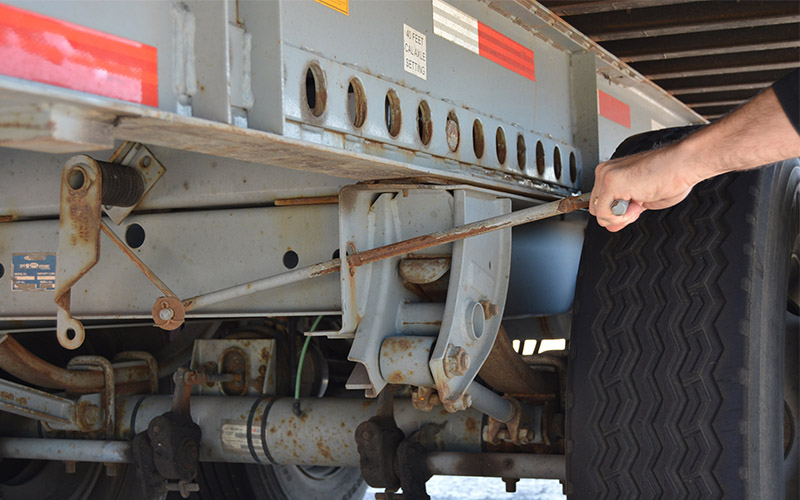
Core Powertrain and Structural Design
Engine and Transmission
The tractor’s powertrain must be matched to the gross combination weight and the route profile. For a typical five-axle combination operating at 40 tonnes gross weight, engine ratings in the 400–500 hp range with torque of 1,650–1,850 lb-ft are common in long-haul service. Automated manual transmissions (AMTs) have become the fleet standard because they reduce clutch wear, enforce consistent shift patterns, and lower driver fatigue—factors that affect both fuel consumption and maintenance cost.
The critical interface is not within the tractor alone but at the fifth-wheel coupling. The coupling transmits traction forces from tractor to trailer and carries the trailer’s vertical load on the tractor’s frame. A fifth wheel positioned too far forward overloads the steer axle; too far rearward reduces steer axle load and compromises directional stability . The coupling height and kingpin setting must be verified against the trailer’s upper coupler plate to ensure proper load transfer.
Hydraulic System
Most general-freight tractor and semi trailer combinations have no shared hydraulic system. The tractor’s hydraulic system, if equipped, serves steering and auxiliary functions. The trailer’s hydraulic system, when present, is limited to landing gear operation or specialized functions on lowbed and dump configurations.
The relevant fluid system for the combination is pneumatic: the tractor’s air compressor and dryer supply the trailer’s brake system through the service and emergency lines. Air quality is a shared responsibility. A tractor with a failing air dryer will contaminate the trailer’s brake chambers, causing diaphragm failure and brake drag that the trailer maintenance program cannot prevent. For fleets operating mixed tractor-trailer pools, air system condition should be treated as a combination-level maintenance item, not a tractor-only concern.
Chassis and Structural Durability
The tractor’s frame carries the fifth-wheel load plus its own axle loads. The trailer’s main beams carry the payload and transfer a portion of it forward through the kingpin. Weight distribution between the two units is determined by the fifth-wheel position and the trailer’s axle configuration.
A five-axle combination with a tandem drive tractor and a tandem-axle semi trailer distributes gross weight across the steer axle, the tractor tandem, and the trailer tandem. In Ontario, for example, a tandem axle with load equalization is limited to 19,100 kg, while the allowable gross vehicle weight for a tractor-trailer combination varies with base length, reaching 60,800 kg at 19.25 m or more . These figures are jurisdiction-specific and must be verified against local regulations, but they illustrate the principle: legal payload is determined by axle limits and bridge formulas, not by the trailer’s structural rating alone.
Structural fatigue on both units follows from the same loading cycles. The trailer’s suspension hanger welds and the tractor’s fifth-wheel mounting plate experience cyclic stresses that accumulate with mileage. Inspection of both units should prioritize these zones.
Technical Specifications
The table below presents representative parameters for a five-axle tractor and semi trailer combination in general freight service. Values are labeled as typical industry ranges; actual specifications vary by manufacturer, configuration, duty cycle, and local regulations.
Comparative Advantages TCO and ROI
The tractor and semi trailer combination competes with the rigid truck on regional routes and with longer combination vehicles (LCVs) on high-volume corridors. The rigid truck offers simpler dispatch and no coupling time, but its payload is constrained by a single chassis and it cannot be decoupled for waiting time. The semi trailer combination’s advantage is asset decoupling: a tractor can drop a loaded trailer and hook a pre-loaded unit, reducing tractor idle time in high-turnover networks.
Fuel efficiency is a significant differentiator within the combination category. EPA SmartWay data indicates that when SmartWay tractors and trailers are used together, fuel savings of 10 to 20 percent are achievable compared to conventional equipment . These savings come from aerodynamic devices, low-rolling-resistance tires, and idle-reduction technologies. For a fleet operating 120,000 km annually at 35 L/100km and a diesel price of 7.5 CNY/L, a 10% fuel saving equals approximately 31,500 CNY per combination per year. The incremental cost of SmartWay-compliant equipment varies, but the fuel savings alone often justify the premium within a few years.
A defensible ROI example requires stated assumptions. Consider a fleet replacing older tractors with units that improve fuel efficiency by 5 percent through aerodynamic improvements and powertrain optimization. At 120,000 km/year, 35 L/100km baseline, and 7.5 CNY/L diesel, a 5 percent saving equals 15,750 CNY per tractor per year. Against a price premium of 60,000 CNY, simple payback is approximately 3.8 years—before resale value or maintenance improvements are counted. Buyers should substitute their own fleet data.
Resale value for the combination favors standard specifications. Tractors with documented maintenance history and popular engine/transmission combinations hold value better than specialized units. Trailers with standard dimensions and air suspension command higher trade-in offers than specialized configurations.
Heavy Duty Application Scenarios
-
Long-haul highway freight: The dominant duty cycle for tractor and semi trailer combinations. Aerodynamic efficiency, fuel consumption, and driver comfort are the primary specification drivers. SmartWay-compliant tractors and trailers, low-rolling-resistance tires, and idle-reduction systems are appropriate.
-
Container drayage and port operations: Short trips with high-frequency coupling and uncoupling. The fifth-wheel and kingpin experience accelerated wear. Durability of coupling components and brake system reliability under frequent stop-start cycles are more important than aerodynamic efficiency.
-
Construction and heavy haulage: Lowbed semi trailers coupled to high-horsepower tractors move excavators and crushers. The combination operates at or near gross weight limits, and gradeability and cooling capacity become critical. The 3.5-inch kingpin is used for loads exceeding standard weight limits.
-
Regional distribution: Medium-distance routes with frequent drops. The tractor’s fuel efficiency matters less than reliability and driver accessibility. Trailers with air suspension and easy-access landing gear reduce loading dock time.
Selection and Maintenance Considerations
Selecting a tractor and semi trailer combination begins with the regulatory envelope and the cargo definition. Gross combination weight limits, axle load limits, and bridge formulas determine maximum practical payload. A combination rated for 60 tonnes is commercially irrelevant if local regulations cap the route at 45 tonnes.
Key selection criteria include:
-
Coupling compatibility: The kingpin size must match the fifth-wheel jaw specification. The coupling gap should be checked regularly; excessive clearance accelerates wear on both components. Fifth-wheel lubrication at manufacturer intervals prevents jaw sticking and uneven wear.
-
Weight distribution verification: After coupling, verify axle loads at a scale. A fifth wheel that is positioned incorrectly will produce axle overloads that neither the tractor nor trailer specification sheet anticipated.
-
Air system condition: The tractor’s air dryer and compressor affect trailer brake reliability. Contaminated air from the tractor is a common cause of trailer brake chamber failure. Air system maintenance should be scheduled at the combination level, not separately for tractor and trailer.
-
Fuel efficiency specification: For high-mileage operations, aerodynamic devices, low-rolling-resistance tires, and idle-reduction technologies have measurable payback periods. For low-mileage or stop-start duty cycles, the economics differ.
Preventive maintenance for the combination follows mileage and calendar schedules. Brake system inspection—including pushrod stroke measurement and air dryer filter replacement—is commonly scheduled at 50,000 km or three-month intervals. Fifth-wheel lubrication, kingpin measurement, and suspension component inspection should be performed at defined intervals on both units.
Conclusion
The tractor and semi trailer combination rewards specification discipline at the coupling interface and the weight distribution calculation. A combination that matches payload to legal axle limits, positions the fifth wheel for proper load transfer, and maintains the shared air system as a combination-level asset will deliver lower cost per ton-kilometer than one selected on headline capacity alone. The engineering priorities are clear: verify coupling compatibility, measure axle loads after loading, and treat the tractor’s air system as a determinant of trailer brake reliability.
Commercially, the combination remains the most flexible heavy freight asset available to fleets. Its value depends less on purchase price than on fuel efficiency, utilization rate, and residual value at disposal. Fleets that verify configuration against local regulations, document fuel consumption benchmarks, and invest in coupling and air system maintenance protect all three. The tractor provides the power; the trailer provides the capacity; the coupling and the weight distribution determine whether the combination delivers either efficiently.