

Introduction
Side dump semi trailer listings on Fastline provide a useful cross-section of the North American market for this equipment class. Fastline is an equipment marketplace that aggregates new and used trailer inventory from dealers across the United States, and its side dump category includes models from dedicated specialists like SmithCo and Side Dump Industries alongside diversified manufacturers such as Jet and CPS.
The practical value of examining Fastline listings is that they reveal actual transaction context: which models dealers are stocking, what specifications are common in new inventory, and how used units are priced relative to new ones. A new 2026 SmithCo SX3-4736 tri-axle side dump is listed at $84,100** FOB factory with FET included . A used 2007 Side Dump Industries unit, described as “very used” with no tarp, is listed at **$36,500 . Between those bookends, listings for Jet and CPS side dumps show the range of configurations available at the new-equipment end of the market.
This article examines what the Fastline side dump listings reveal about model specifications, pricing tiers, and the procurement considerations that separate a sound purchase from an expensive one. All listing details are drawn from published Fastline inventory; buyers should verify current availability and condition directly with the selling dealer.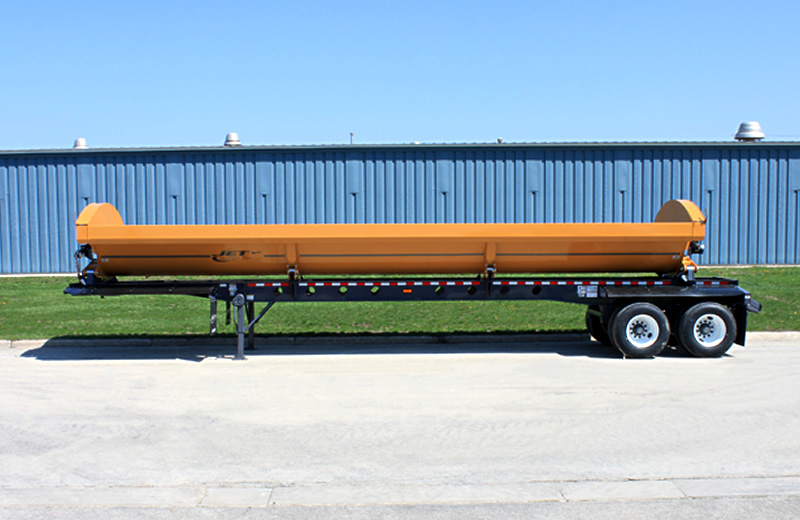
Core Powertrain and Structural Design
SmithCo: The Premium New-Equipment Benchmark
SmithCo listings on Fastline anchor the upper end of the side dump market. Two distinct new models appear in the inventory: the SX2-40-34 tandem-axle unit and the SX3-4736 tri-axle unit.
The SX2-40-34 is a 40-foot trailer with a 34-foot tub, 30 cubic yard capacity, air ride suspension, and a gross vehicle weight rating of 75,480 pounds . Its specification highlights the engineering focus that defines SmithCo’s approach: AR450 steel rock tub, 6-inch heavy-duty cylinders, a two-way valve, electric rollover tarp with lockout switch, mechanical scale, and a bolt-on push block . The AR450 plate specification is the critical durability parameter for abrasive loads—it indicates the abrasion-resistant steel grade used in the tub construction, which determines how many years of service the trailer delivers before tub repair.
The SX3-4736 is a larger tri-axle configuration with a 47-foot frame and 36-foot round-bottom tub . Its tub volume is listed as 24.1 cubic yards water level and 32 cubic yards heaped. The specification includes air ride suspension, a rear lift axle, 11R22.5 tires on aluminum outer wheels, remote grease zerks for the tub cylinders and kingpin plate, and a hydraulic system requirement of 25–30 gallons per minute flow at minimum 2,500 psi pressure . The remote grease zerks are a maintenance-access feature that matters in abrasive service, where cylinder pins and the kingpin plate require frequent lubrication.
Jet and CPS: Alternative New-Equipment Options
The Jet 40-foot side dump listed on Fastline offers a different engineering approach to the same functional problem. Its specification describes a 34-foot round-bottom tub with “superior engineered tub corners to prevent cracking,” four pivot points per side (eight total), and trunnion-mounted inverted cylinders for what the listing describes as “very stable smooth dumping” . The four-pivot-per-side arrangement distributes the dump load across more attachment points than a simpler two-pivot design, which may reduce stress concentration at the tub-to-frame connection during dumping. The listing also notes a two-way directional hydraulic valve, electric rollover tarp, air ride tandem suspension, and ABS 2S/1M .
The CPS side dump listing is less detailed but indicates a 40-foot trailer with a 34-foot tub, 23 cubic yard capacity, and air ride suspension . CPS appears in the Fastline inventory as a new-equipment option without the detailed specification breakout that SmithCo and Jet provide.
Technical Specifications
The table below summarizes the side dump semi trailer listings identified on Fastline. These are published listing details, not verified specifications for any individual unit. Buyers must inspect the actual trailer and confirm its condition and compliance before purchase.
Comparative Advantages TCO and ROI
The Fastline listings provide concrete data points for a total cost of ownership comparison between new and used side dump trailers.
New-equipment economics. The $84,100 SmithCo SX3-4736 represents the capital cost of a new, fully specified tri-axle side dump with a documented build and factory warranty . The specification includes features that affect lifecycle cost directly: AR450 tub steel, remote grease zerks for maintenance access, and a hydraulic system designed for a defined flow and pressure range. For a fleet hauling abrasive materials at high utilization, these features translate into longer tub life and lower maintenance labor over the trailer’s service life.
Used-equipment economics. The $36,500 Side Dump Industries unit is less than half the price of the new SmithCo, but the listing’s description—“very used,” no tarp—signals condition that requires inspection and likely immediate expenditure . A used side dump at this price point may be appropriate for a fleet with in-house maintenance capability and a lower-intensity duty cycle, where the trailer will not be pushed to the utilization levels that justify a new premium unit. The buyer’s calculation should include the cost of a tarp installation, any hydraulic repairs, tub wear assessment, and brake and tire condition.
The middle ground. The Jet and CPS listings at “contact for price” occupy the space between the SmithCo premium and the used market. The Jet’s four-pivot-per-side design and trunnion-mounted cylinders are engineering features that may offer durability advantages in certain duty cycles, but the absence of a listed price makes direct comparison difficult. Buyers evaluating these alternatives should request quotations with full specifications and compare the hydraulic system design, tub steel grade, and warranty terms against the SmithCo baseline.
ROI assumptions for a new-versus-used decision. A fleet purchasing the new SmithCo at $84,100 would amortize the capital over an expected service life of eight to ten years in abrasive service. The used Side Dump Industries unit at $36,500 would amortize over a shorter remaining life, with higher maintenance uncertainty. The decision hinges on utilization: a fleet running the trailer at high annual tonnage will recover the new-equipment premium through uptime and lower repair frequency; a fleet with seasonal or low-intensity use may find the used unit adequate. The calculation requires the fleet’s own tonnage and maintenance data.
Heavy Duty Application Scenarios
The Fastline side dump listings reflect the application segments where this equipment is deployed:
-
Construction and demolition debris. The SmithCo SX2-40-34’s AR450 tub and push block specification suit construction sites where the trailer must handle abrasive debris and may be pushed into position . The side dump’s ability to discharge on uneven ground without the tip-over risk of an end dump is the defining operational advantage.
-
Aggregate and quarry haulage. The higher-capacity SX3-4736 with its 32-cubic-yard heaped volume suits aggregate loads where volume, not weight, may be the limiting factor . The remote grease zerks address the maintenance burden of abrasive dust exposure.
-
Agriculture and stockpiling. Side Dump Industries’ listings include an AG Series model for hauling and stockpiling commodities from road base to manure , indicating that the side dump format serves agricultural applications alongside construction.
-
Price-sensitive or lower-utilization operations. The used 2007 unit at $36,500 provides an entry point for fleets that need side dump capability without the capital commitment of a new premium trailer .
Selection and Maintenance Considerations
For buyers evaluating side dump semi trailers through Fastline or similar marketplaces, the following practices reduce risk:
-
Verify the tub steel specification. The SmithCo listings explicitly state AR450 steel for the rock tub . A listing that does not state the steel grade should prompt a direct question to the seller. Abrasion resistance is the primary determinant of tub life.
-
Inspect hydraulic system condition on used units. Side dump trailers rely on cylinders, valves, and hoses that wear under repeated cycling. A used unit’s hydraulic system should be cycled through a full dump sequence before purchase, with attention to cylinder leaks, valve response, and hose condition.
-
Confirm tarp condition and replacement cost. The used Side Dump Industries listing notes “No Tarp” . A replacement electric rollover tarp is a significant cost item, and the absence of a tarp affects load containment and weather protection. Factor this into the purchase price comparison.
-
Request the full specification sheet for “contact for price” listings. The Jet and CPS listings do not publish prices . Buyers should request a written quotation with tub steel grade, cylinder specifications, suspension details, and warranty terms before making comparisons.
-
Verify weight ratings against the tractor and route. The SmithCo SX2-40-34 has a GVWR of 75,480 pounds . Confirm that the tractor and the operating routes can accommodate the loaded weight within legal limits.
-
For used units, assess structural condition beyond the tub. Frame cracks, crossmember corrosion, and suspension wear are common in older side dump trailers that have seen abrasive service. A used trailer with a sound tub but a compromised frame is not a bargain.
Conclusion
Fastline’s side dump semi trailer listings show a market segmented by condition and specification. At the new end, SmithCo’s SX3-4736 at $84,100 and the SX2-40-34 offer documented AR450 tub construction, remote grease zerks, and factory-backed specifications that support high-utilization abrasive service . Jet and CPS provide alternative new-equipment configurations with different hydraulic and tub designs, available at quoted prices . At the used end, a 2007 Side Dump Industries unit at $36,500 offers entry-level capability but requires inspection and likely immediate expenditure . The procurement decision for fleet managers is not which listing is cheapest, but which trailer’s specification and condition match the duty cycle it will serve. A new premium trailer amortized over a decade of high-tonnage service delivers a lower cost per ton than a used unit that requires repairs and downtime. A used trailer that serves a seasonal or low-intensity application without major failure delivers value that a new unit’s depreciation cannot match. The listings provide the starting data; the inspection and the utilization analysis provide the decision.