

Introduction
A shipment of eggs by semi trailer is a temperature-controlled logistics operation governed by a specific federal requirement: shell eggs destined for the ultimate consumer must be stored and transported at an ambient temperature no greater than 45 °F (7.2 °C) . This is not a recommended practice or an industry guideline—it is a regulatory mandate under 9 CFR 590.50, with limited exemptions only for producer-packers with flocks of 3,000 or fewer layers .
The operational pressure extends beyond temperature compliance. Eggs are fragile, and the vibration and shock transmitted through a trailer’s suspension during highway transport can produce cracked shells and internal damage that only becomes visible at the receiver or, worse, at the retail shelf. The choice of trailer specification—particularly the suspension system—directly affects the rate of cargo loss. Air ride suspension is widely identified as the appropriate specification for fragile perishables including eggs, because it replaces steel spring impact transmission with a cushion of compressed air that absorbs road irregularities .
This article examines the engineering and operational requirements for egg shipment by semi trailer. It covers the refrigeration system, the suspension and loading practices that protect the cargo, and the compliance framework that governs the shipment. All regulatory requirements are cited to their source; operational recommendations are presented as industry practice rather than legal mandate.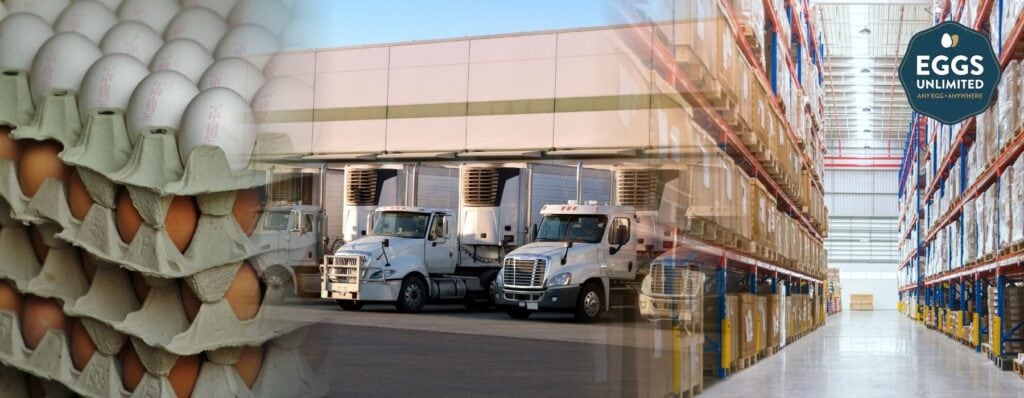
Core Powertrain and Structural Design
Refrigeration System and Temperature Control
The refrigeration unit is the defining system for an egg trailer. The trailer must be capable of maintaining an ambient internal temperature at or below 45 °F throughout the shipment, including during loading, transit, and any staging periods. This requirement applies to shell eggs packed for the ultimate consumer; eggs intended for pasteurization (breaking stock) are subject to the same 45 °F transport standard under USDA import requirements .
Trailer refrigeration units are classified by their achievable temperature range. A Class A reefer maintains temperatures between +12 °C and 0 °C (+53 °F to +32 °F), which comfortably covers the 45 °F egg requirement with margin for control variation . The unit must be capable of pulling down and holding the set point without continuous attention, and the trailer body must be insulated to limit thermal gain. Modern trailer refrigeration units, such as the Carrier Vector HE 19, are specified with cooling capacities in the range of 17–18 kW at 0 °C ambient, sufficient for a standard trailer box . The specific capacity required depends on box volume, insulation condition, ambient conditions, and door-opening frequency during multi-stop delivery.
Pre-cooling is a critical operational step. The trailer box should be brought to temperature before loading begins, and the eggs should be pre-chilled to the transport temperature at the shipper’s facility. Loading warm product into a cold trailer introduces a heat load that the refrigeration unit must remove, and the product may spend hours above the regulatory limit before the box recovers. Temperature recorders or data loggers are standard practice for verifying compliance throughout the shipment.
Air Ride Suspension and Vibration Isolation
The suspension specification is the second critical engineering decision for egg transport. Air ride suspension uses air-filled bladders in place of steel leaf springs, creating a cushion that absorbs road shock rather than transmitting it to the cargo . Industry guidance identifies fragile perishables—including eggs—as a category that requires air ride transport because the shock and vibration of highway travel can cause compression damage and shell fracture .
The benefit depends on a system-level specification: air ride on the trailer alone provides partial benefit if the tractor remains on steel springs. The vibration isolation is most effective when both tractor and trailer are air-ride equipped, because the cargo’s ride quality is determined by the entire suspension chain . For fleets specifying egg trailers, the procurement decision should include the tractor specification or a contractual requirement that the shipment be hauled by an air-ride tractor.
A secondary operational consideration with air suspension is trailer walk during loading and unloading. As weight is added to or removed from the trailer, the air springs compress and extend, causing the trailer to move relative to the dock. Forklift movement amplifies this motion. The standard mitigation is to bleed the air from the suspension bladders before loading or unloading begins, which lowers the trailer and stabilizes it against the dock . Dock personnel should be trained on this procedure, and the trailer should be chocked or restrained with a vehicle restraint system that accounts for the suspension’s movement characteristics.
Loading Practice and Cargo Securing
Egg shipments typically move in fiber filler flats packed into 30-dozen cases, stacked on pallets and secured for transport. The loading pattern should distribute weight evenly across the trailer deck and against the walls, with the load secured using load bars, e-track straps, or equivalent restraint to prevent shifting during transit. Shifting cargo can cause case collapse and egg breakage independent of suspension performance.
The pallet quality and stacking configuration matter. Wooden pallets in poor condition can fail under the weight of stacked cases, and uneven stacking creates point loads that concentrate vibration damage. Shrink wrap or stretch wrap around each pallet unit stabilizes the load and prevents case separation. For multi-stop deliveries, the load should be sequenced so that earlier stops are accessible without unloading and reloading the entire trailer—each handling event introduces additional breakage risk.
Technical Specifications
The table below presents reference parameters for egg shipment by semi trailer. These are regulatory requirements or industry specifications, not values for any single trailer model. The specific trailer and refrigeration unit documentation controls operational settings.
Comparative Advantages TCO and ROI
The commercial case for specifying air ride and refrigeration correctly for egg shipments rests on cargo loss avoidance and compliance protection rather than on trailer acquisition cost.
Cargo loss economics. A single pallet of eggs represents a measurable value, and a shipment with a high breakage rate can generate a claim that exceeds the freight revenue. The causes of breakage are cumulative: suspension-transmitted shock, cargo shifting, case collapse, and handling damage. Air ride addresses the suspension component of that chain . Proper loading and securing address the shifting and collapse components. The combined effect is a reduction in the loss rate that translates directly to the shipper’s bottom line and to the carrier’s claims record.
Compliance and rejection risk. A shipment that arrives above 45 °F may be rejected by the receiver, particularly if the receiver is a retail distribution center with its own quality assurance protocols. The cost of a rejected load includes the freight, the product value, the disposal or return logistics, and the relationship damage with the shipper. Temperature monitoring and a functioning refrigeration unit are the controls that prevent this outcome. The regulatory requirement is unambiguous , and the receiver has no obligation to accept non-compliant product.
ROI assumptions for air ride specification. A carrier or fleet considering air ride trailers for egg service would compare the capital cost premium against the reduction in cargo claims and the rate premium that shippers pay for verified air-ride service. Fragile perishable shippers often specify air ride as a condition of carriage, so the specification may be a requirement to access the freight rather than an optional upgrade . In that case, the ROI calculation is whether the freight revenue from egg and other fragile shipments justifies the trailer specification, not whether the suspension pays for itself through reduced claims alone.
Heavy Duty Application Scenarios
Egg shipment by semi trailer occurs across several distinct logistics contexts:
-
Farm-to-processing and farm-to-distribution. Eggs move from production facilities to grading and packing operations or directly to distribution centers. The trailer must be pre-cooled and the refrigeration unit running before loading. Air ride is specified when the shipper requires it or when the route includes rough road segments.
-
Multi-stop retail delivery. A trailer delivering to multiple grocery locations opens its doors repeatedly, each time introducing ambient heat and humidity. The refrigeration unit must have capacity to recover temperature after each stop, and the load should be sequenced for efficient access. Air ride reduces vibration damage during the urban and suburban segments between stops.
-
Long-haul interstate transport. Cross-country egg shipments place sustained demand on the refrigeration unit and expose the cargo to hours of highway vibration. Temperature monitoring throughout the trip is essential, and air ride on both tractor and trailer provides the greatest isolation from road input .
-
Import and export shipments. Shell eggs moving in international commerce are subject to the same 45 °F requirement, and USDA import requirements explicitly call for certification that eggs were stored and transported under refrigeration at that temperature . The trailer’s temperature records become part of the compliance documentation.
Selection and Maintenance Considerations
For fleets and shippers specifying or operating semi trailers for egg transport, the following practices support compliance and cargo protection:
-
Verify the refrigeration unit’s capacity against the box and the route. A unit that maintains temperature on a short haul may struggle on a long haul with multiple door openings in high ambient temperatures. The unit’s capacity specification at the expected ambient condition is the relevant figure, not the nominal rating.
-
Specify air ride on both tractor and trailer, or confirm the tractor specification. Air ride on the trailer alone provides partial benefit. The cargo’s ride quality is determined by the full suspension chain .
-
Establish a pre-cooling and loading procedure. The trailer box should be at temperature before the doors open for loading. Eggs should be pre-chilled at the shipper. A written procedure prevents the common error of loading warm product into a cold trailer and expecting the unit to catch up.
-
Train dock personnel on air suspension loading. The trailer walk phenomenon is a safety and cargo damage risk. Bleeding the air suspension before loading is the standard mitigation, and dock staff should understand why the trailer moves and how to stabilize it .
-
Use temperature data loggers and retain the records. The logger provides evidence of compliance during transit and supports any claim or dispute resolution. For import/export shipments, the records may be required for certification .
-
Inspect the trailer box for insulation damage and door seal condition. A trailer with compromised insulation or worn door gaskets will struggle to maintain temperature, particularly in summer or winter extremes. These components should be part of every PM inspection for a reefer assigned to egg service.
Conclusion
A shipment of eggs by semi trailer is governed by a clear regulatory standard—45 °F ambient maximum—and protected by a clear engineering specification: air ride suspension on both tractor and trailer, with a refrigeration unit sized for the route and the box. The compliance requirement is binary; a shipment above temperature is non-compliant and subject to rejection . The cargo protection requirement is incremental; each suspension upgrade, loading improvement, and handling discipline reduces the breakage rate that erodes the shipment’s value. For carriers serving the egg trade, the specification decision is whether to meet the shipper’s air ride requirement and access the freight, or to operate equipment that limits the accessible market. For shippers, the decision is whether to verify the carrier’s equipment and temperature records or to accept the risk of a rejected load. The engineering and commercial logic converge on the same answer: the trailer that keeps the eggs cold and the ride smooth is the trailer that delivers the shipment without a claim.