

Introduction
Commercial transport operators and industrial buyers increasingly require trailers that do more than carry conventional freight. Mobile workspaces, exhibition units, observation facilities, temporary service centers, and specialized project trailers may need natural lighting and visibility while maintaining an enclosed structure.
A semi trailer with windows but no doors is a customized trailer configuration featuring one or more windows without conventional side-access doors. The phrase can describe several different designs, including a mobile office trailer, display trailer, observation unit, or enclosed special-purpose semi trailer. The exact configuration depends on whether the trailer is intended for transporting goods, housing people, displaying products, or supporting a mobile operation.
The absence of conventional doors does not necessarily mean that the trailer has no access opening. A purpose-built unit may use an access hatch, rear entrance, removable panel, or another controlled entry arrangement. If the trailer is intended for human occupancy, an appropriate emergency exit and safe access system must be incorporated into the design.
The main engineering considerations include window placement, glazing strength, wall reinforcement, weather sealing, ventilation, access arrangements, chassis stability, and road transport compliance. Buyers should define the trailer's intended function before discussing dimensions and specifications with a manufacturer.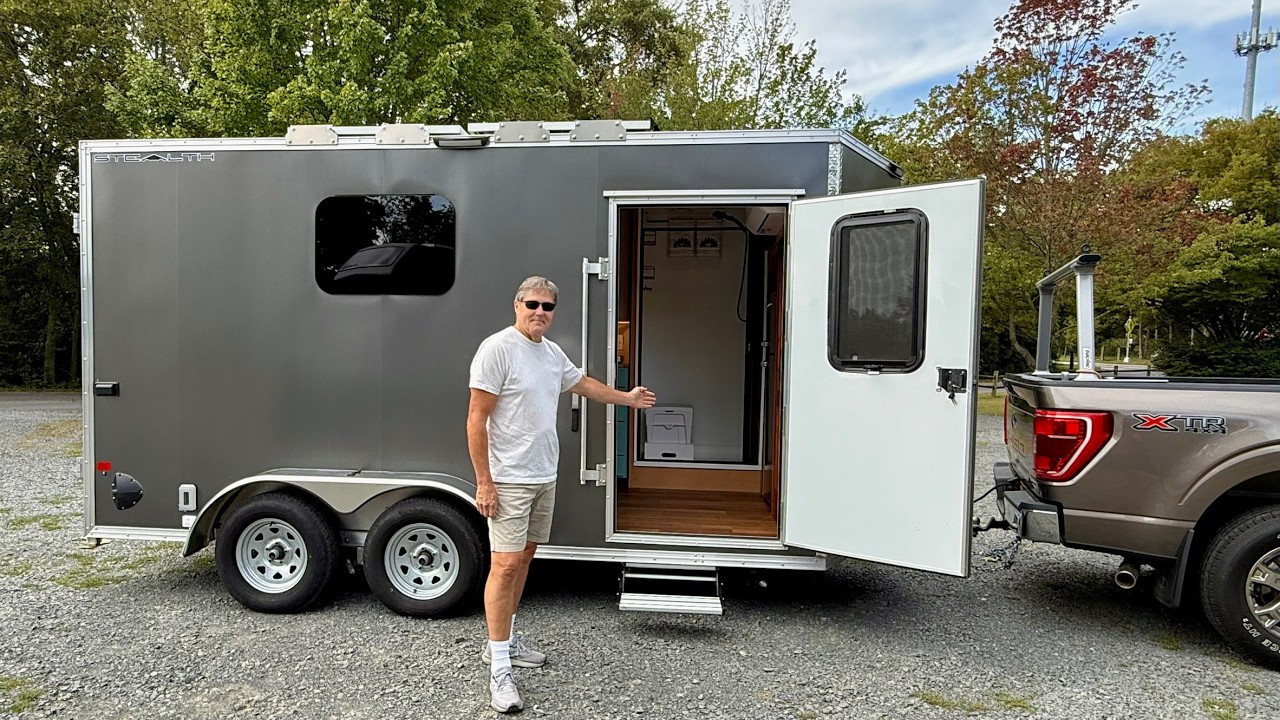
Core Powertrain and Structural Design
A conventional semi trailer is an unpowered vehicle connected to a tractor through a fifth-wheel coupling. A customized enclosed trailer with windows follows the same basic transportation principle, but its body structure requires additional consideration because windows interrupt the continuity of the side walls.
Engine and Transmission
A semi trailer with windows but no doors normally does not have its own propulsion engine or transmission. The tractor unit provides the power required for road transportation.
The tractor and trailer must be compatible in terms of:
-
Fifth-wheel coupling: The kingpin must match the tractor's fifth-wheel assembly.
-
Coupling height: The tractor and trailer must align correctly to maintain safe operating geometry.
-
Gross combination weight: The tractor must be rated for the combined weight of the tractor, trailer, and cargo.
-
Electrical connections: Lighting and any auxiliary electrical equipment must be compatible with the tractor.
-
Braking connections: The trailer's pneumatic braking system must operate correctly with the tractor.
If the trailer is designed as a mobile office or exhibition facility, it may also require an independent electrical supply, battery system, or generator. These are auxiliary systems rather than a conventional trailer propulsion system.
Window Design and Glazing System
Windows are among the most important components of this specialized trailer. They provide natural lighting, visibility, and, depending on the application, communication between occupants and people outside the trailer.
Window selection should consider:
-
Glazing material: Tempered safety glass, laminated safety glass, or suitable engineered transparent panels may be considered according to the application.
-
Window dimensions: Larger openings provide more visibility but require appropriate structural reinforcement.
-
Frame construction: Window frames must resist vibration, movement, and repeated road loading.
-
Weather sealing: Seals must prevent rainwater, dust, and air leakage.
-
Thermal performance: Insulated glazing may be appropriate for climate-controlled mobile facilities.
-
Impact resistance: The glazing specification should reflect the operating environment and applicable safety requirements.
For trailers intended to carry people or operate as mobile facilities, glazing should be selected according to relevant building, vehicle, fire-safety, and occupational requirements in the destination market.
Hydraulic and Auxiliary Systems
A window-equipped enclosed trailer does not normally require a hydraulic system for its primary transportation function. However, auxiliary equipment may be installed when the trailer serves as a mobile workspace or specialized service unit.
Possible equipment includes:
-
Hydraulic stabilizers for stationary operation.
-
Hydraulic leveling systems.
-
Powered deployment platforms.
-
Mechanized display or lifting equipment.
-
Hydraulic ramps on configurations requiring specialized loading.
These systems should be designed around the trailer's actual operating purpose. If the trailer will remain stationary for extended periods, stabilizers and leveling equipment may be more relevant than road-transport hydraulic features.
Electrical equipment may be more important than hydraulics for mobile offices and exhibition trailers. Buyers should specify lighting, ventilation, air conditioning, power outlets, battery storage, generator capacity, and external power connections where required.
Chassis and Structural Durability
The chassis supports the trailer body, windows, interior equipment, and any transported cargo. Window openings create interruptions in the side-wall structure, so reinforcement must be designed to maintain sufficient rigidity.
Important structural components include:
-
Main longitudinal chassis beams.
-
Crossmembers and floor supports.
-
Side-wall framing.
-
Reinforced window openings.
-
Roof supports and connecting members.
-
Kingpin mounting structure.
-
Axle and suspension mounting brackets.
The window openings should be integrated into the structural design rather than simply cut into an existing body without engineering assessment. Reinforcement around openings helps distribute loads and reduce the risk of distortion, cracking, or seal failure.
The manufacturer should also consider road vibration, torsional movement, braking forces, and wind loads during transportation.
Operator Safety and Emergency Access
A trailer with windows but no conventional doors requires special attention to access and emergency arrangements, particularly if people will occupy the interior.
The absence of side doors may be a visual or functional design requirement, but it should not prevent safe entry and evacuation.
Depending on the intended use, the design may require:
-
A secure rear entrance or concealed access door.
-
Emergency exits suitable for the intended occupancy.
-
Safe internal and external steps.
-
Appropriate window opening or escape arrangements where permitted.
-
Fire-resistant interior materials where required.
-
Adequate ventilation and lighting.
-
Suitable electrical protection and emergency equipment.
A trailer intended only for cargo transportation has different requirements from a mobile office or public exhibition facility. Buyers should clearly identify whether the unit will carry goods, house workers, or accommodate visitors.
Technical Specifications
There is no universal specification for a semi trailer with windows but no doors because this is a customized design rather than a single standardized trailer category. Dimensions, payload, window arrangements, body materials, and interior systems depend on the intended application.
The following table identifies the main parameters buyers should confirm with the manufacturer.
|
Key Parameter |
Typical Technical Specification |
Operational Significance |
|---|---|---|
|
Trailer configuration |
Customized enclosed semi trailer |
Defines its transportation and operational purpose |
|
Window arrangement |
Fixed, sliding, or opening windows |
Determines visibility, ventilation, and access |
|
Glazing material |
Tempered or laminated safety glazing, as appropriate |
Influences impact safety and durability |
|
Body structure |
Reinforced steel or aluminum framing with suitable panels |
Supports structural integrity |
|
Access arrangement |
Rear entrance, access hatch, or approved alternative |
Enables safe entry and emergency evacuation |
|
Chassis configuration |
Manufacturer-rated commercial trailer chassis |
Determines load support and road performance |
|
Suspension and axles |
Selected according to gross weight and road requirements |
Influences stability and load distribution |
|
Electrical and ventilation systems |
Optional lighting, power, ventilation, and climate control |
Supports mobile office or specialized use |
Additional Design Measurements
Before production, buyers should confirm:
-
Overall trailer length, width, and height.
-
Internal usable dimensions.
-
Window quantity, size, position, and opening method.
-
Floor loading capacity.
-
Gross vehicle weight and rated payload.
-
Axle ratings and suspension configuration.
-
Interior insulation and wall-panel specifications.
-
Electrical supply and ventilation requirements.
If the trailer is intended for human occupancy, the manufacturer should also clarify applicable occupancy limits, access requirements, emergency arrangements, and fire-safety provisions.
Comparative Advantages TCO and ROI
A customized semi trailer with windows but no conventional side doors should be compared with standard enclosed trailers, mobile office trailers, and purpose-built exhibition trailers.
The most appropriate alternative depends on whether the primary objective is cargo transportation, mobile workspace, public display, or temporary accommodation.
Comparison with Standard Enclosed Semi Trailers
A standard enclosed semi trailer is designed primarily to protect cargo from weather, theft, and external exposure. Its doors are generally positioned to support loading and unloading through rear or side access.
A window-equipped customized trailer provides additional visibility and natural light. This can be valuable for display facilities, observation units, and mobile workspaces. However, windows introduce additional design requirements involving structural reinforcement, sealing, glazing protection, and thermal insulation.
If the trailer is intended to transport ordinary freight, a conventional enclosed trailer may be more practical and economical.
Comparison with Mobile Office Trailers
A mobile office trailer is designed to provide usable interior space for personnel. It may include windows, insulation, lighting, electrical outlets, air conditioning, and dedicated access points.
A custom semi trailer without visible conventional doors may offer a cleaner exterior appearance or meet a specific architectural requirement. However, it still needs safe and practical access.
Buyers should compare the cost of the trailer body, interior fit-out, electrical equipment, ventilation, access systems, and required regulatory approvals.
Total Cost of Ownership
Total cost of ownership (TCO) includes the initial purchase price and the expenses incurred throughout the trailer's operating life.
Important cost categories include:
-
Chassis and customized body purchase price.
-
Window frames, glazing, and sealing components.
-
Electrical, ventilation, and climate-control equipment.
-
Tires, brakes, axles, and suspension maintenance.
-
Interior repairs and replacement of fittings.
-
Insurance, registration, and inspection expenses.
-
Cleaning and corrosion protection.
-
Downtime and lost operational revenue.
A customized window-equipped trailer may have a higher initial cost than a standard enclosed trailer because of its specialized bodywork and interior equipment. The additional expense may be justified if the trailer performs a specialized commercial function that generates sufficient operating revenue.
ROI Evaluation
Return on investment depends on the trailer's actual use. For a mobile exhibition unit, for example, revenue may come from product demonstrations, temporary retail operations, or promotional activities. For a mobile office, the financial benefit may come from reducing the need for permanent facilities at multiple project locations.
A realistic ROI calculation should consider:
-
Initial customization and manufacturing costs.
-
Annual operating days.
-
Transportation and setup expenses.
-
Electricity and climate-control costs.
-
Maintenance and insurance.
-
Revenue or cost savings attributable to the mobile facility.
No fixed payback period can be assumed without knowing the trailer's application, utilization rate, and commercial revenue model.
Heavy Duty Application Scenarios
A semi trailer with windows but no conventional side doors is more suitable for specialized enclosed applications than for ordinary heavy freight transportation. Its final design should reflect the operating environment and whether people will occupy the interior.
Mobile Offices and Site Facilities
Construction, mining, and infrastructure projects often require temporary administrative or inspection facilities.
A customized trailer may provide:
-
Natural lighting through side windows.
-
Interior desks and workstations.
-
Electrical outlets and lighting.
-
Air conditioning and ventilation.
-
Communication and monitoring equipment.
The design should include safe access, secure window systems, suitable insulation, and adequate floor loading capacity.
Exhibition and Product Display Trailers
Manufacturers and commercial organizations may use customized trailers to display products at trade shows, industrial sites, and promotional events.
Large windows can improve external visibility and allow visitors to view displayed products. Depending on the intended operation, the trailer may require:
-
Display lighting.
-
Insulated glazing.
-
Interior product supports.
-
Electrical distribution.
-
Climate control.
-
Secure storage and access arrangements.
If visitors are expected to enter the trailer, suitable entrance and emergency-exit provisions are essential.
Observation and Monitoring Facilities
Some industrial projects require temporary observation spaces for site supervision, monitoring, or inspection.
Windows can provide visibility of the surrounding working area while protecting personnel and equipment from weather. The glazing and structural design should be appropriate for the environmental conditions and any potential impact hazards.
Mobile Service and Specialized Work Units
A customized enclosed trailer may also serve as a mobile technical service facility. Applications can include equipment inspection, field support, testing, and specialized maintenance operations.
The interior layout should account for equipment weight, power requirements, ventilation, workbench installation, and safe movement within the trailer.
Selection and Maintenance Considerations
A customized semi trailer with windows but no doors should be specified according to its intended function. Buyers should provide a clear design brief before requesting a quotation.
Key Purchasing Considerations
-
Intended application: Confirm whether the trailer will be used for cargo, office space, exhibitions, monitoring, or technical services.
-
Access arrangement: Explain why conventional side doors are not required and identify the necessary alternative access points.
-
Window design: Specify window quantity, dimensions, position, opening method, and glazing requirements.
-
Structural design: Request drawings showing reinforcement around every window opening.
-
Interior configuration: Identify insulation, flooring, wall panels, lighting, furniture, and equipment requirements.
-
Electrical system: Confirm power supply, battery or generator requirements, wiring, and protection.
-
Ventilation and climate control: Determine whether natural ventilation, mechanical ventilation, or air conditioning is necessary.
-
Chassis and payload: Verify gross vehicle weight, rated payload, axle ratings, and tractor compatibility.
-
Regulatory compliance: Check applicable roadworthiness, vehicle approval, fire-safety, and occupancy requirements in the destination market.
-
After-sales support: Confirm warranty coverage, replacement glazing availability, sealing components, and repair services.
Preventive Maintenance
Window-equipped trailers require additional inspection compared with conventional enclosed cargo trailers because the glazing and seals are exposed to road vibration and environmental conditions.
A practical maintenance program should include:
-
Window glazing: Check for cracks, chips, scratches, and other damage.
-
Window frames: Inspect fasteners, frame deformation, and mounting points.
-
Seals and joints: Check for water leakage, air infiltration, and deterioration.
-
Body structure: Inspect reinforced openings, welds, wall panels, and roof connections.
-
Chassis: Check longitudinal beams, crossmembers, kingpin mounting, and corrosion.
-
Axles and suspension: Inspect tires, hubs, springs, air bags, and suspension fasteners.
-
Braking system: Check brake linings, chambers, pneumatic lines, and electronic components where fitted.
-
Electrical equipment: Test lighting, wiring, power outlets, and protective devices.
-
Interior systems: Inspect ventilation, air conditioning, insulation, and installed equipment.
Maintenance frequency should follow the manufacturer's recommendations and applicable regulations. Trailers operating on rough roads or in environments with heavy dust, moisture, or temperature variation may need more frequent inspections.
Supplier and Manufacturing Evaluation
Because this is a customized product, the supplier's engineering and manufacturing capability is especially important.
Before placing an order, buyers should request:
-
General arrangement drawings.
-
Window layout and glazing specifications.
-
Structural reinforcement details.
-
Chassis and axle specifications.
-
Electrical and ventilation diagrams where applicable.
-
Access and emergency-exit arrangements.
-
Quality inspection documentation.
-
Warranty and spare-parts information.
A production drawing should be approved before manufacturing begins. This helps ensure that the window layout, exterior appearance, interior arrangement, and access requirements match the intended application.
Conclusion
A semi trailer with windows but no conventional side doors is a specialized enclosed trailer configuration that can support mobile offices, exhibition facilities, observation units, and other customized industrial applications. Its design combines a roadworthy semi trailer chassis with a purpose-built body featuring carefully positioned windows and an appropriate access arrangement.
The most important purchasing factors are window safety, structural reinforcement, weather sealing, interior functionality, emergency access, payload capacity, and regulatory compliance. Buyers should distinguish between a cargo-only trailer and a mobile facility intended for human occupancy because their design and safety requirements can be significantly different.
Before purchasing, confirm the complete body layout, glazing specifications, chassis ratings, access arrangements, and destination-market requirements with the manufacturer. A properly engineered configuration can provide a practical mobile facility while maintaining the structural integrity and roadworthiness required for commercial transportation.