

Introduction
Rising transportation costs, tighter delivery schedules, driver availability, and increasing cargo requirements make trailer selection an important decision for logistics companies and commercial transport operators. A semi trailer is an unpowered road transport vehicle designed to carry cargo while transferring part of its weight to a compatible tractor unit through a fifth-wheel coupling. It is widely used in construction, manufacturing, agriculture, mining supply chains, and long-distance freight transportation.
The term "semi trailer" refers to a broad equipment category rather than one specific design. Common configurations include flatbed trailers, lowbed trailers, box trailers, curtain-side trailers, container chassis, dump semi trailers, and tanker semi trailers. Each configuration serves a different cargo type and operating environment.
Choosing the right semi trailer requires more than comparing purchase prices. Buyers should evaluate payload capacity, axle configuration, frame strength, suspension, braking equipment, tire specifications, loading methods, road regulations, and expected annual utilization. These factors directly affect transport safety, operating costs, maintenance requirements, and long-term fleet performance.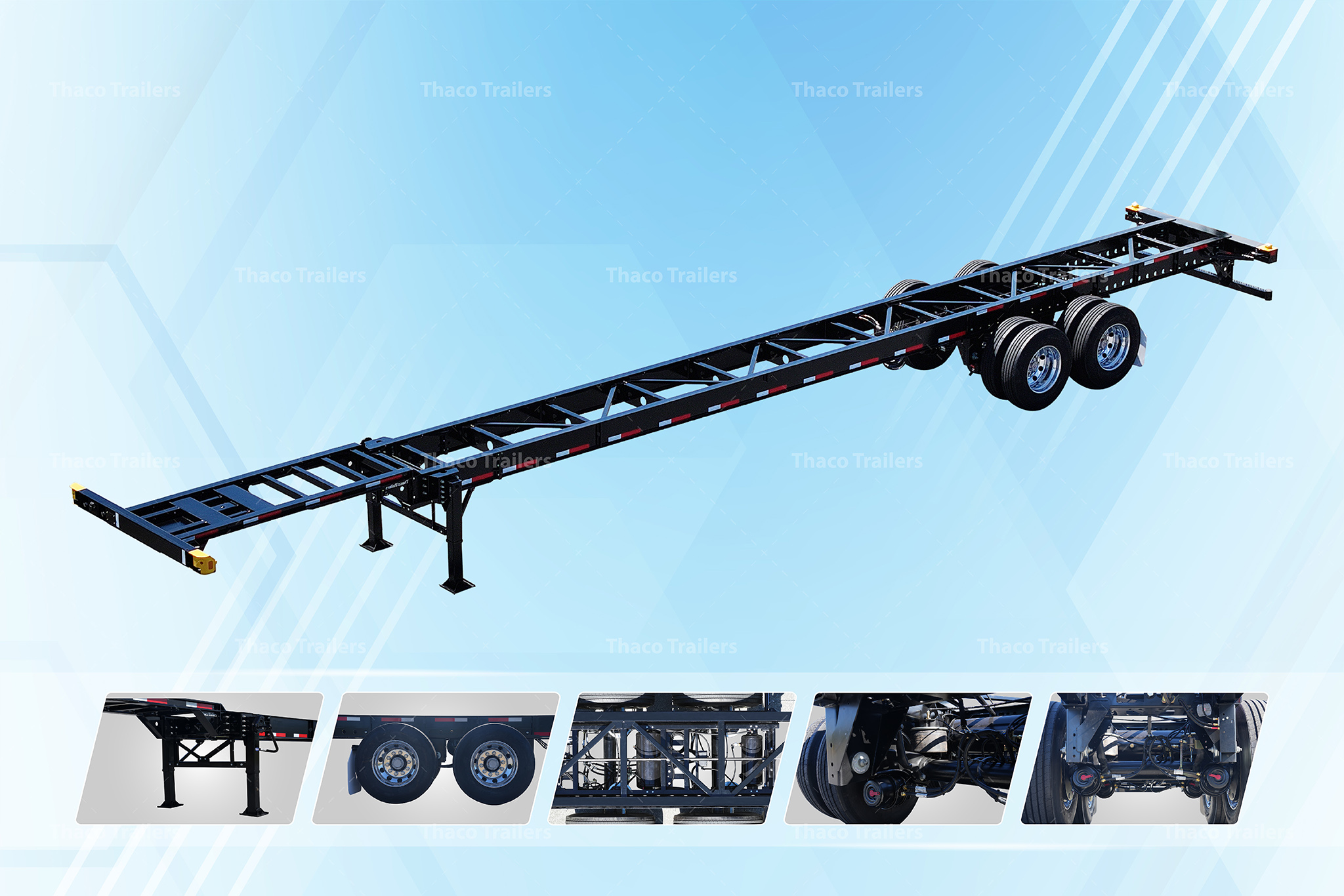
Core Powertrain and Structural Design
Unlike a powered truck or tractor unit, a conventional semi trailer does not have its own main engine or transmission. It relies on the tractor unit for propulsion, while its structural, suspension, braking, and electrical systems support safe transportation.
Coupling and Tractor Compatibility
The fifth-wheel coupling connects the semi trailer to the tractor unit. The trailer's kingpin engages with the fifth wheel, allowing the tractor and trailer to articulate during turning and maneuvering.
Important compatibility factors include:
-
Kingpin specification: The kingpin must match the tractor's fifth-wheel coupling.
-
Fifth-wheel height: The tractor and trailer must be compatible to maintain appropriate trailer alignment.
-
Gross combination weight: The tractor must have sufficient rated capacity for the intended loaded combination.
-
Axle loading: The load distribution must remain within the permitted limits for the tractor and trailer axles.
-
Electrical and air connections: The connections must support the trailer's lighting, braking, and other required systems.
Incorrect coupling compatibility or excessive imposed load can affect handling, braking performance, and structural reliability.
Hydraulic System
Not every semi trailer requires a hydraulic system. Hydraulic equipment is primarily used on specialized designs such as dump semi trailers, lowbed trailers with hydraulic ramps, and certain extendable or self-loading transport platforms.
A dump semi trailer generally uses a hydraulic lifting cylinder to raise the cargo body and discharge bulk materials. Hydraulic system selection should consider:
-
Cylinder configuration and lifting geometry.
-
Required lifting force and operating pressure.
-
Hydraulic oil capacity and temperature management.
-
Power take-off compatibility with the tractor.
-
Hose routing, seals, valves, and maintenance access.
For conventional flatbed, box, and container trailers, hydraulic equipment may not be necessary. Adding unnecessary hydraulic components can increase purchase cost and maintenance complexity.
Axles, Suspension, and Braking Systems
The axle assembly supports the trailer load and transfers forces to the road surface. Semi trailers may use different axle counts and suspension configurations depending on payload, cargo distribution, road conditions, and local regulations.
Common suspension systems include:
-
Mechanical leaf-spring suspension: A widely used configuration valued for its relatively simple structure and repairability.
-
Air suspension: Uses compressed air to support the trailer and can provide improved ride-height control and cargo protection when properly configured.
-
Specialized suspension: Used on certain heavy-duty, lowbed, and modular transport trailers requiring specific load distribution or maneuverability.
The braking system is equally important. Conventional road-going semi trailers commonly use pneumatic service brakes, with ABS or other electronic braking functions depending on vehicle specifications and market requirements.
Buyers should verify axle ratings, brake compatibility, air-line connections, brake chamber specifications, and applicable regulatory requirements before purchasing.
Chassis and Structural Durability
The chassis is the primary load-bearing structure of a semi trailer. Its design determines how effectively the trailer distributes cargo weight and withstands bending, torsional forces, road vibration, and repeated loading cycles.
Key structural components include:
-
Main longitudinal beams.
-
Crossmembers and reinforcing sections.
-
Kingpin mounting structure.
-
Landing gear supports.
-
Axle suspension mounting points.
-
Rear underrun protection and other required safety structures.
Steel grade, beam dimensions, welding quality, corrosion protection, and structural reinforcement all influence service life. A trailer intended for heavy construction materials may require a different frame configuration from one used for general palletized freight.
Operator Safety and Service Access
Although a semi trailer has no conventional operator cab, its design directly affects driver and roadside safety. Important safety features include reliable landing gear, secure cargo-restraint points, anti-lock braking equipment where required, conspicuous lighting, reflective markings, and appropriate protective structures.
Maintenance access should also be considered. Easily accessible brake components, suspension parts, electrical connections, lubrication points, and tire assemblies can reduce inspection time and simplify routine servicing.
Technical Specifications
Semi trailer specifications vary significantly by design, manufacturer, axle configuration, and intended application. Buyers should distinguish between the trailer's technical rating and the legally permitted operating load. A trailer with a particular structural capacity may still be subject to lower road-weight limits, axle-load restrictions, or dimensional requirements in its destination market.
The following table summarizes the principal parameters that should be checked during procurement.
|
Key Parameter |
Typical Technical Specification |
Operational Significance |
|---|---|---|
|
Trailer configuration |
Flatbed, lowbed, box, tanker, dump, or container chassis |
Determines cargo compatibility and loading method |
|
Axle configuration |
Commonly 2, 3, or more axles depending on design |
Affects load distribution and road compliance |
|
Payload capacity |
Manufacturer-rated value according to trailer design |
Determines usable cargo capacity |
|
Suspension |
Mechanical, air, or specialized suspension |
Influences ride quality and maintenance |
|
Braking system |
Pneumatic brakes, with ABS or other required systems |
Supports controlled and compliant braking |
|
Main frame |
Steel longitudinal beams and crossmembers |
Determines structural strength and durability |
|
Tires and wheels |
Size, load index, rim rating, and approved configuration |
Affect load support, stability, and operating safety |
|
Overall dimensions |
Length, width, and height according to configuration |
Determines cargo fit and route compatibility |
Additional technical information should include the kingpin specification, landing gear capacity, floor construction, tire quantity, spare-wheel arrangement, lighting system, corrosion protection, and permitted loading points.
For international purchases, the manufacturer should provide a complete technical specification sheet identifying the trailer's rated gross weight, tare weight, payload rating, axle ratings, dimensions, and braking configuration.
Comparative Advantages TCO and ROI
A semi trailer allows a transport operator to separate the cargo platform from the tractor unit. This arrangement can improve fleet flexibility because one tractor may operate with different compatible trailers according to cargo requirements and delivery schedules.
Compared with a rigid truck, a tractor-semi-trailer combination can offer greater cargo flexibility and may provide higher transport capacity in suitable configurations. However, the actual advantage depends on road regulations, vehicle dimensions, cargo density, loading facilities, and operating conditions.
Different trailer types also have different economic characteristics.
-
Flatbed semi trailers: Offer flexible loading for steel, timber, construction materials, and machinery, but cargo generally requires suitable weather protection and securement.
-
Lowbed semi trailers: Support the transportation of excavators, bulldozers, loaders, and other oversized equipment, but specialized loading and route planning may be necessary.
-
Box semi trailers: Protect general cargo from weather and external exposure, making them suitable for packaged goods and distribution.
-
Dump semi trailers: Support bulk-material transportation and unloading, but hydraulic components require additional inspection and maintenance.
-
Tanker semi trailers: Provide dedicated liquid or gas transportation, subject to cargo-specific construction and regulatory requirements.
Total Cost of Ownership
Total cost of ownership (TCO) includes more than the initial purchase price. A realistic assessment should consider:
-
Purchase price and financing expenses.
-
Tractor fuel consumption and operating costs.
-
Tire replacement and suspension maintenance.
-
Brake servicing and replacement components.
-
Insurance, registration, and road charges.
-
Corrosion protection and structural repairs.
-
Downtime and lost transportation revenue.
-
Resale value at the end of the ownership period.
A trailer with a higher initial purchase price may offer better long-term value if its design matches the operating environment and reduces avoidable maintenance or downtime. However, this advantage should be verified using actual operating records rather than assumed from the purchase price alone.
ROI Evaluation
Return on investment depends on annual operating distance, payload utilization, freight revenue, maintenance costs, and the number of productive working days.
For example, a logistics company evaluating a new flatbed semi trailer should compare the expected annual contribution from additional transport work against the trailer's purchase cost, financing, insurance, maintenance, and depreciation.
The calculation should use realistic assumptions for annual trips, average cargo weight, empty return journeys, fuel prices, and maintenance downtime. A higher nominal payload rating does not automatically produce higher profits if road restrictions or cargo availability prevent the operator from using that capacity.
Heavy Duty Application Scenarios
Semi trailers support a wide range of industrial and commercial transportation tasks. The correct configuration depends on cargo dimensions, weight, loading requirements, route conditions, and delivery frequency.
Construction and Infrastructure
Flatbed and lowbed semi trailers are commonly used to transport construction materials and heavy equipment.
Typical cargo includes:
-
Excavators, wheel loaders, and bulldozers.
-
Steel beams and structural components.
-
Construction machinery and prefabricated materials.
-
Road-building equipment and industrial generators.
Lowbed trailers are particularly useful when transporting tall machinery because their lower loading platform can help reduce overall transport height. Buyers should verify deck height, ramp capacity, axle configuration, and route restrictions.
Mining and Quarrying
Mining and quarrying operations require trailers capable of handling demanding transport conditions. Dump semi trailers may be used for suitable bulk materials, while lowbed trailers transport large mining equipment between sites.
The operating environment can involve abrasive materials, uneven access roads, heavy axle loads, and frequent loading cycles. Reinforced structural components, appropriate tires, reliable braking systems, and accessible maintenance points are important considerations.
Agriculture and Bulk Transportation
Agricultural transport may involve grain, fertilizer, livestock-related supplies, machinery, and other bulk products.
Depending on the cargo, operators may select flatbed, dump, tanker, or specialized semi trailers. Buyers should consider seasonal utilization, loading equipment compatibility, cargo protection, cleaning requirements, and the road conditions commonly encountered between farms, storage facilities, and processing plants.
Manufacturing and General Freight
Box and curtain-side semi trailers are suitable for many manufacturing and distribution operations. They can transport packaged products, pallets, machinery components, and industrial supplies.
The selection process should focus on internal dimensions, loading-door arrangement, floor strength, cargo-restraint equipment, and compatibility with warehouse loading docks.
Selection and Maintenance Considerations
Selecting the right semi trailer requires matching the equipment to the actual transportation task rather than purchasing solely according to advertised payload or price.
Key Purchasing Considerations
Before requesting a quotation, buyers should establish the following information:
-
Cargo type: Identify whether the trailer will carry machinery, containers, bulk materials, liquids, or general freight.
-
Cargo weight and dimensions: Confirm maximum cargo weight, length, width, height, and center of gravity.
-
Trailer configuration: Select a flatbed, lowbed, box, dump, tanker, or other suitable design.
-
Axle arrangement: Match axle quantity and ratings to the intended load and destination-market regulations.
-
Tractor compatibility: Confirm fifth-wheel height, kingpin dimensions, gross combination weight, and braking connections.
-
Road conditions: Consider highway operation, construction access roads, gradients, and uneven surfaces.
-
Legal requirements: Check vehicle dimensions, axle loads, braking requirements, lighting, registration, and any relevant market-specific standards.
-
After-sales support: Evaluate spare-parts availability, warranty coverage, technical assistance, and repair capability.
Preventive Maintenance
Regular inspections help identify defects before they develop into major failures. A preventive maintenance program should cover:
-
Frame and welding: Inspect main beams, crossmembers, joints, and mounting points for cracks, deformation, or corrosion.
-
Axles and suspension: Check springs, air bags, shock absorbers, bushings, hubs, and suspension fasteners.
-
Braking system: Inspect brake linings, chambers, air hoses, valves, and ABS components where fitted.
-
Tires and wheels: Monitor tire pressure, tread wear, wheel fasteners, rim condition, and load ratings.
-
Landing gear: Check operation, lubrication, mounting brackets, and structural condition.
-
Electrical equipment: Test lights, connectors, wiring, and warning systems.
-
Cargo restraints: Inspect tie-down points, winches, locks, and other securing devices.
-
Hydraulic equipment: On applicable trailers, check oil levels, hoses, cylinders, seals, and connections.
Inspection frequency should follow the manufacturer's maintenance schedule and applicable regulations. Trailers operating under severe loading, dusty conditions, corrosive environments, or frequent short-haul cycles may require more frequent checks.
Compliance and Supplier Evaluation
For international procurement, buyers should confirm that the trailer meets the technical and regulatory requirements of its destination market. Requirements can differ between countries and may cover braking systems, lighting, dimensions, axle loads, tires, safety structures, and vehicle approval documentation.
A reliable supplier should be able to provide:
-
A complete technical specification sheet.
-
Drawings and major component information.
-
Axle, suspension, and braking system details.
-
Available configuration and customization options.
-
Inspection and quality-control documentation.
-
Warranty terms and spare-parts support.
The buyer should also confirm whether the quoted configuration includes tires, spare wheels, landing gear, toolboxes, electrical connections, and other accessories. Clear documentation helps avoid misunderstandings about the delivered equipment.
Conclusion
A semi trailer is a critical part of commercial transportation, and its configuration must match the cargo, tractor unit, route conditions, and applicable regulations. Flatbed, lowbed, box, dump, tanker, and container trailers each offer different operational advantages.
For fleet managers and procurement professionals, the most important decision factors are rated payload, structural strength, axle and suspension configuration, braking performance, tractor compatibility, maintenance accessibility, and total cost of ownership.
A well-matched semi trailer can improve fleet utilization, support reliable cargo transportation, and provide long-term commercial value. Before purchasing, buyers should compare complete technical specifications, verify legal requirements in the destination market, and evaluate the supplier's manufacturing quality and after-sales support.