

Introduction
Semi trailer tracking systems—more precisely called trailer telematics—are the combination of GPS location devices, onboard sensors, and cloud software that monitor an unpowered trailer’s position, condition, and usage in real time . The distinction from a simple GPS tracker matters: a location-only device answers “where is my trailer,” while a telematics system answers “is it being used, is it healthy, and is its cargo intact” . For fleet managers, the second set of questions is where the money is.
The operational problem that tracking systems address is structural. A trailer has no engine, no odometer, and no driver sitting in it when it is dropped at a yard or customer site . Without telematics, that trailer goes dark—its location unknown, its tire condition unmonitored, its maintenance schedule based on calendar guesswork rather than actual mileage. Industry data indicates that around 20 percent of trailers sit idle at any given moment, and most fleets cannot identify which ones . A fleet covering three to four times the number of trailers it actively uses is tying up capital in equipment that is not generating revenue .
The commercial scale of this gap is visible in the market. The global trailer telematics market was valued at approximately $2.54 billion in 2025** and is projected to reach **$7.04 billion by 2034, growing at roughly 11.2 percent annually . Fleets are adopting the technology because the data it produces—when connected to maintenance and dispatch systems—changes how trailers are bought, maintained, and deployed.
This guide examines the sensor architecture that defines a tracking system’s capability, the utilization and health data that drive fleet economics, and the integration requirements that determine whether the data becomes action.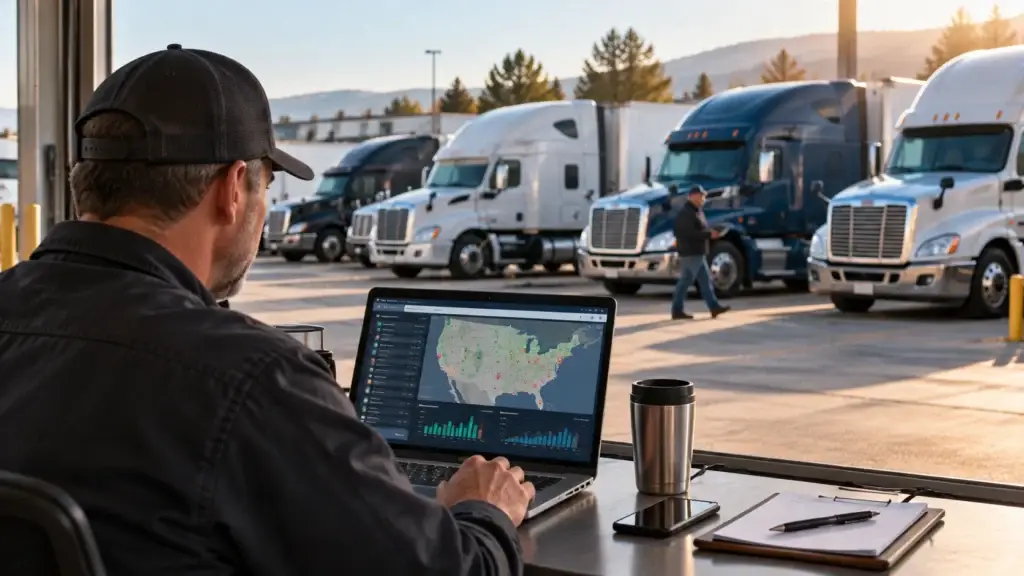
Core Powertrain and Structural Design
Engine and Transmission
A semi trailer tracking system has no relationship to the tractor’s engine or transmission. The trailer’s telematics unit is powered either by an internal battery (for battery-powered or “slap-and-track” devices) or by a hard-wired connection to the trailer’s electrical system . When the trailer is coupled to a tractor, the unit may recharge through the SAE J560 connector’s auxiliary power circuit; when uncoupled, it relies on its internal battery. Government research on trailer tracking systems notes that a rechargeable battery can provide power for at least 30 days when the trailer is disconnected from a tractor, and recharge fully in six hours or less when connected to a typical 12-volt tractor supply .
Hydraulic System
Trailer tracking systems are electronic and sensory, not hydraulic. They interface with the trailer’s pneumatic brake system only through ABS/EBS data reading—the telematics unit can pull brake fault codes and warnings from the trailer’s electronic braking system and route them to maintenance . This is a diagnostic interface, not a control interface. The tracker does not operate the brakes or any hydraulic function.
Chassis and Structural Durability
The sensor stack is the tracking system’s defining architecture. A basic system includes GPS location and a hub odometer that measures actual distance traveled, since the trailer has no engine odometer . A mid-tier system adds tire pressure monitoring (TPMS), which catches a slow leak before it becomes a blowout, and door sensors, which report open/closed status and dwell time while open . A comprehensive system adds temperature monitoring for reefer cargo, ABS/EBS fault codes, and in some cases interior cameras for load verification .
The mounting and power design determines durability. Battery-powered units install in minutes and can be mounted on the undercarriage to reduce tampering risk . Hard-wired units draw continuous power but require installation labor. A covert option embeds the GPS tracker inside a standard 4-inch trailer tail light, using the light’s housing as camouflage and its power circuit for recharging .
Technical Specifications
The table below presents representative parameters for semi trailer tracking system components and deployment. Values are drawn from published product specifications and industry sources; actual figures vary by manufacturer and configuration.
Comparative Advantages TCO and ROI
The tracking system decision is an asset visibility and utilization comparison, not a device price comparison. A location-only GPS tracker costs less but leaves the fleet blind to tire condition, brake faults, and door events. A full telematics package costs more but converts the trailer from a passive asset into a data source that feeds maintenance and dispatch.
The utilization data is where the largest capital returns appear. Geotab has reported that customers deferred $3 million to $4 million in capital spending by improving trailer utilization through visibility into where trailers are deployed and how frequently they are used . The mechanism is straightforward: if a fleet can see that a portion of its trailer pool is sitting idle, it can redeploy those units instead of buying more. Daylight Transport, using Samsara’s Smart Trailer system, reported a 48 percent improvement in trailer utilization and $250,000 in annual savings from reallocating underutilized trailers .
A defensible cost comparison requires stated assumptions. Consider a fleet of 100 trailers with a capital cost of 150,000 CNY each. If telematics data reveals that 20 trailers are consistently underutilized and can be redeployed rather than replaced, the deferred capital is 3,000,000 CNY. Against a per-trailer hardware and subscription cost that varies by sensor package, the payback is measured in months of deferred capital, not years of fuel savings. The calculation hinges on the fleet’s actual utilization gap, which the data itself reveals.
Maintenance ROI is the second return stream. TPMS alerts that become work orders prevent roadside failures; ABS fault codes that route to the shop before inspection day avoid out-of-service violations . BCP Transportation reported reducing diagnostic time by at least one hour per incident using Smart Trailer ATIS and ABS features . For a fleet with frequent trailer maintenance events, that time saving accumulates.
Heavy Duty Application Scenarios
-
Dry van and general freight: Door sensors and location are the priority. The data proves loads, flags security events, and finds units in drop pools. Hub odometer mileage drives PM scheduling .
-
Refrigerated (reefer) trailers: Temperature and reefer-unit data lead. A cold-chain break is the costly failure, and continuous monitoring with alerts protects the cargo and proves the chain held . Schmitz Cargobull’s TrailerConnect system includes real-time monitoring of cooling unit status with fault analysis and recommended actions .
-
Flatbed trailers: Location and TPMS carry the load. Flatbeds range widely and blowouts are the frequent roadside event. Hub miles add wear-based service scheduling .
-
Tanker trailers: TPMS and ABS/EBS brake data come first for a heavy, high-consequence load, with GPS and temperature where the product requires it .
Selection and Maintenance Considerations
Selecting a semi trailer tracking system begins with the failure that costs the most, not the sensor count. The first question is: what goes wrong most often on this trailer type, and which sensor detects it before it becomes a roadside event? The second is: does the data connect to the system that acts on it?
Key considerations include:
-
Match the sensor package to the trailer type and failure profile. A dry van does not need reefer temperature monitoring; a tanker does not need door sensors. The right package follows the failure that hurts most .
-
Verify battery life and power source for the deployment model. A battery-powered unit with a 30-day uncoupled life suits drop-and-hook operations; a hard-wired unit suits trailers that are frequently coupled and have reliable power access .
-
Confirm TMS and maintenance system integration. Telematics data sitting in a separate dashboard from the maintenance system delivers a fraction of its value. The data must feed work orders, PM scheduling, and dispatch decisions .
-
Check connectivity technology against operating geography. Cellular coverage supports most highway routes; satellite links serve ultra-remote corridors at higher cost .
-
Treat the tracker as a data source, not a solution. The ROI comes from what the fleet does with utilization and fault data—redeploying idle trailers, routing defects to the shop, scheduling PM on actual mileage. The device enables the decision; the decision delivers the return .
Conclusion
Semi trailer tracking systems turn an unpowered, easily lost asset into a connected data source. The sensor stack—GPS, hub odometer, TPMS, door, temperature, and brake fault codes—answers the operational questions that a location-only device cannot: is the trailer being used, is it healthy, and is its cargo intact . The utilization data alone has allowed fleets to defer millions in capital spending and improve trailer utilization by nearly half .
The engineering priorities are clear: match the sensor package to the trailer type, verify battery and connectivity for the operating model, and integrate the data with the maintenance and dispatch systems that act on it. The commercial priorities follow: the largest return comes from utilization visibility and deferred capital, not from device cost savings. Fleets that treat tracking as a sensor purchase get dots on a map. Fleets that treat it as an integration project get a trailer fleet that is right-sized, maintained on actual usage, and visible at every stage of its service life.