

Introduction
A semi trailer tire pressure monitoring system (TPMS) continuously measures the pressure and temperature inside each trailer tire and alerts the driver or fleet manager when a tire falls outside its specified range. Unlike an automatic tire inflation system (ATIS), which adds air to maintain pressure, TPMS is a monitoring technology: it detects and reports, leaving the corrective action to the driver or maintenance team. The two systems are complementary, and some modern trailers integrate both—Hendrickson’s TIREMAAX TPMS enhancement, for example, adds pressure data to its existing automatic inflation system and feeds it through the Phillips Connect platform .
The operational case for TPMS rests on a measurable cost problem. Industry data shows that roughly 33 percent of trailer tires are underinflated, with about 5 percent of tires more than 20 psi below specification . Underinflation by 10 psi increases fuel consumption by 0.5% to 1% , and a constant 20% underinflation can cut tire life by approximately 30% . Trailers are especially vulnerable because maintenance is infrequent and trailers sit unattended for extended periods, allowing pressure loss to go unchecked. TPMS addresses this gap by making pressure visible continuously rather than at periodic manual checks.
This guide examines the sensor technologies, alert thresholds, and fleet economics that determine whether a semi trailer TPMS delivers the savings it promises.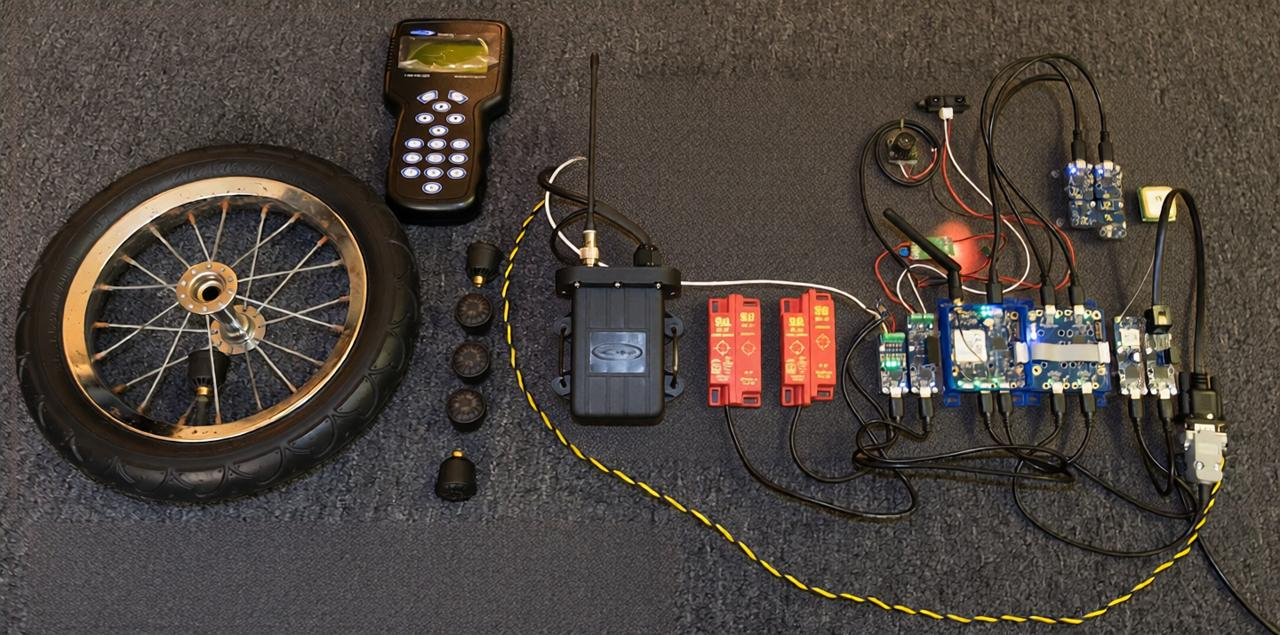
Core Powertrain and Structural Design
Engine and Transmission
A semi trailer TPMS has no relationship to the tractor’s engine or transmission. Its power source is typically a battery within each wheel sensor, and its data transmission is wireless—radio frequency from the sensor to a receiver mounted on the trailer, then to the cab display or telematics platform. The tractor’s role is limited to providing the display interface or telematics gateway that surfaces the trailer’s data to the driver or fleet manager.
Hydraulic System
TPMS is not a hydraulic system. It is an electronic sensing and communication system. The relevant fluid system on the trailer is pneumatic—the brake air supply—and TPMS sensors must be compatible with the wheel and valve-stem configuration. On trailers equipped with ATIS, TPMS sensors may be integrated into the hubcap or valve stem without interfering with the inflation system’s air delivery .
Chassis and Structural Durability
The sensor mounting location determines durability and reliability. Three direct sensor types dominate the commercial market :
-
Internal (valve-stem mounted): The sensor screws onto the valve stem inside the tire. This is the most common OEM factory installation and offers the highest reliability and signal integrity because the sensor is protected inside the tire.
-
External (valve-cap mounted): The sensor replaces the valve cap on the outside of the stem. Installation takes minutes without dismounting the tire, making it the most common retrofit style, but it is vulnerable to theft and road debris damage.
-
Fabric-banded (wheel-mounted): The sensor mounts on a strap inside the wheel drop-center. It offers better signal reliability than external sensors and no valve-stem interference, suiting rough duty cycles.
Alert overload is the most common deployment failure. If a system alerts on every 3 psi deviation—most of which are normal temperature-related fluctuations—drivers receive 20 or more alerts per shift and begin ignoring all of them, including the critical ones . A structured three-tier alert system (Info, Warning, Critical) separates routine pressure variation from genuine failures and determines whether the system is used or muted.
Technical Specifications
The table below presents representative parameters for semi trailer TPMS deployment and the tire pressure data that drives the economic case. Values are drawn from industry sources and published system specifications.
Comparative Advantages TCO and ROI
The TPMS decision is a direct versus indirect versus no monitoring comparison. Indirect TPMS uses wheel speed sensors and ABS data to infer pressure loss from rolling radius changes. It is cheaper because it requires no wheel sensors, but it misses the gradual 5–15% underinflation that drives most fuel and tire waste . A fleet that chooses indirect TPMS to save upfront cost may find its first-year blowout rate unchanged, because the slow leaks that matter most are below the detection threshold.
Direct TPMS measures actual pressure and temperature at each wheel. It costs more but captures the underinflation that drives the economic case. The fuel penalty alone justifies the investment for high-utilization fleets: at 10 psi underinflation and 0.75% fuel penalty, a trailer running 100,000 km per year at 35 L/100km and 7.5 CNY/L incurs approximately 1,970 CNY in excess fuel cost annually. Across a fleet of 40 trailers, that is roughly 78,700 CNY per year—before counting the tire life savings from avoiding 20% underinflation and its 30% tire life penalty.
Trailer TPMS specifically addresses a gap that tractor-only systems leave open. Trailer tires blow more often than tractor tires because they are harder to inspect and drivers spend less time near them . A fleet that installs TPMS on tractors only and skips trailers has monitored the wheels that are checked daily and left unmonitored the wheels that are checked rarely.
A defensible cost comparison requires stated assumptions. Consider a fleet of 30 trailers with 8 tires each. If TPMS detects and corrects chronic underinflation that was consuming 5% of tire life, and the fleet spends 200,000 CNY per year on trailer tires, the tire life saving is 10,000 CNY annually. If the fuel saving from eliminating a sustained 5 psi underinflation is 0.4%, and the fleet burns 2 million CNY in diesel per year across those trailers, the fuel saving is 8,000 CNY. Combined annual benefit is 18,000 CNY against a per-trailer system cost that varies by sensor type and installation. The payback depends on utilization and the actual underinflation rate the fleet experiences.
Integration with telematics multiplies the value. A TPMS that feeds data into a fleet platform can trigger work orders, prioritize trailers for service, and document pressure checks for inspection compliance . The data becomes actionable rather than merely visible.
Heavy Duty Application Scenarios
-
Long-haul highway fleets: Continuous monitoring catches slow leaks and temperature-related pressure changes during long runs. The driver receives a warning before a tire fails at highway speed, allowing a planned stop rather than a roadside emergency.
-
Trailer pools and drop-and-hook operations: Trailers sit unattended between trips, and pressure loss goes undetected without monitoring. Auto-location and auto-pairing functions allow TPMS to recognize sensors when a trailer is hooked, supporting pool-fleet logistics without manual teach-in .
-
Container drayage and port operations: Short trips leave little time for manual checks. TPMS provides continuous visibility during the duty cycle and can alert the driver before a tire reaches the out-of-service threshold.
-
Cold climate operations: Temperature drops reduce tire pressure, and TPMS compensates by reporting actual pressure rather than requiring the driver to estimate the effect of ambient temperature. The system’s temperature data also flags overheating that precedes a failure.
Selection and Maintenance Considerations
Selecting a semi trailer TPMS begins with the sensor type and the fleet’s maintenance model. An OEM factory installation will typically use internal sensors; a retrofit will typically use external sensors for speed of installation, with fabric-banded sensors as an option for rough duty cycles .
Key considerations include:
-
Choose direct TPMS for long-haul and high-utilization trailers. Indirect TPMS misses the gradual underinflation that drives fuel and tire waste. The upfront savings are recovered multiple times over in the costs the system fails to prevent .
-
Plan for sensor theft and damage on external units. External valve-cap sensors are vulnerable to theft and road debris. Anti-theft locking caps or internal sensors are appropriate for urban and high-turnover routes. Budget 5–10% annual sensor replacement if external sensors are used .
-
Structure alerts in tiers. A system that alerts on every minor deviation is a system that gets ignored. Define Info, Warning, and Critical thresholds so drivers respond to the alerts that matter .
-
Include trailers in the deployment. Tractor-only TPMS leaves the least-inspected tires unmonitored. Trailer TPMS with auto-pairing supports drop-and-hook operations without manual intervention .
-
Integrate with telematics for actionable data. A TPMS that only lights a dash lamp delivers less value than one that feeds a fleet platform, triggers work orders, and documents pressure history .
Conclusion
A semi trailer tire pressure monitoring system addresses a measurable and expensive problem: roughly one-third of trailer tires are underinflated, and that underinflation costs fuel, tire life, and roadside downtime . Direct TPMS with internal or fabric-banded sensors provides the accurate, continuous pressure data that indirect systems cannot, and a tiered alert structure ensures the data is acted upon rather than ignored .
The engineering priorities are clear: select direct TPMS for trailers that run high mileage or sit unattended, structure alerts to prevent fatigue, and integrate the data with the fleet’s maintenance workflow. The commercial priorities follow: model the fuel and tire-life savings against the system cost using the fleet’s actual underinflation rate and utilization, and recognize that trailer tires are the least-inspected wheels in the operation and therefore the ones that benefit most from monitoring. The trailer whose tires are continuously measured is the one that delivers the fuel efficiency and casing life the fleet paid for.