

Introduction
Moving household goods, commercial inventory, machinery, and industrial equipment requires careful coordination of transportation capacity, labor, loading time, and cargo protection. Rising transportation costs and labor constraints have encouraged some businesses and individuals to consider self-managed moving arrangements rather than relying entirely on full-service moving companies.
Semi trailer self pack moving generally describes a moving arrangement in which the customer packs and loads their own belongings into a semi-trailer or a suitable trailer-based moving unit, while transportation is arranged separately. Depending on the service model, the trailer may be delivered to a loading location, collected after loading, and transported to the destination.
This arrangement is different from conventional full-service moving. The customer takes responsibility for packing and often loading, unloading, and inventory management, while a transportation provider may handle the road transport.
The main equipment considerations include:
-
Trailer type: Dry van, moving trailer, flatbed, or another suitable configuration.
-
Internal dimensions: Available floor space, interior height, and door clearance.
-
Payload capacity: The permitted cargo weight after accounting for trailer tare weight and applicable vehicle limits.
-
Loading access: Rear doors, ramps, dock-height compatibility, and loading equipment.
-
Cargo protection: Weather resistance, securement points, and internal protection.
-
Transportation arrangements: Pickup, delivery, route planning, and legal operating requirements.
Choosing the correct trailer and preparing a structured loading plan are essential to making self-pack moving practical, safe, and cost-effective.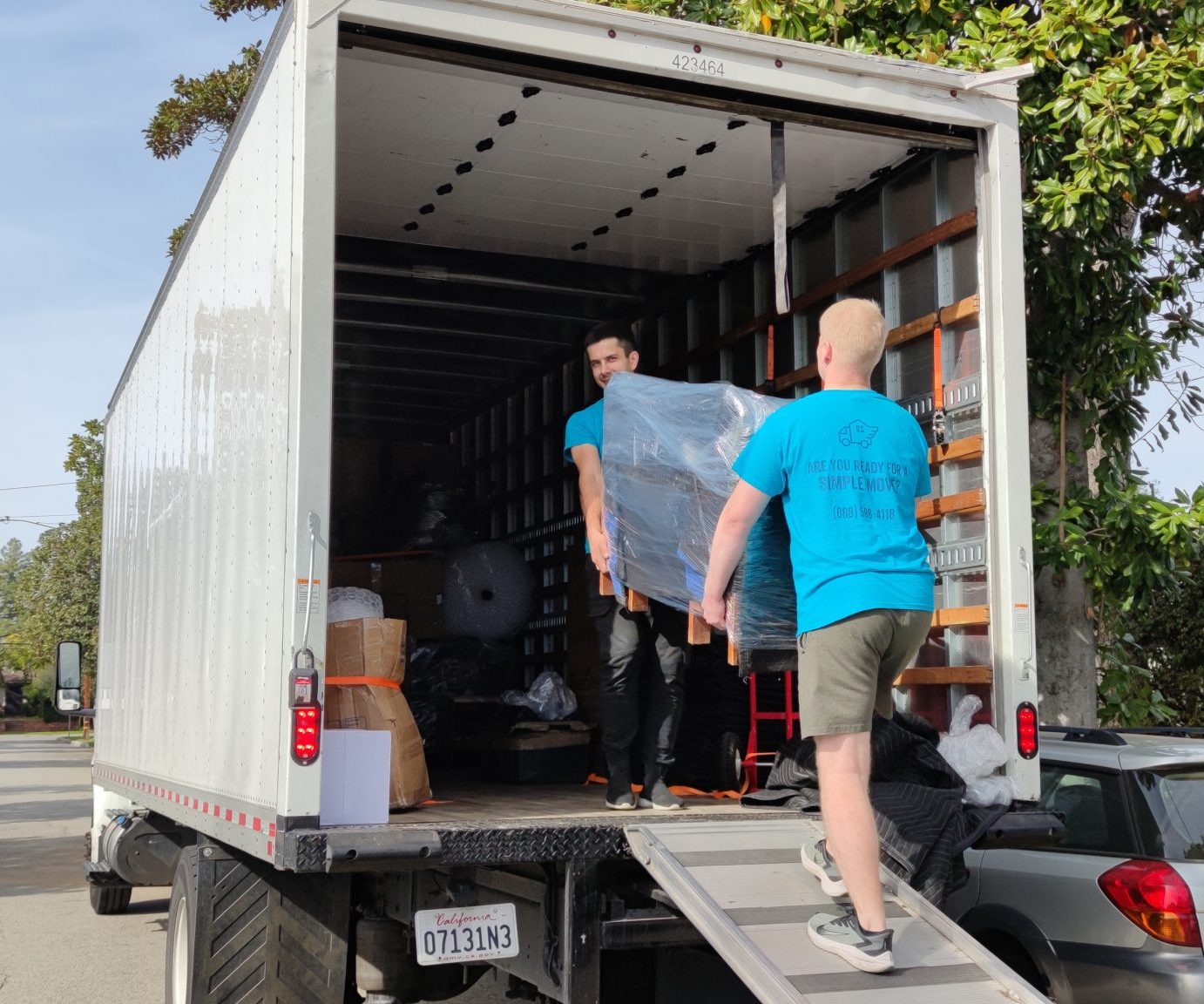
Core Powertrain and Structural Design
A semi-trailer is a non-powered transport unit designed to connect to a compatible tractor through a fifth-wheel coupling. In a self-pack moving operation, the trailer's structural design, access arrangements, and cargo-securement features are more important than engine performance.
Engine and Transmission
The semi-trailer itself does not have an independent engine or transmission. Road propulsion is provided by the tractor unit, which transfers power through its drivetrain to move the loaded trailer.
When arranging semi trailer self pack moving, the tractor must be compatible with the trailer's coupling system, gross combination weight, and braking connections.
Important tractor considerations include:
-
Engine power and torque appropriate for the combined operating weight.
-
Transmission configuration suitable for the route and terrain.
-
Compatibility with the trailer's fifth-wheel height and kingpin.
-
Correct electrical and pneumatic connections.
-
Compliance with applicable commercial vehicle requirements.
The required tractor specification depends on the loaded trailer weight, road gradients, travel distance, and local operating regulations.
Trailer Body and Cargo Space
For most self-pack moving applications involving household or commercial goods, an enclosed dry van or purpose-designed moving trailer is generally more suitable than an open flatbed.
An enclosed trailer provides protection against direct rain, road spray, dust, and unauthorized access when properly secured. Its internal layout also supports organized stacking and cargo separation.
Key design features include:
-
Enclosed cargo body.
-
Rear loading doors.
-
Interior wall protection.
-
Floor suitable for the intended cargo weight.
-
Cargo tie-down points or load-restraint systems.
-
Sufficient internal height and width.
-
Optional logistics rails, partitions, or protective equipment.
A trailer's external dimensions do not represent its usable cargo capacity. Wheel housings, structural members, door openings, and internal fittings can reduce the available loading space.
Loading System and Hydraulic Equipment
Loading arrangements strongly influence labor requirements and operating efficiency.
Depending on the trailer and loading location, useful equipment may include:
-
Forklifts for pallets and heavy packaged goods.
-
Pallet jacks for moving loads across a suitable floor.
-
Loading docks and dock levelers.
-
Portable loading ramps.
-
Tail lifts or liftgates where fitted.
-
Hand trucks and furniture dollies.
-
Winches or specialized machinery-handling equipment.
A hydraulic liftgate can assist with raising suitable cargo between ground level and the trailer floor. However, its rated lifting capacity, platform dimensions, and operating limits must be checked before use.
A standard semi-trailer does not automatically include a liftgate, forklift, or self-loading system. Buyers should confirm the actual equipment configuration before arranging collection.
Chassis, Suspension, and Braking System
The trailer chassis supports the cargo body and transfers the load through the suspension and axles to the road.
For moving applications, correct load distribution is essential. Concentrating heavy furniture, machinery, or pallets in one area can create excessive axle loading or affect trailer stability.
Important components include:
-
Main chassis rails and crossmembers.
-
Axle and suspension assemblies.
-
Service and parking brakes.
-
Landing gear.
-
Tires and wheels.
-
Fifth-wheel coupling components.
-
Electrical and air connections.
The permitted payload is not determined by internal cargo volume alone. It must account for the trailer's rated gross weight, tare weight, axle ratings, tractor capacity, and applicable road-weight restrictions.
Structural Durability and Cargo Protection
Self-pack moving can involve repeated loading, unloading, stacking, and repositioning. The trailer floor, walls, doors, and securement points must therefore be suitable for the expected cargo and handling methods.
For example, heavy machinery may require a reinforced floor and dedicated restraint arrangements, while household furniture may require wall protection and soft packing materials.
Useful protective features include:
-
Durable floor surfaces.
-
Reinforced loading areas.
-
Internal tie-down rails.
-
Protective wall lining.
-
Weather-resistant door seals.
-
Secure locking hardware.
Cargo protection also depends on packing quality. A weather-resistant trailer cannot prevent damage caused by poorly secured loads, inadequate cushioning, or unsuitable stacking.
Operator Safety and Service Access
Loading and unloading introduce risks involving falling objects, manual handling, forklift movements, and uneven surfaces.
Safe operations should include:
-
Inspection of the loading area.
-
Suitable personal protective equipment.
-
Proper forklift and liftgate operation.
-
Secure trailer positioning.
-
Clear pedestrian and vehicle movement zones.
-
Correct cargo restraint before transportation.
The trailer should be parked on a suitable surface, with the tractor and trailer secured according to the equipment manufacturer's instructions and applicable safety procedures.
Technical Specifications
The specifications required for semi trailer self pack moving depend on cargo type, route, trailer design, and transportation arrangements. A common enclosed semi-trailer configuration may provide substantial cargo volume, but actual dimensions and payload ratings vary by manufacturer and model.
The following table identifies typical planning parameters rather than official specifications for a particular trailer.
|
Key Parameter |
Typical Technical Specification |
Operational Significance |
|---|---|---|
|
Trailer configuration |
Enclosed dry van or purpose-built moving trailer |
Protects goods during transportation |
|
Internal length |
Often approximately 12–16 m for full-size commercial trailers |
Determines usable loading space |
|
Internal width |
Often approximately 2.4–2.5 m |
Affects furniture and pallet arrangement |
|
Internal height |
Commonly around 2.4–2.8 m, configuration-dependent |
Determines vertical stacking clearance |
|
Payload capacity |
Varies substantially with trailer rating and legal limits |
Controls the permitted cargo weight |
|
Loading access |
Rear swing doors or roll-up doors, depending on design |
Affects loading speed and equipment access |
|
Loading equipment |
Forklift, pallet jack, ramp, or optional liftgate |
Influences labor and handling requirements |
|
Cargo securement |
Straps, load bars, rails, and blocking materials |
Reduces load movement during transit |
Cargo Volume and Payload Are Different
Cargo volume measures the available three-dimensional space inside the trailer, while payload capacity measures the permitted weight of the cargo.
A load of lightweight household furniture may occupy most of the trailer volume without approaching its payload limit. Dense materials, machinery, or metal components may reach the permitted weight before the trailer is full.
For this reason, self-pack moving plans should calculate both estimated volume and total cargo weight.
Loading Door Dimensions
The rear door opening can be smaller than the trailer's internal dimensions. Large furniture, industrial equipment, and oversized packaged goods must fit through the actual door opening.
Before loading, verify:
-
Door opening width and height.
-
Internal ceiling clearance.
-
Floor height above ground.
-
Ramp or dock compatibility.
-
Turning space for forklifts and handling equipment.
These measurements can prevent delays caused by cargo that fits inside the trailer but cannot pass through the entrance.
Comparative Advantages TCO and ROI
Semi trailer self pack moving can reduce the need for a full-service moving crew, but it also transfers more responsibility to the customer. Its economic value depends on labor availability, cargo volume, transportation distance, and the customer's ability to manage packing and loading safely.
Self Pack Moving Compared with Full-Service Moving
In a full-service moving arrangement, the provider generally handles packing, loading, transportation, and unloading according to the agreed service scope.
In a self-pack arrangement, the customer handles some or most of the preparation and loading work.
|
Evaluation Factor |
Self Pack Moving |
Full-Service Moving |
|---|---|---|
|
Packing responsibility |
Mainly customer-managed |
Generally provider-managed |
|
Loading labor |
Customer or hired labor |
Usually moving crew |
|
Transportation |
Arranged separately or included |
Usually included |
|
Scheduling flexibility |
Depends on trailer availability and agreement |
Depends on provider schedule |
|
Labor cost |
Potentially lower if labor is available |
Usually higher due to service labor |
|
Damage responsibility |
Depends on contract and handling |
Depends on contract and service terms |
|
Planning effort |
Higher customer involvement |
More provider coordination |
Self-pack moving may suit customers who have enough time, labor, and equipment to prepare the shipment. Full-service moving may be more practical when goods are fragile, valuable, unusually heavy, or difficult to handle.
Self Pack Moving Compared with Rental Trucks
A rental box truck may be more convenient for smaller moves, local transportation, or customers with appropriate driving qualifications.
A semi-trailer arrangement may offer greater cargo space for large moves or commercial freight, but it usually requires a suitable tractor, compatible transportation provider, and more careful route and loading planning.
The correct option depends on:
-
Total cargo volume.
-
Cargo weight.
-
Travel distance.
-
Access at both locations.
-
Driver licensing requirements.
-
Vehicle availability.
-
Loading and unloading resources.
A larger trailer is not automatically more economical if much of its capacity remains unused.
Total Cost of Ownership and Moving Costs
The total cost of a self-pack moving operation can include:
-
Trailer rental or transportation service charges.
-
Delivery and collection fees.
-
Packing materials and protective supplies.
-
Labor for loading and unloading.
-
Forklift or liftgate rental.
-
Fuel or transportation charges, if separately billed.
-
Insurance and liability costs.
-
Storage fees and scheduling penalties.
-
Cleaning or damage-related charges.
Customers should request a written quotation that clearly identifies included services, rental periods, mileage conditions, delivery windows, and additional charges.
ROI and Cost Comparison
A simple cost comparison can help determine whether self-pack moving is financially worthwhile.
Estimated self-pack cost = Trailer and transportation charges + Packing materials + Loading labor + Equipment rental + Insurance and additional fees
Estimated cost difference = Comparable full-service quotation − Estimated self-pack cost
For example, a business moving warehouse inventory may already have trained employees and forklift access. In that situation, self-managed loading may reduce the need to purchase external loading services.
However, the calculation must include employee labor hours, equipment operating costs, and the potential cost of cargo damage. Any savings depend on actual quotations and operating conditions rather than a guaranteed percentage.
Heavy Duty Application Scenarios
Semi trailer self pack moving can support residential, commercial, and industrial transportation when the trailer configuration and loading method match the cargo.
Household and Long-Distance Moving
An enclosed trailer can transport household furniture, appliances, boxes, and personal belongings over long distances.
Typical cargo includes:
-
Sofas, beds, and cabinets.
-
Refrigerators and washing machines.
-
Cartons and personal belongings.
-
Outdoor furniture.
-
Packed household equipment.
Furniture should be wrapped, fragile items separated, and heavy objects placed in stable positions. Appliances must be prepared according to their manufacturers' transportation instructions.
Commercial Office Relocation
Businesses may use self-pack moving arrangements to transport office equipment, furniture, and archived materials.
Important considerations include:
-
Inventory labeling.
-
Computer and electronics protection.
-
Secure document packaging.
-
Separation of fragile equipment.
-
Loading sequence based on unloading priorities.
A structured inventory system helps reduce misplaced items and improves unloading efficiency.
Warehouse and Industrial Relocation
Businesses relocating inventory or production equipment may benefit from larger enclosed trailers.
Potential cargo includes:
-
Palletized inventory.
-
Packaging materials.
-
Spare parts.
-
Industrial tools.
-
Selected production equipment.
Heavy industrial equipment requires a loading plan based on its center of gravity, lifting points, floor loading, and restraint requirements. Ordinary furniture-moving methods are not sufficient for heavy machinery.
Retail and Distribution Logistics
Retailers and distributors may use self-managed loading for store relocations, stock transfers, and seasonal inventory movements.
Palletized goods can improve loading efficiency when compatible with the trailer floor, forklift, and loading dock.
The loading plan should account for delivery sequence so that goods required first are accessible without unnecessary unloading and reloading.
Construction and Equipment Transportation
Some semi-trailer arrangements can support the movement of construction equipment, tools, and jobsite supplies. However, heavy machinery should be transported using an appropriate equipment trailer rather than an ordinary enclosed moving trailer when weight, dimensions, or loading requirements exceed the latter's design limits.
For machinery transportation, verify:
-
Machine operating weight and transport dimensions.
-
Trailer payload and axle ratings.
-
Loading ramp capacity.
-
Securement points.
-
Required permits and route restrictions.
A specialized lowbed or equipment trailer may be necessary for excavators, loaders, and other heavy machines.
Selection and Maintenance Considerations
Selecting a suitable semi trailer self pack moving solution requires coordination between trailer specifications, cargo requirements, loading equipment, and transportation arrangements.
Assess Cargo Volume and Weight
Start with an inventory of everything being moved.
Estimate:
-
Total number of cartons and pallets.
-
Furniture dimensions.
-
Largest individual items.
-
Total cargo weight.
-
Fragile or high-value goods.
-
Items requiring special handling.
Use both volume and weight calculations to avoid choosing a trailer that is either too small or unsuitable for the load.
Confirm Trailer Dimensions and Access
Before booking, request the actual internal dimensions and door opening measurements.
Confirm that the loading and delivery locations can accommodate the trailer. Some residential streets, commercial entrances, and industrial sites may not provide sufficient turning space or clearance for a full-size tractor-trailer.
Check:
-
Road access and turning radius.
-
Overhead clearance.
-
Parking and staging space.
-
Loading dock height.
-
Ground conditions.
-
Local restrictions on commercial vehicles.
Select Appropriate Loading Equipment
Loading equipment should match the cargo weight and handling method.
For example:
-
Hand trucks are suitable for many boxes and smaller appliances.
-
Furniture dollies assist with bulky household items.
-
Pallet jacks move compatible palletized cargo across suitable surfaces.
-
Forklifts handle heavy pallets and industrial loads.
-
Liftgates support suitable cargo where loading docks are unavailable.
Never exceed the rated capacity of a forklift, liftgate, ramp, or other handling equipment.
Plan Cargo Distribution and Securement
A well-organized loading sequence improves stability and reduces unloading time.
Recommended practices include:
-
Distribute cargo weight appropriately.
-
Place heavier items low and secure them against movement.
-
Avoid concentrating excessive weight in one section.
-
Protect fragile items with suitable cushioning.
-
Fill gaps to limit shifting where appropriate.
-
Use rated straps and load-restraint equipment.
-
Keep doors and access areas clear.
Cargo must be secured in accordance with applicable load-restraint requirements. Packaging alone should not be treated as a substitute for proper cargo securement.
Check Insurance and Transportation Responsibilities
Before signing a service agreement, establish who is responsible for the trailer, cargo, loading, transportation, and unloading.
Review:
-
Cargo insurance coverage.
-
Trailer damage liability.
-
Loading and unloading responsibilities.
-
Delivery and collection conditions.
-
Late-return or waiting charges.
-
Permitted cargo categories.
-
Claims procedures.
Insurance coverage and liability conditions vary by provider and jurisdiction. Customers should obtain written confirmation rather than relying on verbal assumptions.
Inspect the Trailer Before and After Use
A basic trailer inspection can identify conditions that may affect cargo protection or transportation safety.
Check:
-
Interior floor condition.
-
Rear door operation and locking hardware.
-
Roof and wall condition.
-
Water leakage and door seals.
-
Tires and visible suspension components.
-
Lighting and reflective markings.
-
Braking and coupling connections, where inspection is part of the customer's authorized responsibilities.
Document any existing damage with photographs before loading. Report defects to the transportation provider and do not use equipment that is unsafe or unsuitable for the intended operation.
Plan Loading, Unloading, and Delivery Timing
Self-pack moving requires more coordination than simply booking a trailer.
Establish a schedule covering:
-
Packing and labeling.
-
Trailer delivery.
-
Loading equipment availability.
-
Loading and inspection.
-
Transportation departure.
-
Destination access and unloading.
-
Trailer collection or return.
Allow additional time for unexpected access restrictions, weather, equipment delays, and unloading requirements.
Conclusion
Semi trailer self pack moving offers a flexible transportation arrangement for customers who want to manage their own packing and loading while using a suitable semi-trailer for larger shipments. It can support household relocation, office moves, warehouse transfers, and selected industrial transportation tasks.
The most important factors are trailer configuration, usable cargo volume, payload capacity, loading access, cargo protection, securement, and transportation responsibility. A suitable enclosed trailer and an organized loading plan can make self-managed transportation more practical, but the arrangement requires careful preparation and realistic cost calculations.
Before booking, confirm the trailer's dimensions, loading equipment, delivery access, insurance conditions, and total charges. Matching the trailer and handling method to the actual cargo is the foundation of a safe and cost-effective self-pack moving operation.