

Overview
A semi trailer revit gun—more commonly written as rivet gun in English technical usage—is the fastening tool used to install blind rivets or rivet nuts during semi trailer panel repair, bodywork, and accessory mounting. Fleet maintenance teams and trailer repair workshops encounter this tool category when replacing side panels, repairing damaged body sections, or mounting hardware where welding is impractical or prohibited by the panel material.
The procurement confusion around “revit gun” for semi trailers is real: the term is used loosely for both blind rivet tools and rivet nut (nutsert) tools, which are different instruments with different capacities and applications. This FAQ addresses the selection criteria, capacity specifications, and practical application questions that determine whether a workshop invests in the right tool for its actual trailer repair mix.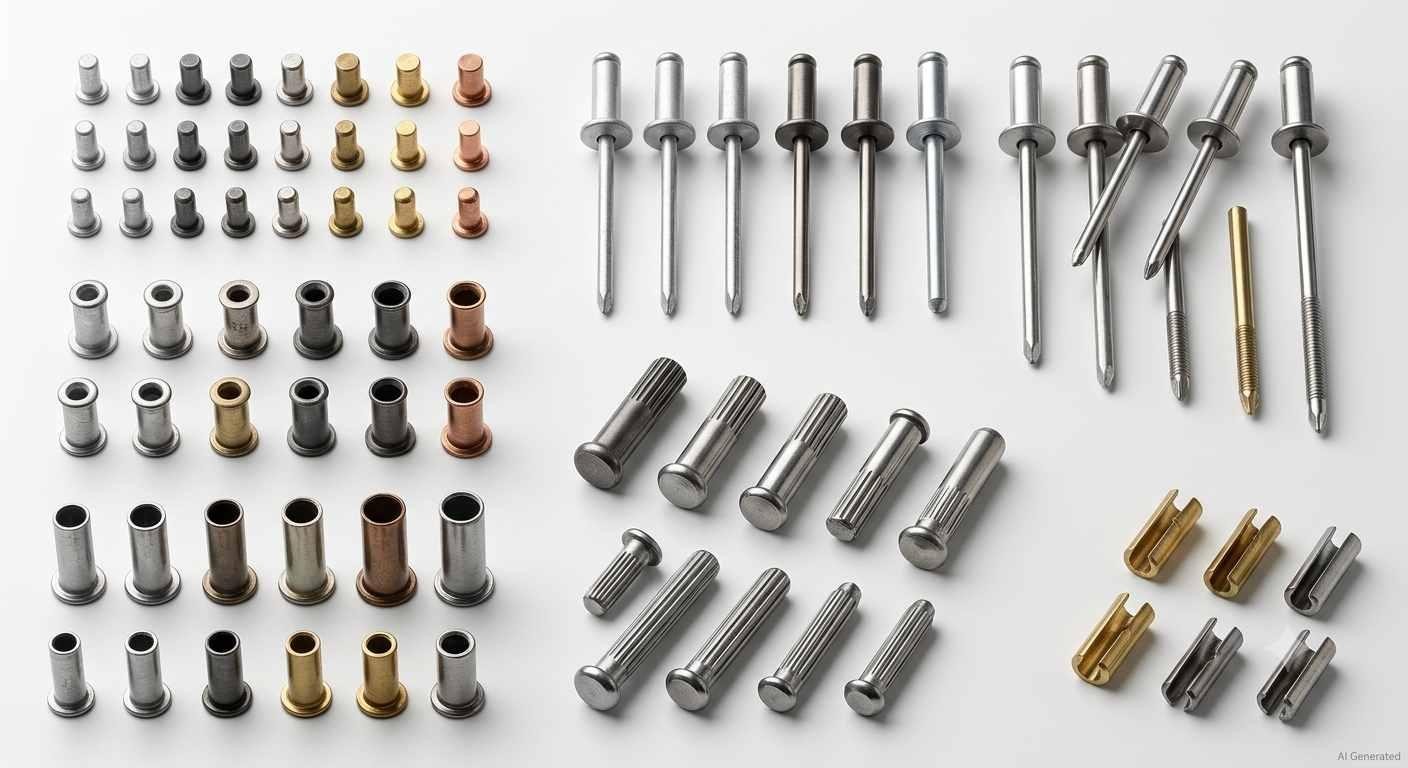
Frequently Asked Questions
What is the difference between a blind rivet gun and a rivet nut gun for semi trailer work?
A blind rivet gun installs pop rivets to join panels or attach components where only one side is accessible, while a rivet nut gun installs threaded inserts into thin sheet metal so that a machine screw or bolt can be fastened into the panel. Blind rivet tools are the common choice for semi trailer side panel repair, where overlapping aluminum or steel sheets are joined with rivets; they pull a mandrel through the rivet body to expand it. Rivet nut tools, such as the hand riveters sold for trailer and automotive repair, install threaded nutserts that accept M3 through M8 bolts and are used where a removable component must be bolted to a panel rather than permanently riveted . A fleet workshop doing structural panel repair needs a blind rivet tool; a workshop mounting brackets, latches, or access panels needs a rivet nut tool.
What pull force and rivet capacity should a semi trailer rivet gun have?
A semi trailer rivet gun should deliver at least 2,000 lbs of pull force for 3/16-inch structural blind rivets, which is the upper range of common trailer panel fasteners. Air-hydraulic riveters specified for trailer and container assembly, such as the Universal Tool UT8910, produce 2,000 lbs (907 kg) of traction power and handle aluminum rivets from 1/8 inch to 3/16 inch . Hand rivet nut tools covering M3 to M8 are sufficient for nutsert installation in thin trailer panels, where the fastener is not carrying structural load . A workshop attempting 3/16-inch stainless or monobolt rivets with a light-duty hand tool will find the tool inadequate for production trailer repair.
Are pneumatic or battery rivet guns better for trailer workshop use?
Pneumatic air-hydraulic rivet guns are the standard for production trailer repair because they deliver consistent pull force and cycle quickly, while battery riveters offer mobility for field repairs where air is unavailable. Air-hydraulic units operate at approximately 90 PSI and are specified for trailer, container, and RV assembly work . Battery-operated riveters, such as the 3M-Marson model with roughly 2,248 lbs of pulling force, eliminate the air hose for roadside or yard work but add battery weight and charging logistics . A fixed trailer repair bay should be equipped with air; a mobile service truck doing panel repairs in the field benefits from a battery or hand tool.
What rivet sizes and materials are used on semi trailer panels?
Semi trailer body panels commonly use 3/16-inch (4.8 mm) blind rivets in aluminum or steel, with smaller 1/8-inch and 5/32-inch rivets used for lighter gauge and trim attachment. Air-hydraulic riveters specified for trailer work typically include nose pieces for 3/32, 1/8, 5/32, and 3/16 inch rivets, covering the range from light trim to structural panel joints . Rivet material should match the panel material to avoid galvanic corrosion: aluminum rivets for aluminum panels, and steel or stainless rivets for steel panels where higher shear strength is required. A workshop that stocks only one rivet size will find itself unable to handle the mixed-material construction common in modern semi trailers.
How does a rivet gun fit into semi trailer panel repair procedure?
A rivet gun is used after the damaged panel section has been cut out, the replacement panel fitted and clamped, and the rivet hole pattern drilled or matched to the existing frame. The repair sequence for riveted semi trailer panels involves removing the damaged section without distorting the frame rails or crossmembers, preparing the replacement panel to the same gauge and material, positioning and clamping it, drilling rivet holes at the specified spacing, and setting rivets with the appropriate tool . The rivet gun’s role is the final fastening step; the quality of the repair depends more on panel fit, hole alignment, and rivet spacing than on the tool’s speed. A rivet gun that cannot deliver consistent pull force will produce loose or over-set rivets that fail in service.
What maintenance and durability factors affect semi trailer rivet gun selection?
Semi trailer rivet gun selection should account for duty cycle, jaw and hydraulic seal wear, and the availability of replacement nose pieces and jaw sets, because trailer repair shops run these tools harder than occasional-use buyers. Air-hydraulic riveters have alloy steel jaws and hydraulic cylinders that wear with cycle count; models specified for trailer assembly include an extra set of jaws in the kit because jaw replacement is a routine maintenance item . Hand rivet nut tools require mandrel and nose piece replacement when threads strip or deform, and the mandrels are consumable items in production use . Fleet workshops should confirm that consumable parts—jaws, mandrels, nose pieces—are available as spares before standardizing on a tool model.
What documentation or training should accompany a rivet gun purchase for a trailer workshop?
A rivet gun purchase for trailer workshop use should include the manufacturer’s operating instructions, the recommended air pressure and consumption specifications where pneumatic, and the rivet diameter and material range the tool is rated to set. Air-hydraulic riveters specify recommended pressure (typically 90 PSI), air consumption in CFM, and the rivet capacity range in their documentation . Operators should be trained on the relationship between rivet grip range and panel thickness: a rivet that is too short for the combined panel thickness will not form a proper tail, and a rivet that is too long will leave a loose joint. The tool manual’s capacity chart is the controlling reference, not the workshop’s existing rivet stock.
Conclusion
Selecting a semi trailer rivet gun starts with the fastening task: blind rivets for panel joints, rivet nuts for threaded inserts, and a pull force rating of at least 2,000 lbs for 3/16-inch structural work. Match the tool’s capacity range to the rivet materials and sizes actually used on the fleet’s trailer panels, and confirm that jaws, mandrels, and nose pieces are available as consumable spares. The tool is the least expensive component of a panel repair; the fit, hole alignment, and rivet selection determine whether the repair holds.