

Introduction
Semi trailer height is a two-part specification that determines both loading practicality and route legality. The first part is deck height—the distance from the ground to the trailer’s cargo platform—which governs how easily cargo can be loaded and how much vertical clearance remains for the load itself. The second part is overall height, the distance from the ground to the top of the trailer or its cargo, which is capped by bridge, tunnel, and overpass clearances along the route.
For fleet managers and procurement teams, height is often the specification that converts a legal trailer into an illegal load. A flatbed trailer with a 60-inch deck height has approximately 8.5 feet of vertical space before reaching a 13.5-foot overall limit. A lowboy trailer with a 20-inch deck height has over 11 feet. The same cargo that fits comfortably on a lowboy may require permits or route detours on a flatbed. This guide examines the deck height ranges by trailer type, the legal overall height limits across major markets, and the selection and planning practices that prevent clearance surprises.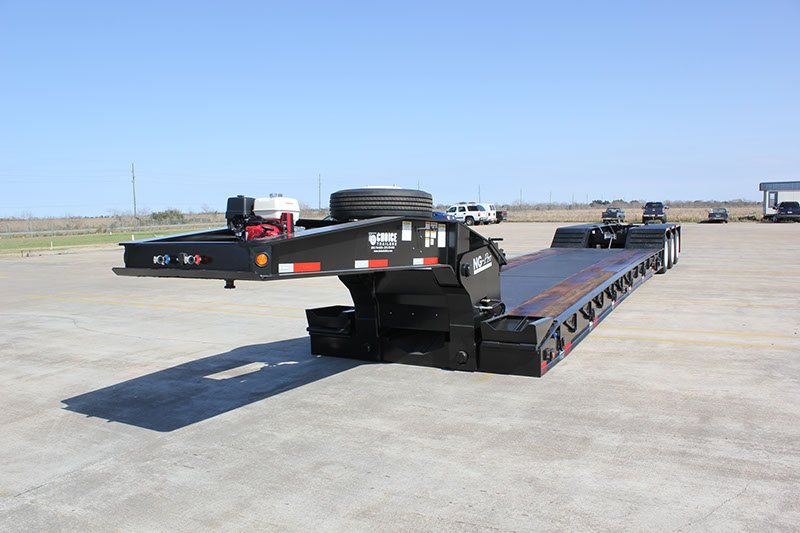
Core Powertrain and Structural Design
Engine and Transmission
Semi trailer height has no relationship to the tractor’s engine or transmission. However, the tractor’s fifth-wheel setting directly affects the trailer’s overall height. A fifth wheel mounted higher raises the trailer’s nose, increasing overall height and frontal area. Lowering the fifth wheel reduces both, improving aerodynamic efficiency and clearance margin . This is a combination-level specification decision that should be made with the trailer’s deck height in mind.
Hydraulic System
Hydraulic systems affect height primarily on lowboy and drop-deck trailers with hydraulic detachable goosenecks. The gooseneck’s hydraulic system allows the front of the trailer to be lowered or detached for loading, and the deck height in transport configuration is a function of the trailer’s suspension and wheel size. For standard flatbed and van trailers, hydraulics are not a height determinant.
Chassis and Structural Durability
Deck height is determined by the chassis design: main beam depth, suspension type, and wheel and tire size. A flatbed trailer with deep main beams and spring suspension will have a higher deck than one with shallower beams and air suspension. The trade-off is structural stiffness versus loading convenience and cargo height capacity.
Overall height is the sum of deck height and cargo height, capped by regulation. In the United States, the common legal maximum overall height is 13 feet 6 inches (4.11 m) . A load that exceeds this limit requires an oversize permit and route survey. In China, GB1589 sets the maximum height for semi trailers at 4 meters (13.1 feet) from the ground . The European Union’s height limits vary by member state, with most countries applying a 4-meter overall limit for standard combinations.
Technical Specifications
The table below presents representative deck and overall height parameters for common semi trailer types. Values are labeled as typical industry ranges; actual specifications vary by manufacturer, model, suspension configuration, and tire size.
Comparative Advantages TCO and ROI
The height decision is fundamentally a cargo compatibility versus route flexibility trade-off. A lowboy trailer’s 18–24 inch deck height allows tall machinery—excavators, cranes, industrial components—to remain below legal overall limits without permits. A flatbed trailer’s 48–60 inch deck height is cheaper to acquire and simpler to maintain, but it limits the height of cargo that can be carried legally.
The cost of a wrong height specification is most visible in permit costs and route restrictions. An oversize permit for a tall load typically adds administrative cost, may require pilot cars, and restricts travel to approved routes and times. For a fleet making regular deliveries of tall equipment, the permit cost and delay can exceed the acquisition premium of a lowboy trailer within a few trips.
A defensible comparison requires stated assumptions. Consider a fleet transporting excavators with a loaded height of 11 feet on a flatbed trailer. The flatbed deck height of 55 inches (4.58 ft) yields an overall height of approximately 15.6 feet—well above the 13.5-foot legal limit. Every trip requires an oversize permit, pilot car, and route survey. A lowboy with a 22-inch deck height yields an overall height of approximately 12.8 feet, legal without permits. If the flatbed’s permit and pilot car cost is 800 CNY per trip and the fleet makes 100 trips per year, the annual cost is 80,000 CNY. A lowboy’s acquisition premium of 150,000 CNY is recovered in under two years, before counting the operational flexibility gained by eliminating route restrictions. Buyers should model their own cargo heights and trip volumes.
Resale value for height-specific trailers favors standard configurations. Flatbeds and dry vans with common deck heights have broad buyer pools. Lowboys and specialized drop-deck trailers have narrower markets but command premiums when the buyer’s cargo requires their capability.
Heavy Duty Application Scenarios
-
Construction equipment transport: Lowboy trailers with 18–24 inch deck heights are the standard for excavators, dozers, and crushers. The low deck keeps tall machinery within legal overall height limits and reduces the need for permits. The hydraulic detachable gooseneck allows loading from the front without ramps.
-
General freight and building materials: Flatbed trailers with 48–60 inch deck heights carry steel, lumber, and prefabricated components where cargo height is not the limiting factor. The higher deck simplifies loading from ground level and provides clearance for forklift tines.
-
Container drayage: Container chassis deck heights are determined by the container’s corner casting geometry and the chassis suspension. Standard chassis heights typically place the container floor at approximately 48–60 inches, with overall height determined by the container size and any high-cube configuration.
-
Step-deck and drop-deck freight: Step-deck trailers with 36–42 inch rear deck heights accommodate taller cargo than flatbeds while maintaining a front deck at standard height for fifth-wheel compatibility. They are common in markets where cargo height varies and permit avoidance is a priority.
Selection and Maintenance Considerations
Selecting semi trailer height begins with the cargo height profile, not the trailer specification sheet. The first question is: what is the tallest cargo this trailer will carry, and what is its loaded height? The second question is: what is the legal overall height limit on the routes this cargo will travel? The difference between these two numbers determines the maximum acceptable deck height.
Key considerations include:
-
Verify legal limits for every jurisdiction on the route. US states generally apply a 13 ft 6 in limit, but some routes have lower bridge clearances that effectively reduce the usable height . China’s 4-meter limit is national, but local road restrictions may be more stringent . Route surveys are mandatory for any load approaching the legal limit.
-
Account for suspension and tire configuration. Air suspension can be deflated to lower the trailer for loading or clearance, but it must be re-inflated for travel. Tire size changes alter deck height; a switch from low-profile to standard tires raises the deck and reduces cargo height capacity.
-
Coordinate fifth-wheel height with trailer deck height. A high fifth-wheel setting raises the trailer nose and increases overall height . For fleets operating near height limits, lowering the fifth wheel may recover clearance margin without changing the trailer.
-
Document loaded heights for recurring cargo. A load that fits under a bridge on one trip may not fit when the trailer is loaded differently. Standardized loading procedures and measured heights prevent clearance incidents.
Conclusion
Semi trailer height is a specification that must be resolved against the cargo and the route, not against the trailer alone. The engineering fundamentals are clear: deck height is determined by chassis design and suspension, overall height is capped by regulation, and the fifth-wheel setting is the variable that connects the two. A lowboy with a 20-inch deck and a flatbed with a 55-inch deck are both legal trailers; only one of them will carry an 11-foot excavator without a permit.
Commercially, the height decision is a route flexibility decision. A trailer that keeps cargo within legal limits avoids permit costs, pilot cars, and route restrictions. A trailer that requires permits on every tall load imposes a recurring cost that erodes the acquisition savings. Fleets that measure their cargo heights, verify the legal limits on their actual routes, and specify deck height accordingly make height decisions that hold up in operation. The trailer that fits under the bridges on the route, with the cargo loaded, is the right height.