

Overview
A semi trailer dock bumper is a sacrificial impact pad mounted on the rear of the trailer or on the dock face to absorb the force of backing into a loading bay. For fleet managers and procurement teams, the distinction that matters is which surface the bumper protects: a bumper mounted on the trailer’s rear sill takes the impact directly and protects the trailer frame and light box, while a bumper mounted on the dock face protects the building and provides a consistent contact point for the trailer.
The material and mounting decision has a measurable effect on replacement frequency. A cycle test comparing an OEM rubber trailer bumper against a polyurethane alternative found the rubber unit failed at 16,520 cycles, while the polyurethane bumper completed 250,000 cycles without failure . That difference determines whether a fleet replaces bumpers annually or once per trailer life, and it is the central procurement question this FAQ addresses.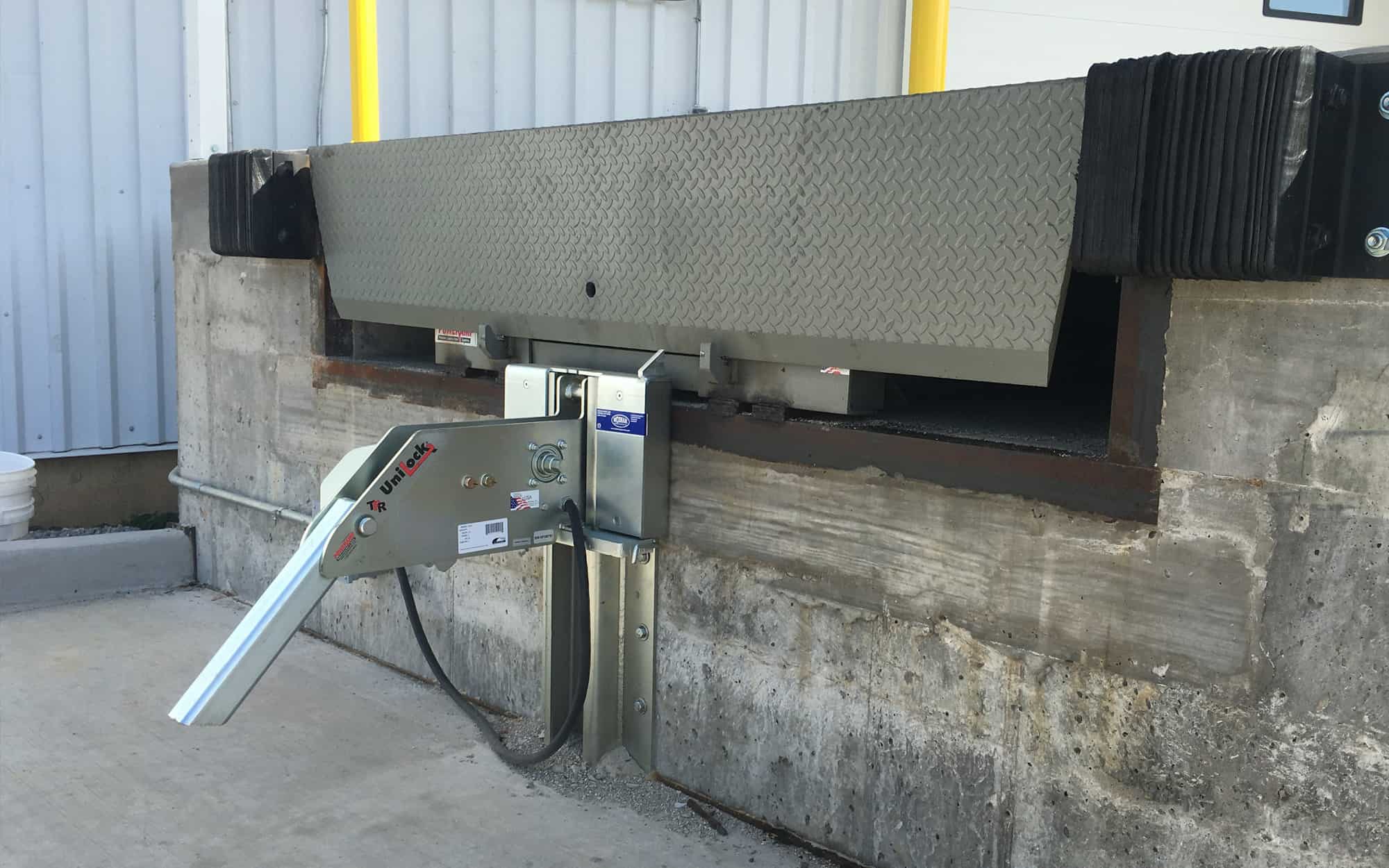
Frequently Asked Questions
What is the difference between a dock bumper and a trailer-mounted bumper?
A dock bumper is mounted on the face of the loading dock and absorbs the trailer’s impact as it backs in, protecting the building wall and dock equipment. A trailer-mounted bumper (sometimes called a bumper block or dock bumper) is attached to the trailer’s rear sill or bumper and protects the trailer’s own frame, lights, and door hardware from impact with the dock.
The two are not interchangeable, but they work together. A trailer with a properly functioning rear bumper still benefits from a dock-face bumper that provides a consistent standoff distance, and a dock with good bumpers still needs trailer protection for the occasions when the trailer contacts the dock at an angle or with a misjudged approach. Fleets that operate at multiple docks cannot control the dock-face condition, which is why the trailer-mounted bumper is the fleet’s own line of defense.
Should I choose rubber or polyurethane dock bumpers for my trailer?
Choose polyurethane for high-cycle docking operations where replacement labor and downtime matter, and rubber for lower-frequency or cost-sensitive applications. The cycle test data shows a substantial durability gap: the OEM rubber bumper failed at 16,520 cycles, while the polyurethane unit lasted the full 250,000-cycle test with little visual damage .
Polyurethane also offers practical advantages beyond cycle life. It is non-marking, so it does not leave black scuff streaks on warehouse walls, and it maintains its shape and rebound across a temperature range of approximately -40°F to 150°F, where rubber can become brittle in cold or soft in heat . Rubber remains the lower-cost option and is adequate for trailers that dock infrequently or operate in mild conditions. The procurement decision should compare the per-cycle cost, not the per-unit price.
What are the common dimensions and mounting configurations for trailer dock bumpers?
Common trailer dock bumper dimensions include 6" x 3" x 3" and 24" x 2-1/2" x 3" molded rubber units, with mounting holes pre-drilled and countersunk for easy installation . A representative reinforced rubber bumper lists three mounting holes spaced 10 inches center-to-center and accepts up to 3/4-inch anchor bolts .
Mounting position matters as much as the bumper itself. The bumper should be mounted on the rear sill or bumper structure at the outermost points, outside the light assemblies, so that it takes the dock contact before the lights or door hardware can be damaged . A bumper mounted inboard of the lights leaves the light boxes exposed, defeating its purpose. The mounting surface should be flat and sound, and the fasteners should be tightened to the trailer manufacturer’s specification rather than to the point of compressing the bumper.
How do I choose the right bumper for my fleet’s docking frequency?
Match the bumper material and size to the daily dock cycle count and the load weight. A trailer that docks once or twice per day with light loads can use a standard molded rubber bumper. A trailer in high-frequency distribution or LTL service, where it may dock multiple times per shift, should use a polyurethane or reinforced bumper rated for the cycle count.
The application guide from dock equipment suppliers uses a similar logic: light commercial traffic at 1–2 trailers per day calls for molded bumpers, while medium-to-heavy loads at 3+ trailers per day call for laminated or steel-faced protection . For the trailer-mounted bumper, the equivalent decision is between a standard rubber block and a polyurethane unit with higher energy absorption. Fleets with mixed duty cycles can standardize on polyurethane for the high-cycle units and rubber for the remainder.
What should I inspect on trailer dock bumpers during preventive maintenance?
Inspect the bumper for compression set, cracking, missing fasteners, and separation from the mounting surface. A rubber bumper that has compressed flat or cracked through no longer absorbs impact—it transmits the force directly to the sill. A polyurethane bumper that has torn or pulled loose from its fasteners has the same problem.
The inspection should also confirm that the bumper is still positioned correctly relative to the lights and door hardware. A bumper that has shifted or been replaced with an undersized unit may leave the light box exposed. Fasteners should be checked for tightness and for rust streaks that indicate movement. Because the bumper is a low-cost component, the inspection finding should trigger replacement rather than a repair attempt; a cracked or compressed bumper is not restored by tightening its bolts.
Does a trailer dock bumper affect legal rear impact guard compliance?
A trailer dock bumper is not a substitute for the FMVSS 223 rear impact guard, and it does not satisfy the underride protection requirement. The rear impact guard is a separate structural system with defined dimensions, strength requirements, and certification labeling. The dock bumper is an accessory that protects the trailer and dock from low-speed impact.
Fleets should not confuse the two when inspecting a trailer. A trailer with a missing dock bumper is not necessarily out of compliance with FMVSS 223, but it is exposed to sill and light damage. A trailer with a missing or damaged rear impact guard is a safety and compliance problem regardless of whether the dock bumper is present. The two components serve different functions and should be inspected separately.
Conclusion
Semi trailer dock bumper procurement comes down to three decisions: material (polyurethane for high-cycle durability, rubber for lower-frequency or cost-sensitive use), mounting position (outboard of the lights, on a sound sill surface), and replacement policy (treat the bumper as a wear item and replace it when compression or cracking is visible). The cycle test data showing polyurethane lasting 15 times longer than rubber is the strongest argument for specifying it in high-utilization fleets . The bumper is a low-cost component that protects expensive trailer structure, and the inspection that catches a compressed or loose bumper before it fails is cheaper than the sill repair it prevents.