

Introduction
A semi trailer backup camera is a rear-facing video system that transmits a live view from the back of the trailer to a monitor in the tractor cab, giving the driver visibility behind the combination during reversing, docking, and low-speed maneuvering. The operational case rests on a specific blind-spot problem: the length and height of a semi trailer create rear zones that mirrors cannot fully cover, and trailers that move between tractors leave fixed camera systems behind when the equipment changes . NHTSA data cited by industry sources attributes an average of 263 fatalities and more than 10,000 injuries each year to back-up crashes in the United States, with many occurring in parking lots and loading zones where rear visibility is limited .
For fleet managers, the semi trailer backup camera is not a simple accessory purchase. The market divides into universal systems designed to work across any Class 8 truck or trailer, and vehicle-specific or wired systems that require installation on both the tractor and each trailer. The choice determines whether the camera stays with the trailer when it is dropped, whether the driver needs a separate monitor, and how much installation labor each unit requires. A system that costs less per unit but requires 2 hours of wiring on every trailer may cost more in total than a universal system that installs in 15–20 minutes .
This guide examines the camera system architectures, the wireless versus wired trade-off, and the fleet economics that determine whether a semi trailer backup camera delivers the safety and operational value it promises.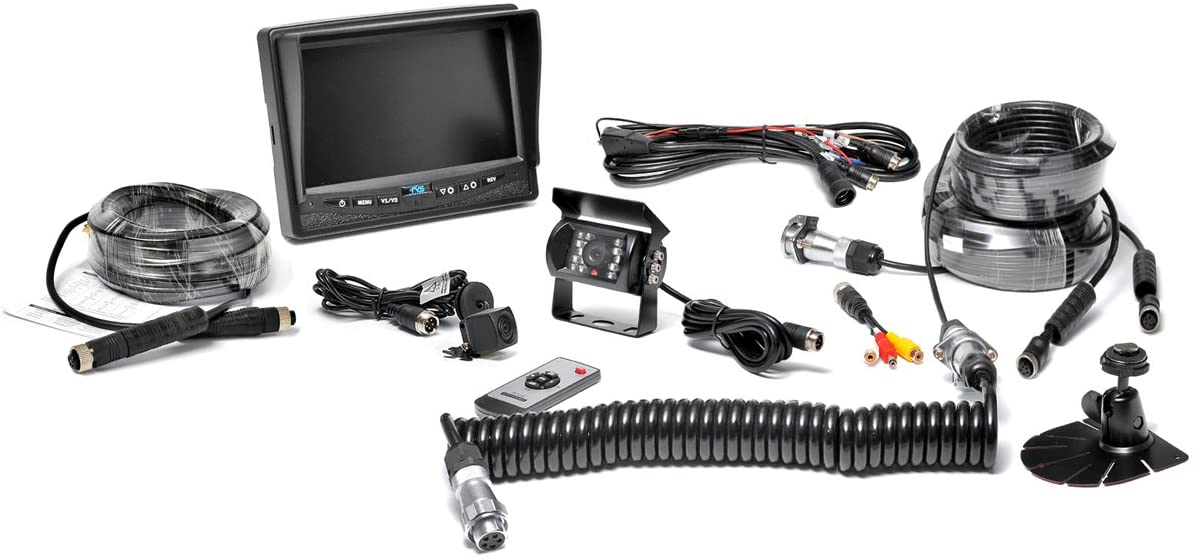
Core Powertrain and Structural Design
Engine and Transmission
A semi trailer backup camera has no relationship to the tractor’s engine or transmission. Its power source is the tractor or trailer’s 12V or 24V electrical system, and its data link is either a physical cable run between tractor and trailer or a wireless transmitter-receiver pair. The camera’s performance depends on stable voltage and a reliable signal path, not on the drivetrain.
Hydraulic System
The camera system is electrical, not hydraulic. The relevant interface is the trailer’s electrical connector: the SAE J560 7-pin plug supplies lighting and ABS power, and the camera may draw its power from an auxiliary circuit or a dedicated connection. On trailers equipped with liftgates or other hydraulic functions, camera wiring must be routed away from hydraulic lines to prevent chafing and heat damage.
Chassis and Structural Durability
The mounting location determines both visibility and durability. Industry installation guidance notes that on large semi-trailers, rear cameras should be mounted between existing lights rather than above a light, because a light adjacent to the camera can wash out the view . The camera housing must be rated for the operating environment; IP67 or IP69K ratings indicate protection against dust and water ingress, and operating temperature ranges of -40°C to +70°C are common for commercial-grade units .
Wireless signal transmission is the critical durability variable for trailers. A wireless system eliminates the coiled cable between tractor and trailer, but transmission reliability depends on the trailer’s construction. Installation guidance warns that transmission signal interference can be an issue with wireless backup camera systems, so a wired system is preferable if the trailer is made of aluminum . For fleets operating mixed aluminum and steel trailers, this is a specification decision that affects which system can be deployed universally.
Technical Specifications
The table below presents representative parameters for semi trailer backup camera systems, drawn from published product specifications and installation guidance.
Comparative Advantages TCO and ROI
The backup camera decision is a fitment model comparison: universal camera on every trailer versus wired camera on tractor or trailer only. A tractor-mounted camera helps with coupling alignment but is useless once the tractor drives away from the trailer. A trailer-mounted universal camera stays with the asset that has the blind spot, regardless of which tractor is hooked to it.
The universal system approach, exemplified by the Phillips REAR-VU, is positioned as the transportation industry’s only universally compatible backup camera designed for truck trailers . Its three installation kits target different fleet configurations: a side-mount antenna kit for box trucks and standard dry vans pulled by day cabs (15–20 minutes), a nose-mount antenna kit for sleeper cabs and reefers or specialty trailers (30–50 minutes), and a truck-mount kit for coupling alignment and deadheading visibility (15–20 minutes) . The system delivers 170-degree video, doubles as a rearview mirror while driving, and includes event data recorder capability that captures 15-second clips around an impact .
The wireless trade-off is the key economic variable. A wireless system eliminates the coiled cable between tractor and trailer, which reduces installation time and eliminates the cable damage risk that comes with repeated coupling and uncoupling . But wireless transmission can be unreliable on aluminum trailers, and installation guidance recommends wired systems for that construction . A fleet that operates aluminum trailers and chooses wireless to save installation labor may find the signal dropping at the moment the driver needs it most.
A defensible cost comparison requires stated assumptions. Consider a fleet of 30 trailers evaluating a universal trailer-mounted camera against a tractor-mounted camera. If the tractor-mounted camera helps only with coupling and deadheading visibility, but leaves the trailer blind spot unmonitored when the tractor is hooked to a different trailer, the fleet has spent money without addressing the primary risk. If the universal trailer-mounted system reduces backing incidents by a measurable margin—even one avoided property damage claim per year—the cost per trailer is recovered. The calculation should include the avoided insurance deductible, the administrative cost of incident investigation, and the value of the EDR footage in defending against fraudulent claims.
Resale and transferability also favor the universal trailer-mounted approach. A camera installed on a trailer stays with the trailer when it is sold or traded, preserving its value. A tractor-mounted camera stays with the tractor and may be incompatible with the next fleet’s equipment.
Heavy Duty Application Scenarios
-
Drop-and-hook fleets with interchangeable trailers: The universal trailer-mounted camera is the appropriate specification. The camera stays with the trailer, and automatic pairing or easy re-pairing allows the driver to see the rear view regardless of which tractor is hooked . This is the primary use case for the REAR-VU’s universal design .
-
Aluminum trailer operations: Wired systems are preferred because wireless transmission can be unreliable through aluminum construction . The installation labor is higher, but the signal reliability is not compromised.
-
Refrigerated and specialty trailers: The nose-mount antenna kit is designed for sleeper cabs and reefers, placing the antenna in the trailer roof seam to minimize signal interference from obstacles . This configuration suits trailers where the rear camera signal must pass through insulated walls and refrigeration equipment.
-
Yard and docking operations: The camera doubles as a rearview mirror while driving, allowing the driver to see overtaking vehicles and monitor the trailer’s position during docking . In busy yards and loading zones, this continuous visibility reduces the risk of low-speed contact incidents.
Selection and Maintenance Considerations
Selecting a semi trailer backup camera begins with the trailer construction and fleet operating model, not the camera’s price. The first question is: are the trailers aluminum or steel? The second is: do trailers move between tractors, or is each trailer assigned to a dedicated tractor?
Key considerations include:
-
Check the trailer material for wireless compatibility. Aluminum trailers can interfere with wireless signal transmission. A wired system is the safer specification for aluminum fleets, despite the higher installation labor .
-
Verify the mounting location avoids light washout. Mount the camera between existing lights, not above a light, to prevent the light from washing out the camera’s view .
-
Confirm the ingress protection rating. IP67 or IP69K ratings are appropriate for road spray, dust, and washdown. A camera without a stated IP rating is not suitable for exterior trailer mounting .
-
Plan for power supply. Wireless refers to the connection between camera and monitor, not the power source. Both the camera and the monitor must be powered, and the trailer camera needs a 12V or 24V supply from the trailer’s electrical system .
-
Verify EDR capability if liability defense matters. A system with event data recording captures video before and after an impact, providing evidence for incident investigation and claims defense .
Conclusion
A semi trailer backup camera addresses a measurable safety problem: the rear blind zone that mirrors cannot cover, and the backing incidents that occur in yards, docks, and loading zones where visibility is limited . The universal trailer-mounted system, such as the Phillips REAR-VU, keeps the camera with the asset that has the blind spot and installs in 15–50 minutes depending on the kit . Wireless systems reduce installation labor but may be unreliable on aluminum trailers, where a wired system is the safer specification .
The engineering priorities are clear: match the system to the trailer construction, mount the camera between lights to avoid washout, verify IP67 or IP69K protection, and confirm that both camera and monitor have power. The commercial priorities follow: evaluate the universal trailer-mounted model against tractor-only systems by asking whether the camera stays with the blind spot when the equipment changes, and include the value of incident reduction and EDR evidence in the total cost calculation. The trailer whose rear view is visible to every driver who hooks to it is the one that delivers the safety the fleet paid for.