

Introduction
A semi trailer ABS brake warning lamp that comes on and off intermittently indicates a signal fault that the electronic control unit cannot consistently resolve—not a complete system failure. The lamp cycling is the ECU’s response to a wheel speed signal that drops out, becomes erratic, or reads implausibly under specific conditions. The critical diagnostic principle is that the fault is usually mechanical or electrical in origin, not a failed ECU. Field data consistently shows that most trailer ABS faults trace to sensor air gap, tone ring condition, connector corrosion, or hub bearing play rather than electronic component failure .
The operational stakes are higher than the lamp’s intermittent nature suggests. While an ABS warning lamp does not typically trigger an out-of-service violation on its own, it is recordable and can be ticketed . More importantly, an intermittent wheel speed fault means the ABS may not function when it is actually needed—during a panic stop or on a low-friction surface. A trailer that cycles the ABS lamp on and off during a shift is telling the maintenance team that a wheel-end signal is failing under dynamic conditions that a stationary inspection may not reproduce.
This article explains why the lamp cycles, the conditions that trigger intermittent faults, and the diagnostic sequence that isolates the root cause before parts are replaced.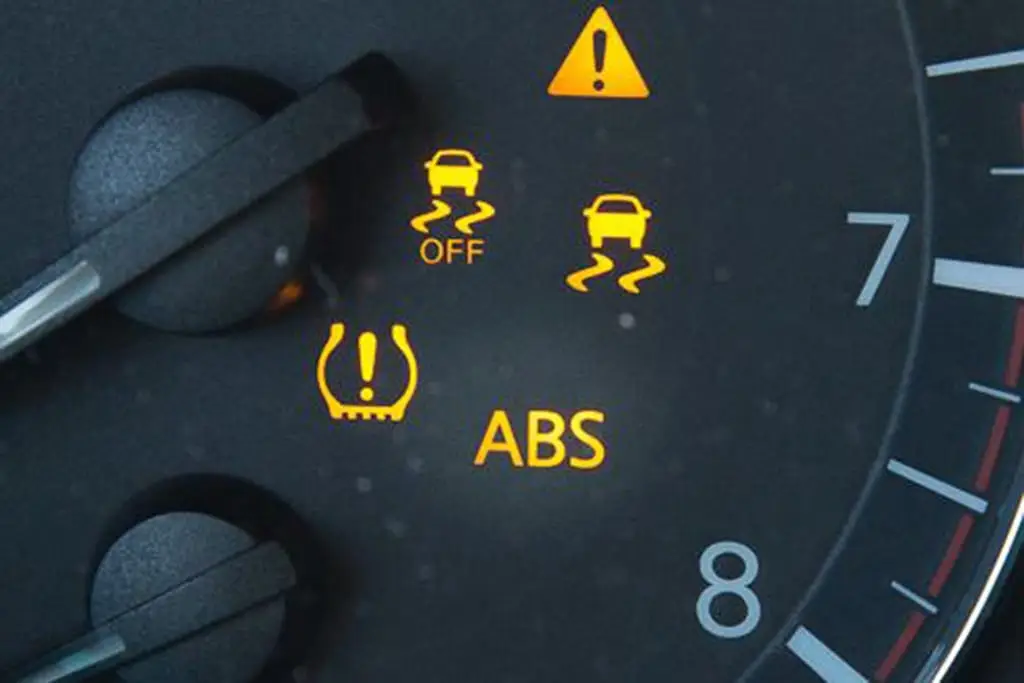
Core Powertrain and Structural Design
The Fault Path: Sensor, Gap, and Tone Ring
The ABS wheel speed sensor generates a signal proportional to the rotation of the tone ring (exciter ring) mounted on the wheel hub. The ECU compares wheel speeds across axles and triggers the warning lamp when a signal is missing, implausible, or inconsistent with the other wheels.
An intermittent fault occurs when the signal degrades under specific conditions rather than failing completely. The most common mechanical cause is air gap variation. The sensor is positioned at a small distance from the tone ring—typically in the range of 0.1 to 1.5 mm depending on design, with many modern sensors self-seating against the ring . A worn wheel bearing allows the hub to move laterally under load, changing the air gap dynamically. The signal may be strong during straight-line driving and drop out during cornering or braking when the bearing play shifts the hub position . This is why a fault that appears only under certain driving conditions should prompt a bearing inspection before sensor replacement.
Tone ring condition is the second mechanical variable. A cracked ring, a missing tooth, or teeth packed with mud, rust, or metal debris create signal distortion that the ECU interprets as an implausible reading . A wheel seal leak that contaminates the ring with oil or grease has the same effect. These conditions often produce a lamp that flickers or cycles as the contaminated section of the ring rotates past the sensor.
Electrical and Connection Intermittency
The electrical path from sensor to ECU introduces its own intermittent failure modes. Connector corrosion at the wheel-end sensor plug, particularly water intrusion into a weatherpack connector, creates resistance that varies with temperature and vibration . A chafed or partially broken sensor cable may function during straight driving but fail when the suspension articulates or the harness rubs against a frame component. The fault appears and disappears with road conditions, which is the defining characteristic of an intermittent ABS lamp.
The 7-way connector between tractor and trailer is a frequently overlooked source of intermittent ABS faults. Corroded pins, bent or pushed-back terminals, or water bridging the ABS power circuit cause the trailer ABS ECU to lose power or receive unstable voltage . If the lamp comes on immediately after hooking up to a tractor and then cycles or clears during the shift, the 7-way connection is the first item to inspect. The FMCSA requires trailers manufactured after March 1, 1998 to have an external ABS malfunction indicator lamp, and a defective or intermittent lamp circuit is a recordable violation .
Power Supply and Voltage Stability
Modern trailer ABS and EBS systems are sensitive to voltage stability. A poor ground connection or corroded ISO 7638 connector pins can cause the ECU to log a power supply fault that manifests as an intermittent lamp . The ECU may reset and re-test when voltage stabilizes, causing the lamp to cycle rather than stay illuminated. This is particularly common on trailers that sit idle for extended periods, allowing corrosion to develop on connector pins that are not exercised by regular coupling and uncoupling.
Technical Specifications
The table below presents reference values for intermittent trailer ABS diagnosis. These are general industry ranges from diagnostic sources, not specifications for any single system. The manufacturer’s service documentation for the specific ABS system is the authoritative source for acceptance criteria.
Comparative Advantages TCO and ROI
The commercial case for disciplined intermittent ABS diagnosis rests on avoiding unnecessary part replacement and preventing the safety and compliance consequences of a system that may not function when needed.
Diagnostic cost versus parts cost. Replacing a wheel speed sensor is a relatively inexpensive repair, but it does not resolve an intermittent fault caused by a worn bearing, a contaminated tone ring, or a corroded connector. The part fails to fix the symptom, the lamp returns, and the diagnostic process starts over—often at a roadside or in a shop with the trailer out of service. The industry pattern is clear: “randomly replacing sensors because the ABS light is on is a widespread waste of time and money” . The root cause is frequently in the air gap, tone ring tooth, connector corrosion, or hub bearing play.
Downtime and compliance risk. An intermittent ABS lamp is not typically an out-of-service condition, but it is recordable and can be ticketed . A trailer that cycles the lamp during a CVSA inspection draws attention to the braking system and may prompt a more thorough examination. More significantly, a wheel speed fault means the ABS may not modulate brake pressure on that wheel during a hard stop. The cost of a loss-of-control incident—damage, liability, and downtime—dwarfs the labor hours required for a systematic diagnostic sequence.
ROI assumptions for a diagnostic-first approach. A fleet that trains technicians to read fault codes before replacing parts, to measure sensor resistance and air gap, and to inspect tone rings and bearings will reduce repeat ABS repairs. The investment is in diagnostic tools and training, not in a larger parts inventory. The return is measured in avoided come-backs, reduced roadside events, and a braking system that functions as designed when the driver needs it.
Heavy Duty Application Scenarios
Intermittent ABS faults present differently across operating contexts, and the diagnostic priority shifts accordingly:
-
Long-haul fleets with high annual mileage. Wheel bearing wear accumulates faster, and the air gap variation under load is more pronounced. A lamp that cycles during highway driving or cornering should prompt a bearing inspection at the next PM. The 7-way connector is exercised frequently, so corrosion is less likely unless the trailer sits idle.
-
Trailers that sit idle for extended periods. Connector corrosion develops on the 7-way and ISO 7638 pins, and the ABS ECU may log power supply faults on the first trip after idle. A pre-trip inspection that includes cleaning and dielectric-greasing the 7-way connector prevents this class of intermittent fault .
-
Construction and off-road duty. Mud, dust, and debris contaminate tone rings and sensor tips. The lamp may cycle as the wheel rotates through contaminated sections of the ring. Cleaning the sensor tip and ring, and verifying the air gap, resolves many of these faults without part replacement .
-
Trailers operating in wet or winter conditions. Water intrusion into wheel-end connectors and the 7-way plug causes resistance changes that vary with temperature. A fault that appears in rain or after a wash and clears when dry is a connector sealing issue, not a sensor failure.
Selection and Maintenance Considerations
For fleet managers and maintenance technicians, the following sequence addresses an intermittent trailer ABS lamp systematically:
-
Read the fault code before touching any component. The ECU stores a diagnostic trouble code that identifies the affected wheel and the fault type (air gap, signal implausible, short circuit, power supply). The code is the starting point, not the sensor replacement .
-
Inspect the 7-way connector first if the lamp appears after hookup. Corroded pins, bent terminals, or water in the plug are common causes. Clean and apply dielectric grease, and verify clean voltage on the ABS power pin .
-
Check wheel bearing play before condemning the sensor. A worn bearing changes the air gap dynamically. If the fault persists after sensor replacement, the bearing is the likely root cause .
-
Inspect the tone ring for cracks, missing teeth, and contamination. A wheel seal leak that coats the ring with grease or oil produces an intermittent signal. Clean or replace the ring as needed .
-
Measure sensor resistance and AC output where applicable. For passive sensors, compare resistance across the same axle. An out-of-range value or a large disparity between sides points to a sensor or wiring fault .
-
Verify ECU power and ground. A poor ground or unstable supply voltage causes the ECU to log power supply faults that cycle the lamp. Check the ISO 7638 or 7-way supply and the ECU ground connection .
-
Clear fault memory and road-test. After repair, clear the stored code and perform a low-speed road test with live wheel speed data displayed. A fault that does not recur in live data and does not reset the lamp is resolved. A fault that returns immediately indicates an unresolved root cause .
Conclusion
An intermittent semi trailer ABS warning lamp is a diagnostic signal, not a verdict on the ECU. The lamp cycles because a wheel speed signal is degrading under specific conditions—bearing play that shifts the air gap, a contaminated tone ring, a corroded connector, or unstable power supply. The engineering and commercial decision for fleet maintenance is to treat the fault code as the entry point and the mechanical and electrical inspection as the path to resolution, rather than replacing sensors on the symptom. A trailer whose ABS lamp cycles on and off is telling the technician that the system cannot guarantee wheel speed input when it matters. The disciplined response—read the code, check the 7-way, measure the gap, inspect the bearing—costs hours of diagnostic time. The undisciplined response costs the same time plus the parts, plus the come-back, plus the risk that the ABS is not there when the driver needs it.