

Overview
A semi trailer ABS Bendix valve is a pneumatic control component used in certain trailer anti-lock braking systems (ABS). Depending on the system design, the valve may regulate air pressure to the trailer's brake chambers in response to electronic commands from the ABS controller. Its operation helps prevent excessive wheel lockup during braking and supports vehicle stability under suitable operating conditions.
For fleet managers, trailer manufacturers, parts distributors, and maintenance technicians, selecting the correct Bendix ABS valve requires more than matching its general appearance. Electrical connectors, pneumatic ports, system configuration, axle arrangement, and part numbers must all be considered. This FAQ covers the valve's function, compatibility, inspection, troubleshooting, replacement, and service requirements.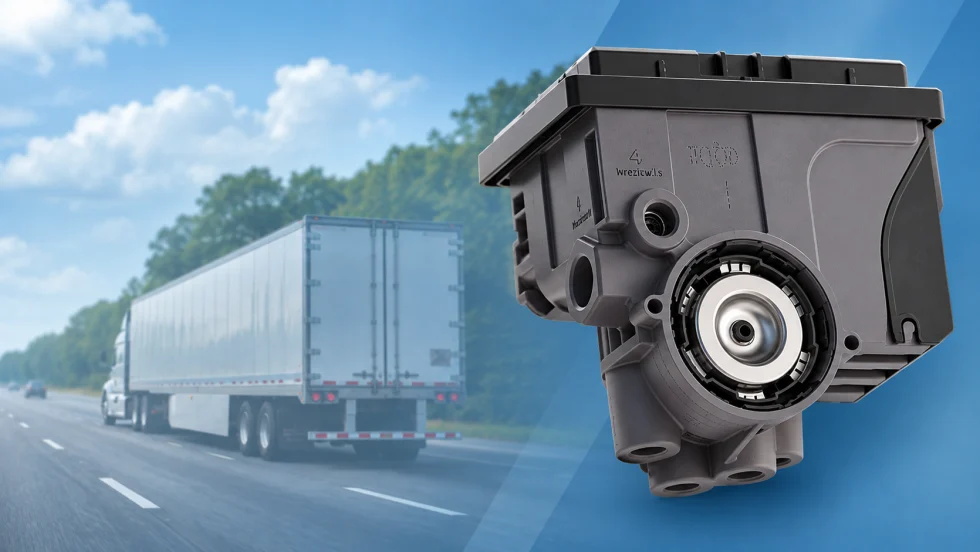
Frequently Asked Questions
Q1: What does a Bendix ABS valve do on a semi trailer?
A Bendix ABS valve controls pneumatic brake pressure as part of the trailer's anti-lock braking system. When the ABS controller detects a wheel-locking condition through wheel-speed sensor signals, it can command the appropriate modulator valve to adjust air pressure to the brake chambers.
Depending on the specific system, the valve may increase, hold, or release brake pressure to help maintain wheel rotation during hard braking. It works together with the ABS electronic control unit, wheel-speed sensors, wiring, air supply, and foundation brakes.
Q2: Is a Bendix ABS valve compatible with every semi trailer?
No, a Bendix ABS valve is compatible only with trailer ABS systems that match its part number, pneumatic configuration, electrical interface, and control-system requirements. Different trailers may use different valve designs and ABS architectures.
Before ordering a replacement, verify:
-
The original valve's Bendix part number and identification markings
-
The trailer ABS manufacturer and system model
-
The number and arrangement of pneumatic ports
-
Electrical connector type and wiring configuration
-
Axle layout and modulator arrangement
-
Applicable installation instructions
A valve that looks similar may not function correctly in another ABS system. Confirm compatibility through the trailer manufacturer's parts documentation or Bendix technical information.
Q3: What are the common signs of a faulty trailer ABS Bendix valve?
Common signs of a faulty ABS modulator valve may include an ABS warning indicator, diagnostic fault codes, abnormal pneumatic response, or braking behavior that differs from the manufacturer's expected system operation. However, these symptoms do not automatically prove that the valve itself has failed.
Possible causes include:
-
Electrical connector damage or wiring faults
-
Wheel-speed sensor problems
-
Air leaks or restricted pneumatic lines
-
Contamination or moisture in the air system
-
Valve coil or internal mechanical failure
-
ABS controller or power-supply problems
Technicians should retrieve ABS diagnostic codes and perform the prescribed electrical and pneumatic tests before replacing the valve.
Q4: How do you test a Bendix ABS valve on a semi trailer?
A Bendix ABS valve should be tested using the diagnostic procedure specified for the exact trailer ABS system. Inspection normally involves checking electrical connections, retrieving fault codes, verifying the air supply, and confirming that the valve responds correctly to authorized diagnostic commands.
A professional inspection may include:
-
Check the ABS warning indicator and retrieve stored diagnostic codes.
-
Inspect wiring, connectors, and grounding for corrosion or damage.
-
Check pneumatic supply lines, fittings, and connections for leaks.
-
Use the manufacturer's approved diagnostic equipment and test procedures to evaluate valve operation.
-
Verify that the braking system performs correctly after repairs.
Because the system involves compressed air and safety-critical braking components, testing should be performed by qualified technicians. Never disconnect pneumatic lines or electrical components without following the applicable safety procedure.
Q5: How often should a semi trailer ABS Bendix valve be maintained?
A Bendix ABS valve should be inspected as part of the trailer's regular brake-system maintenance, with service frequency determined by the trailer manufacturer's instructions and operating conditions. The valve generally does not have a universal replacement interval that applies to every model.
Recommended inspection activities include:
-
Checking the valve body, mounting points, and air connections for damage
-
Inspecting electrical connectors and harnesses for corrosion or loose connections
-
Checking for pneumatic leaks
-
Monitoring ABS warning indicators and diagnostic faults
-
Ensuring the compressed-air system is maintained according to manufacturer requirements
Moisture, oil contamination, and other foreign material in the compressed-air system can affect pneumatic components. Follow the trailer and ABS manufacturers' maintenance instructions for air-system care.
Q6: Can you replace a Bendix trailer ABS valve without replacing the entire ABS system?
Yes, an individual Bendix ABS valve can often be replaced without replacing the complete trailer ABS system, provided the replacement part is approved for the existing system. The controller, sensors, wiring, and other components may remain in service if they pass the required inspections and diagnostic checks.
Before replacement, technicians should:
-
Confirm the exact replacement part number.
-
Verify port positions and pneumatic connections.
-
Check the electrical connector and system configuration.
-
Follow the specified removal and installation procedure.
-
Perform required diagnostic checks and operational verification after installation.
Do not substitute a different valve based only on physical similarity. An incorrect component can cause system faults or improper braking performance.
Q7: What should buyers check when purchasing a Bendix ABS valve for a semi trailer?
Buyers should verify the exact part number, system compatibility, product condition, supplier reliability, and availability of technical documentation before purchasing a Bendix ABS valve. These checks help reduce the risk of ordering an incompatible component or receiving an unsuitable replacement.
Important purchasing considerations include:
-
Part identification: Match the original Bendix part number and product markings.
-
System compatibility: Confirm the trailer ABS model and pneumatic configuration.
-
Product condition: Determine whether the component is new, remanufactured, or used.
-
Documentation: Request installation instructions and applicable technical information.
-
Supplier support: Check warranty terms, return conditions, and technical assistance.
-
Availability: Confirm stock status and expected delivery time with the supplier.
For fleet maintenance programs, keeping accurate records of installed valve part numbers can simplify future replacement and parts procurement.
Q8: Can a faulty ABS Bendix valve affect semi trailer braking performance?
Yes, a faulty ABS Bendix valve can interfere with the pressure-control function of the trailer anti-lock braking system. Depending on the failure and system design, ABS operation may be impaired, a warning indicator may illuminate, or diagnostic faults may be recorded.
A malfunctioning ABS component does not necessarily mean that all service braking is lost, because the trailer's conventional air brake system and ABS perform different functions. However, the actual braking condition must be assessed rather than assumed.
If an ABS warning or abnormal braking behavior occurs, the trailer should be inspected promptly by a qualified technician. Follow applicable regulations and manufacturer instructions before returning the vehicle to service.
Conclusion
Selecting and maintaining the correct semi trailer ABS Bendix valve is essential for reliable trailer brake-system operation. Fleet operators and parts buyers should verify the valve's part number, pneumatic and electrical compatibility, and ABS system configuration before replacement. Regular inspections, accurate diagnostics, and manufacturer-approved service procedures help reduce unnecessary component replacement and support safe trailer operation.