

Overview
A semi trailer is a non-powered commercial vehicle designed to carry cargo while connected to a road tractor through a fifth-wheel coupling and kingpin. Unlike a full trailer, part of its weight is supported by the tractor, while the remaining load is carried by the trailer axles. Semi trailers are widely used in freight transportation, construction logistics, agricultural distribution, and industrial supply chains.
Choosing the right semi trailer requires matching its body design, dimensions, payload rating, axle configuration, and braking system to the cargo and operating environment. This FAQ explains the main trailer types, important specifications, tractor compatibility, safety requirements, maintenance, and procurement considerations for commercial buyers.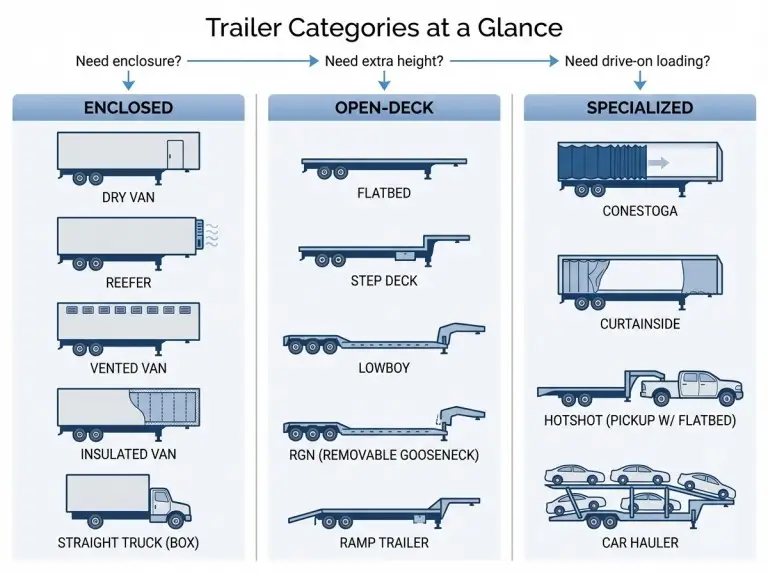
Frequently Asked Questions
Q1: What are the main types of semi trailers?
The main types of semi trailers include dry vans, flatbeds, refrigerated trailers, lowboys, tankers, dump trailers, and specialized transport trailers.
Each type is designed for a different cargo application:
-
Dry van: Enclosed transportation for packaged goods, furniture, and general freight.
-
Flatbed: Open-deck transportation for steel, timber, machinery, and construction materials.
-
Refrigerated trailer: Insulated cargo transportation with a temperature-control system.
-
Lowboy: Low-deck transportation for heavy machinery and oversized equipment.
-
Tanker: Transportation of liquids, gases, or other approved bulk materials.
-
Dump trailer: Transportation and unloading of bulk materials such as sand, gravel, and soil.
-
Specialized trailer: Designed for specific loads, including containers, vehicles, logs, or other industrial cargo.
The best choice depends on cargo dimensions, weight, loading method, unloading requirements, and route conditions.
Q2: What is the payload capacity of a semi trailer?
A semi trailer's payload capacity is the maximum cargo weight it can carry within its rated structural and legal operating limits.
There is no single payload capacity for all semi trailers because the rating depends on trailer construction, empty weight, axle configuration, suspension, tires, and braking equipment. A flatbed, dry van, tanker, and lowboy may have substantially different weight capacities.
Before purchasing, confirm:
-
Manufacturer-rated gross vehicle weight.
-
Trailer empty weight and available payload.
-
Individual axle and tire load ratings.
-
Kingpin and fifth-wheel load limits.
-
Applicable road weight restrictions.
The manufacturer's specification and the legal limits in the operating jurisdiction determine the usable payload.
Q3: What dimensions should buyers check when selecting a semi trailer?
Buyers should check trailer length, width, height, deck height, usable cargo space, and overall combination dimensions before selecting a semi trailer.
Important measurements include:
-
Length: Determines the available cargo space and affects road access.
-
Width: Influences cargo compatibility and compliance with transport regulations.
-
Overall height: Important for bridge, tunnel, and overhead clearance.
-
Deck height: Especially relevant for flatbeds and low-deck equipment trailers.
-
Interior dimensions: Important for enclosed trailers and palletized freight.
Nominal trailer dimensions may differ from usable cargo dimensions. Request the manufacturer's dimensional drawing and confirm the actual measurements of the selected configuration.
Q4: How do you choose the right axle configuration for a semi trailer?
The correct semi trailer axle configuration depends on payload requirements, axle load distribution, road regulations, and the intended operating conditions.
Common configurations include:
-
Single axle: Used for certain lighter-duty or specialized applications.
-
Tandem axle: A common arrangement for general commercial freight.
-
Tri-axle: Provides additional axle capacity and load distribution for suitable applications.
-
Multi-axle configurations: Used for certain heavy-duty or specialized transport requirements.
Axle selection must account for axle ratings, suspension capacity, tire load ratings, braking performance, and permitted axle spacing. More axles do not automatically mean a higher legal payload because local weight regulations still apply.
Q5: How do you match a semi trailer with the right truck tractor?
A semi trailer must be matched with a tractor that has compatible coupling components and sufficient load, braking, and electrical-system capacity.
Buyers and fleet managers should verify:
-
Fifth-wheel height and kingpin compatibility.
-
Fifth-wheel and kingpin load ratings.
-
Tractor gross combination weight rating.
-
Tractor axle and tire capacities.
-
Air-brake connections and electrical connectors.
-
Required turning clearance and overall vehicle dimensions.
The tractor must be able to support the trailer's kingpin load while maintaining legal axle weights. A compatible coupling alone does not guarantee that the complete vehicle combination is suitable for the intended cargo or route.
Q6: What safety systems should a semi trailer have?
A semi trailer should have braking, lighting, coupling, tire, and structural safety equipment that meets the requirements of its intended operating market.
Important systems and components include:
-
Service brakes: Provide controlled braking during normal operation.
-
Parking and emergency braking systems: Help prevent unintended trailer movement and support safe operation.
-
ABS: Helps control wheel lockup during braking when properly specified and maintained.
-
Lighting and reflective markings: Improve visibility and communicate vehicle movements.
-
Kingpin and fifth-wheel coupling: Secure the trailer to the tractor.
-
Tires and suspension: Support the load and maintain stable road contact.
Specific legal requirements vary by jurisdiction and trailer category. Buyers should verify applicable braking, lighting, coupling, and inspection regulations before ordering.
Q7: What maintenance does a semi trailer require?
A semi trailer requires regular inspection and preventive maintenance of its tires, brakes, axles, suspension, coupling components, lighting, and structural frame.
A practical maintenance program should include:
-
Pre-trip inspections: Check tires, lights, air lines, coupling security, and visible damage.
-
Brake inspections: Examine brake linings, drums or discs, chambers, hoses, and adjustment mechanisms.
-
Wheel-end maintenance: Inspect bearings, seals, hubs, and lubrication according to the axle manufacturer's instructions.
-
Suspension inspections: Check springs or air suspension components, bushings, shocks, and mounting points.
-
Structural inspections: Look for cracks, corrosion, loose fasteners, and damage to the frame or cargo-support structure.
Maintenance intervals depend on mileage, operating conditions, component design, and manufacturer requirements. Follow the applicable trailer, axle, brake, and suspension manuals for service procedures and replacement limits.
Q8: What should buyers consider before purchasing a semi trailer?
Buyers should evaluate cargo suitability, payload capacity, dimensions, axle configuration, tractor compatibility, regulatory compliance, and long-term maintenance costs before purchasing a semi trailer.
A useful procurement checklist includes:
-
Intended cargo type and loading or unloading method.
-
Required trailer body design and usable dimensions.
-
Rated payload, empty weight, and axle specifications.
-
Frame material, floor design, and corrosion protection.
-
Brake system, suspension, tires, and wheel-end components.
-
Coupling compatibility with the available tractor.
-
Manufacturer documentation, warranty terms, and service support.
-
Replacement-parts availability and expected maintenance requirements.
For used trailers, inspect the frame, floor, axles, brakes, suspension, tires, and coupling components. Review maintenance records and previous repair history rather than relying only on the trailer's appearance or asking price.
Conclusion
Selecting a suitable semi trailer requires matching its design and technical specifications to the cargo, tractor, operating routes, and applicable regulations. Buyers should compare payload ratings, dimensions, axle configurations, safety equipment, maintenance requirements, and after-sales support to make a practical long-term purchasing decision.