

Overview
A 57-foot semi trailer is a long commercial trailer designed to transport freight behind a compatible road tractor. It may be configured as a dry van, flatbed, refrigerated trailer, or another specialized body type, depending on the cargo and operating requirements. Its additional deck or cargo length can increase loading flexibility, but it also creates important considerations for turning clearance, axle loading, route access, and legal operating limits.
For fleet managers and equipment buyers, selecting a 57-foot semi trailer requires more than confirming its nominal length. This FAQ explains trailer dimensions, payload capacity, axle configurations, tractor compatibility, regulatory considerations, maintenance, and total operating costs.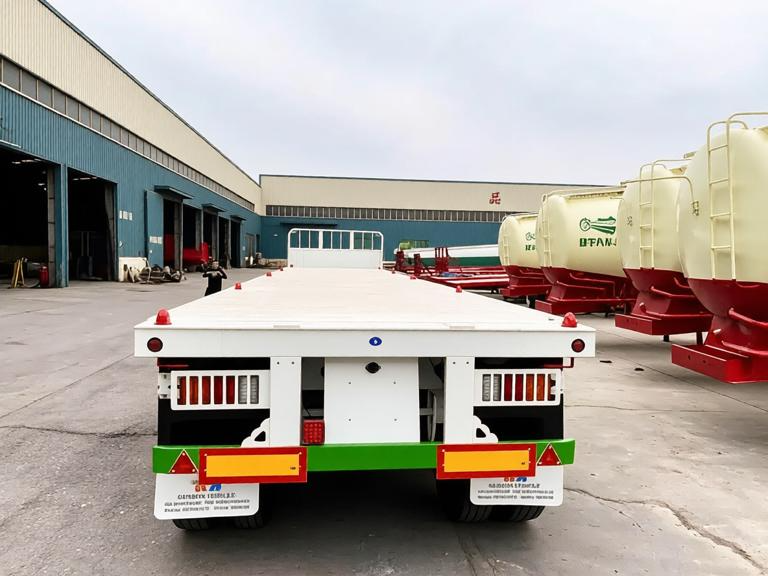
Frequently Asked Questions
Q1: What are the dimensions of a 57-foot semi trailer?
A 57-foot semi trailer has a nominal body or deck length of 57 feet, equivalent to 684 inches or approximately 17.37 meters.
Its overall dimensions depend on the trailer type and manufacturer. Buyers should distinguish between:
-
Body or deck length: The usable cargo-carrying length.
-
Overall length: The complete trailer length, including front and rear structural components.
-
Width: Determined by the trailer design and applicable transport regulations.
-
Height: Affected by suspension, tire size, deck design, and cargo-body configuration.
A 57-foot flatbed, dry van, and refrigerated trailer can have different exterior dimensions and usable cargo spaces. Always request the manufacturer's dimensional drawing before planning loading operations or transport routes.
Q2: What is the payload capacity of a 57-foot semi trailer?
The payload capacity of a 57-foot semi trailer is determined by its rated structural capacity, empty weight, axle ratings, tire capacity, and applicable legal weight limits.
There is no universal payload rating for every 57-foot trailer. Actual capacity varies with:
-
Trailer body type and construction materials.
-
Number of axles and individual axle ratings.
-
Suspension, wheels, tires, and braking equipment.
-
Cargo weight distribution and kingpin loading.
-
Tractor and combination gross-weight restrictions.
Buyers should obtain the manufacturer's rated gross vehicle weight and empty weight, then verify the permitted payload for the intended operating jurisdiction. The trailer's structural rating does not automatically authorize the same payload on public roads.
Q3: What axle configurations are available for a 57-foot semi trailer?
A 57-foot semi trailer can be manufactured with different axle configurations, including tandem and multi-axle arrangements, depending on its intended payload and operating conditions.
Common purchasing considerations include:
-
Tandem axles: A common configuration for general freight applications.
-
Tri-axle configurations: Used when additional axle capacity or load distribution is required.
-
Sliding axle assemblies: Allow axle-position adjustments where the design and regulations permit.
-
Specialized multi-axle arrangements: May be selected for heavier or specialized cargo.
The correct configuration depends on gross weight, axle spacing, suspension design, tire ratings, road regulations, and loading requirements. Buyers should confirm the complete axle specification rather than selecting a configuration based only on trailer length.
Q4: What types of 57-foot semi trailers can buyers choose from?
A 57-foot semi trailer can be configured for general freight, construction materials, machinery, refrigerated products, or specialized cargo.
Common body types include:
-
Dry van: Enclosed protection for packaged goods and general freight.
-
Flatbed: Open loading access for machinery, steel, timber, and oversized materials where permitted.
-
Refrigerated trailer: Insulated cargo body with a refrigeration system for temperature-controlled transportation.
-
Lowboy or specialized platform: Designed for certain heavy equipment and machinery transport, subject to configuration and route requirements.
The best design depends on cargo dimensions, loading methods, weather protection, loading equipment, and delivery locations. Confirm the usable cargo length, floor or deck rating, tie-down arrangement, and loading height before ordering.
Q5: Can a 57-foot semi trailer be used with any semi truck tractor?
A 57-foot semi trailer can only be used with a tractor that has compatible fifth-wheel, coupling, electrical, pneumatic, and load-bearing specifications.
Before purchasing, verify:
-
Fifth-wheel height and coupling compatibility.
-
Kingpin size, position, and load rating.
-
Tractor axle ratings and available payload capacity.
-
Electrical connectors and lighting-system compatibility.
-
Air-brake connections and required braking equipment.
-
Overall combination length and turning clearance.
The tractor must also have sufficient capacity for the intended trailer and cargo combination. A technically compatible fifth wheel does not guarantee that the complete vehicle combination complies with local road-weight and length regulations.
Q6: Are 57-foot semi trailers legal for road transportation?
A 57-foot semi trailer is legal for road use only when the complete vehicle combination meets the applicable dimensional, weight, axle-spacing, and equipment regulations in the operating jurisdiction.
Legal requirements can differ significantly between countries, states, and specific road networks. In the United States, for example, federal commercial vehicle length rules and state-specific provisions must be considered; certain longer trailers may be restricted to designated routes or permitted operations.
Before deployment, fleet operators should verify:
-
Maximum permitted trailer and combination length.
-
Gross vehicle and axle weight limits.
-
Required permits for longer or specialized combinations.
-
Bridge, tunnel, and restricted-route clearances.
-
Lighting, reflective markings, braking, and other required safety equipment.
A 57-foot trailer should not be assumed to have unrestricted access to every public road. Confirm the rules for the actual registration and operating locations before purchase.
Q7: What maintenance does a 57-foot semi trailer require?
A 57-foot semi trailer requires regular inspections of its tires, axles, brakes, suspension, lighting, coupling components, and cargo-support structure.
A practical preventive maintenance program should include:
-
Before each trip: Check tire condition and inflation, lights, air connections, coupling security, and visible structural damage.
-
During scheduled servicing: Inspect brake components, wheel bearings, suspension bushings, fasteners, and air lines.
-
At manufacturer-specified intervals: Lubricate serviceable components and inspect wheel ends according to the axle and hub manuals.
-
After unusual operating events: Check for damage caused by overloading, impact, severe braking, or road hazards.
Service intervals depend on component specifications, mileage, operating environment, and duty cycle. Use the official trailer, axle, suspension, and brake maintenance documentation for exact inspection and replacement requirements.
Q8: What should buyers check before purchasing a 57-foot semi trailer?
Buyers should verify the trailer's dimensions, payload ratings, axle configuration, structural condition, road compliance, and compatibility with their tractor and cargo.
A pre-purchase checklist should cover:
-
Trailer type and actual usable cargo length.
-
Manufacturer, model, production year, and identification plate.
-
Empty weight, gross vehicle rating, and axle specifications.
-
Frame, floor, deck, crossmembers, and cargo-restraint points.
-
Tires, wheels, brakes, suspension, and wheel-end condition.
-
Electrical and pneumatic systems.
-
Required certificates, inspection records, and registration documents.
-
Spare-parts availability, service support, and warranty terms.
For used trailers, inspect for corrosion, cracks, previous structural repairs, accident damage, and uneven tire wear. Comparing the complete specification and maintenance history is more useful than comparing purchase prices alone.
Conclusion
A 57-foot semi trailer can provide additional cargo length for suitable freight operations, but its practical value depends on payload requirements, axle configuration, tractor compatibility, and legal route access. Before purchasing, obtain the manufacturer's full specification sheet and dimensional drawing, verify local transport regulations, and evaluate the trailer's maintenance and service requirements.