

Introduction
Heavy equipment transportation requires trailers that can handle substantial loads while maintaining stability, structural integrity, and road safety. For contractors, equipment dealers, logistics companies, and industrial fleet operators, choosing the right semi trailer involves more than comparing purchase prices. Payload requirements, axle configuration, loading height, transport dimensions, road regulations, and maintenance costs all influence the final decision.
The keyword Zieman semi trailer refers to trailers associated with Zieman Manufacturing Company, a manufacturer known for specialized trailers used in heavy equipment and industrial transportation. Buyers researching Zieman trailers are generally interested in trailer configurations, hauling capacity, construction quality, equipment compatibility, and suitability for demanding transport operations.
A key consideration is that Zieman semi trailers should not be treated as one standardized product. Different trailer models and configurations can serve different load types and operating conditions. Buyers should identify the exact model and verify its manufacturer documentation before relying on any capacity, dimension, or equipment specification.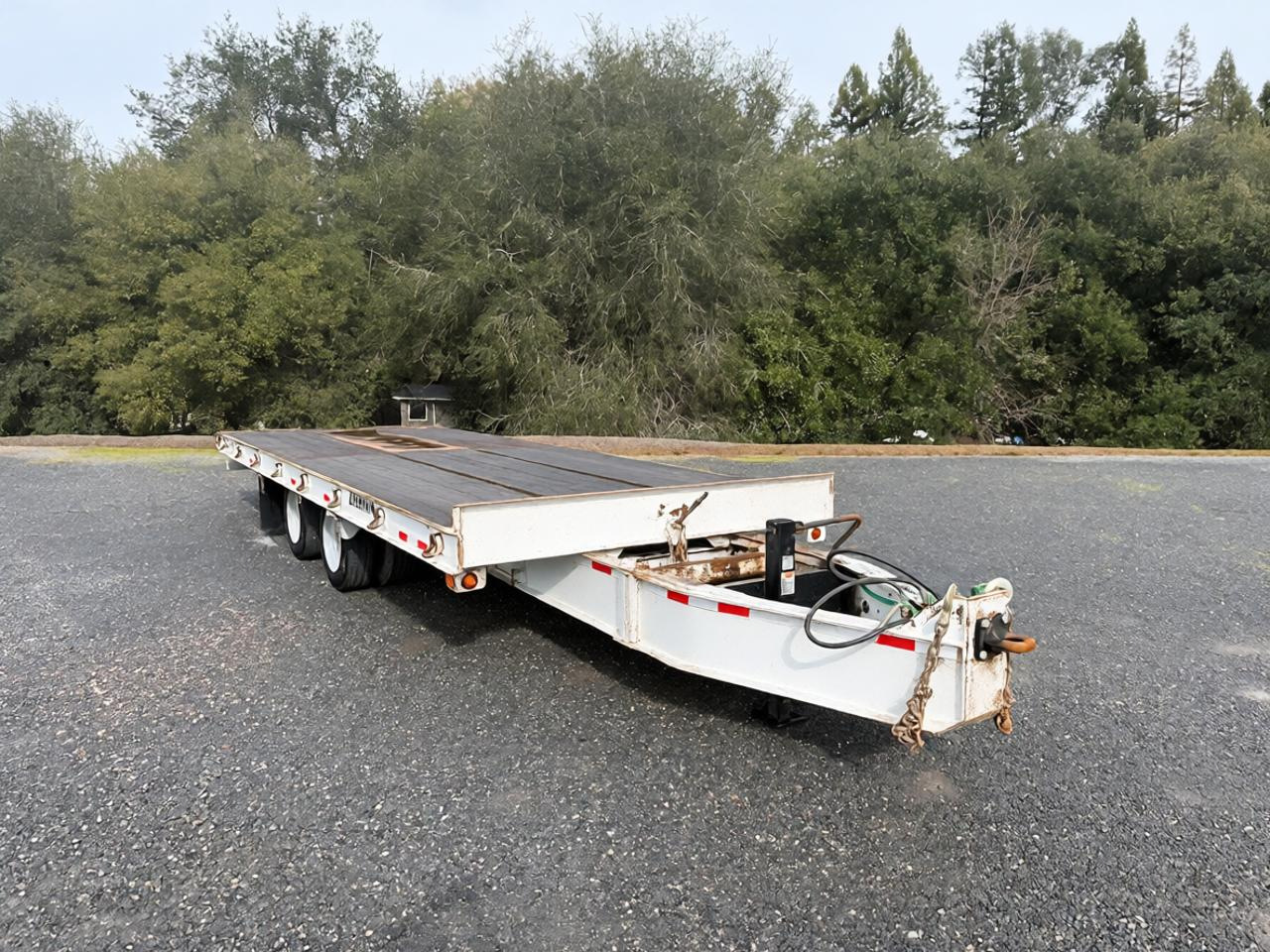
Core Powertrain and Structural Design
A semi trailer does not have its own engine or transmission. Its performance depends on the towing tractor and the trailer's mechanical, structural, and braking systems. For a Zieman semi trailer, the most important engineering considerations include the chassis, deck configuration, axle group, suspension, loading equipment, and coupling system.
Chassis and Frame Design
The chassis is the primary load-bearing structure of a heavy-duty semi trailer. It transfers the weight of transported equipment to the axles and fifth-wheel connection while resisting bending, twisting, and dynamic forces during transport.
Important design considerations include:
-
Longitudinal frame members: Support the main payload and resist bending under heavy loads.
-
Crossmembers: Distribute deck loads across the chassis structure.
-
Kingpin assembly: Connects the trailer to the tractor's fifth wheel.
-
Axle mounting structure: Transfers vertical and dynamic forces from the trailer to the suspension and wheels.
-
Deck construction: Provides a suitable loading surface for machinery, vehicles, and industrial equipment.
For heavy equipment transport, the chassis must also accommodate concentrated loads. A machine with narrow tracks or small contact points can create higher localized deck stresses than a similarly weighted machine with a wider footprint.
Axles, Suspension, and Load Distribution
Axle configuration is a major factor in heavy-haul trailer selection. The number and arrangement of axles influence load distribution, maneuverability, tire requirements, and compliance with local road-weight regulations.
The correct configuration depends on:
-
Trailer tare weight.
-
Expected payload and its distribution.
-
Permitted axle loads.
-
Tractor compatibility.
-
Route conditions and turning requirements.
-
Applicable transport permits.
Suspension design also affects ride quality and load stability. Mechanical and air suspension systems have different maintenance requirements and operating characteristics. The appropriate system depends on the trailer model, load type, and intended transport environment.
Deck, Ramps, and Loading Configuration
Heavy equipment trailers may use different deck arrangements depending on the machinery being transported.
For construction and agricultural equipment, important features can include:
-
Low loading height.
-
Suitable deck width and length.
-
Rear loading ramps.
-
Securement points for chains and straps.
-
Reinforced loading areas.
-
Appropriate approach and departure angles.
A low deck can help reduce the overall transport height of tall machinery. This is particularly important when moving excavators, loaders, bulldozers, and other equipment along routes with bridge-height restrictions.
Ramp strength and geometry should match the equipment's operating weight, track or tire configuration, and ground clearance. Loading procedures must follow the manufacturer's rated limits and safety instructions.
Braking and Safety Systems
A heavy-duty semi trailer requires a braking system designed for its permitted operating mass and intended road use.
Depending on the model and destination market, braking equipment may include pneumatic service brakes, ABS, and other required electronic braking functions.
Operators should verify:
-
Brake type and axle compatibility.
-
ABS availability and regulatory requirements.
-
Emergency braking arrangements.
-
Tire load and speed ratings.
-
Lighting and electrical connections.
-
Reflective markings and safety equipment.
-
Securement-point ratings and locations.
Safe transportation also depends on correct load distribution. Excessive kingpin load can affect tractor handling, while excessive rear axle loading can create compliance and braking concerns.
Structural Durability and Maintenance Access
Heavy equipment trailers frequently operate on construction sites, industrial roads, and other demanding surfaces. Their chassis and deck structures must withstand repeated loading, unloading, vibration, and exposure to environmental conditions.
Buyers should inspect weld quality, frame condition, deck surfaces, suspension mounting points, and corrosion protection. Accessible lubrication points and replaceable wear components can also reduce maintenance difficulty.
Technical Specifications
Zieman semi trailer specifications depend on the exact model and configuration. There is no single set of dimensions, payload ratings, or axle specifications that applies to every trailer associated with the brand. The following parameters should be checked against the manufacturer's documentation for the specific unit being considered.
|
Key Parameter |
Specification to Verify |
Operational Significance |
|---|---|---|
|
Model designation |
Exact Zieman model and production version |
Identifies the correct technical documentation |
|
Payload capacity |
Manufacturer-rated payload |
Establishes the permitted cargo weight |
|
Trailer tare weight |
Actual empty trailer weight |
Determines available payload within legal limits |
|
Deck dimensions |
Length, width, and loading height |
Determines equipment compatibility |
|
Axle configuration |
Number, spacing, and rated capacity |
Influences load distribution and road compliance |
|
Suspension |
Mechanical, air, or specified system |
Affects ride characteristics and maintenance |
|
Braking system |
Brake type and electronic safety equipment |
Supports safe operation and regulatory compliance |
|
Loading equipment |
Ramp type, capacity, and geometry |
Determines loading suitability for machinery |
Understanding Payload and Gross Vehicle Weight
Payload is the weight of the cargo that a trailer is designed and legally permitted to carry. It is not the same as gross vehicle weight.
A simplified calculation is:
Available payload = Permitted gross combination weight − Tractor tare weight − Trailer tare weight
Actual legal limits also depend on axle loading, kingpin weight, vehicle dimensions, route restrictions, and local transport regulations.
For example, a trailer with a high manufacturer-rated payload may still be restricted by the towing tractor's capacity or the road network's axle-weight limits. Buyers should evaluate the complete tractor-trailer combination rather than the trailer in isolation.
Comparative Advantages TCO and ROI
A specialized heavy-duty semi trailer can offer advantages when compared with a general-purpose flatbed or standard equipment trailer. The main benefit is the ability to configure the trailer around specific machinery, loading requirements, and transport conditions.
Specialized Trailer vs. Standard Flatbed
A standard flatbed may be suitable for general cargo and equipment with straightforward loading requirements. A specialized equipment trailer may provide a more appropriate deck arrangement, loading geometry, structural reinforcement, or securement layout for particular machinery.
|
Evaluation Factor |
Specialized Equipment Trailer |
Standard Flatbed |
|---|---|---|
|
Equipment compatibility |
Designed around specific load requirements |
Depends on deck dimensions and load arrangement |
|
Loading height |
May offer a low-profile configuration |
Varies by model |
|
Loading equipment |
May include dedicated ramps or other features |
Often requires separate loading arrangements |
|
Load distribution |
Configuration can be tailored to machinery |
Requires careful positioning and securement |
|
Purchase cost |
Can be higher for specialized designs |
Often more economical for general cargo |
|
Operating flexibility |
Strong for intended equipment types |
Broad general-purpose applications |
Total Cost of Ownership
The total cost of ownership (TCO) of a Zieman semi trailer should include more than its purchase price.
Major cost categories include:
-
Initial purchase price and financing.
-
Tractor fuel consumption and operating costs.
-
Tire replacement and maintenance.
-
Brake, suspension, and axle servicing.
-
Chassis, deck, and structural repairs.
-
Inspection, registration, and insurance.
-
Downtime and replacement transport costs.
-
Parts availability and after-sales support.
A trailer that is well matched to the transported equipment may reduce loading difficulty and unnecessary handling. However, specialized equipment can also have higher acquisition and maintenance costs.
ROI Considerations
Return on investment depends on annual utilization, payload efficiency, transport distance, loading time, maintenance costs, and the difference between the specialized trailer and available alternatives.
For example, a contractor transporting heavy machinery regularly may benefit from a trailer that reduces loading time or eliminates the need for separate transport equipment. The financial benefit should be calculated using actual operating data rather than assumed productivity improvements.
A practical ROI assessment should compare:
-
Annual transport volume.
-
Number of trips required.
-
Average distance per trip.
-
Driver and tractor operating costs.
-
Loading and unloading time.
-
Maintenance expenses.
-
Expected service life.
-
Resale value.
Heavy Duty Application Scenarios
Zieman semi trailers and similar specialized equipment trailers are relevant to transport operations that require suitable deck configurations, load support, and securement arrangements.
Construction Equipment Transportation
Construction contractors frequently move machinery between projects, equipment yards, and maintenance facilities.
Potential cargo includes:
-
Excavators and mini excavators.
-
Wheel loaders and skid steer loaders.
-
Bulldozers and graders.
-
Compactors and rollers.
-
Agricultural and industrial machinery.
The trailer should be selected according to the machine's operating weight, dimensions, ground clearance, track width, and loading requirements.
Industrial and Manufacturing Equipment
Industrial facilities may need to transport large components, machinery, and production equipment between factories or installation sites.
In these applications, deck strength, load distribution, tie-down locations, and transport height are particularly important. Specialized loading arrangements may also be necessary for equipment with unusual dimensions or concentrated weight.
Agricultural Machinery Transport
Agricultural contractors and equipment dealers may use specialized trailers to move tractors, harvesters, sprayers, and other machinery.
Selection should consider seasonal transport frequency, field access, machine width, tire configuration, and loading conditions. The trailer must also comply with road regulations governing vehicle dimensions and permitted weights.
Equipment Rental and Dealer Fleets
Rental companies and machinery dealers often transport equipment of different sizes and weights. A suitable trailer can help standardize delivery operations and reduce dependence on external transport providers.
However, fleet operators should avoid selecting a trailer based only on the heaviest machine in their inventory. The most practical solution balances equipment compatibility, utilization, loading efficiency, and ownership cost.
Selection and Maintenance Considerations
Before purchasing a Zieman semi trailer, buyers should identify the exact model and confirm that its configuration matches their transport requirements.
1. Identify the Exact Model
Request the model designation, production year, serial number, and manufacturer documentation. These details are essential for confirming the trailer's original specifications and available replacement parts.
2. Confirm Load Requirements
Prepare a list of the machinery or cargo to be transported. Include:
-
Operating weight.
-
Overall length and width.
-
Overall transport height.
-
Track or tire dimensions.
-
Center of gravity where available.
-
Loading and unloading requirements.
The trailer must support both the total cargo weight and its actual distribution across the deck.
3. Check Tractor Compatibility
Verify the towing tractor's fifth-wheel capacity, permitted combination weight, coupling height, braking connections, and electrical compatibility.
A suitable trailer must operate safely as part of the complete vehicle combination.
4. Verify Road Regulations
Different countries and regions impose different limits on trailer dimensions, axle loads, gross combination weight, and oversize cargo.
Heavy or oversized equipment may require route surveys, special permits, escort vehicles, or restrictions on travel times.
5. Inspect the Trailer Before Purchase
For a used trailer, conduct a detailed inspection covering:
-
Chassis cracks, deformation, and corrosion.
-
Welds and crossmembers.
-
Deck condition and loading ramps.
-
Axles, hubs, and suspension.
-
Brakes and tires.
-
Kingpin and coupling assembly.
-
Lighting and electrical systems.
-
Hydraulic components, if fitted.
The inspection should be performed by a qualified technician familiar with heavy-duty trailers.
6. Establish Preventive Maintenance
A regular maintenance schedule should include:
-
Checking tire pressure and wear.
-
Inspecting brake components.
-
Lubricating specified moving parts.
-
Checking suspension and axle mounting points.
-
Inspecting the kingpin and fifth-wheel connection.
-
Examining the frame, deck, and welds.
-
Testing lighting and electrical connections.
-
Maintaining ramps and other loading equipment.
Maintenance intervals should follow the manufacturer's instructions and be adjusted for actual operating conditions.
7. Evaluate Parts and After-Sales Support
Before purchasing, confirm whether replacement parts, technical documentation, and maintenance support are available in the destination market.
For international buyers, shipping costs, parts lead times, warranty coverage, and local repair capabilities can have a significant impact on long-term ownership costs.
Conclusion
A Zieman semi trailer should be evaluated according to its exact model, engineering configuration, payload rating, deck dimensions, axle arrangement, and intended transport application. Specialized heavy-duty trailers can provide practical advantages for construction, industrial, agricultural, and equipment rental operations when their design matches the cargo requirements.
For procurement managers and fleet operators, the most important decision is to verify the manufacturer's technical documentation and assess the complete tractor-trailer combination. Correct payload selection, structural condition, road compliance, maintenance support, and equipment compatibility are the foundations of safe operation and long-term fleet value.