

Overview
Semi trailer safety decals are identification, warning, instruction, and visibility markings applied to commercial trailers to communicate important safety information and improve road visibility. They help drivers, maintenance technicians, loading personnel, and other road users recognize vehicle hazards, operating restrictions, and safety requirements.
For trailer manufacturers, fleet managers, and procurement teams, selecting the correct safety decals involves checking regulatory requirements, reflective performance, material durability, placement, and compatibility with trailer surfaces. This FAQ explains the main types of semi trailer safety decals, applicable requirements, installation practices, maintenance, and purchasing considerations.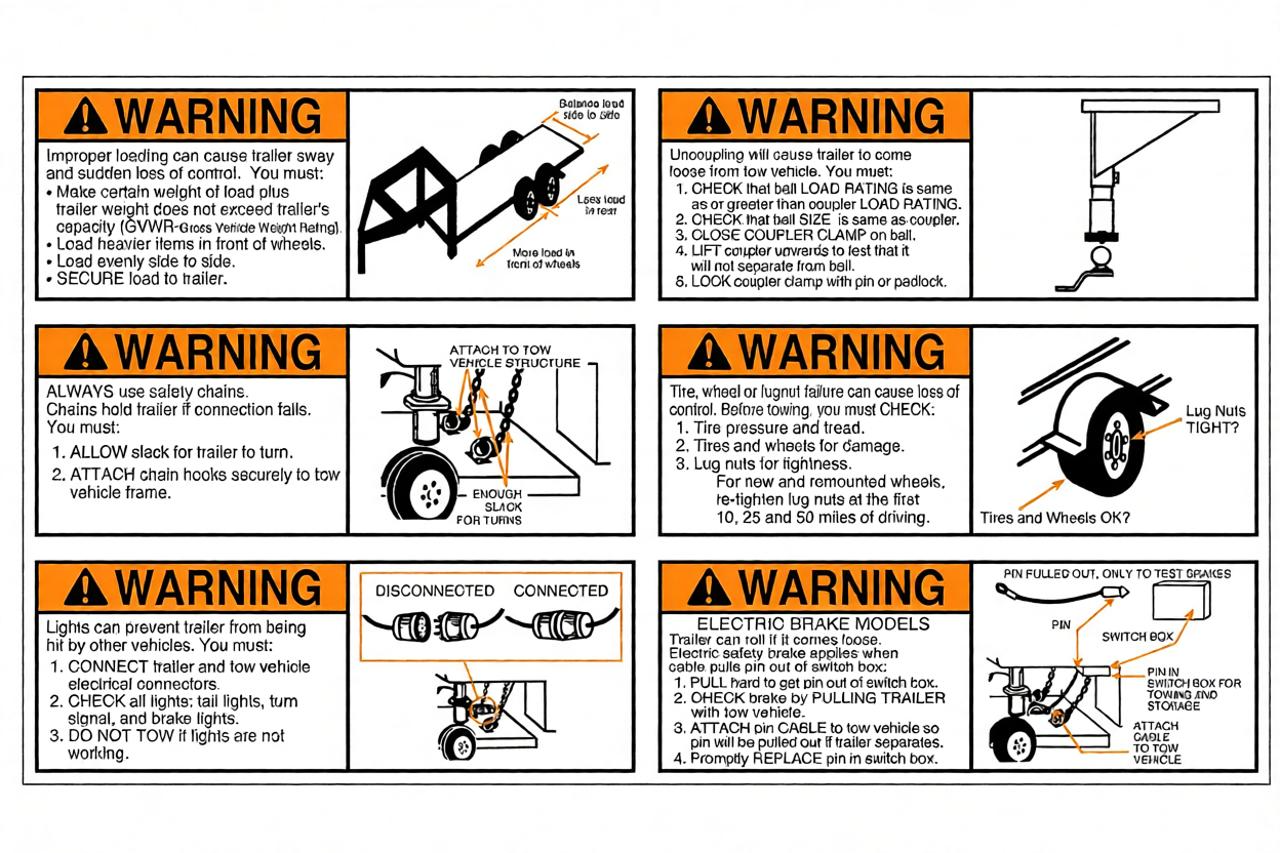
Frequently Asked Questions
Q1: What types of safety decals are required on a semi trailer?
Semi trailer safety decal requirements depend on the trailer's vehicle classification, gross vehicle weight rating, operating location, and applicable transportation regulations.
Common safety markings include:
-
Reflective conspicuity markings: Improve trailer visibility, particularly at night and in low-light conditions.
-
Warning labels: Identify hazards involving electrical systems, moving components, hot surfaces, or other equipment-specific risks.
-
Tire and loading information labels: Communicate relevant tire pressure, load limits, and operating information where required.
-
Identification labels: Display manufacturer information, VIN, GVWR, GAWR, and other required vehicle details.
-
Operating instruction labels: Provide important information about landing gear, suspension, brakes, and other trailer systems.
In the United States, applicable requirements may include FMVSS No. 108 and relevant provisions of 49 CFR. Buyers should verify the requirements for their specific trailer category and intended market.
Q2: Are reflective safety decals mandatory for semi trailers?
Reflective conspicuity markings are mandatory for certain commercial trailers under applicable vehicle safety regulations, including U.S. FMVSS No. 108.
In the United States, covered trailers generally require approved red-and-white retroreflective sheeting or reflex reflectors in specified locations and patterns. Requirements depend on trailer type, dimensions, weight classification, and applicable manufacturing or in-service provisions.
When purchasing reflective markings, confirm:
-
Compliance with the applicable regulatory specifications.
-
Required color combinations and marking patterns.
-
Retroreflective performance and product identification.
-
Correct installation locations and dimensions.
DOT-C2 markings are commonly associated with compliant red-and-white conspicuity tape, but buyers should verify the specific product approval and applicable regulatory requirements rather than relying on appearance alone.
Q3: What materials are used for semi trailer safety decals?
Semi trailer safety decals are commonly made from pressure-sensitive vinyl, retroreflective sheeting, polyester films, or other durable materials designed for vehicle applications.
The appropriate material depends on the decal's function:
-
Standard vinyl: Suitable for general warning labels, identification stickers, and operating instructions.
-
Retroreflective sheeting: Designed to reflect incoming light and improve nighttime visibility.
-
Weather-resistant polyester: Suitable for certain technical information and equipment identification labels.
-
Industrial adhesive films: Designed for stronger adhesion to appropriate metal or painted surfaces.
For outdoor trailer applications, evaluate UV resistance, moisture resistance, temperature tolerance, abrasion resistance, and adhesive compatibility.
Q4: Where should safety decals and reflective markings be installed on a semi trailer?
Semi trailer safety decals should be installed in clearly visible locations specified by the applicable regulations and the trailer manufacturer's design.
Typical locations include:
-
Rear panels and rear corners.
-
Lower side sections of the trailer.
-
Areas surrounding designated operating controls.
-
Locations near electrical connections or other equipment-specific hazards.
-
Manufacturer identification and rating plate areas.
Reflective markings must follow the applicable installation pattern and dimensional requirements. Warning labels should be positioned where operators and maintenance personnel can read them before performing the relevant operation.
Avoid installing decals over seams, damaged paint, corrosion, or surfaces that prevent proper adhesion.
Q5: How long do semi trailer safety decals last?
The service life of semi trailer safety decals varies with material quality, adhesive type, sunlight exposure, weather conditions, cleaning methods, and operating environment.
Standard vinyl labels and reflective sheeting do not necessarily have the same durability or replacement requirements. High UV exposure, road salt, pressure washing, abrasion, and repeated chemical cleaning can accelerate deterioration.
Fleet managers should inspect decals regularly for:
-
Fading or loss of reflective performance.
-
Peeling edges and adhesive failure.
-
Cracks, scratches, and surface damage.
-
Missing or illegible warning information.
-
Contamination that reduces visibility.
Replace damaged or noncompliant markings according to applicable regulations and manufacturer recommendations.
Q6: How should semi trailer safety decals be installed correctly?
Semi trailer safety decals should be installed on clean, dry, smooth, and compatible surfaces using the application instructions supplied by the decal manufacturer.
A practical installation procedure includes:
-
Clean the application area and remove grease, dust, rust, and loose paint.
-
Allow the surface to dry completely.
-
Measure and mark the required installation position.
-
Apply the decal evenly while preventing wrinkles and trapped air.
-
Press the surface and edges firmly according to the manufacturer's instructions.
-
Allow the adhesive to develop before exposing the area to demanding washing or operating conditions.
For reflective markings, follow the specified orientation, spacing, color arrangement, and installation pattern. Improper installation can reduce visibility and compromise regulatory compliance.
Q7: How often should semi trailer safety decals be inspected and replaced?
Semi trailer safety decals should be checked during routine vehicle inspections and replaced whenever they become damaged, illegible, detached, or noncompliant.
A practical fleet maintenance approach includes:
-
Pre-trip inspections: Check for missing or visibly damaged safety markings.
-
Periodic maintenance: Inspect reflective tape, warning labels, and identification information.
-
Post-accident inspections: Check areas affected by impacts, repairs, or panel replacement.
-
After repainting or body repairs: Restore all required markings and labels.
There is no single universal replacement interval for every type of decal. Replacement timing should follow applicable regulations, manufacturer instructions, and the actual condition of the markings.
Q8: What should buyers consider when purchasing semi trailer safety decals in bulk?
Buyers should evaluate regulatory compliance, material specifications, reflective performance, adhesive quality, customization options, and supplier reliability before purchasing semi trailer safety decals in bulk.
Important procurement considerations include:
-
Application requirements: Identify whether the order includes warning labels, identification stickers, reflective tape, or complete decal kits.
-
Regulatory compliance: Confirm applicable DOT, FMVSS, or other destination-market requirements.
-
Material specifications: Check UV resistance, weather resistance, thickness, and adhesive characteristics.
-
Dimensions and design: Confirm decal size, color, wording, symbols, and installation positions.
-
Customization: Determine whether company logos, fleet identification numbers, and specific warning instructions are required.
-
Quality documentation: Request relevant product specifications and compliance documentation.
-
Supply capability: Evaluate production consistency, replacement availability, delivery arrangements, and after-sales support.
For fleet purchases and trailer manufacturing projects, providing trailer drawings, photographs, and a complete decal list helps suppliers prepare compatible products and accurate quotations.
Conclusion
Semi trailer safety decals play an important role in vehicle identification, hazard communication, and road visibility. Selecting suitable materials and ensuring correct installation help maintain marking performance throughout the trailer's service life.
Before purchasing, fleet operators and trailer manufacturers should confirm the applicable safety regulations, reflective marking specifications, decal dimensions, and installation requirements for their intended market.