

Introduction
Semi trailer length is one of the most consequential specification decisions a fleet makes, yet it is often treated as a fixed parameter rather than a variable. The length of a semi trailer determines cargo deck area, compatibility with standard container sizes, maneuverability in tight terminals, and—critically—whether the combination can legally operate on the routes the fleet serves. A trailer that is 53 feet long in a jurisdiction that caps semi trailers at 48 feet is an asset that cannot generate revenue without permits or route restrictions.
The operational pressures around length selection are straightforward. Longer trailers carry more cargo per trip, reducing cost per ton-kilometer on high-volume lanes. But longer trailers also require more turning radius, more parking space, and compatibility with loading docks and container handling equipment that may have been designed around shorter units. For fleets operating across borders or state lines, the regulatory variation adds a compliance layer that must be resolved before the trailer is ordered, not after it is delivered.
This guide examines semi trailer length from three perspectives: the regulatory limits that define what is legal, the configuration choices that determine what is practical, and the commercial trade-offs that determine what is profitable.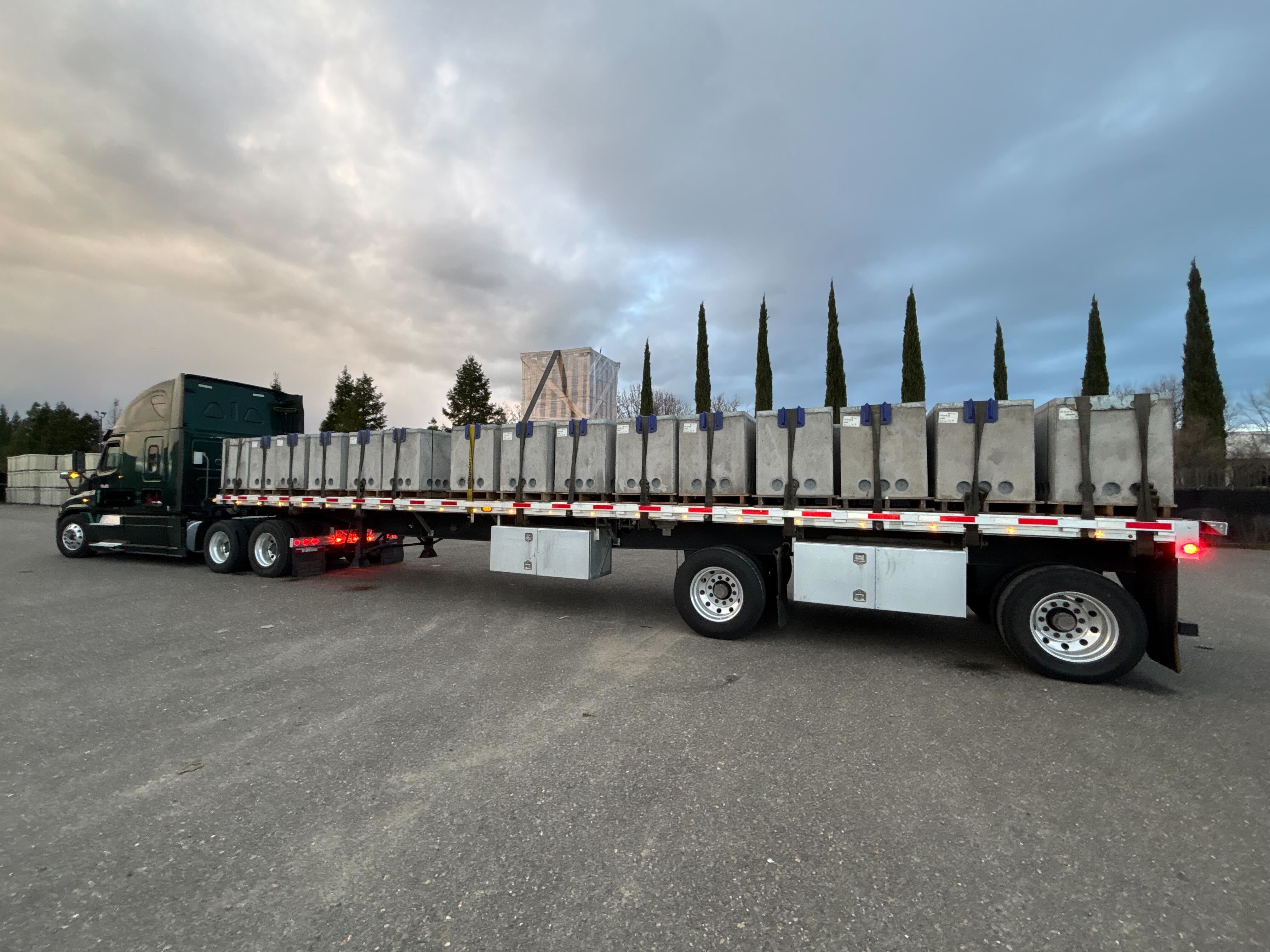
Core Powertrain and Structural Design
Engine and Transmission
Semi trailer length has no direct relationship to the tractor’s engine or transmission. However, length affects the aerodynamic profile of the combination and the gross weight that the powertrain must move. A longer trailer increases frontal area and skin friction, raising fuel consumption at highway speed. A longer trailer also increases potential payload, which may require a higher-horsepower tractor to maintain grade performance. These interactions are second-order compared to the regulatory and dimensional constraints that govern length selection.
Hydraulic System
Hydraulic systems are not a primary consideration for standard length selection. For specialized trailers—lowbed configurations with hydraulic gooseneck detachment, or extendable flatbeds with hydraulic telescoping sections—length is a function of the hydraulic system’s stroke and structural design. These configurations operate under different regulatory frameworks than standard fixed-length trailers and should be specified with the manufacturer’s engineering data rather than generalized rules.
Chassis and Structural Durability
The chassis structure must be designed for the bending moments imposed by the trailer’s length and payload distribution. A longer trailer with the same main beam cross-section will experience higher bending stress at the fifth-wheel and suspension hanger zones. Manufacturers compensate with variable web depths, thicker flanges, or additional cross-members, but these are configuration-specific engineering decisions. A trailer stretched beyond its designed length without structural reinforcement will develop fatigue cracks at predictable locations—typically the suspension hanger welds and cross-member intersections.
Maneuverability is the other structural constraint. Longer trailers have larger swept paths and require more clearance in turns. The turning geometry is determined by the wheelbase from kingpin to rear axle group, not the overall length alone, but the two are correlated. A 53-foot trailer with a 40-foot kingpin-to-rear-axle distance maneuvers differently from a 53-foot trailer with a 38-foot setting, and the difference matters in terminal design and route planning.
Technical Specifications
The table below presents representative semi trailer length limits and common configurations across major markets. Values are regulatory or typical industry references; actual requirements vary by jurisdiction and specific route designation.
Comparative Advantages TCO and ROI
The length decision is fundamentally a payload density versus flexibility trade-off. A 53-foot trailer carries approximately 10 percent more deck area than a 48-foot trailer. For lightweight, high-volume cargo—packaged goods, insulation, empty containers—that additional area translates directly into revenue per trip. For dense cargo—steel coils, machinery, bagged materials—the trailer reaches legal weight limits before it fills the deck, and the additional length provides no payload benefit.
The cost side of the comparison is less obvious. Longer trailers cost more to acquire, but the premium is modest relative to total cost of ownership. The larger cost driver is regulatory compatibility. A fleet that operates 53-foot trailers in states where they are legal without permits captures the payload advantage. A fleet that must route around restrictive states or obtain permits for every trip through those states incurs administrative cost and operational constraint that can exceed the acquisition premium.
A defensible comparison requires stated assumptions. Consider a fleet evaluating 48-foot versus 53-foot dry vans for a route network that operates primarily in states that permit 53-foot trailers. Assume the 53-foot trailer carries 10 percent more cargo per trip on average, and the fleet operates 100,000 km annually per trailer at a revenue rate of 2.50 CNY per ton-kilometer, with an average payload of 20 tonnes on the 48-foot unit. The 53-foot unit carries 22 tonnes. The additional 2 tonnes per trip, at the same rate and distance, generates approximately 50,000 CNY additional revenue per trailer per year. Against an acquisition premium of perhaps 15,000–25,000 CNY, the payback is well under one year—if the route network permits 53-foot operation without restriction.
If the route network crosses states that cap semi trailers at 48 feet, the 53-foot trailer’s advantage disappears on those segments. The fleet may need to maintain a mixed fleet, route 53-foot units only on permissive lanes, or accept permit costs. The correct specification depends on the actual route map, not on a national average.
Resale value favors standard lengths for the operating region. In the US, 53-foot dry vans and flatbeds have broad buyer pools in permissive states; 48-foot units have nationwide appeal but lower revenue potential. Specialized or extended lengths have narrower buyer pools and lower liquidity.
Heavy Duty Application Scenarios
-
Long-haul dry van and flatbed freight (US): 53-foot trailers are the standard where state law permits, maximizing deck area for general freight. Fleets operating national networks often maintain 48-foot units for unrestricted interstate operation or use 53-foot units with route planning that respects state limits .
-
Container drayage: The trailer length is often dictated by container size rather than by fleet preference. A 40-foot container chassis is typically sized for the container, with the chassis length matched to the kingpin-to-rear-axle requirement for the container’s weight distribution. Extending chassis length beyond the container provides no payload benefit and reduces maneuverability in terminals.
-
European general freight: The 12-meter standard limits deck area compared to US 53-foot trailers, but EU combinations are designed around overall length limits that include the tractor. Fleets operating in Europe specify trailers to the national or modular combination framework applicable to their routes .
-
Chinese logistics and port operations: GB1589 limits most semi trailers to 13.75 meters, with a 13.95-meter allowance for 45-foot container transport . These limits are enforced at inspection, and non-compliant trailers face fines and operational restrictions. The Chinese market’s flatbed lengths cluster around 12.4 to 13.95 meters to comply .
Selection and Maintenance Considerations
Selecting semi trailer length begins with the route map, not the cargo profile. The first question is: what jurisdictions will this trailer operate in, and what are their semi trailer length limits? The second question is: does the cargo density justify the maximum legal length, or is a shorter trailer sufficient?
Key considerations include:
-
Verify state and national limits against the specific routes served. US federal law sets a 48-foot floor on designated highways, but many states permit longer trailers on their networks . A trailer that is legal in Texas at 59 feet may be non-compliant in California at 48 feet . The operating authority’s route plan determines the practical maximum.
-
Understand that overall length is not the only constraint. Kingpin-to-rear-axle distance, bridge formula compliance, and overall combination length limits may restrict a trailer’s operation even where the semi trailer itself is within the nominal length limit. California, for example, permits 53-foot trailers only if the kingpin-to-rear-axle distance is 38 feet or less .
-
Consider terminal and dock compatibility. A 53-foot trailer requires longer loading docks, wider turning radii in yard areas, and more parking space than a 48-foot unit. Existing facilities designed around 48-foot trailers may not accommodate 53-foot units efficiently.
-
Match tractor and trailer for combination length limits. Some jurisdictions limit the overall combination length, not just the trailer. A 53-foot trailer coupled to a long-wheelbase tractor may exceed an overall length cap even if the trailer itself is legal.
Conclusion
Semi trailer length is a regulatory variable before it is an engineering variable. The engineering—main beam design, suspension placement, maneuverability—must be executed within the dimensional envelope that the operating jurisdiction permits. A 53-foot trailer that maximizes deck area in Texas is a compliance liability in California. A 12-meter trailer that meets EU standards is undersized for US interstate freight. The correct specification is the one that matches the route network, not the one that maximizes a single dimension.
Commercially, the length decision should be modeled against actual route and cargo data. Longer trailers increase revenue potential per trip but may reduce route flexibility or require permit administration. Shorter trailers sacrifice deck area for nationwide compatibility and easier maneuverability. Fleets that verify regulatory limits for every jurisdiction on their route map, confirm bridge formula and kingpin-distance compliance, and model the revenue impact against actual cargo density make length decisions that hold up in operation. The trailer that is legal everywhere it needs to go, and full enough to pay for itself on the lanes it serves, is the right length.