

Overview
Semi trailer door replacement is a maintenance decision that sits at the intersection of cost, cargo protection, and safety. The rear door is the most-worked part of a trailer body—cycled at every stop, exposed to weather, and relied upon to keep freight dry and secure . When a door fails to close square, a hinge seizes, or a seal hardens and separates, the trailer begins admitting water and road dust that damage cargo and accelerate corrosion.
This FAQ addresses the cost ranges, door types, measurement procedures, and inspection priorities that matter most when replacing a semi trailer door. Costs vary by door type, size, brand, and region; the trailer manufacturer’s door specification and the replacement supplier’s measurement requirements control the specific purchase.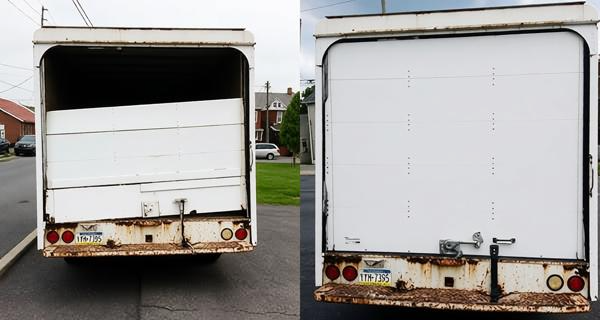
Frequently Asked Questions
How much does a semi trailer door replacement cost?
A replacement semi trailer door typically costs several hundred to over a thousand dollars for the door assembly alone, with labor and hardware adding to the total. A new Schmitz Cargobull service door for a box or refrigerated semi trailer was listed at approximately €950 gross (around $1,107) per door, with the manufacturer’s list price at €4,108 per door before discount .
The cost range widens with door type and complexity. A basic steel swing door for a standard dry van may start around $2,000 to $3,000 including materials and labor, while an aluminum door with complex design and installation in a high-cost area can exceed $10,000 . Roll-up door repairs—such as replacing a broken torsion spring or cable—are typically less expensive than a full door replacement, but the decision depends on whether the door curtain, tracks, and hardware are serviceable . Fleets should obtain quotes for both the door assembly and the installation labor before committing.
What is the difference between swing doors and roll-up doors on a semi trailer?
Swing doors open outward on hinges and are the standard configuration on most dry van and refrigerated trailers, while roll-up doors retract upward into a coil above the door opening. Swing doors are simpler mechanically and easier to repair, but they require clearance behind the trailer for opening. Roll-up doors save that clearance and allow docking in tighter spaces, but they rely on a torsion spring counterbalance system that can fail and turn the door into dead weight of 200 to 400+ lbs .
The replacement decision differs by type. A swing door replacement involves the door panel, hinges, latches, and seals. A roll-up door replacement or repair involves the door curtain, tracks, rollers, cables, and the torsion spring assembly. Spring replacement is not a DIY repair and requires commercial-grade tools and proper handling—a failed spring can cause sudden door drops and serious injury . Fleets should match the replacement door type to the trailer’s original specification rather than converting between types, because the door frame and track system are designed for one configuration.
How do I measure a semi trailer door for replacement?
Measure the opening width and height first, then measure the existing door’s overedging dimensions to confirm the replacement will cover the opening correctly. Measure the opening in two areas and take the average on both width and height, and confirm that the trailer frame is square before ordering .
The measurement sequence should include:
-
Opening width: Distance between the roadside post and curbside post.
-
Opening height: Distance between the header and the sill.
-
Overedging width: The distance across the existing door panel, measured over the edge folds.
-
Overedging height: The vertical distance across the existing door panel .
For roll-up doors, the manufacturer’s sticker or plate on the lower corner of the bottom section may provide the model number and door type, which simplifies ordering . If the trailer has no door or track, the opening dimensions must be measured and the track and door will typically need two inches of room on each side of the trailer opening . A door ordered from approximate measurements rather than verified dimensions is a door that may not fit.
What should I inspect before deciding to replace rather than repair a trailer door?
Inspect the door alignment, hinge condition, latch function, and perimeter seal before deciding whether the door needs replacement or can be repaired. A door that closes square and locks securely may only need a new seal or hinge, while a door that is structurally deformed or has failed hinges and a rotted frame is a replacement candidate .
The inspection should cover:
-
Alignment: Does the door close square, or does it hang crooked? A misaligned door often indicates worn hinges rather than a damaged panel .
-
Hinges: Check for rust, looseness that requires frequent tightening, noise during operation, and visible gaping when the door is closed .
-
Latches and cables: Confirm that latches lock and release properly and that cables are not frayed or seized .
-
Seals: A seal that has hardened, cracked, or separated is the number-one way water and road dust enter a dry van. If daylight is visible around a closed door, the seal has failed .
-
Door panel: Check for punctures, delamination, and corrosion that compromise the panel’s structural integrity.
What causes semi trailer door seals to fail?
Semi trailer door seals fail from age, UV exposure, and repeated compression, which harden the rubber and cause it to crack and separate from the door frame. A failed seal admits water and road dust into the cargo area, leading to cargo damage, corrosion of the trailer interior, and floor deterioration .
Seal replacement is a lower-cost maintenance item than door replacement and should be performed whenever the seal is no longer soft and continuous. The perimeter gasket should be inspected at every preventive maintenance interval, and any gap or hardening should be addressed before it becomes a cargo claim. For fleets operating in winter-salt or coastal environments, seal inspection should be more frequent because the rubber degrades faster under chemical exposure.
What hardware should be replaced along with a semi trailer door?
Replace the hinges, latches, and seals along with the door panel when the existing hardware shows wear, because reusing worn hardware on a new door transfers the old problems to the new assembly. A door that is replaced but fitted with a seized hinge or a worn latch will not close square or seal properly, defeating the purpose of the replacement.
The hardware checklist includes hinges (piano or strap type, matching the door’s bolt pattern), cam latches or slam latches appropriate to the door type, and the perimeter seal . For roll-up doors, the cables, rollers, and torsion spring should be inspected and replaced if worn. The replacement door should be installed with the sealant and weatherproofing specified by the door or trailer manufacturer—gunnable sealant around the frame edges and sealant tape behind the screw track frame are common requirements .
When should a fleet replace a semi trailer door rather than repair it?
Replace rather than repair when the door panel is structurally compromised, the frame is bent or rotted, or the cost of repeated repairs exceeds the cost of a replacement. A door that has been patched multiple times, that no longer closes square despite hinge adjustment, or that has a failed seal channel is a replacement candidate.
The economic calculation should include the cargo damage risk, not just the repair cost. A door that admits water during rain can damage an entire load, and a single cargo claim can exceed the cost of a new door. For fleets with high-value or moisture-sensitive freight, a door that has failed once should be treated as a replacement candidate rather than a repair candidate. For older trailers approaching the end of their service life, a replacement door should be evaluated against the trailer’s residual value.
Conclusion
Semi trailer door replacement comes down to three decisions: confirming the door type and dimensions before ordering, inspecting the hinges, latches, and seals to determine whether the problem is the panel or the hardware, and weighing the repair cost against the cargo damage risk of a compromised door. Swing door assemblies can cost from several hundred dollars for the door alone to over $2,000 installed, while roll-up door repairs may be less expensive if the curtain and tracks are serviceable . The measurement should be taken from the opening and the existing door’s overedging, not estimated, and the replacement should include new seals and worn hardware. The door manufacturer’s installation instructions and the trailer’s frame dimensions remain the controlling references for every replacement.