

Overview
A BBQ semi trailer is a large mobile food-service unit built on a semi-trailer chassis and configured for barbecue preparation, cooking, storage, and customer service. It is used by catering companies, event operators, food-service businesses, and mobile restaurant operators that need more workspace and equipment capacity than a conventional food truck or small concession trailer can provide.
Unlike a standard cargo semi trailer, a BBQ semi trailer requires a purpose-designed kitchen layout, commercial cooking appliances, ventilation, food-grade work surfaces, utility connections, and appropriate fire and food-safety provisions. Buyers should evaluate its road configuration and commercial kitchen systems together to ensure that the finished unit suits the intended menu, operating environment, and local requirements.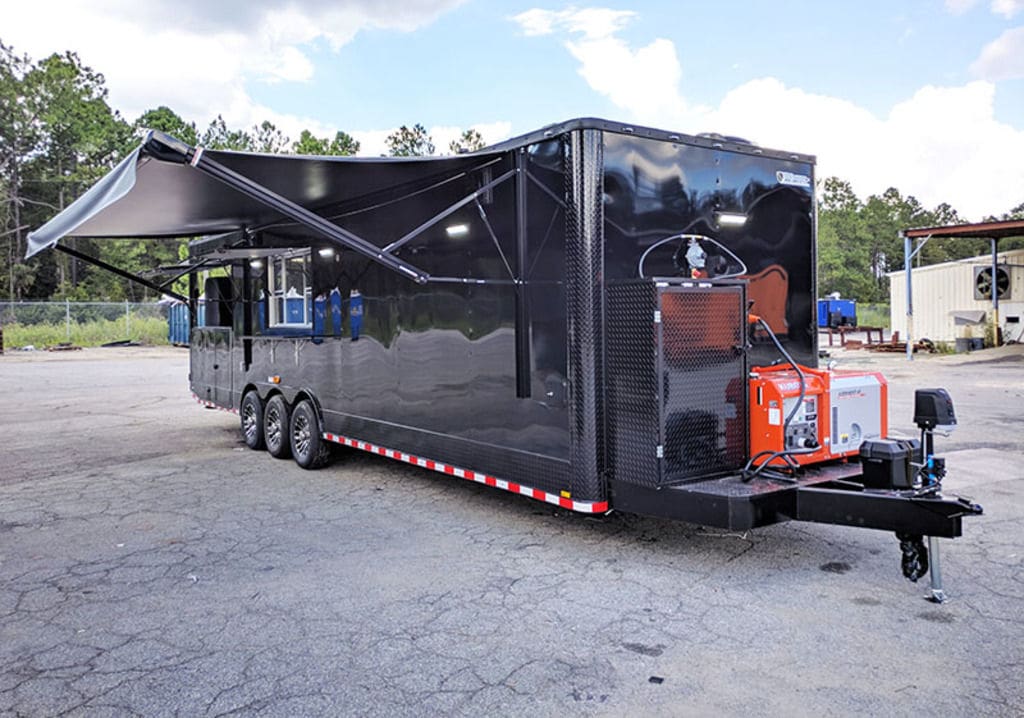
Frequently Asked Questions
Q1: What is a BBQ semi trailer used for?
A BBQ semi trailer is used as a mobile commercial kitchen for preparing and selling barbecue food at events, festivals, markets, and other locations. It can accommodate cooking equipment such as grills, smokers, ovens, refrigerators, preparation counters, and serving stations.
Its larger working area can support multiple food-preparation tasks and a broader menu than many smaller mobile catering units. The actual layout depends on the trailer dimensions, equipment selection, staffing requirements, and service volume.
Q2: What cooking equipment can be installed in a BBQ semi trailer?
A BBQ semi trailer can be equipped with commercial grills, smokers, ovens, fryers, refrigeration units, and food-preparation stations, subject to its design and utility capacity. Common equipment options include:
-
BBQ grills: Gas-fired or charcoal-fired units for grilling meat and vegetables.
-
Smokers: Commercial smoking equipment for slow-cooked barbecue products.
-
Refrigeration: Commercial refrigerators and freezers for temperature-controlled storage.
-
Preparation equipment: Stainless-steel counters, sinks, cutting surfaces, and storage cabinets.
-
Serving equipment: Heated display units, service windows, and order counters.
Before installation, confirm equipment dimensions, weight, ventilation needs, fuel requirements, electrical loads, and access for cleaning and maintenance.
Q3: What size and capacity should a BBQ semi trailer have?
The required size and capacity depend on the menu, number of cooking stations, expected customer volume, and available operating space. A larger trailer can provide more room for cooking, refrigeration, food preparation, storage, and customer service, but it also increases transport and site-planning requirements.
There is no universal payload or kitchen capacity for all BBQ semi trailers. Buyers should check the manufacturer's drawings and weight documentation, including chassis rating, axle ratings, gross vehicle weight rating (GVWR), and the weight of all installed appliances, supplies, and equipment. The finished trailer must remain within applicable road weight and dimension limits.
Q4: What power, fuel, and utility systems does a BBQ semi trailer need?
A BBQ semi trailer needs utility systems matched to its cooking appliances, refrigeration, ventilation, and cleaning equipment. Depending on the configuration, these may include:
-
Electrical power: Shore-power connections or a suitably sized generator for appliances, lighting, refrigeration, and ventilation.
-
Cooking fuel: LPG, natural gas, charcoal, wood, or electricity, depending on the approved appliance design and local rules.
-
Water supply: Freshwater storage or an approved external connection.
-
Wastewater: Properly sized greywater storage and drainage arrangements.
-
Ventilation: A commercial extraction hood and exhaust system where required by the cooking equipment and applicable regulations.
The electrical load, generator capacity, fuel storage, water capacity, and ventilation design should be calculated from the actual equipment schedule. Do not assume that a standard generator or utility connection will support every kitchen configuration.
Q5: What ventilation and fire-safety systems are required in a BBQ semi trailer?
A BBQ semi trailer must have ventilation and fire-protection systems appropriate for its cooking appliances, fuel sources, and operating environment. Commercial cooking equipment that produces grease-laden vapors may require an approved exhaust hood, grease filters, and a compatible fire-suppression system.
Important purchasing checks include:
-
Confirming whether the hood and exhaust system are suitable for the installed appliances.
-
Checking fire-extinguisher type, placement, inspection status, and local requirements.
-
Reviewing LPG cylinder storage, pipework, shutoff valves, and leak-testing provisions where LPG is used.
-
Providing safe separation between hot equipment, combustible materials, and customer areas.
-
Ensuring emergency exits and access routes are not obstructed.
Applicable fire, gas, electrical, and food-service requirements vary by jurisdiction. Have the completed installation reviewed by qualified professionals and the relevant local authorities before operation.
Q6: How should a BBQ semi trailer be maintained?
A BBQ semi trailer requires regular inspection of both its road-going components and commercial kitchen equipment. A preventive maintenance program should cover the chassis, axles, tires, brakes, electrical system, cooking appliances, ventilation, plumbing, and safety equipment.
Recommended inspection tasks include:
-
Before travel: Check tires, wheel fasteners, lights, brakes, coupling components, and visible chassis damage.
-
Before service: Inspect cooking appliances, fuel connections, electrical cables, ventilation, sinks, and refrigeration.
-
After operation: Clean grills, grease-contact surfaces, filters, worktops, and food-contact equipment according to approved procedures.
-
Periodically: Arrange qualified inspections of the braking system, running gear, gas installation, electrical protection, and fire-suppression equipment.
Maintenance intervals should follow the trailer, appliance, and component manufacturers' instructions. Keep service records and address leaks, damaged wiring, abnormal tire wear, or malfunctioning safety devices promptly.
Q7: What factors affect the operating cost of a BBQ semi trailer?
The operating cost of a BBQ semi trailer is mainly affected by fuel or electricity consumption, food ingredients, labor, cleaning, maintenance, transportation, and site fees. Cooking method and operating hours can significantly influence energy costs, while refrigeration and ventilation add ongoing electrical demand.
For a realistic cost estimate, buyers should consider:
-
Energy use: Estimate fuel and electricity consumption from the selected appliances and expected operating hours.
-
Labor: Account for the number of kitchen and serving staff required.
-
Maintenance: Include appliance servicing, trailer inspections, cleaning supplies, and replacement parts.
-
Transportation: Consider towing vehicle requirements, fuel, parking, and event access.
-
Compliance: Budget for applicable inspections, permits, insurance, and food-service requirements.
Compare operating costs against expected sales volume and menu pricing rather than evaluating the purchase price alone.
Q8: What should buyers check before purchasing a BBQ semi trailer?
Buyers should verify the trailer's road specifications, kitchen layout, installed equipment, utility systems, safety provisions, and compliance documentation before placing an order. A detailed equipment list and technical drawing help prevent costly changes after manufacturing.
Use this checklist during supplier evaluation:
-
Chassis and dimensions: Confirm overall length, width, height, axle configuration, GVWR, payload rating, and towing compatibility.
-
Kitchen layout: Check cooking areas, preparation counters, storage, serving windows, staff movement, and cleaning access.
-
Appliance specifications: Verify appliance models, cooking capacity, fuel type, electrical requirements, and installation arrangements.
-
Utility systems: Review generator capacity, wiring, water tanks, wastewater storage, plumbing, and ventilation.
-
Safety and compliance: Request relevant electrical, gas, fire-safety, and food-service documentation for the intended market.
-
After-sales support: Confirm spare-parts arrangements, technical documentation, warranty terms, and service responsibilities in writing.
Ask the manufacturer for photographs, equipment schedules, layout drawings, and a complete quotation that clearly separates standard features from optional equipment.
Conclusion
A suitable BBQ semi trailer must combine a roadworthy trailer structure with a practical, safe, and properly equipped commercial kitchen. Before purchasing, confirm the intended menu, cooking equipment, utility capacity, operating location, and local compliance requirements. A complete technical specification and equipment layout are essential for comparing suppliers and controlling the total investment.