

Introduction
Transport operators and fleet managers face increasing pressure to control fuel consumption, improve delivery efficiency, reduce equipment downtime, and meet changing road-safety requirements. Selecting the right semi trailer is an important part of this process because trailer design directly affects payload capacity, tractor compatibility, operating stability, and long-term maintenance costs.
The term ATRO semi trailer identifies a search for a semi-trailer associated with the ATRO name. However, the exact manufacturer, product range, and model configuration should be confirmed before treating any particular technical specification as an official ATRO product feature. Buyers should verify the manufacturer's identity, product documentation, and model-specific information rather than relying on the keyword alone.
A semi trailer is a road transport vehicle designed to connect to a truck tractor through a fifth-wheel coupling. Unlike a full trailer, a semi trailer transfers part of its loaded weight to the tractor while supporting the remaining load through its own axle group. This configuration is widely used for transporting general cargo, containers, construction materials, machinery, agricultural products, and industrial goods.
For buyers evaluating an ATRO semi trailer, the most important considerations include:
-
Rated gross vehicle weight and permissible payload.
-
Axle number, axle spacing, and suspension configuration.
-
Main beam design, deck construction, and structural strength.
-
Braking system and compatibility with the towing tractor.
-
Cargo dimensions, loading method, and securing provisions.
-
Local road regulations, inspection requirements, and parts availability.
A reliable purchasing decision requires more than comparing the initial purchase price. The trailer must match the cargo, route conditions, tractor specifications, and expected annual operating hours.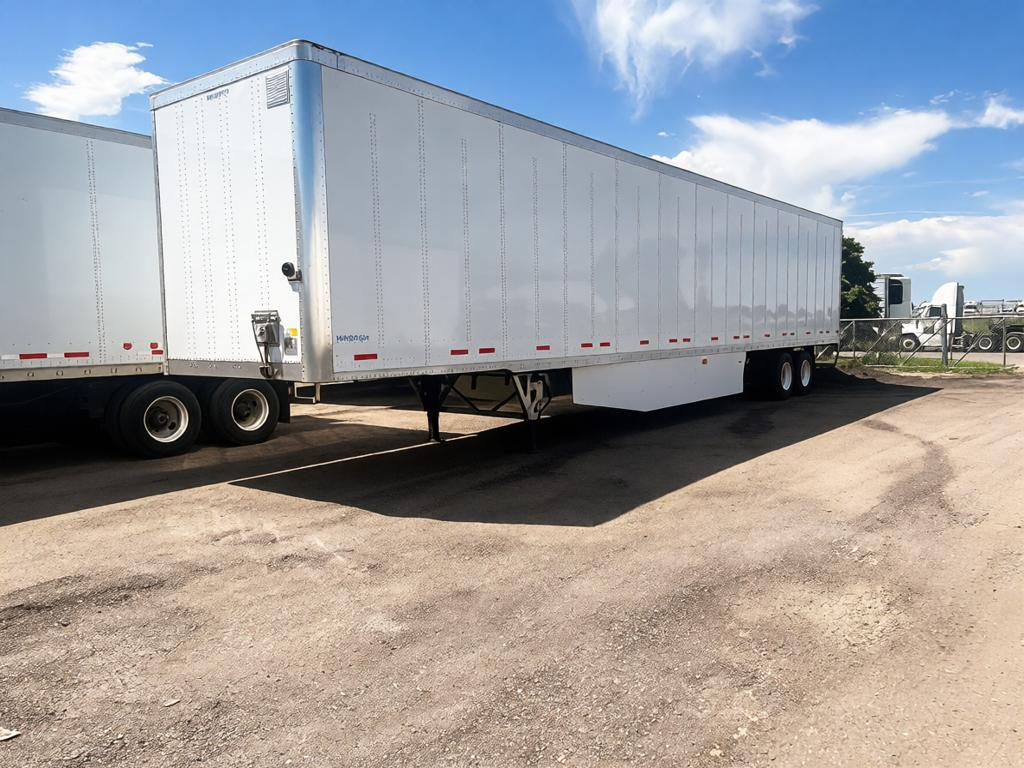
Core Powertrain and Structural Design
A conventional semi trailer does not normally have its own primary engine or transmission. Propulsion comes from the towing tractor, while the trailer provides the load-bearing structure, running gear, braking equipment, and cargo-supporting platform. Consequently, evaluating an ATRO semi trailer requires particular attention to chassis engineering, axle systems, braking performance, and tractor-trailer integration.
Engine and Transmission Compatibility
Although the semi trailer itself is generally unpowered, the towing tractor's engine and transmission determine the available pulling force, acceleration, and ability to operate under different load and terrain conditions.
A suitable tractor should be selected according to the combined gross vehicle weight, road gradient, operating speed, cargo type, and expected route. Engine power alone is not enough to determine compatibility. Maximum torque, transmission ratios, axle ratio, cooling capacity, and braking capability also influence overall performance.
Important compatibility checks include:
-
Fifth-wheel height: The tractor and trailer coupling heights must be compatible to maintain correct loading geometry.
-
Kingpin position: The kingpin location affects load distribution between the tractor axles and trailer axles.
-
Gross combination weight: The tractor must be approved for the intended combined operating weight.
-
Electrical connections: Lighting, ABS, and other electronic systems must use compatible connectors and wiring standards.
-
Air connections: The tractor's pneumatic supply and control lines must match the trailer braking system.
A mismatch can create excessive axle loading, poor handling, uneven tire wear, or braking problems.
Axles, Suspension, and Braking System
The axle and suspension configuration determines how the trailer carries its load and responds to uneven road surfaces. Common commercial semi-trailer configurations include tandem and tridem axle groups, with the appropriate arrangement depending on payload, legal axle-load limits, and intended operating conditions.
Suspension systems may include mechanical leaf-spring suspension or air suspension. Mechanical systems are widely used for heavy-duty applications because of their relatively straightforward construction. Air suspension can provide improved ride characteristics and adjustable ride height on compatible designs, making it useful for certain cargo and loading operations.
The braking system is another essential component. Commercial semi trailers commonly use pneumatic service brakes, with anti-lock braking systems (ABS) and electronic braking systems (EBS) available or required depending on vehicle category and market regulations.
Key components include:
-
Brake chambers and foundation brakes.
-
Air reservoirs and pneumatic control lines.
-
ABS wheel-speed sensors and electronic control equipment.
-
Brake valves and, where applicable, electronic braking modulators.
-
Parking and emergency braking components.
The braking configuration must be compatible with the tractor and comply with applicable vehicle regulations. Buyers should confirm the system type, certification documentation, and availability of replacement components before ordering.
Chassis and Structural Durability
The chassis is the primary load-bearing structure of a semi trailer. It transfers cargo forces through the main beams, crossmembers, suspension mounting points, axle group, kingpin, and fifth-wheel connection.
A typical heavy-duty trailer frame uses structural steel, although aluminum structures and mixed-material designs are also used where weight reduction is a priority. The correct material depends on payload requirements, fatigue resistance, manufacturing quality, operating environment, and repair considerations.
Important structural features include:
-
Main longitudinal beams: Support the majority of the trailer's bending loads.
-
Crossmembers: Distribute loads across the frame and support the deck or cargo platform.
-
Kingpin assembly: Transfers a portion of the trailer's vertical and longitudinal forces to the tractor.
-
Suspension mounting brackets: Carry repeated dynamic loads from the axle group.
-
Rear frame and bumper: Provide structural support and may incorporate underrun protection where required.
-
Corrosion protection: Coatings and appropriate surface preparation help protect exposed steel components.
Structural durability depends not only on steel grade or beam dimensions but also on weld quality, joint design, manufacturing tolerances, fatigue resistance, and maintenance history.
Operator Safety and Serviceability
A semi trailer must be designed and maintained to support safe coupling, loading, unloading, and road operation. Relevant safety provisions may include reflective markings, side guards, rear underrun protection, suitable lighting, secure cargo anchor points, and appropriate access arrangements.
Serviceability also affects fleet availability. Accessible brake components, replaceable suspension parts, standardized lighting connections, and readily available wheel-end components can reduce repair time.
For a prospective ATRO semi trailer purchase, request detailed photographs of the underside, suspension mounting points, kingpin area, brake components, and main frame welds. These areas provide useful evidence of construction quality and maintenance accessibility.
Technical Specifications
The technical specifications of an ATRO semi trailer should be confirmed from the exact model's technical data sheet and manufacturer's documentation. A search keyword alone does not establish a particular payload, axle rating, material specification, or braking configuration.
The following parameters form a practical evaluation framework for a conventional heavy-duty semi trailer. They are selection criteria rather than verified specifications for a named ATRO model.
|
Key Parameter |
Typical Technical Specification |
Operational Significance |
|---|---|---|
|
Trailer configuration |
Flatbed, lowbed, box, tipper, or other specialized design |
Determines suitable cargo and loading method |
|
Axle configuration |
Commonly 2, 3, or more axles depending on design |
Influences load distribution and legal capacity |
|
Payload capacity |
Model-specific; subject to structural and legal limits |
Determines usable cargo weight |
|
Main frame material |
Commonly structural steel or aluminum |
Affects strength, tare weight, and corrosion management |
|
Suspension |
Mechanical leaf spring or air suspension |
Influences ride characteristics and maintenance |
|
Braking system |
Pneumatic brakes with ABS or EBS where equipped |
Supports controlled braking and regulatory compliance |
|
Coupling system |
Kingpin and fifth-wheel connection |
Determines tractor compatibility and load transfer |
|
Electrical system |
Market-specific lighting and electronic connectors |
Ensures correct connection to the towing vehicle |
Several specifications require particular attention during procurement.
Payload capacity is the amount of cargo a trailer can legally and structurally carry. It must be calculated using the trailer's permitted gross weight, tare weight, axle limits, and applicable road regulations. A high theoretical payload is not useful if the intended route imposes lower axle-load limits.
Deck dimensions and height determine whether the trailer can accommodate the cargo without exceeding permitted vehicle width, height, or length. This is particularly important for machinery, steel products, and oversized industrial equipment.
Axle configuration and suspension affect load distribution, tire wear, ride quality, and maneuverability. The best configuration depends on cargo weight, road conditions, and regional transport rules.
Kingpin and fifth-wheel compatibility should be checked before delivery. Incorrect coupling dimensions can affect stability, axle loading, and safe tractor-trailer operation.
Comparative Advantages TCO and ROI
When evaluating an ATRO semi trailer, buyers should compare the proposed configuration with other trailers designed for the same transportation task. A flatbed, for example, should be compared with other flatbeds rather than with a specialized lowbed or refrigerated trailer that serves a different cargo requirement.
The main commercial considerations include acquisition cost, payload efficiency, maintenance requirements, downtime, fuel consumption, and expected service life.
Purchase Price and Payload Efficiency
The initial purchase price is only one part of the investment. A trailer with a lower purchase price may require more frequent repairs or offer less useful payload capacity. Conversely, a more expensive configuration may provide better suitability for a specific duty cycle.
Payload efficiency can be evaluated by comparing usable cargo weight with the trailer's tare weight. A lower tare weight may allow more cargo within the same permitted gross vehicle weight, provided structural strength and durability remain adequate.
For fleets transporting heavy materials, structural capacity and axle ratings may be more important than minimizing trailer weight. For lighter but high-volume cargo, deck dimensions and tare weight may have greater commercial value.
Total Cost of Ownership
Total cost of ownership (TCO) includes the expenses incurred throughout the trailer's operating life rather than only the purchase price.
A practical TCO calculation should include:
-
Initial purchase price and financing costs.
-
Registration, inspection, and insurance.
-
Tire replacement and wheel-end maintenance.
-
Brake and suspension servicing.
-
Structural inspections and corrosion protection.
-
Unplanned repair costs and downtime.
-
Resale value at the end of the ownership period.
For example, assume a fleet compares two trailers over five years, with identical annual mileage, cargo volume, and operating conditions. The fleet can estimate the total cost of each option by adding purchase, maintenance, tire, insurance, and downtime expenses, then subtracting the expected resale value.
The comparison should use actual supplier quotations and the fleet's historical maintenance records. Without those inputs, an exact savings percentage or return on investment cannot be established.
Fuel Consumption and Operating Efficiency
A semi trailer affects the towing tractor's fuel consumption through its weight, aerodynamic profile, tire rolling resistance, axle alignment, and operating condition.
An aerodynamic trailer design may reduce air resistance at highway speeds, while appropriate tire selection and maintenance can help control rolling resistance. However, actual fuel savings depend on vehicle speed, cargo weight, road conditions, weather, tractor configuration, and driving behavior.
Fleet operators should evaluate fuel efficiency using comparable routes and loads rather than relying exclusively on manufacturer estimates.
Service Life and Resale Value
A trailer's service life depends on its structural design, material quality, operating environment, loading practices, maintenance history, and exposure to corrosion.
Resale value is generally influenced by:
-
Manufacturer and model recognition.
-
Structural condition and repair history.
-
Axle, suspension, and brake condition.
-
Availability of replacement parts.
-
Compliance with current transport regulations.
-
Remaining useful service life.
A well-maintained trailer with complete inspection and service records is generally easier for a prospective buyer to evaluate.
Heavy Duty Application Scenarios
The appropriate semi-trailer configuration depends on the cargo dimensions, loading equipment, route conditions, and frequency of use. An ATRO semi trailer should be assessed against the actual transportation task rather than selected solely by its advertised category.
General Freight and Industrial Cargo
Flatbed and platform semi trailers are commonly used for steel products, timber, construction materials, packaged industrial goods, and other cargo that can be secured externally.
Important requirements include adequate deck strength, suitable tie-down points, appropriate side protection where needed, and correct load distribution.
Construction and Machinery Transportation
Construction equipment may require a lowbed or specialized equipment trailer because of its weight, height, and concentrated loading points.
Buyers should verify:
-
Equipment operating weight and transport dimensions.
-
Deck height and loading angle.
-
Ramp capacity and configuration.
-
Axle-group capacity and load distribution.
-
Ground clearance and route restrictions.
-
Securement points and cargo-restraint requirements.
A conventional flatbed may be suitable for some compact equipment, but larger or taller machines may require a dedicated lowbed configuration.
Container and Intermodal Transportation
Container chassis semi trailers are designed to transport standardized shipping containers. Their frames generally incorporate twist locks that secure the container at designated corner fittings.
The chassis must match the container size and permitted load. Buyers should confirm twist-lock arrangement, axle configuration, frame condition, and compatibility with the intended container-handling system.
Agricultural and Bulk Material Transportation
Agricultural and bulk-material fleets may use specialized tipper, grain, or other bulk semi trailers. The selected body should match the material's density, flow characteristics, loading method, and unloading requirements.
For these applications, operators should pay particular attention to body structure, hydraulic equipment where fitted, load stability, cleaning access, and corrosion resistance.
Selection and Maintenance Considerations
Selecting an ATRO semi trailer requires a systematic review of the product documentation, intended application, tractor compatibility, and local transport requirements.
Key Purchasing Checks
Before confirming an order, buyers should request:
-
Manufacturer information: Confirm the legal manufacturer name, factory details, product range, and model designation.
-
Technical data sheet: Obtain trailer dimensions, tare weight, gross vehicle weight rating, payload information, axle specifications, and suspension details.
-
Structural documentation: Review frame materials, main beam design, deck construction, and available manufacturing or inspection records.
-
Braking information: Confirm pneumatic brake specifications, ABS or EBS equipment, and compatibility with the intended tractor.
-
Coupling dimensions: Check kingpin specifications, fifth-wheel height, and load distribution.
-
Regulatory documentation: Verify applicable conformity, roadworthiness, lighting, braking, and registration requirements in the destination market.
-
Warranty and spare parts: Clarify warranty coverage, exclusions, service arrangements, and replacement-part availability.
Preventive Maintenance
Regular inspection helps identify wear and damage before they lead to unexpected breakdowns.
A practical maintenance program should cover:
-
Frame and welds: Inspect for cracks, deformation, corrosion, and damage around highly stressed joints.
-
Kingpin and coupling area: Check for wear, deformation, secure mounting, and correct lubrication according to the manufacturer's instructions.
-
Axles and suspension: Examine springs, air bags where fitted, mounting brackets, bushings, and shock absorbers.
-
Braking equipment: Inspect brake chambers, air lines, valves, friction components, and ABS or EBS warning systems.
-
Tires and wheels: Check inflation pressure, tread condition, uneven wear, wheel fasteners, and alignment.
-
Lighting and electrical connections: Test all lamps, connectors, reflectors, and electronic warning systems.
-
Corrosion protection: Repair damaged coatings and address corrosion, particularly around joints and exposed structural areas.
Maintenance intervals should follow the trailer manufacturer's recommendations, applicable inspection regulations, and the fleet's actual operating conditions.
Tractor Compatibility and Operator Training
Drivers and maintenance personnel should understand correct coupling procedures, air-line connections, electrical connections, landing gear operation, and pre-trip inspections.
Operators should also be trained to recognize abnormal brake behavior, suspension problems, tire damage, and unsafe cargo loading. Proper cargo distribution is essential because excessive or uneven loading can overload individual axles and compromise vehicle stability.
After-Sales Support and Supplier Evaluation
Supplier quality should be assessed through documentation and practical support capability. Buyers should ask whether the supplier can provide replacement brake components, suspension parts, lighting equipment, kingpins, and other service items.
For international purchases, it is also important to confirm export documentation, shipping arrangements, warranty procedures, spare-parts lead times, and technical assistance after delivery.
Conclusion
An ATRO semi trailer should be evaluated through verified manufacturer information, model-specific specifications, structural design, axle and suspension capacity, braking equipment, and compatibility with the towing tractor. The exact product identity and configuration should be confirmed before making assumptions about technical performance or commercial suitability.
For fleet operators, the best purchasing decision balances payload efficiency, structural durability, road compliance, maintenance accessibility, and total cost of ownership. A trailer that matches the cargo and operating environment can support reliable transportation and long-term fleet value, while careful inspection and preventive maintenance help protect the investment throughout its service life.