

Overview
An air valve on a semi trailer is a pneumatic control component that manages compressed air within the trailer's braking or suspension system. Depending on its design, it may control brake application, release, emergency braking functions, air supply distribution, or suspension height. Different valves perform different jobs, so identifying the correct component is essential before inspection or replacement.
For fleet managers, technicians, and trailer operators, air valve problems can cause brake response issues, air leaks, uneven suspension height, or unexpected system warnings. This FAQ explains common semi trailer air valve types, how they work, typical failure symptoms, troubleshooting, replacement compatibility, and preventive maintenance.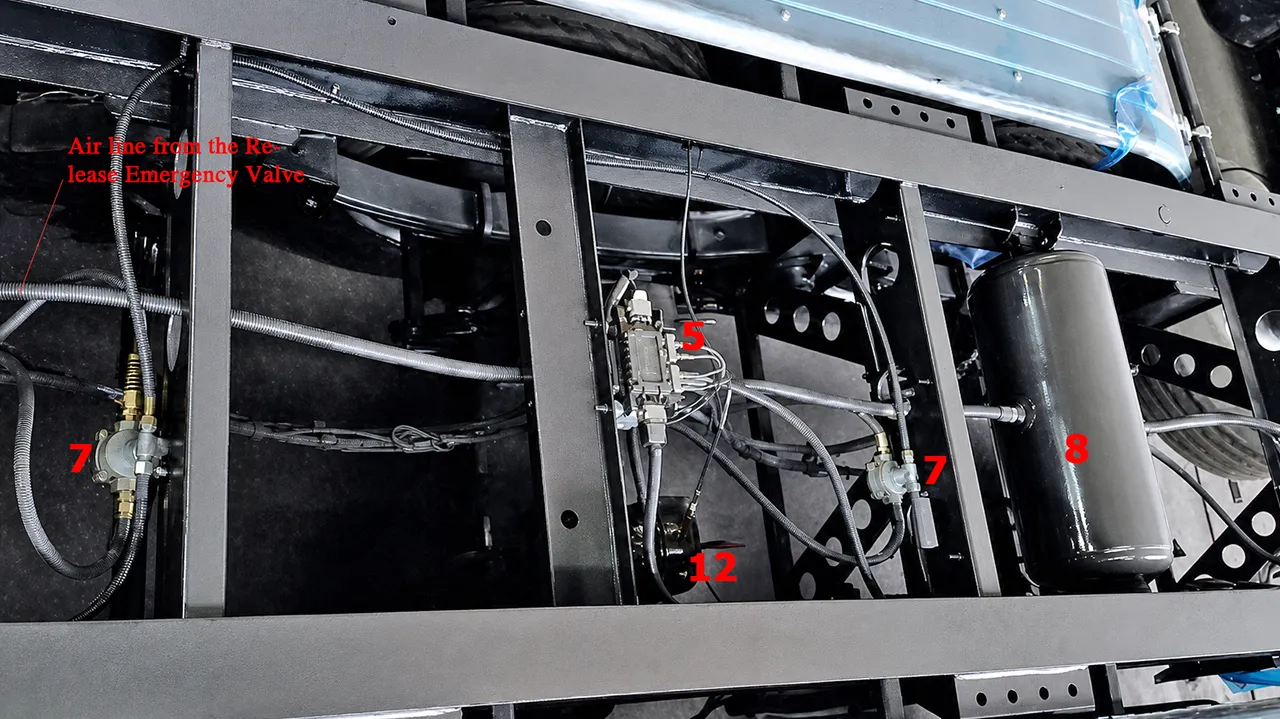
Frequently Asked Questions
Q1: What does an air valve on a semi trailer do?
An air valve on a semi trailer controls the flow, pressure, or distribution of compressed air within the trailer's pneumatic system. Its specific function depends on the valve type and installation location.
Common applications include:
-
Brake control: Directs air pressure to brake chambers during service or emergency braking.
-
Relay operation: Helps deliver air to trailer brake chambers without relying on a long control-air path from the tractor.
-
Emergency functions: Supports automatic braking when the required supply pressure is lost.
-
Suspension control: Regulates air suspension pressure and ride height.
-
Air distribution: Controls or isolates air supply to specific circuits.
A valve should always be identified by its part number, port markings, and system diagram rather than appearance alone.
Q2: What are the common types of air valves on a semi trailer?
Common semi trailer air valves include relay valves, emergency relay valves, ABS modulator valves, leveling valves, and pressure protection or control valves.
Their functions are different:
-
Relay valve: Controls the application and release of trailer service brakes using air supplied from the trailer reservoir.
-
Emergency relay valve: Combines service relay and emergency functions in applicable systems.
-
ABS modulator valve: Controls brake pressure at selected wheels or axle groups according to ABS commands.
-
Leveling valve: Maintains the specified ride height in an air suspension system.
-
Pressure protection valve: Helps preserve air pressure in designated circuits by controlling air supply.
Not every trailer uses every valve type. The correct configuration depends on the braking and suspension system installed by the trailer manufacturer.
Q3: How does a semi trailer relay valve work?
A semi trailer relay valve uses a control-air signal to regulate compressed air from the trailer reservoir to the brake chambers.
When the driver applies the brakes, the control signal reaches the relay valve, which allows reservoir air to flow toward the brake chambers. When the brakes are released, the valve exhausts the delivery air so the brake chambers can release.
This arrangement helps improve brake response by reducing the distance that high-volume air must travel from the tractor. Correct valve installation, port connections, and compatibility with the trailer brake system are essential for proper operation.
Q4: What are the symptoms of a faulty semi trailer air valve?
A faulty semi trailer air valve may cause continuous air leakage, delayed brake application, slow brake release, abnormal pressure behavior, or suspension height problems.
Common warning signs include:
-
Audible air leakage around the valve or its fittings.
-
Brakes that apply slowly or fail to release correctly.
-
Unexpected air-pressure loss when the system is charged.
-
Uneven or incorrect air suspension ride height.
-
ABS or braking-system warnings when an electronically controlled valve or modulator is involved.
These symptoms can also result from damaged hoses, fittings, brake chambers, reservoirs, or electrical components. A technician should test the complete pneumatic system before replacing a valve.
Q5: How do you troubleshoot an air valve on a semi trailer?
Troubleshooting a semi trailer air valve begins with identifying the affected circuit and checking for air leaks, abnormal pressure behavior, and incorrect valve operation.
A qualified technician should:
-
Identify the valve using its manufacturer label, part number, and port markings.
-
Inspect the valve body, mounting points, hoses, and fittings for visible damage or leakage.
-
Check system pressure and operating behavior against the manufacturer's specifications.
-
Test the relevant brake or suspension function using the approved service procedure.
-
Inspect related components, including reservoirs, brake chambers, electrical connections, and air lines.
Air brake systems are safety-critical. Never disconnect pressurized lines or bypass a safety valve to keep a trailer in service. Follow the manufacturer's troubleshooting instructions and applicable commercial vehicle maintenance requirements.
Q6: Can a semi trailer air valve be repaired, or should it be replaced?
A semi trailer air valve should be repaired only when the manufacturer provides an approved service procedure and the valve remains suitable for continued operation.
Some valves have serviceable components or manufacturer-approved repair kits, while others are designed to be replaced as complete assemblies. Replacement is appropriate when the valve body is damaged, internal components fail inspection, leakage cannot be corrected through approved servicing, or the manufacturer specifies replacement.
For safety-critical brake valves, use approved components and installation procedures. Do not attempt improvised repairs or use unverified internal parts.
Q7: How do you choose the correct replacement air valve for a semi trailer?
The correct replacement air valve must match the trailer's pneumatic system, valve function, port arrangement, operating specifications, and manufacturer-approved application.
Before ordering, confirm:
-
Original valve manufacturer and part number.
-
Valve type and intended function.
-
Supply, delivery, control, and exhaust port locations.
-
Thread type and port sizes.
-
Pressure and flow requirements.
-
Compatibility with the trailer's ABS, brake, or suspension system.
-
Approved replacement or supersession information.
A valve that looks similar may have different internal operation or port configuration. Confirm compatibility using the trailer manufacturer's parts catalog or the valve manufacturer's technical documentation.
Q8: How should semi trailer air valves be inspected and maintained?
Semi trailer air valves should be inspected as part of the regular pneumatic brake and suspension maintenance program.
Recommended inspection points include:
-
Check valve bodies and connections for audible or visible air leaks.
-
Inspect hoses and fittings for cracking, corrosion, abrasion, and loose connections.
-
Check mounting brackets and fasteners for damage or looseness.
-
Confirm correct brake application and release behavior.
-
Inspect leveling valve linkage and suspension ride height where applicable.
-
Check ABS-related electrical connections and diagnostic warnings where applicable.
There is no universal replacement interval for every air valve. Inspection and servicing should follow the trailer, axle, brake-system, and valve manufacturer's documentation.
Conclusion
The air valve on a semi trailer is an important part of its braking or suspension system, and the correct valve depends on its specific function and pneumatic configuration. Identifying the original part number, checking the system diagram, and following approved inspection and replacement procedures help maintain reliable operation. Because brake-system valves are safety-critical, suspected faults should be diagnosed and repaired by qualified technicians before the trailer returns to service.