

Introduction
An air tank semi trailer is a specialized tank trailer designed to transport compressed air as a cargo, rather than to supply air to a vehicle’s brake system. This distinction is critical: the small air reservoirs mounted on every semi trailer for brake operation are auxiliary components, while an air tank semi trailer is a mobile pressure vessel whose entire payload is compressed gas. Such trailers serve industrial applications where compressed air must be delivered to remote sites—construction projects without fixed compressor infrastructure, mining operations, pipeline testing, and emergency service.
The engineering demands on this equipment are substantially higher than on a conventional liquid tank trailer. A mobile pressure vessel must satisfy design codes that account for road vibration, impact loading, and the fatigue cycles imposed by years of transport service. In the United States, the applicable framework includes ASME Section VIII Division 1 for pressure vessel construction and 49 CFR 178.274 for UN portable tanks used in hazardous materials transport . The design must account for dynamic loads—road vibration analyzed per ASME Section VIII Appendix 13, and impact loading of 3g acceleration in any direction per 49 CFR 178.274(c) .
For fleet managers and industrial buyers, the air tank semi trailer is a niche asset with a narrow supplier base and a high consequence of specification error. A vessel that does not meet the applicable code cannot be legally operated. A safety valve that fails to open at the correct pressure is a catastrophic failure waiting to happen. This guide examines the design standards, safety requirements, and selection considerations that define this specialized equipment.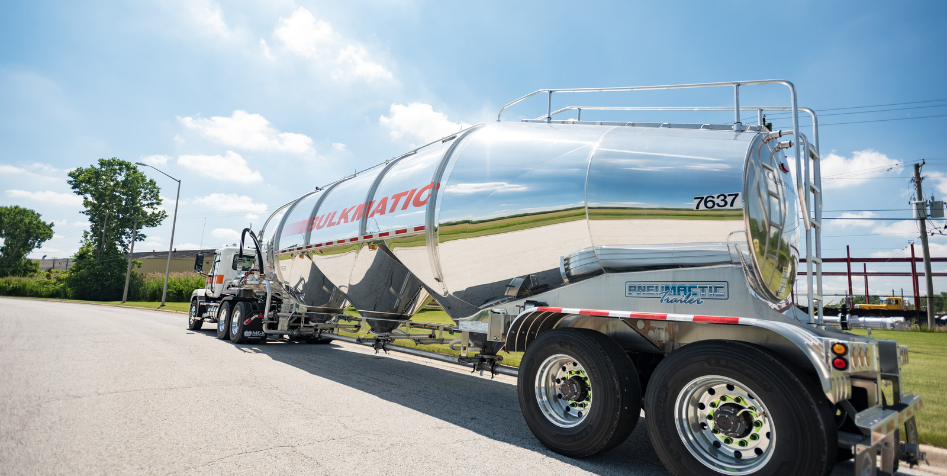
Core Powertrain and Structural Design
Engine and Transmission
An air tank semi trailer has no engine or transmission. Its propulsion comes entirely from the towing tractor. The trailer’s critical systems are the pressure vessel, the frame that carries it, and the safety devices that protect against overpressure. The tractor’s air system may be used to supply air to the trailer’s control circuits, but the cargo air is stored at the vessel’s design pressure and is independent of the tractor’s brake system.
Hydraulic System
Air tank semi trailers do not use hydraulic systems for cargo handling. The relevant systems are pneumatic: the vessel itself stores compressed air, and the discharge system may use valves and piping to transfer the air to receiving equipment at the destination. For vessels carrying compressed air as a hazardous material, the piping and valve arrangement must comply with the applicable transport regulations, including emergency shutoff provisions.
Chassis and Structural Durability
The vessel is the defining structural component. For compressed air service, carbon steel such as SA 516 Grade 70 is a standard material, with a minimum yield strength of 38,000 psi (260 MPa) . The vessel wall thickness is determined by the design pressure, diameter, and allowable stress per the applicable code. Post-weld heat treatment is required for shell welds when thickness exceeds 1.5 inches .
The frame that carries the vessel must accommodate chassis flexure without imposing excessive stress on the tank. 49 CFR 178.274 requires that the framework have sufficient flexibility to adapt to torsional deformation of the chassis during operation . The mounting arrangement must also account for the vessel’s expansion and contraction under pressure and temperature changes.
Internal corrosion is a significant durability concern for carbon steel vessels in compressed air service. Moisture in the compressed air can condense inside the vessel and attack the steel wall. The design should maintain a dew point below 35°F (2°C) at working pressure, and an approved internal coating system may be specified to protect the steel . The coating application requires surface preparation to SSPC-SP10 near-white blast cleaning and must be fully cured before hydrostatic testing .
Technical Specifications
The table below presents representative parameters for air tank semi trailers and the pressure vessel standards that govern their construction. Values are drawn from published regulatory and engineering references; actual specifications vary by design pressure, capacity, and jurisdiction.
Comparative Advantages TCO and ROI
The air tank semi trailer competes with two alternatives: on-site compressor installation and cylinder delivery. On-site compressors eliminate transport costs but require capital investment, maintenance, and a reliable power source at the destination. Cylinder delivery is flexible but has limited capacity and high per-unit handling cost. The air tank trailer offers bulk capacity with mobility, but its economics depend on the frequency of delivery and the distance to the receiving site.
A defensible comparison requires stated assumptions. Consider a construction site that requires 500 cubic meters of compressed air per week for pneumatic tools and equipment testing. If the site is 200 km from the nearest industrial gas supplier, cylinder delivery might cost 3,000 CNY per week including transport and handling, while an air tank trailer making one round trip per week might cost 1,500 CNY in tractor fuel, driver time, and trailer depreciation. The annual saving of 78,000 CNY would justify the trailer’s acquisition cost within a few years. However, if the site is closer or the air demand is lower, the trailer’s fixed costs may exceed the delivery savings.
Regulatory compliance cost is a significant ownership factor. The pressure vessel must be inspected and tested at intervals defined by the applicable code, and the certification documentation must be maintained. A vessel without current certification cannot legally transport compressed air as a regulated cargo. The cost of inspection and documentation should be included in the total cost of ownership calculation.
Resale value for air tank semi trailers is highly specialized. The buyer pool is narrow—industrial gas suppliers, pipeline contractors, and specialized service companies—but the equipment is expensive to build new and has a long service life when maintained. A vessel with complete certification records and a documented inspection history commands a stronger resale price than one without.
Heavy Duty Application Scenarios
-
Construction and infrastructure projects: Remote sites without fixed compressed air infrastructure rely on air tank trailers for pneumatic tools, concrete spraying, and pipeline testing. The trailer’s mobility allows it to serve multiple sites on a rotating schedule.
-
Pipeline testing and purging: Compressed air is used to test pipeline integrity and purge lines before commissioning. Air tank trailers provide the volume and pressure required for these operations without installing temporary compressors.
-
Mining and quarrying: Underground and remote mining operations require compressed air for drilling, ventilation, and equipment operation. An air tank trailer can deliver bulk air to sites where compressor installation is impractical.
-
Emergency and standby service: When a fixed compressor fails or is taken offline for maintenance, an air tank trailer can provide temporary air supply to critical operations. The trailer’s value in these scenarios is measured in avoided downtime rather than in routine delivery economics.
Selection and Maintenance Considerations
Selecting an air tank semi trailer begins with the regulatory classification of the cargo and the route. Compressed air may be regulated as a hazardous material depending on pressure and jurisdiction, which determines whether the vessel must comply with 49 CFR 178.274 or a less stringent standard. The buyer should confirm the applicable regulations with the supplier and the relevant authority before specifying the vessel.
Key selection and maintenance considerations include:
-
Verify the design code and certification. The vessel must be built to ASME Section VIII Division 1 or the applicable standard, and the certification documentation must be complete and current. A vessel without proper certification is not legally operable for regulated cargo.
-
Confirm the safety valve and fusible plug specifications. The safety valve must be ASME UV-stamped and set to open at no more than 110% of the design pressure. For air service over 200 psi, a fusible plug with a 250°F melting point is required . These devices must be tested and replaced at defined intervals.
-
Inspect the internal coating if specified. For carbon steel vessels in compressed air service, the internal coating protects against moisture corrosion. The coating must be inspected for damage or degradation at each internal inspection, and repaired if necessary.
-
Maintain the certification and inspection records. The vessel’s service life depends on documented inspection and testing. Records of hydrostatic tests, safety valve settings, and internal inspections should be maintained for the life of the vessel and transferred with it at resale.
-
Account for chassis flexure in mounting design. The vessel mounting must allow the frame to flex without imposing excessive stress on the tank. Inspect mountings for cracking or loosening at each PM interval.
Conclusion
The air tank semi trailer is a specialized pressure vessel on wheels, governed by design codes that account for road vibration, impact loading, and the fatigue cycles of transport service. Its engineering priorities are clear: build to ASME Section VIII Division 1 and the applicable transport regulations, protect carbon steel from internal moisture corrosion, and equip the vessel with ASME-certified safety devices that are tested and maintained at defined intervals.
Commercially, the air tank semi trailer is justified when the frequency and volume of compressed air delivery exceed the economics of on-site compression or cylinder delivery. The buyer’s task is to match vessel capacity and pressure rating to the actual demand, verify that the certification supports the intended cargo classification, and include inspection and documentation costs in the total cost of ownership. The trailer that is properly certified, correctly maintained, and matched to its duty cycle delivers compressed air where it is needed without the fixed cost of permanent infrastructure.