WELCOME TO OUR BLOG

We're sharing knowledge in the areas which fascinate us the most
click

What Is the Purpose of Engine Valves? A Complete Guide for Mechanics

By globalmachex March 10th, 2026 43 views

Quick Intro—Why Something That Just Opens and Closes Is Complicated


Let's be honest. A valve sounds simple. It's just a lid that lets stuff in and out, right? Like a door.

Except this door opens and closes fifty times a second at engine redline. It lives in temperatures hot enough to melt aluminum. It gets slammed shut by a spring while combustion tries to blow it open. And if it's off by a fraction of a millimeter, your engine destroys itself.

So yeah, it's a little more complicated than a door.

The basic idea is straightforward: get air and fuel in, let exhaust out, seal tight when you need compression. But how engines actually do that—the timing, the overlap, the clearance—that's where the magic happens.

Answering the Main Question


What Engine Valves Actually Are

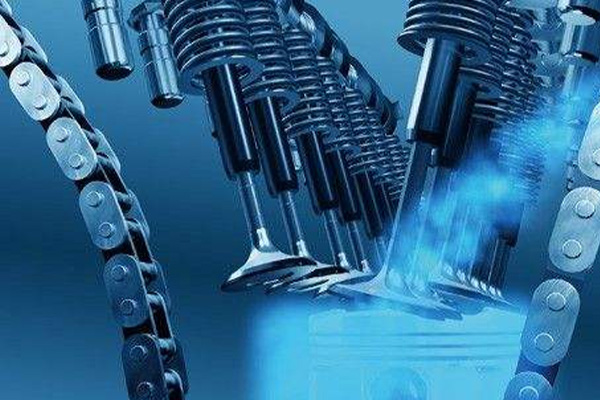
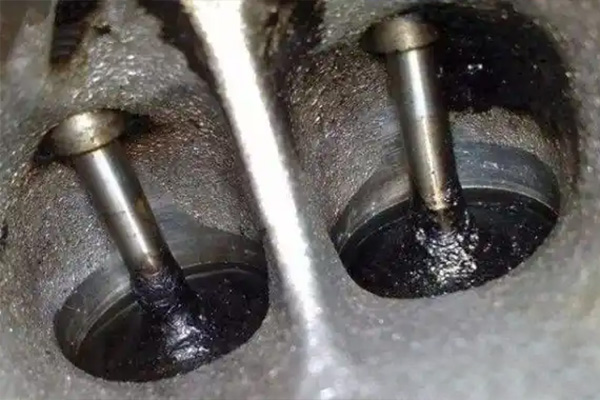
An engine valve is basically a mushroom-shaped piece of metal with a long stem and a flat head . The head seals against a seat in the cylinder head, and the stem slides up and down in a guide. Simple shape, complicated job.

There are two types, and they do opposite things:

Intake valves let the air-fuel mixture into the cylinder. They're usually larger than exhaust valves because getting enough mixture in is harder than letting exhaust out .

Exhaust valves let the burned gases out. They run hotter—like, really hot—because they're dealing with combustion byproducts that can hit 1,400 degrees or more .

How They Open and Close

Valves don't just flap around on their own. They're pushed open by the camshaft—a rotating shaft with egg-shaped lobes . As the cam turns, the lobe pushes against a lifter, which transfers motion through pushrods and rocker arms (in older designs) or directly against the valve in overhead cam engines .

Then a spring slams it shut. That spring has to be strong enough to close it fast but not so strong that it beats up the whole valvetrain. It's a balancing act.

The camshaft is driven by the crankshaft via a timing belt, chain, or gears . They have to stay perfectly synchronized. If that timing jumps—say a belt breaks or skips teeth—the valves can open at the wrong time and meet the piston face-to-face. That's called "interference," and it usually ends with bent valves and a very sad engine.

What Happens During Each Stroke

Engines run on a cycle. Four strokes, to be exact. Valves are part of every one.

Intake Stroke

Piston goes down, cylinder fills with vacuum. Intake valve opens, air and fuel rush in. Exhaust valve stays shut so nothing escapes out the wrong end .

This is where the engine breathes. If the valve doesn't open enough or opens too late, you get less mixture, less power. It's like trying to run a marathon while breathing through a straw.

Compression Stroke

Both valves closed. Piston goes up, squishes the mixture into a tiny space. This is where the magic of compression happens—squeezing the mixture makes it burn harder .

If a valve leaks here, compression bleeds off. That cylinder makes less power, runs rough, and generally acts up. A compression test tells you if valves are sealing.

Power Stroke

Spark plug lights the fire. Mixture burns, expands, pushes the piston down. Both valves stay closed to keep all that pressure working on the piston instead of escaping .

Exhaust Stroke

Piston comes back up, exhaust valve opens. Burned gases get pushed out into the exhaust manifold. Then the valve closes, and the whole thing starts over .

At idle, this happens a few hundred times a minute. At highway speeds, thousands. Valves take a beating.

Valve Timing—When Stuff Happens

You might think valves just open at the start of a stroke and close at the end. But real engines are more clever than that.

Intake valves usually open a little before the piston starts down, and close a little after it comes back up . This "early opening, late closing" lets the incoming mixture use its own momentum to keep filling the cylinder even after the piston changes direction. Engineers call this "taking advantage of ram effect."

Exhaust valves open before the piston reaches the bottom of the power stroke. Why? Because even though it's a little early, letting the pressure start escaping before the piston pushes it out reduces the work the piston has to do on the exhaust stroke . It's a trade that pays off.

Valve Overlap—The Weird Part

Here's where it gets interesting. At the end of the exhaust stroke and the beginning of the intake stroke, there's a brief moment when both valves are open at the same time . This is called overlap.

Why would you do that? Two reasons:

First, the exiting exhaust gas rushing out creates a suction that helps pull the incoming mixture in . It's like using a fast-moving river to pull water out of a side channel.

Second, at high RPM, this overlap helps "scavenge" the cylinder—clearing out the last traces of exhaust so you get a full fresh charge .

Too much overlap at low RPM, though, and the incoming mixture can go right out the exhaust, wasting fuel and making emissions worse. That's why performance cams with lots of overlap make engines idle rough but scream at the top end.

Clearance and Adjustments

Valves need a tiny gap between the rocker arm (or cam lobe) and the valve stem . This is called valve lash or clearance. If it's too tight, the valve might not close all the way—burns, leaks, lost compression. If it's too loose, the valvetrain gets noisy and the valve doesn't open enough .

Some engines use hydraulic lifters that adjust themselves automatically. Others need manual adjustment—feeler gauges and wrenches every so many miles. Know which you have.

How to Actually Keep Valves Happy


Step One: Listen

Valves make noise when something's wrong. A steady tapping that speeds up with RPM usually means too much clearance . A hissing sound under load might mean a valve isn't sealing.

Learn what your engine normally sounds like. When it changes, investigate.

Step Two: Change Oil on Time

Oil lubricates the valvetrain. Dirty oil or low oil wears out cam lobes, lifters, and valve guides . Skip oil changes and you're grinding metal on metal up there.

Step Three: Maintain the Timing System

If your engine has a timing belt, change it at the recommended interval. Seriously. When a belt breaks on an interference engine, valves get bent. That's thousand-dollar repair for a hundred-dollar belt .

Step Four: Watch the Temperature

Overheating kills valves. They get hot anyway, but extreme heat weakens the metal, burns the seats, and causes cracks . If your temp gauge climbs, figure out why before you cook the valves.

Step Five: Use Good Fuel

Knocking and pinging—detonation—is like hitting the valves and pistons with a sledgehammer inside the cylinder . It destroys engines. Use the octane your engine was designed for.

Step Six: Compression Tests

A compression test tells you if valves are sealing. Low compression on a cylinder might mean burned valves, bad seats, or failed rings . Do a test when you suspect trouble.

Summary


Here's the short version:

  • Intake valves let air and fuel in. Exhaust valves let burned gas out.
  • Camshaft opens them. Springs close them.
  • Timing has to be perfect. Slip a tooth and valves hit pistons.
  • Valves open early, close late to use momentum and pressure.
  • Overlap uses exhaust flow to help pull in fresh mixture.
  • Clearance matters. Too tight burns valves. Too loose makes noise.
  • Listen for changes. Maintain oil and timing. Watch temperature.

Engine valves are simple in concept—they just open and close. But getting it right, thousands of times a minute, under extreme heat and pressure, is one of the hardest jobs in an engine. Treat them right and they'll keep sealing for hundreds of thousands of miles.

Frequently Asked Questions

Q: How do I know if a valve is bad?

A: Rough idle, misfire, loss of power, hissing sounds, or failing a compression test . A mechanic with a leak-down test can tell you exactly which one.

Q: Can I adjust valve clearance myself?

A: On engines with mechanical lifters, yes. You'll need feeler gauges, a wrench, and the specifications from your manual. On hydraulic lifters, no—they self-adjust .

Q: What's the difference between an interference and non-interference engine?

A: In an interference engine, the valves and pistons occupy the same space at different times. If timing slips, they hit. In non-interference, they have clearance. Know which you have—it affects timing belt urgency .

Q: How often should valves be adjusted?

A: Check your manual. Some engines never need adjustment (hydraulic). Others need it every 15,000 to 30,000 miles. If it's tapping, check sooner .

Q: What kills valves fastest?

A: Overheating, detonation (knocking), and poor maintenance . Also running too lean—that creates high exhaust temps that burn valves.

Q: Do performance valves make a difference?

A: In a high-performance build, yes. Bigger valves flow more, stronger materials handle heat and RPM. For a daily driver, stock is fine .

Precision Planting: What All That Fancy Tech Actually Does and Whether You Need It
Previous
Precision Planting: What All That Fancy Tech Actually Does and Whether You Need It
Read More
Buying Farm Equipment from China: What Nobody Tells You About Importing
Next
Buying Farm Equipment from China: What Nobody Tells You About Importing
Read More